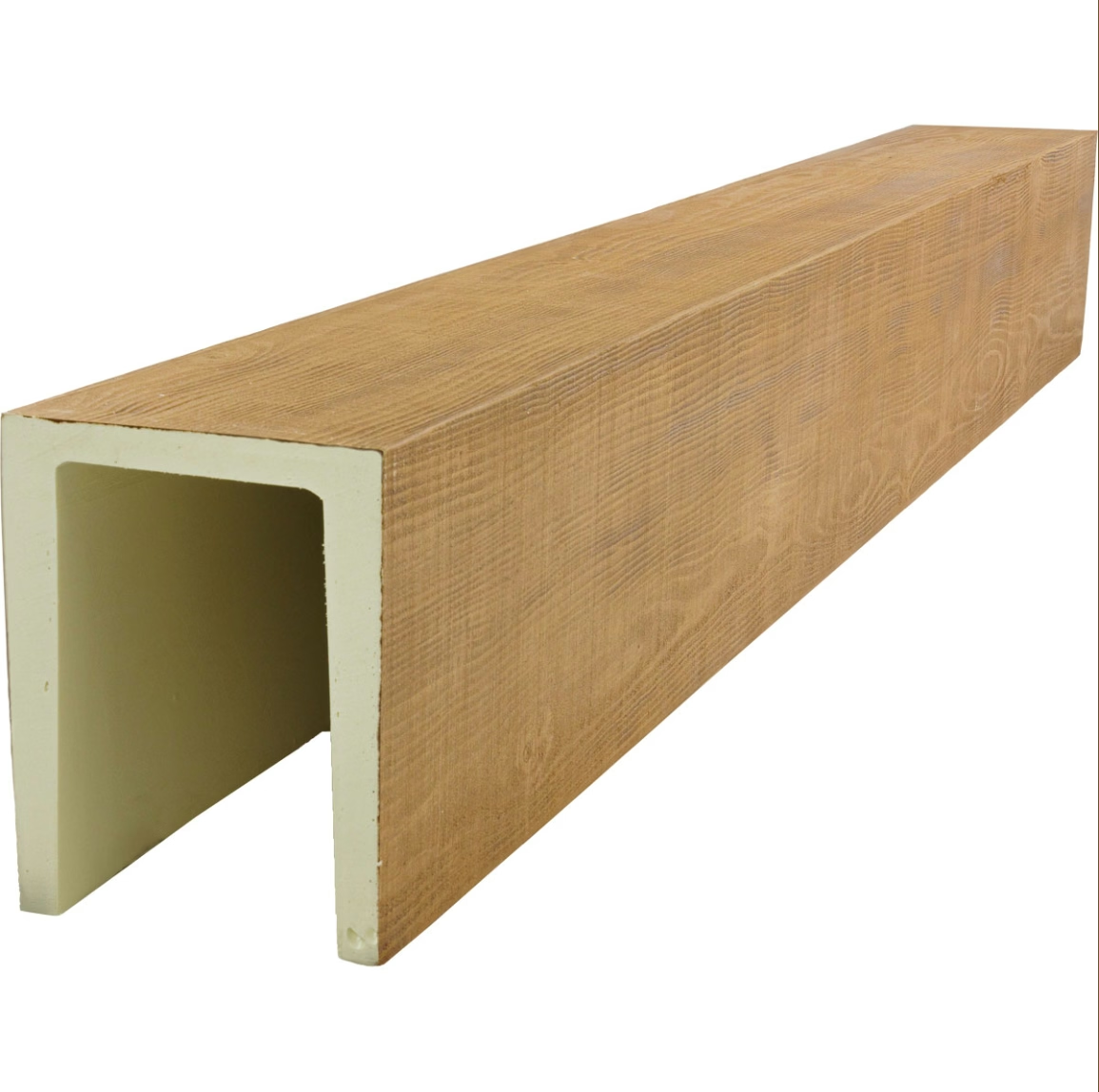
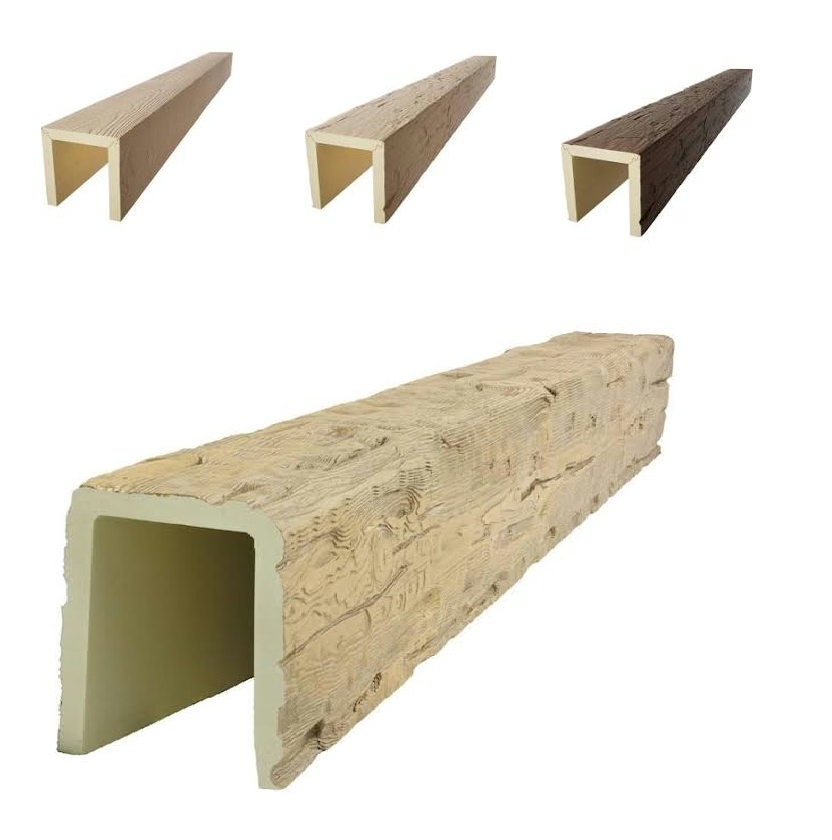
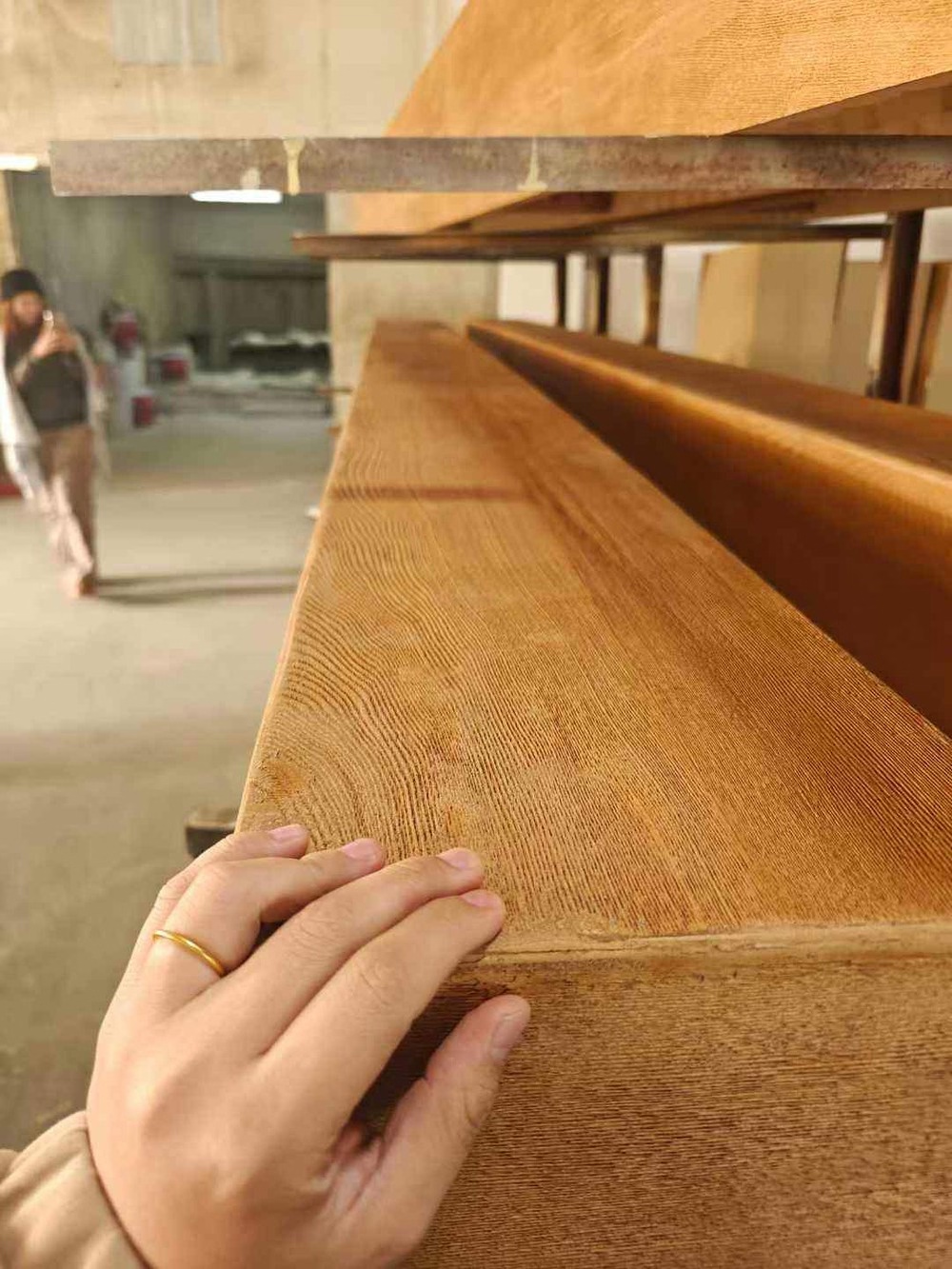
The question of whether to specify natural timber or polyurethane faux beams for architectural applications has become increasingly relevant as faux beam products have matured in quality and expanded in availability. Once viewed as mere substitutes for projects where genuine timber was impractical, modern polyurethane resin beams now compete directly with solid wood on aesthetic grounds while offering distinct advantages across a range of practical considerations. Understanding the comprehensive comparison between these materials helps architects, builders, and homeowners make selections that optimize outcomes for their specific circumstances.
Solid wood carries centuries of tradition and an inherent authenticity that many find compelling. The organic variations in grain pattern, the warmth of genuine timber, and the craft heritage associated with woodworking all contribute to natural wood's enduring appeal. Yet the same characteristics that make solid wood desirable also create limitations that contemporary building practices increasingly find unacceptable. Examining these differences systematically reveals where each material excels and where the choice becomes clear.
Weight and Structural Considerations
The weight difference between solid wood and polyurethane resin beams affects every stage of a project from design through long-term maintenance. Solid timber beams of substantial appearance typically weigh ten to twenty pounds per linear foot or more, depending on wood species and moisture content. A typical eight-foot exposed beam might weigh sixty to one hundred pounds or heavier, requiring careful handling and potentially multiple people for installation.
Polyurethane resin beams of equivalent visual impact typically weigh one to three pounds per linear foot. The same eight-foot beam might weigh eight to fifteen pounds, easily managed by one person and requiring no special equipment. This difference transforms installation from a construction task into a finishing task, achievable by contractors with general skills rather than specialists in heavy timber work.
Structural requirements follow from these weight differences. Solid timber beams require ceiling systems designed to support their substantial weight. Engineering calculations may be required, additional structural support might be necessary, and load restrictions in some buildings might preclude timber beam installations entirely. Polyurethane beams impose negligible loads on ceiling structures, making virtually any building a candidate for exposed beam aesthetics. The structural design freedom this provides enables architectural expressions that would otherwise be impossible.
Seismic considerations introduce additional complexity in some regions. Heavy ceiling elements create seismic concerns that lightweight alternatives avoid entirely. Building codes in earthquake-prone areas may restrict or regulate heavy ceiling installations, while lightweight polyurethane beams present no such concerns. This factor alone makes faux beams the practical choice in many geographic areas.
Moisture and Environmental Performance
Solid wood maintains a complex relationship with moisture that creates ongoing management requirements. Timber naturally absorbs and releases moisture, changing dimensions as humidity fluctuates. This movement can cause joint problems, surface checking, and the gradual development of gaps or misalignment over time. In humid environments, solid wood may never fully stabilize, continuing to move and shift throughout its service life.
Polyurethane resin beams absorb no moisture and maintain dimensional stability regardless of environmental conditions. Humidity changes, water splashes, and moisture exposure leave these beams unaffected. This characteristic proves particularly valuable in basements, bathrooms, kitchens, and other areas where moisture is present. Solid timber installations in such spaces often require extensive moisture management and may still develop problems despite careful attention.
Biological degradation affects natural wood but not properly formulated polyurethane. Termites, wood-boring beetles, and other insects can devastate timber installations, often causing damage before problems become apparent. The structural compromise that results may require complete beam replacement. Polyurethane provides no food source for these organisms, making such damage impossible regardless of local pest pressure.
Fungal decay represents another biological threat to timber that does not affect polyurethane. In damp conditions, wood-decay fungi can establish themselves in solid timber, causing softening, discoloration, and eventual structural failure. Polyurethane resin resists fungal colonization entirely, maintaining integrity even in persistently humid conditions that would destroy natural timber.
Temperature resilience differs significantly between materials. Solid wood expands and contracts with temperature changes, creating stress on joints and connections. Polyurethane's thermal expansion coefficient is substantially lower, reducing movement to levels that mounting systems can easily accommodate. In spaces with significant temperature variation—sun-exposed locations, areas near heat sources, or buildings with intermittent climate control—dimensional stability provides meaningful practical advantages.
Aesthetic Consistency and Control
Natural wood varies inherently from piece to piece, making perfect consistency impossible even when beams are cut from the same tree. Grain patterns differ, color varies between boards, and subtle differences in figure and character create unique appearances that some find desirable but that complicate matching for projects requiring visual uniformity.
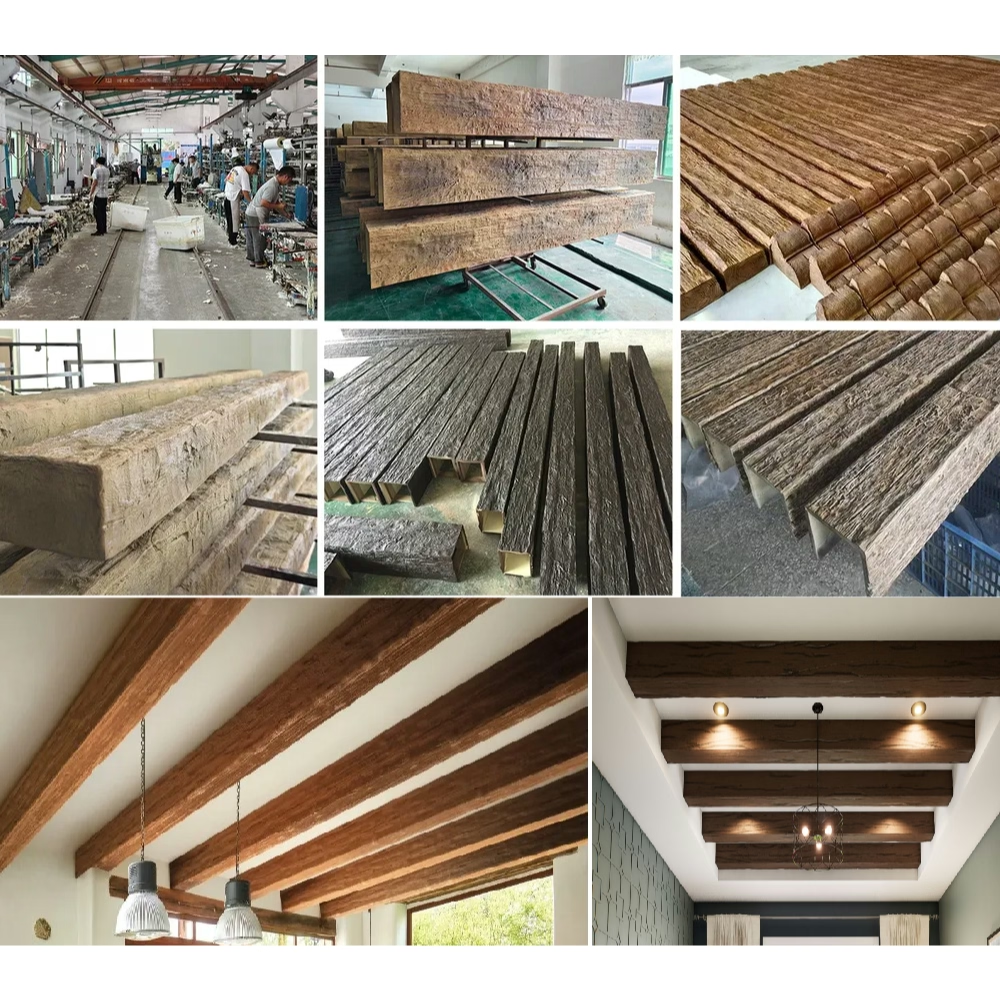
Polyurethane resin beams can be produced with complete consistency across unlimited quantities. Each beam exhibits the same grain pattern positioning, the same color distribution, and the same surface characteristics. A designer can specify a particular product with confidence that all beams delivered will match precisely. This predictability simplifies specification, reduces installation complications, and ensures that finished projects meet visual expectations.
Finish consistency follows from material consistency. Staining and finishing natural wood always involves some variation as the wood's density, grain orientation, and prior exposure affect how finishes penetrate and appear. Polyurethane accepts finishes uniformly, producing consistent results across all pieces. Factory-finished beams arrive with uniformly applied coatings that would be difficult to achieve on-site with natural timber.
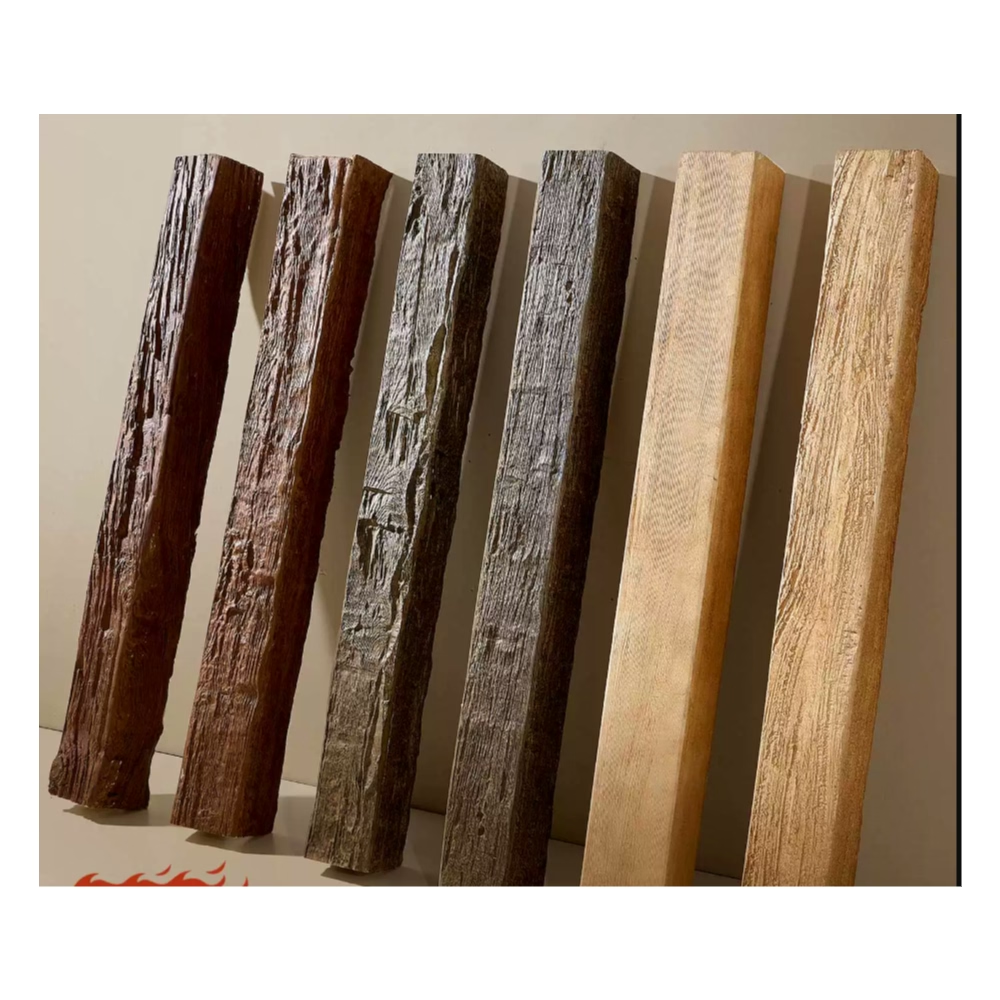
Pattern availability expands dramatically with faux beam technology. Natural wood beams are limited to whatever patterns exist in available timber—essentially, whatever nature produced. Polyurethane beams can be molded to reproduce any desired pattern, including wood species that are rare, expensive, or no longer commercially available. Historical patterns, unique designs created for specific projects, or wood types from distant forests all become equally accessible through molding technology.
The authenticity question that once favored natural wood has diminished as faux beam manufacturing has advanced. Premium polyurethane beams capture wood grain details with sufficient precision that casual observers cannot distinguish them from genuine timber at normal viewing distances. The tactile qualities—surface texture, edge sharpness, and overall feel—approach natural wood closely enough that even close inspection may not reveal the material's true nature.
Maintenance and Long-Term Care
Solid wood beam installations require ongoing maintenance to preserve their appearance and structural integrity. Regular inspection identifies developing problems before they become serious. Cleaning removes accumulated dust and debris that can affect finishes. Periodic refinishing maintains color and surface protection. Each of these activities involves time, expense, and potentially disruption to occupied spaces.
Polyurethane resin beams require minimal maintenance compared to natural timber. The absence of moisture absorption eliminates one major category of maintenance concern. Resistance to biological degradation prevents another category of problems. UV-stable finishes maintain appearance for years without attention. Regular dusting and occasional cleaning with mild soap and water are typically the only maintenance required. This reduction in maintenance burden represents substantial value over the life of the installation.
Refinishing intervals for solid timber depend on exposure, finish type, and environmental conditions but typically range from three to ten years for interior applications. Each refinishing cycle involves stripping old finish, preparing the surface, applying new finish, and allowing adequate cure time. In commercial settings, this work may require business closure or affected-area restriction. Polyurethane beams do not require refinishing under normal circumstances, avoiding this recurring expense and disruption entirely.
Repair approaches differ significantly between materials when damage does occur. Solid wood repairs often involve wood filler, matching grain patterns, and careful finishing to blend repairs with surrounding areas. The process requires skill and may still produce visible evidence of repair. Polyurethane damage can often be repaired using compatible patching materials, with repairs typically becoming invisible when finished. In some cases, damaged sections can be replaced entirely without affecting surrounding beams, which is rarely possible with installed timber.
Total Cost of Ownership
Initial material cost comparison between solid wood and polyurethane beams depends heavily on wood species, beam dimensions, and finish requirements. Premium hardwood timbers can cost substantially more than equivalent faux beams, while some common lumber species may appear competitive on material cost alone. However, material cost represents only a portion of total installed cost, and often a small portion.
Installation labor costs diverge significantly. Solid timber installation often requires multiple workers, specialized equipment, and extended time for handling heavy pieces and achieving proper alignment. Faux beam installation is typically faster, often dramatically so, requiring fewer workers with more common skill sets. For commercial projects where labor costs dominate, this difference can determine project feasibility.
Maintenance costs accumulate over time and favor polyurethane strongly. Natural wood maintenance includes periodic inspections, cleaning, and refinishing that together represent meaningful ongoing expense. Over a twenty-year period, maintenance costs for solid timber beams often exceed the original material cost. Polyurethane beams' minimal maintenance requirements create virtually no ongoing expense beyond occasional cleaning.
Replacement costs arise when beams are damaged or when maintenance is deferred too long. Solid timber replacement involves sourcing matching material, which may be difficult for discontinued species or unusual dimensions, along with installation labor. Polyurethane replacement benefits from consistent production—replacement beams match originals exactly from current production. The availability assurance that this provides reduces risk of stranded installations where matching material cannot be obtained.
Lifecycle cost analysis typically favors polyurethane resin beams when all factors are considered. Initial cost premiums, where they exist, are recovered through installation savings, maintenance elimination, and replacement risk reduction. The time horizon for payback depends on specific circumstances but often falls within five to ten years for most applications. For commercial installations with longer expected service lives, the economic case for polyurethane becomes even stronger.
The comparison between polyurethane resin faux timber beams and solid wood reveals that the choice is no longer one of authenticity versus imitation. Modern faux beams deliver authentic appearance with superior performance across most practical considerations. Natural wood retains advantages in some specialized applications where its specific characteristics—organic variation, thermal mass, or specific material requirements—justify the practical tradeoffs it entails. For the majority of applications, however, polyurethane resin beams represent the superior choice, delivering lasting beauty with dramatically reduced burden.
Technical References
ASTM standards cited in every specification
Test Data
Lab results from internal testing program
Updated 2026
Reviewed against current product specs