When it comes to adding warmth and architectural character to a space, beams have long been a staple in both residential and commercial design. For decades, solid wood beams were the default choice for homeowners and builders seeking that rustic charm. However, modern manufacturing has given us a compelling alternative: polyurethane faux beams. These engineered products offer remarkable benefits that make them increasingly popular in today's construction and renovation projects.
The shift toward PU faux beams isn't just a trend—it's a response to real-world challenges that builders and designers face daily. From handling heavy materials on job sites to maintaining consistent aesthetics across large projects, traditional solid wood presents limitations that synthetic alternatives effectively solve.
Weight and Handling Benefits
One of the most immediate advantages of PU faux beams becomes apparent the moment they arrive on a job site. Traditional solid wood beams are dense, often weighing several pounds per linear foot. This weight creates significant challenges during transportation, storage, and installation. Workers need specialized equipment to lift and position these heavy timbers, and the structural ceiling must be capable of supporting considerable load.
PU faux beams fundamentally change this equation. Crafted from high-density polyurethane, these beams weigh approximately 80% less than their solid wood counterparts. A single installer can easily handle beams that would previously require two or three people. This dramatic weight reduction translates directly to faster installation times and reduced labor costs—factors that matter enormously to contractors working on tight schedules or homeowners tackling DIY projects.

The practical implications extend beyond simple convenience. Lighter beams mean less strain on ceiling structures, making PU options ideal for applications where structural reinforcement would be impractical or expensive. Vaulted ceilings with limited load-bearing capacity can now feature impressive beam installations that would have been impossible with traditional materials.
Durability and Longevity Factors
Solid wood, despite its natural beauty, remains vulnerable to the environment. Moisture causes swelling and warping. Temperature fluctuations lead to cracking and splitting. Insect damage can compromise structural integrity without visible warning signs. These characteristics create ongoing maintenance demands that can surprise unwary homeowners.
PU faux beams sidestep these vulnerabilities entirely. Polyurethane is inherently resistant to moisture, meaning these beams won't absorb water, swell, or develop the mold and rot that plague organic wood products. Temperature changes have minimal effect on the material, as polyurethane maintains its dimensional stability across a wide range of conditions.
Insects simply ignore polyurethane. Termites, carpenter ants, and other wood-boring pests show no interest in this synthetic material, eliminating one of the most serious threats to traditional wood installations. For homeowners in regions prone to termite activity, this characteristic alone can justify the switch to faux beams.
The UV resistance built into quality PU beams also prevents the fading and degradation that causes solid wood to gray and deteriorate over time when exposed to sunlight. Your beam installation retains its original appearance year after year, with minimal intervention required.
Consistency in Appearance
Natural wood varies from piece to piece. Even beams cut from the same tree will display different grain patterns, color variations, and character marks. While some designers embrace this unpredictability, many projects require a more controlled aesthetic. Large commercial spaces, in particular, often demand uniformity that natural materials cannot provide.
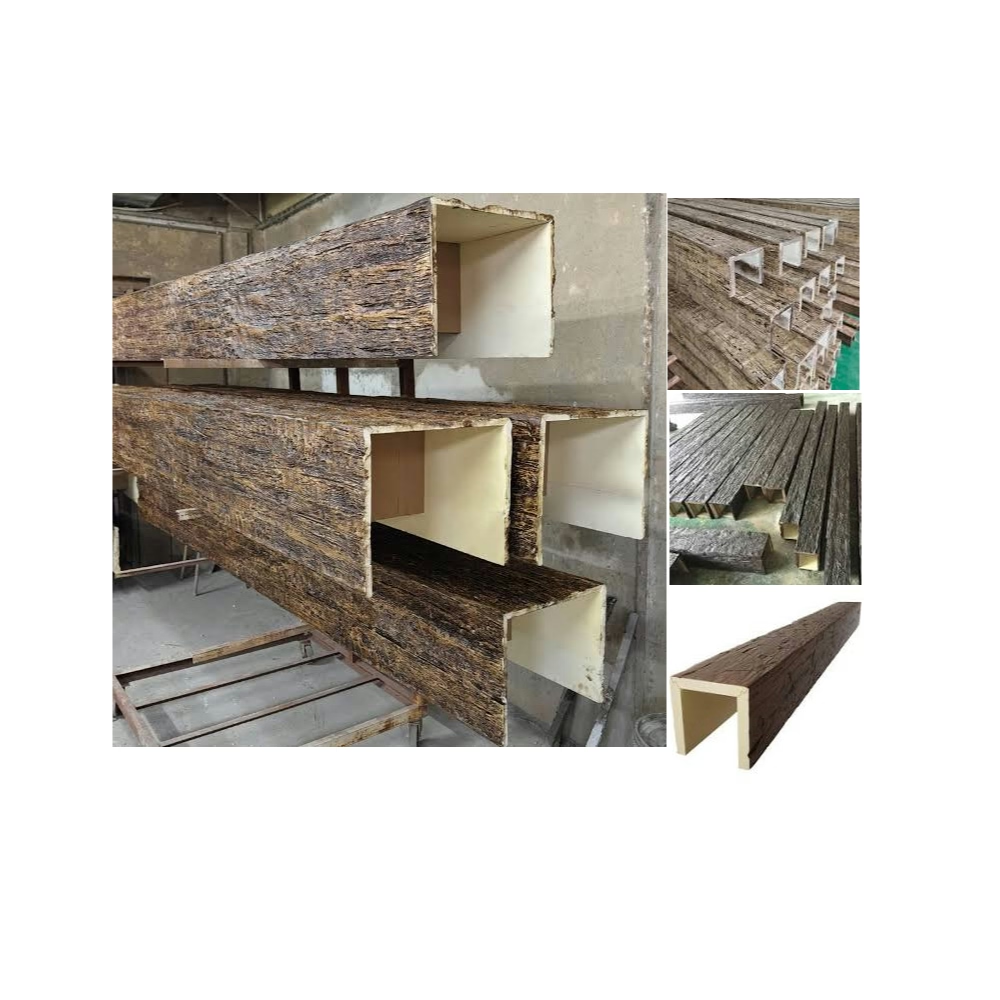
PU faux beams solve this problem through precision manufacturing. Each beam emerges from the mold with identical proportions, texture, and color saturation. When installing beams across a long span or throughout an entire room, this consistency creates a cohesive, intentional appearance. Designers can specify exact visual characteristics and trust that every beam will match the specification precisely.
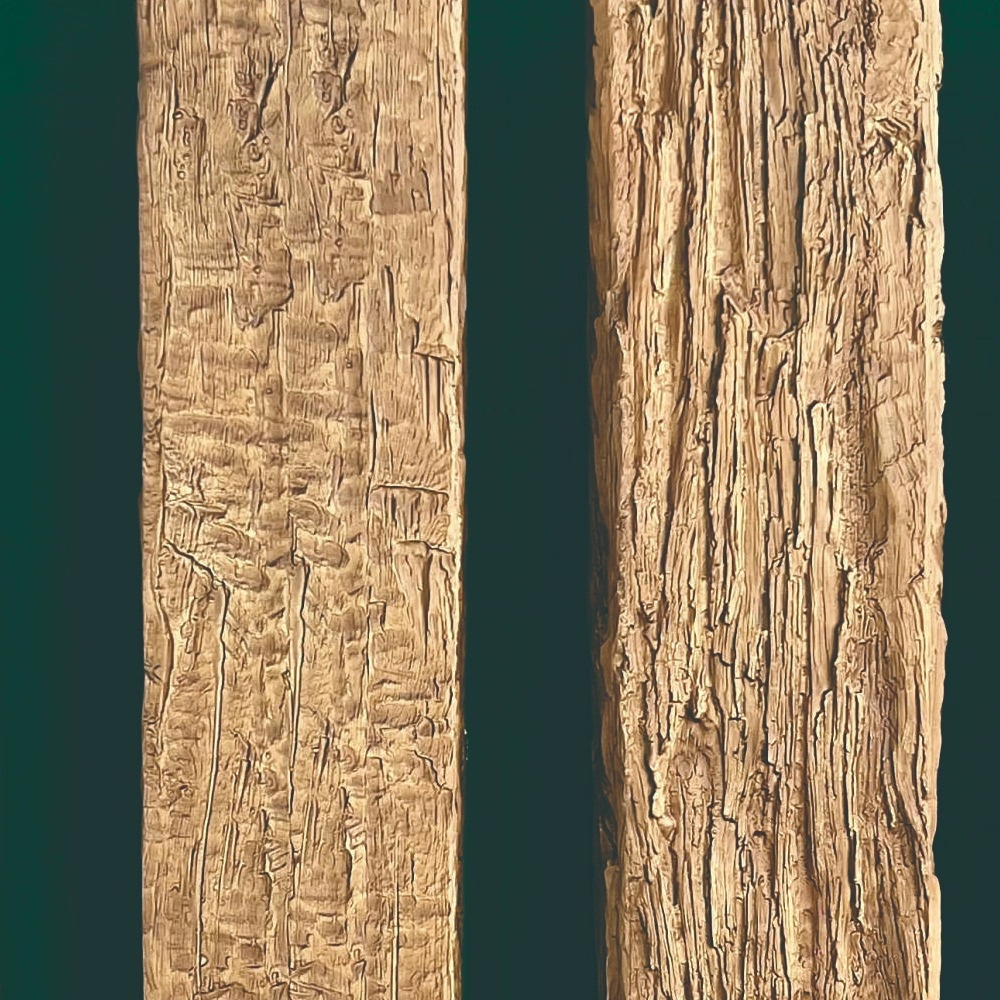
The ability to customize PU beams further expands design possibilities. Manufacturers can produce beams in virtually any profile, from authentic-looking reclaimed wood textures to sleek contemporary profiles. Color matching becomes straightforward, as polyurethane accepts paint and stain uniformly. This flexibility allows architects and interior designers to achieve specific aesthetic goals that might be impossible or prohibitively expensive with natural wood.
Maintenance Requirements
The ongoing care required for solid wood beams represents a hidden cost that many homeowners underestimate. Regular inspections for signs of moisture damage, cracking, or pest activity should be part of any maintenance routine. Periodic resealing or refinishing helps protect the wood from environmental damage, but eventually, even well-maintained beams may require replacement.
PU faux beams demand almost no maintenance. Occasional dusting or light cleaning with mild soap and water keeps them looking fresh. Unlike wood, they never require sealing, staining, or refinishing. The material doesn't chip, peel, or delaminate under normal use conditions.
This low-maintenance characteristic proves especially valuable in hard-to-reach installations. Vaulted ceilings with beams that would require scaffolding to access become much more manageable when the beams don't need periodic treatment. Building owners appreciate the reduced maintenance burden, and property managers find it easier to keep installations looking pristine without specialized service contracts.
Fire Safety Considerations
Building codes increasingly demand fire-resistant materials, particularly in commercial applications and multi-family residential construction. Solid wood, being organic, burns readily and can contribute to fire spread. While fire-retardant treatments exist for wood, they add cost and may require reapplication over time.
Quality PU faux beams often incorporate fire-retardant additives during manufacturing. These treatments make the material significantly more resistant to ignition and flame spread compared to untreated wood. Many manufacturers offer beams that meet Class A fire ratings—the highest classification for building materials. This characteristic can simplify code compliance and potentially reduce insurance costs for property owners.
Cost Analysis Across Project Lifecycle
Comparing PU faux beams to solid wood purely on material cost can be misleading. While quality faux beams may carry a similar or slightly higher upfront price than some wood options, the total cost of ownership tells a different story.
Consider installation expenses: lighter weight beams install faster with fewer workers, reducing labor costs substantially. No specialized lifting equipment means lower equipment rental or purchase costs. Faster installation also means earlier project completion, allowing spaces to generate revenue or be occupied sooner.
The elimination of ongoing maintenance further shifts the economic equation. No sealing, no refinishing, no pest treatments, no repairs from moisture damage. Year after year, the savings accumulate. When these factors combine, PU faux beams frequently prove more economical over the lifespan of an installation.
For projects with aesthetic requirements that would demand premium-grade natural wood, the cost advantage of faux beams becomes even more pronounced. Achieving a consistent, high-end appearance with natural materials often requires expensive Select or Premium grade lumber and careful sorting—expenses avoided entirely with manufactured faux beams.
Environmental Considerations
Sustainable building practices influence many purchasing decisions today. Solid wood, when sourced from responsibly managed forests, offers renewable credentials. However, the full environmental impact includes transportation distances, processing energy, and the eventual need for replacement.
PU faux beams, while petroleum-based, compensate with exceptional longevity. A beam that lasts fifty years without replacement consumes fewer resources than wood that must be replaced every decade or two. Many manufacturers also incorporate recycled materials into their products, reducing virgin resource consumption.
The reduced transportation weight of PU beams lowers fuel consumption and emissions during shipping. Combined with their durability and the elimination of maintenance chemical products, faux beams offer a compelling environmental profile for many applications.
The advantages of PU faux beams over traditional solid wood span practical, economic, and aesthetic dimensions. Lighter weight simplifies handling and installation. Superior durability eliminates common wood failures. Consistent appearance enables precise design execution. Minimal maintenance reduces long-term costs and effort. Fire-resistant options provide safety benefits. When evaluated comprehensively, these benefits explain why PU faux beams have established themselves as a serious alternative in the architectural and construction industries.
Whether you're a contractor seeking efficiency on job sites, a designer pursuing specific aesthetic outcomes, or a homeowner evaluating options for a renovation, PU faux beams deserve serious consideration. The combination of practical advantages and design flexibility makes them uniquely suited to meet contemporary building demands.
Technical References
ASTM standards cited in every specification
Test Data
Lab results from internal testing program
Updated 2026
Reviewed against current product specs


