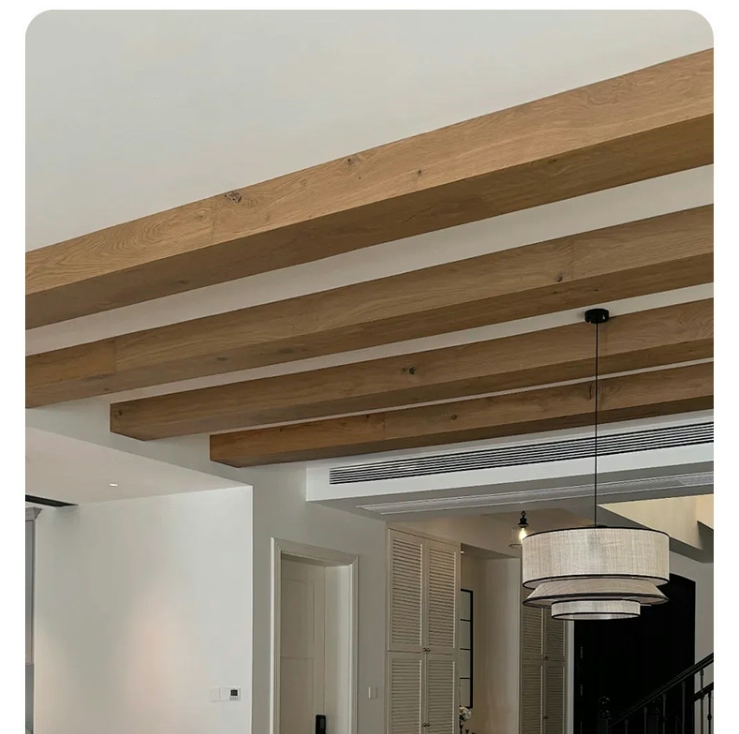
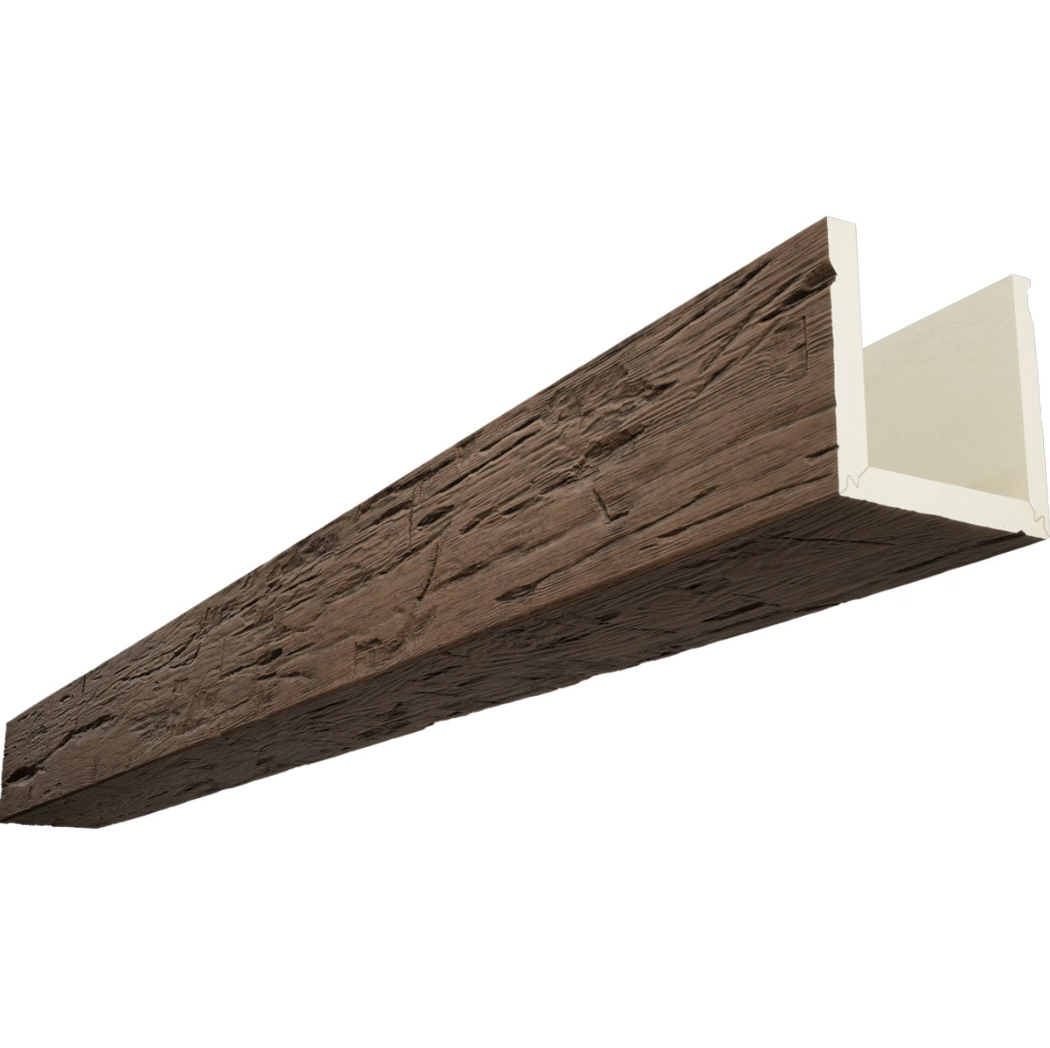
The economics of construction materials reward scale, and polyurethane faux wood beams follow this principle with tiered pricing that makes large orders substantially more attractive than small purchases. For contractors completing whole developments, retailers stocking inventory, and designers working on multiple properties, understanding these discount structures enables purchasing strategies that maximize value while ensuring adequate supply for every project requirement.
Volume discount programs typically activate at order quantities starting around ten to twenty beam units, with pricing improvements accelerating as quantities increase. A contractor ordering beams for a single residence might pay standard list price, while someone ordering for a twenty-unit development can access pricing that reduces per-unit costs by thirty to forty percent. These savings compound significantly across full project budgets, often covering the cost of other materials or labor components.
Understanding Volume Pricing Tiers
Manufacturers and distributors structure their discount programs around quantity breakpoints that reflect production and logistics efficiencies. Smaller orders require the same processing overhead as larger ones—order entry, picking, packing, shipping coordination—but distribute those costs across fewer units. As order size increases, the per-unit cost of these activities drops, and savings pass to buyers in the form of lower pricing.
Tier structures vary between suppliers, but common patterns emerge across the industry. Orders of ten to twenty-five beams might qualify for five to ten percent discounts. Twenty-five to fifty units might unlock fifteen to twenty percent savings. Orders exceeding one hundred beams frequently access pricing twenty-five percent or more below standard rates. Understanding where these breakpoints fall with specific suppliers enables strategic ordering that captures maximum available discounts.
Some suppliers offer cumulative discount programs where annual or lifetime purchase volumes unlock progressively better pricing. These programs benefit ongoing relationships where buyers return repeatedly rather than making isolated large purchases. For contractors with consistent beam requirements, establishing such relationships often proves more valuable than maximizing any single order discount.
Project Planning for Discount Optimization
Maximizing bulk discounts requires aligning order timing with project schedules. A development project spanning multiple phases might consolidate beam requirements into a single large order rather than ordering as each phase begins. This consolidation approach captures higher volume discounts while simplifying logistics with one delivery rather than several. The trade-off involves storage costs for holding inventory between order and installation, which must be weighed against the discount savings.
Material specifications that remain consistent across multiple projects enable even larger consolidation. When selecting beam profiles, finishes, and dimensions that repeat across different properties, buyers can combine requirements from distinct projects into unified orders. This strategy requires more advance planning but unlocks pricing that single-project orders cannot achieve. Design teams and contractors working together on specification decisions early in the process capture these benefits.
Lead time considerations influence discount opportunities as well. Standard lead times often qualify for better pricing than rush orders, and planning orders with supplier lead times in mind prevents premium charges. For large projects with flexible timelines, building discount optimization into the project schedule creates value without compromising completion dates.


Negotiating Beyond Published Tiers
Published discount tiers represent starting points for negotiation rather than absolute limits, particularly for very large orders or ongoing relationships. Suppliers value predictable demand and are often willing to extend pricing beyond standard tiers to secure such commitments. A buyer prepared to commit to regular orders or large upfront purchases can often negotiate terms that exceed published maximum discounts.
Long-term partnership discussions open possibilities that one-time transactions cannot access. Suppliers manufacturing custom beam profiles particularly appreciate customers who commit to ongoing volumes because such commitments justify production line investments. These relationships often yield pricing, priority fulfillment, and product development benefits that transactional purchasing cannot achieve.
Geographic proximity to suppliers affects negotiating positions for very large orders where shipping costs become significant. Buyers who can arrange their own freight or who are located near manufacturing facilities can sometimes negotiate better delivered pricing than published rates suggest. The advantage of local pickup or buyer-arranged freight becomes more pronounced as order size increases and shipping represents a larger portion of total cost.
Hidden Value Beyond Unit Price
Price per beam tells only part of the value story. Quality consistency varies between suppliers, and beams that require touch-up finishing, show visible defects, or arrive damaged cost more than their initial price suggests. Premium suppliers whose beams arrive ready to install without correction reduce effective costs substantially. Freight damage rates, return processing requirements, and quality variability all factor into true landed cost calculations.
Warranty coverage represents another dimension of value often overlooked in price-focused purchasing. Suppliers confident in their products offer comprehensive warranties that protect buyers from defect-related costs. Products with limited or absent warranties transfer risk to buyers, potentially creating substantial exposure on large orders. Warranty terms deserve consideration alongside pricing when evaluating supplier relationships.
Lead time reliability affects project economics in ways that pure pricing analysis misses. A supplier offering slightly lower prices but frequent delays costs more in project management time, schedule disruption, and potentially accelerated shipping charges than their competitors. Evaluating suppliers on delivery reliability metrics alongside pricing identifies the true best value for large order requirements.
Building Sustainable Supplier Relationships
Strategic ordering for bulk discounts works best within the context of reliable supplier relationships built over time. Establishing credit terms, communication preferences, and ordering processes with key suppliers reduces friction on each transaction and enables faster response when project needs arise. These relationships also position buyers advantageously when extraordinary requirements emerge—custom specifications, accelerated timelines, or exceptional volume demands.
Regular communication about upcoming project pipelines allows suppliers to prepare for buyer requirements and sometimes offers advance pricing opportunities before formal quotes. Buyers who share forward-looking demand information become valued partners rather than transactional customers, unlocking service levels that support successful project outcomes. This collaborative approach to purchasing elevates the buyer-supplier relationship beyond simple transaction toward genuine partnership.
Documentation of orders, deliveries, and communications protects both parties and facilitates dispute resolution if issues arise. Maintaining organized records of pricing agreements, specification confirmations, and delivery receipts prevents misunderstandings that erode the trust underlying successful business relationships. These practices become increasingly important as order sizes and relationship complexity grow.
Understanding and leveraging bulk discount opportunities transforms beam purchasing from cost center to value driver. The savings achievable through strategic ordering compound across projects, enabling either more ambitious designs within fixed budgets or improved margins on competitive bids. For serious players in construction and design, mastering these purchasing strategies represents a meaningful competitive advantage.

Technical References
ASTM standards cited in every specification
Test Data
Lab results from internal testing program
Updated 2026
Reviewed against current product specs