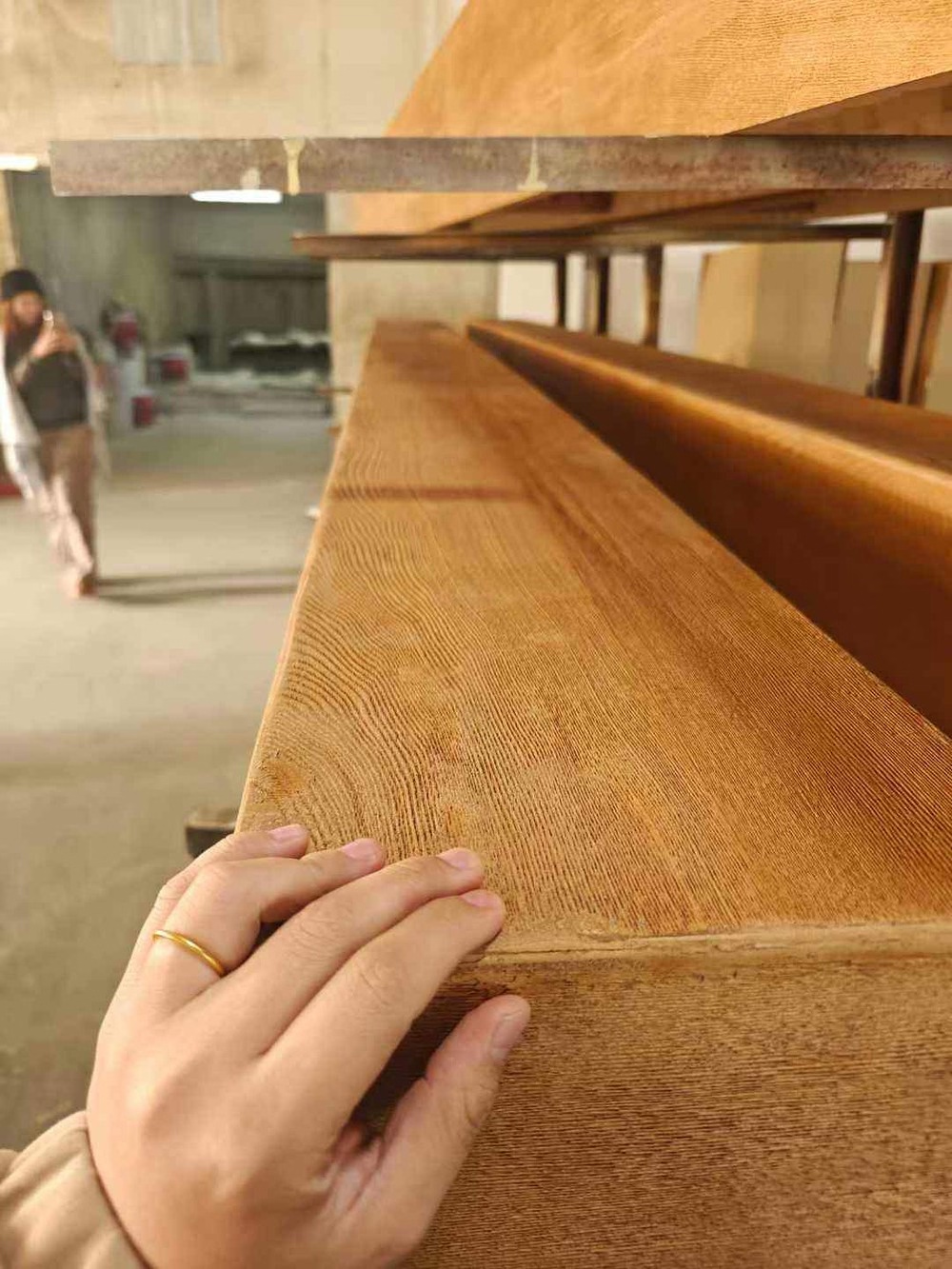
The polyurethane faux wood beam industry sits at the intersection of materials science, manufacturing engineering, and design aesthetics. As global demand for decorative architectural millwork continues to grow, the polymer moulding processes that produce faux beams are undergoing significant technical evolution. Manufacturers who stay ahead of these developments can deliver better products, more efficiently, while those who lag risk losing ground to competitors offering superior quality and value.

The Shift Toward High-Density Rigid Foam Formulations
The fundamental material underpinning most faux wood beam production is rigid polyurethane foam, but not all foam formulations are created equal. Early-generation PU beams used low-density foam cores that offered cost advantages but suffered from surface softness, poor dimensional stability, and susceptibility to damage during handling and installation. The industry has largely moved away from these formulations toward high-density rigid foam cores that provide substantially improved performance characteristics.
High-density foam formulations, typically ranging from eight to fifteen pounds per cubic foot, offer several advantages that have driven their adoption. Surface hardness approaches that of structural plastics, reducing the risk of dents and dings during shipping and installation. Dimensional stability improves dramatically, minimizing the expansion and contraction that can cause finishing problems and joint separation in service. Weight remains a small fraction of comparable timber, preserving the installation advantages that distinguish PU beams from their natural counterparts.
The technical challenge in high-density foam formulation lies in maintaining uniformity throughout the beam cross-section. Density gradients within the foam core can create surface irregularities that telegraph through the finish, producing an uneven appearance that undermines the aesthetic objective. Leading manufacturers have invested in process control technology—precise metering of chemical components, optimized mixing protocols, and controlled curing environments—that delivers consistent density throughout production runs.
Reaction Injection Moulding and Its Advantages
Reaction Injection Moulding, commonly known as RIM, has emerged as a preferred manufacturing process for high-quality faux wood beam production. Unlike traditional pour-in-place foam processes, RIM involves injecting two liquid chemical components into a closed mold under pressure, where they react to form a rigid foam that fills the mold cavity with uniform density and excellent surface reproduction.
The advantages of RIM for beam production are substantial. Surface reproduction captures fine detail with remarkable fidelity, including wood grain textures, knot patterns, and architectural moldings that define the beam's visual character. The controlled injection process minimizes air entrapment and density variation, producing parts with consistent physical properties throughout. Cycle times, while longer than some alternatives, have improved with advances in mold design and heating technology.
Mold materials and construction have evolved in parallel with process technology. Aluminum molds, preferred for their thermal conductivity and machinability, now feature sophisticated temperature control systems that maintain precise surface temperatures throughout the injection and curing cycle. This temperature control is critical for achieving consistent surface quality and minimizing the surface skin variations that can affect finishing.
Thermoplastic Polyolefin Blends and Hybrid Materials
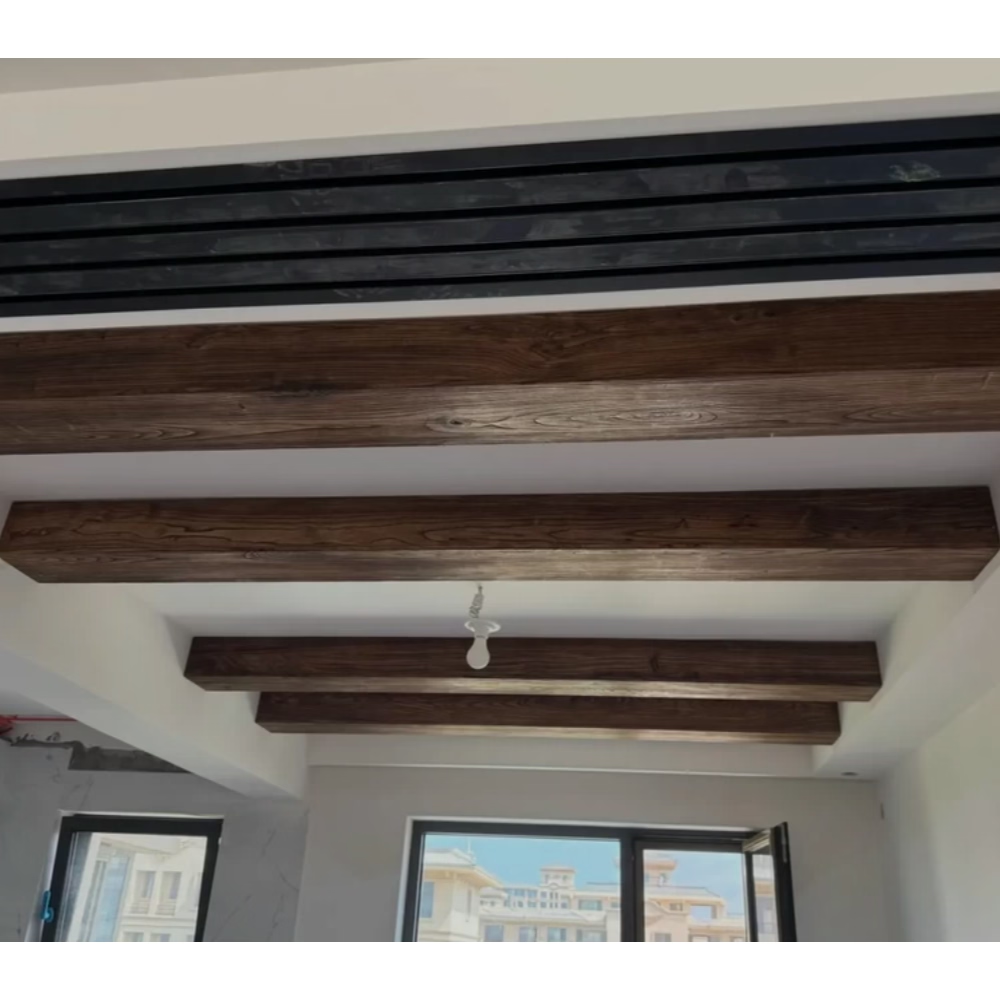
An emerging trend in faux beam manufacturing involves the use of thermoplastic polyolefin blends and hybrid material systems that combine polyurethane with other polymer families. These hybrid formulations attempt to capture the surface quality and finishing characteristics of polyurethane while adding properties—such as increased impact resistance, improved fire performance, or enhanced ultraviolet stability—that expand the range of suitable applications.
Thermoplastic olefin elastomers, in particular, offer interesting possibilities for faux beam applications. These materials can be extruded as well as moulded, enabling the production of beam profiles with long, continuous sections that are difficult to achieve with conventional foam processes. The extrusion capability addresses a persistent challenge in the industry: the need for beam lengths that exceed the practical limits of traditional mould tooling while maintaining consistent cross-sectional geometry.
Hybrid material systems also respond to regulatory pressure regarding fire performance. Building codes in many jurisdictions require flame spread and smoke developed ratings for interior finish materials, and traditional polyurethane foam formulations may not meet the most stringent requirements without additional flame retardant additives. Some hybrid systems achieve inherently better fire performance through their chemical composition, reducing reliance on additive treatments that may affect other material properties or raise environmental concerns.

Surface Texture Technology and Wood Grain Reproduction
The visual authenticity of a faux wood beam depends fundamentally on the quality of surface texture reproduction achieved during moulding. Achieving convincing wood grain texture requires careful attention to mold surface preparation, release agent technology, and foam formulation chemistry. Advances in each of these areas have contributed to significant improvements in surface quality over the past several years.
Modern mold surfaces are typically prepared using CNC-machined master patterns that capture the exact texture of genuine wood samples. These master patterns are created by scanning real wood surfaces with optical or laser profilometry systems, then machining the inverse texture into production mold surfaces with precision that preserves the finest grain details. The result is a mold surface that reproduces wood texture with sufficient fidelity to satisfy close inspection.
Release agent formulations have also advanced considerably. Early release agents left residues that interfered with paint adhesion and finish quality, requiring extensive surface preparation before finishing could begin. Current-generation semi-permanent release systems deposit minimal residue and are compatible with a wide range of finishing systems, enabling direct application of stains, glazes, and topcoats without intermediate cleaning steps.
Additive Manufacturing and Rapid Tooling Applications
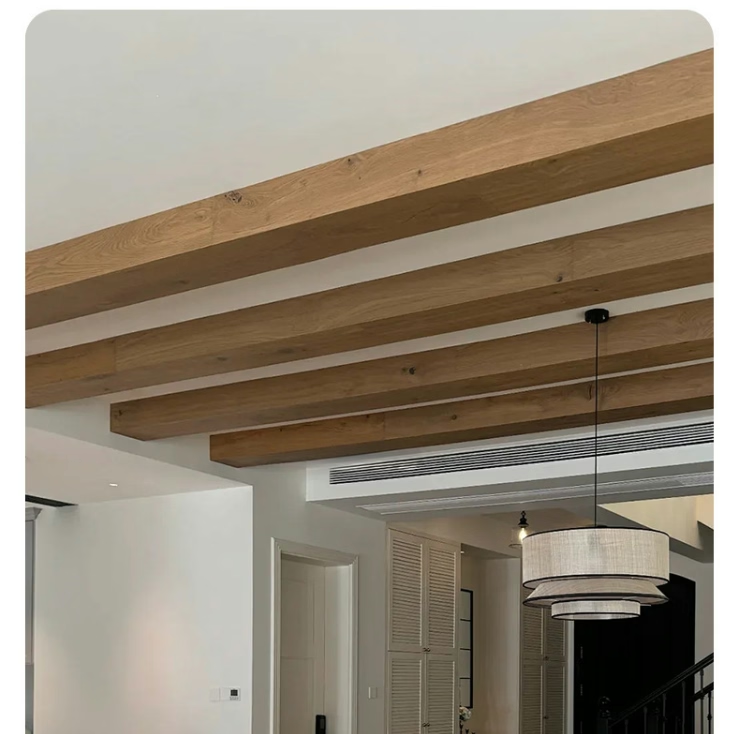
Additive manufacturing technologies, including stereolithography and selective laser sintering, are beginning to influence faux beam production through their application in mold and pattern making. Rather than machining master patterns from solid metal or wood, manufacturers can produce patterns additively with surface textures already integrated, reducing the number of production steps and enabling more complex profile geometries.
Rapid tooling approaches allow manufacturers to produce production-quality molds more quickly and at lower cost than traditional methods, which is particularly valuable for custom beam profiles where the initial market is uncertain. A manufacturer can now produce a functional production mold for a custom profile within days rather than weeks, enabling faster response to customer requests and reducing the commercial risk of new product development.
The technology is not yet mature enough to replace conventional manufacturing for high-volume production runs, where the per-part cost advantages of traditional processes remain significant. However, as additive manufacturing equipment and materials continue to improve, its role in beam production will likely expand, particularly in the area of small-batch custom products where tooling amortization is a major cost driver.
Sustainability Initiatives and Bio-Based Polyols
Environmental sustainability has become an increasingly important consideration in polyurethane manufacturing, driven by both regulatory pressure and market demand for greener products. The faux beam industry is responding through several parallel initiatives, including the incorporation of bio-based polyols derived from renewable feedstocks such as soybean oil, castor oil, and palm oil derivatives.
Bio-based polyols currently represent a small but growing share of total polyol consumption in the foam industry. Their performance characteristics have improved substantially, and several formulations now offer properties comparable to petroleum-derived alternatives in key applications. The carbon footprint advantage of bio-based materials—derived from atmospheric carbon sequestered during feedstock crop growth—provides marketing appeal that resonates with environmentally conscious consumers and commercial buyers.
Recycling and end-of-life considerations are also receiving attention. While rigid polyurethane foam is not currently recyclable through conventional plastic recycling streams, research into chemical recycling processes that depolymerize foam back to its component chemicals is advancing. Several pilot programs have demonstrated the technical feasibility of these approaches, though commercial-scale implementation remains a challenge.
Process Automation and Quality Control Systems
Manufacturing efficiency and consistency in faux beam production increasingly depend on sophisticated automation and inline quality control systems. Modern production lines feature automated component feeding and metering systems that ensure precise chemical ratios throughout production runs, eliminating the batch-to-batch variation that plagued earlier manufacturing approaches.
Vision systems and optical profilometers now inspect finished beams for surface defects, dimensional deviations, and finish irregularities at production speeds. These systems can identify issues that would be invisible to human inspectors and trigger immediate correction of process parameters before defective parts accumulate. The result is improved outgoing quality and reduced waste from inspection-rejected parts.
Data integration across the production process enables continuous improvement through statistical process control techniques. Manufacturers who invest in these systems gain visibility into the relationships between formulation parameters, process conditions, and finished product quality, enabling optimization of both product performance and manufacturing efficiency.
Outlook for Polymer Moulding in the Faux Beam Sector
The polymer moulding technologies underpinning faux wood beam manufacturing will continue to evolve as demand grows and performance expectations rise. The most significant near-term developments are likely to involve further integration of digital technologies—additive manufacturing, machine vision, and data analytics—into conventional manufacturing processes, enabling capabilities that were impractical just a few years ago.
Material development will focus on expanding the performance envelope of PU and hybrid formulations, particularly in areas of fire performance, ultraviolet stability, and environmental sustainability. Manufacturers who invest in material research and process development will be positioned to serve increasingly demanding applications in commercial construction, exterior installations, and green building projects.
The competitive landscape will continue to reward scale and process sophistication, as manufacturers who can achieve consistent quality at high volumes while maintaining flexibility for custom products will capture market share from less advanced competitors. Vertical integration—from mould design and fabrication through foam production, finishing, and distribution—will provide cost and quality advantages that smaller, more specialized players will find difficult to match.
Technical References
ASTM standards cited in every specification
Test Data
Lab results from internal testing program
Updated 2026
Reviewed against current product specs