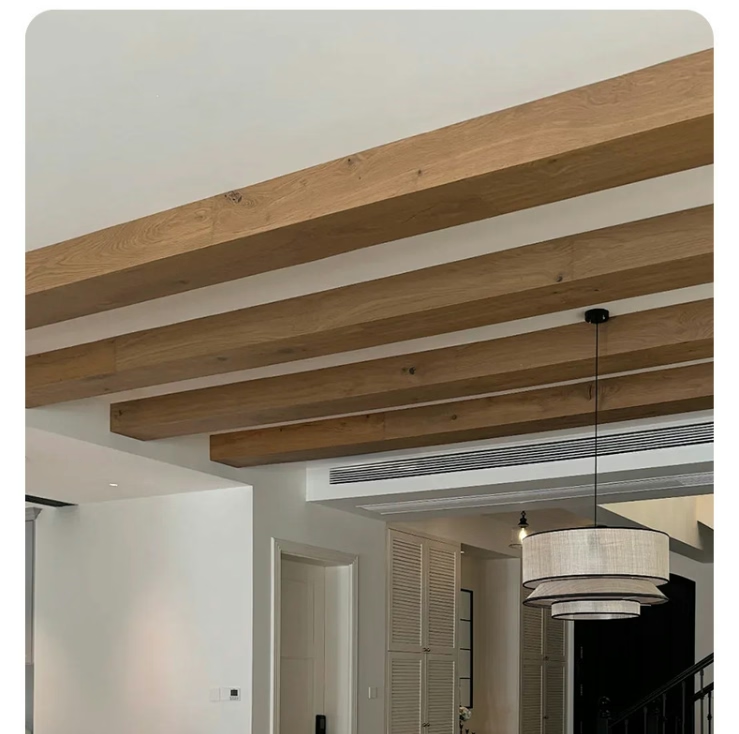
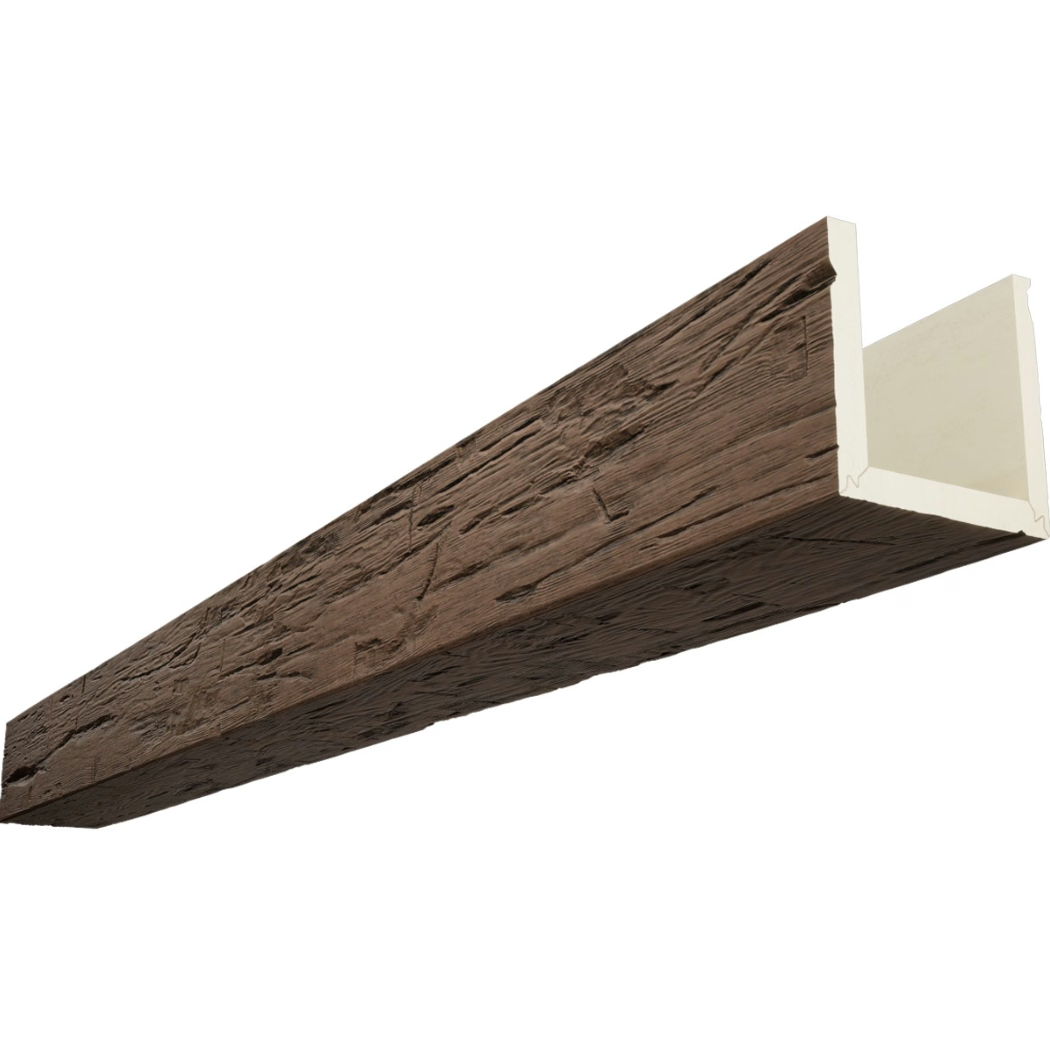
Retailers and showroom operators entering the decorative faux wood beam market face a fundamental challenge: the product is bulky, visually specific, and subject to strong consumer preferences that vary by region and design trend. Committing to full container orders of dozens of beam styles and finishes is a significant financial and operational risk for businesses that lack the sales volume to absorb such inventory. Less than Container Load shipping offers a practical solution that bridges the gap between international sourcing economics and manageable inventory risk.

Understanding LCL Shipping Fundamentals
LCL shipping consolidates cargo from multiple shippers into a single ocean freight container, with each shipper paying only for the volume their goods occupy. A twenty-foot standard container offers approximately twenty-eight cubic meters of usable space, and an LCL shipment might occupy anywhere from a single cubic meter to the full container capacity. This flexibility makes LCL particularly attractive for businesses testing new product lines, stocking seasonal collections, or serving customer orders that don't justify full container quantities.
For PU faux wood beams specifically, LCL shipping becomes viable when shipment volumes exceed approximately two to three cubic meters. Below this threshold, the per-unit shipping cost becomes disproportionately high relative to product value. Above it, LCL provides meaningful cost savings compared to air freight while maintaining reasonable transit times. For most retailers and showroom operators, sample shipments of eight to fifteen cubic meters represent the sweet spot between shipping efficiency and manageable inventory investment.
The LCL process involves several intermediaries that each add cost and complexity to the shipment. A freight forwarder consolidates cargo at an origin facility, where incoming shipments are received, inspected, and combined with other shippers' goods. The consolidated container travels by ocean to the destination port, where it is deconsolidated and customs cleared before individual shipments are released to their respective consignees. Understanding this flow helps buyers anticipate the steps and costs involved in each shipment.
Transit Times and Logistics Planning
Ocean freight transit times for LCL shipments from major Asian manufacturing hubs to US and European ports typically range from twenty-five to thirty-five days for standard service, with premium express services reducing this to fifteen to twenty days at higher cost. These transit times must be factored into inventory planning, as a retailer cannot quickly replenish fast-moving SKUs without maintaining buffer stock sufficient to cover the ordering and shipping cycle.
For seasonal product launches—beams marketed for spring renovation projects or holiday home improvement campaigns—logistics planning must begin two to three months before the intended retail availability date. This timeline accounts for production lead time, consolidation processing, ocean transit, customs clearance, and inland transportation to distribution facilities. Retailers who plan backwards from their sales date and work forward through this timeline consistently achieve better inventory positioning than those who treat shipping as an afterthought.
The variability inherent in LCL shipping deserves acknowledgment. Port congestion, weather disruptions, and customs processing delays can extend transit times unpredictably. Experienced importers build contingency buffers into their inventory plans and maintain relationships with multiple freight forwarders who can provide alternative routing when primary channels experience disruption.
Customs, Duties, and Regulatory Compliance
Importing PU faux wood beams into the United States involves navigating customs regulations and paying applicable duties. The primary customs tariff classification for polyurethane decorative millwork products falls under HTS code 3925.90, which covers builders' ware of plastics. The current tariff rate for most countries under the Most Favored Nation trade status is 5.3% ad valorem, though this rate may vary based on the specific product configuration and origin country.
Antidumping and countervailing duties represent an additional consideration for certain product categories and origin countries. While polyurethane decorative millwork is not currently subject to antidumping orders, the regulatory landscape can change, and importers should monitor relevant proceedings to avoid unexpected duty assessments on arriving shipments.
Customs brokers play an essential role in facilitating compliant imports. A competent broker will ensure accurate tariff classification, proper documentation, and timely submission of entry information to prevent shipment delays. Many freight forwarders provide brokerage services as part of their standard offering, though specialized customs brokers may offer more sophisticated tariff classification and duty minimization strategies for complex product lines.

Packaging for LCL Shipment Integrity
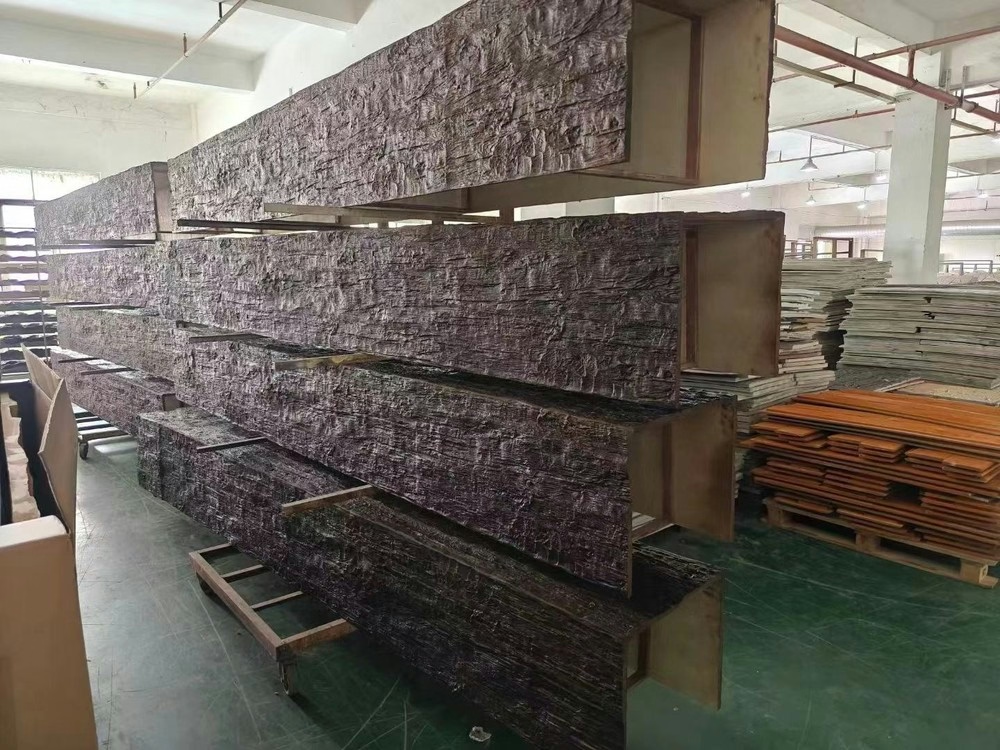
PU faux beams require thoughtful packaging to survive the rigors of consolidated ocean shipping, where they share container space with cargo from other shippers and may be handled multiple times during consolidation and deconsolidation. Standard packaging for international shipment involves wrapping individual beams or beam sets in protective materials, securing them in sturdy cartons or custom crates, and labeling each package with product identification, quantity, and handling instructions.
Expanded polystyrene foam blocks and corrugated cardboard corner protectors provide cushioning against impact and vibration during handling. Water-resistant packaging is essential for ocean shipments, where humidity inside containers can reach high levels during tropical transits. A layer of polyethylene sheeting beneath the outer carton provides additional moisture protection without significant cost or weight penalty.
Palletization and container loading sequence require coordination between the shipper and freight forwarder. Beams should be loaded onto standard wooden pallets in a pattern that maximizes space utilization while ensuring stable stacking. The loading sequence at the consolidation facility determines which products end up where in the container, so careful arrangement can simplify deconsolidation and reduce handling time at the destination.
Sample Shipments for Showroom Merchandising
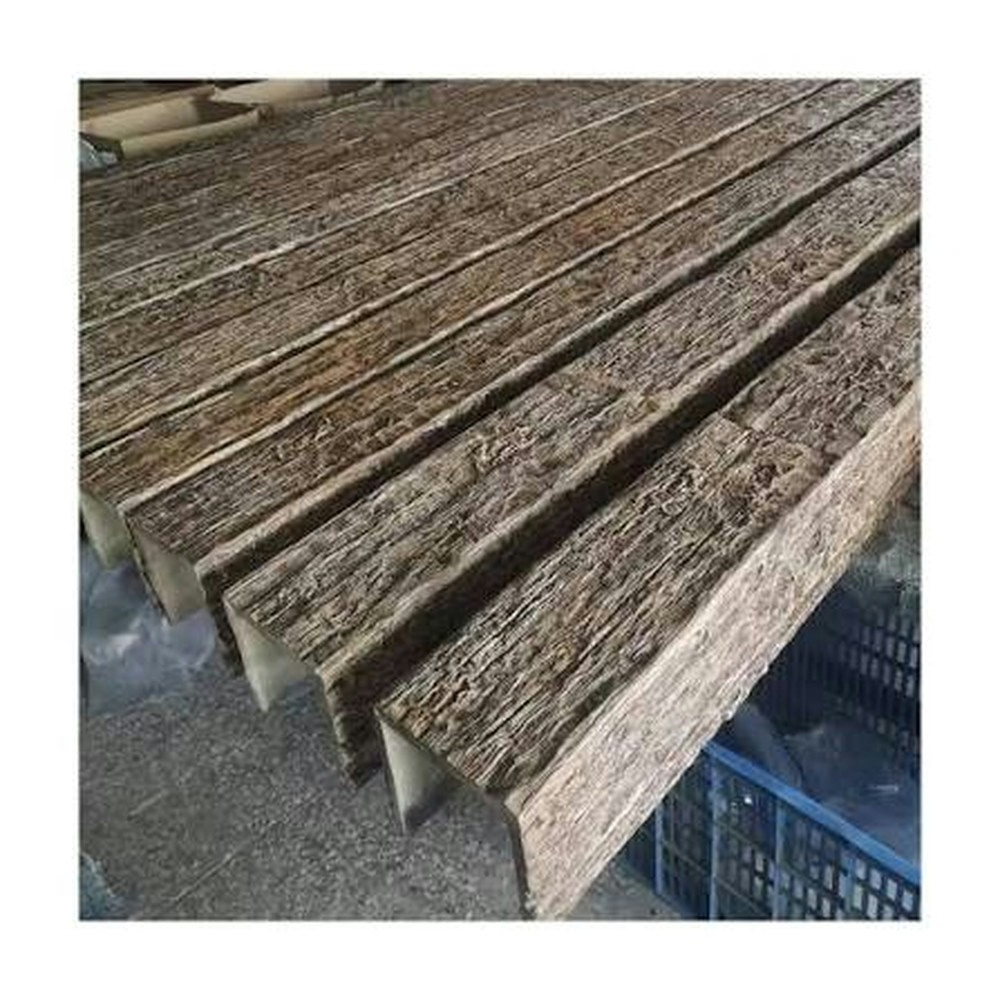
One of the most valuable applications of LCL shipping for the faux beam industry is the importation of sample quantities for showroom merchandising. Before committing to full inventory purchases, retailers and designers need to evaluate beam quality, color accuracy, and finish consistency in person—a task that cannot be accomplished from photographs or digital specifications alone.
Sample shipments typically consist of one to three beams per style, covering the range of profiles and finishes offered in the product line. These samples serve multiple purposes: they enable sales staff to demonstrate products to customers, they provide reference standards for finish matching in custom orders, and they allow designers to specify products with confidence based on physical evaluation. A well-merchandised showroom with comprehensive sample coverage significantly outperforms one where customers can only view catalog imagery.
Sample shipment logistics require their own procedures. Small, well-protected packages of two to five cubic feet can often ship via air freight at reasonable cost, providing faster delivery than ocean shipping when time is limited. For less urgent needs, combining sample shipments with larger LCL cargo under a single freight forwarder's consolidation service reduces per-unit shipping costs while maintaining reasonable delivery timelines.
Cost Optimization Strategies
Managing LCL shipping costs requires attention to several variables that affect the total delivered price of imported beams. Volume is the primary driver—maximizing the utilization of each cubic meter of container space reduces the per-unit freight cost. Consolidation efficiency improves when freight forwarders can combine shipments from multiple buyers, achieving fuller containers that distribute fixed costs across more cargo.
Freight rate negotiations benefit from volume commitments and regular shipping patterns. Forwarders who can predict consistent cargo flows can secure more competitive ocean carrier rates than those managing sporadic, unpredictable shipments. Retailers who establish regular ordering cycles—monthly, quarterly, or seasonal—will achieve better freight economics than those who ship intermittently.
Inland transportation costs, often overlooked in initial pricing discussions, can constitute a significant portion of total delivered cost, particularly for shipments destined for inland cities far from major ports. Intermodal transportation combining ocean, rail, and truck segments offers cost-effective routing for many destinations. Working with forwarders who have established relationships with inland carriers can yield meaningful savings on this segment of the shipment.
Building a Sustainable Import Program
Successful LCL import programs for faux wood beams require infrastructure and processes that support ongoing operations beyond the initial shipment. A reliable supply chain partner—whether a dedicated freight forwarder, a sourcing agent with logistics expertise, or a manufacturer who handles export logistics—provides the operational backbone that makes repeated shipments manageable.
Inventory management systems must account for the extended replenishment cycles that international sourcing introduces. Reorder points should be calculated based on sales velocity and total pipeline time, including production, consolidation, transit, and clearance. Safety stock calculations should incorporate demand variability and supply lead time variability to prevent stockouts during peak demand periods.
Quality control procedures at origin and destination protect against receiving shipments that don't meet specifications. Pre-shipment inspection by a third-party quality control service reduces the risk of loading defects into containers. Upon arrival, systematic inspection of received goods against order documentation identifies any discrepancies before they affect customer fulfillment.
Building these capabilities takes time and involves learning from early mistakes, but the result is a sustainable sourcing program that delivers the cost advantages of international procurement without the operational chaos of ad hoc, unmanaged importing. Retailers and showroom operators who invest in these foundations position themselves to compete effectively on price and product variety against less sophisticated competitors.
Technical References
ASTM standards cited in every specification
Test Data
Lab results from internal testing program
Updated 2026
Reviewed against current product specs