Homeowners increasingly recognize that architectural details significantly impact how spaces feel, not just how they look. The bare ceilings common in newer construction create environments that often feel incomplete or impersonal, lacking the visual interest and warmth that character-filled homes provide. Adding ceiling beams represents one of the most effective ways to address this deficiency, but traditional timber beams present challenges that many homeowners prefer to avoid. Light-duty decorative faux wood beams offer a compelling alternative, delivering the aesthetic benefits of exposed timber with dramatically reduced installation complexity and cost.
The term "light-duty decorative" distinguishes these beams from structural elements that bear weight or support roof systems. In most residential applications, beams serve purely aesthetic purposes—they add visual interest, create architectural character, and introduce the warmth of natural materials without contributing to the building's structural integrity. Recognizing this distinction opens up possibilities for beam design and installation that would be impractical or unnecessary for structural applications.
Light-duty decorative beams expand access to architectural beam aesthetics for homeowners who might otherwise conclude that beams aren't feasible for their homes. Vaulted ceilings that couldn't support heavy timber, budget constraints that rule out professional installation, and maintenance concerns that make natural wood unappealing all become non-issues with properly selected light-duty beams.
Understanding Light-Duty Decorative Beam Construction
Light-duty decorative beams achieve their practical advantages through thoughtful engineering rather than compromised aesthetics. Modern manufacturing techniques allow the creation of beams that appear identical to traditional timber while weighing a fraction as much.
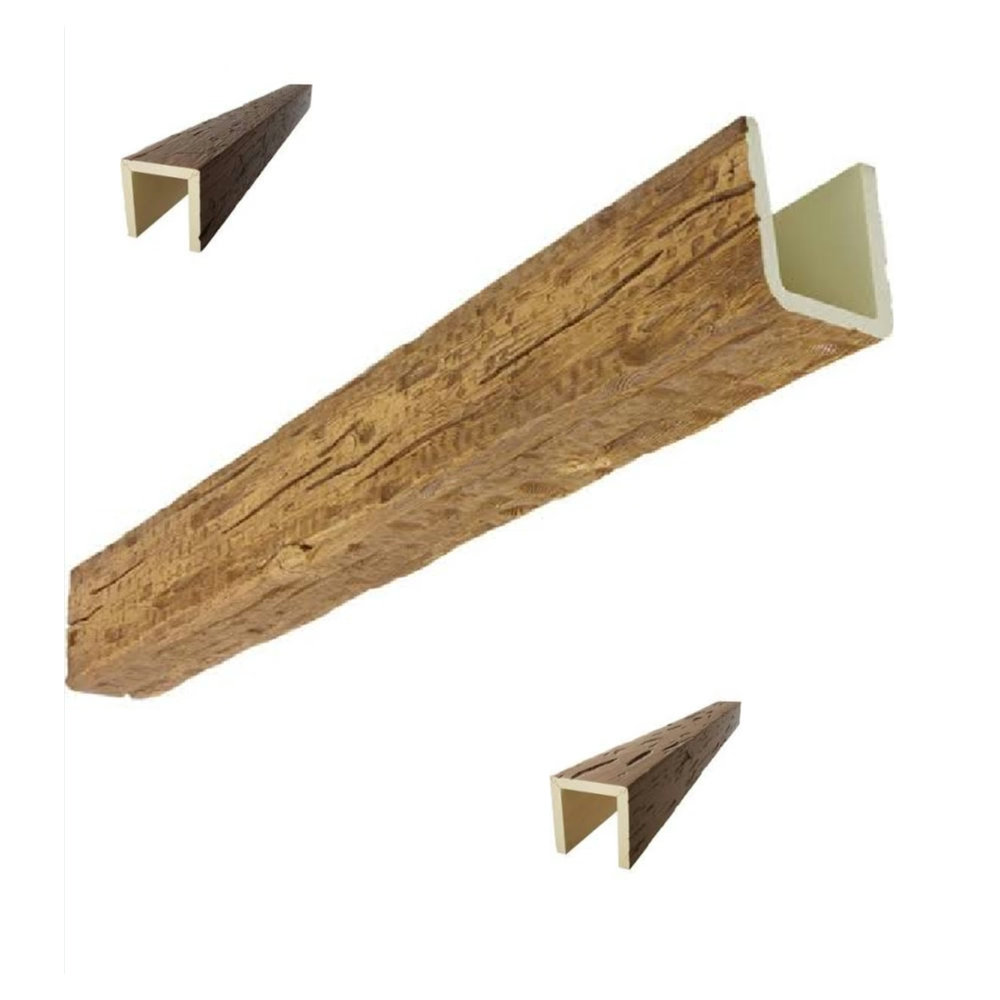
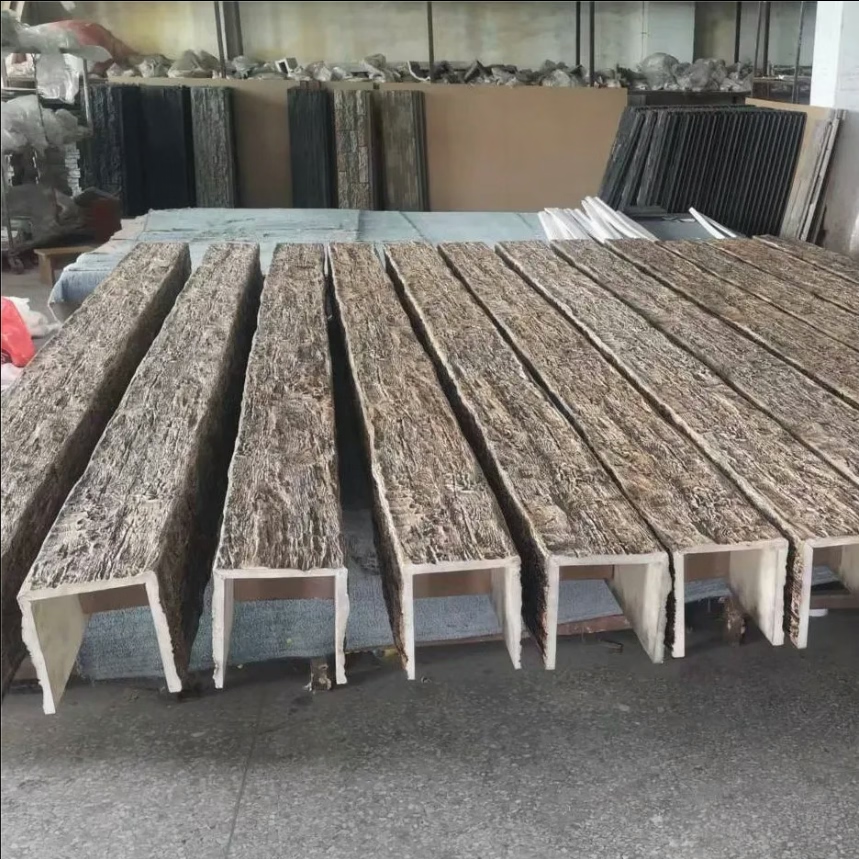
The core construction of light-duty faux beams typically involves polyurethane foam or similar lightweight materials shaped to replicate traditional beam profiles. High-density versions of these materials provide sufficient durability for residential use while maintaining the weight advantages that simplify installation. Some manufacturers use aluminum or steel internal structures for added rigidity, particularly in longer beam spans.
The outer surface of quality light-duty beams convincingly replicates natural wood through careful texturing and finishing. Grain patterns, knot details, and color variations are molded or printed to create authentic wood character that withstands close inspection. The finish treatments resist scratching, fading, and the other degradation that natural wood experiences over time.
Hollow construction contributes significantly to weight reduction. While solid timber beams of substantial size can weigh hundreds of pounds, hollow faux beams of equivalent visual impact may weigh only twenty or thirty pounds. This weight difference transforms what's possible in terms of installation—the difference between needing professional contractors and manageable weekend projects.
Profile options for light-duty beams span a wide range, from simple rectangular forms to complex traditional profiles with multiple chamfers, corbels, and decorative elements. Homeowners can select beam styles that match their architectural context and personal preferences without being constrained by what traditional timber production can provide.
Practical Benefits for Homeowners
The advantages of light-duty decorative beams extend beyond simple aesthetics, offering genuine practical benefits that improve the homeowner's experience.
Installation simplicity stands as the most immediately apparent benefit. While traditional beam installation might require structural calculations, specialized equipment, and professional contractors, light-duty faux beams can often be installed by homeowners with basic tools and reasonable DIY skills. The lightweight handling reduces risk of injury and property damage during installation. Mounting systems designed for easy installation—cleats, brackets, adhesive applications—further simplify the process.
Cost savings compared to traditional timber or structural faux beams can be substantial. The materials themselves are generally less expensive than solid timber of comparable dimensions. Installation savings compound this advantage, as the reduced labor requirements and elimination of specialized equipment needs translate directly into lower project costs.
Maintenance requirements for quality light-duty beams are minimal to nonexistent. Unlike natural wood, which may require periodic sealing, staining, or refinishing, polyurethane beams maintain their appearance indefinitely with simple occasional cleaning. This advantage particularly appeals to homeowners who want beautiful interiors without accepting ongoing maintenance burdens.
Design flexibility increases with light-duty options. Because these beams don't require structural support, they can be installed in locations where traditional beams would be impractical—across large spans without intermediate support, in tight spaces where maneuvering heavy timber would be impossible, in rental properties where permanent modifications are restricted.
Ideal Applications in Residential Spaces
Light-duty decorative beams enhance virtually any residential room, though certain applications showcase their advantages particularly well.
Living rooms benefit substantially from beam installations that add architectural interest to what might otherwise be flat, unremarkable ceilings. Beams can define seating areas, frame focal points like fireplaces or large televisions, or simply add the warmth and texture that makes living spaces feel complete. The installation is typically straightforward in living rooms, where ceiling structure is usually accessible and room proportions accommodate various beam configurations.
Kitchens represent excellent opportunities for light-duty beams. The warmth that beams provide softens what can otherwise be clinical spaces dominated by cabinets, appliances, and hard surfaces. Beams above kitchen islands or peninsulas define these work zones while adding visual interest that prevents kitchens from feeling purely functional.
Bedrooms gain significant benefit from ceiling beams that create a sense of enclosure and coziness. The organic warmth of wood contributes to restful atmosphere, while the visual texture prevents bedrooms from feeling stark or institutional. Vaulted ceilings in bedroom spaces particularly benefit from beam treatment that adds character without overwhelming the openness that vaulted ceilings create.
Home offices and studies, increasingly important in contemporary residential design, can benefit from beams that add warmth without compromising the focused clarity these spaces require. Beams create visual interest that prevents stark modern offices from becoming sterile, while their organic character provides psychological comfort during long work hours.
Basements and converted spaces often present challenging conditions for natural wood or structural beams. Light-duty faux beams handle these environments well, resisting the moisture variations that affect natural materials while adding the character that basements frequently lack. The simplified installation process accommodates the access limitations that basements sometimes present.
Selecting Appropriate Beam Styles
Choosing the right light-duty beams for your residential application requires consideration of several factors that influence both aesthetic success and practical performance.
Room proportions significantly affect beam selection. Beams that appear appropriately scaled in a large, open living room might overwhelm a smaller bedroom. Conversely, beams substantial enough to make an impact in a great room with twenty-foot ceilings might disappear visually in a modest space. Evaluate potential beam dimensions against your specific room measurements and ceiling heights.
Existing architectural style should inform beam selection. Homes with traditional or transitional architecture generally accommodate more substantial, detailed beam profiles, while contemporary or minimalist homes typically require simpler, cleaner beam forms. The goal is creating harmony between beams and architectural context rather than introducing elements that feel incongruous.
Ceiling type influences both beam selection and installation approach. Flat ceilings offer flexibility in beam placement and orientation but may require more deliberate design choices to achieve visual interest. Vaulted or sloped ceilings often benefit from beams that follow or complement the roof structure, creating logical connections between beam placement and architectural form.
The intended visual effect matters significantly. Single accent beams create different effects than multiple parallel beams or cross-grid patterns. Before selecting specific beams, clarify what you hope the installation will accomplish—defining zones, adding warmth, creating visual interest, framing architectural features—and choose beams and installation approaches that serve those goals.
Installation Considerations and Options
Light-duty decorative beams offer various installation approaches that accommodate different project scopes, budgets, and homeowner preferences.
Surface mounting involves attaching beams directly to the ceiling plane using brackets, cleats, or adhesive. This approach works well for flat ceilings where beams will appear to float above the surface. The mounting hardware should be concealed for clean appearance, and the attachment method must provide sufficient strength for the beam weight involved.
Structure following aligns beams with the existing ceiling structure—rafters, joists, or other support elements. This approach creates logical visual connections and often simplifies installation by allowing direct attachment to structural members. For vaulted ceilings, beams can follow the roof slope, appearing to be part of the roof structure even when serving purely decorative functions.
Corridor wrapping involves installing beams around the perimeter of a room, typically following the ceiling edge where it meets the wall. This approach adds architectural interest while minimizing the ceiling area that beams occupy. Corridor wrapping works well in rooms where full ceiling treatment would feel excessive or where access limitations prevent simpler installations.
Cross-beam installations create grid patterns that work well in larger rooms or spaces where simple parallel beams would feel insufficient. These installations require careful planning to ensure the grid relates appropriately to room proportions, and they typically involve more complex mounting arrangements than single-beam installations.
Budget Considerations and Value
Light-duty decorative beams offer excellent value for homeowners seeking to enhance their interiors without accepting the costs and complications of traditional beam installations. Understanding the cost components helps with budgeting and decision-making.
Material costs for light-duty beams vary based on size, profile complexity, finish quality, and manufacturer. Generally, these beams cost less than equivalent solid timber pieces, though prices can approach or exceed natural wood for premium products with exceptional detail and finish quality. Comparing options across multiple manufacturers helps identify the best value for your specific requirements.
Installation costs depend significantly on whether you undertake the work yourself or hire professionals. DIY installation eliminates labor costs entirely, though it requires investing your own time and accepting the responsibility for successful completion. Professional installation ensures proper execution but adds significant cost. Many homeowners successfully install light-duty beams themselves after reviewing manufacturer instructions and watching instructional videos.
Long-term value considers the total cost of ownership over the beam's lifespan. Minimal maintenance requirements for quality polyurethane beams translate into ongoing cost savings compared to natural wood, which may require periodic refinishing or other upkeep. The durability of modern faux beams also reduces the likelihood of replacement, contributing to long-term value.
Return on investment for decorative beam installations can be substantial. Architectural details significantly impact home value, and beams rank among the most desirable ceiling treatments in real estate markets. The visual impact of well-designed beam installations often exceeds their cost in terms of both immediate satisfaction and long-term property value.
Making Your Decision
Light-duty decorative faux wood beams offer an accessible pathway to architectural beam aesthetics for residential homeowners. Their combination of visual appeal, practical benefits, and simplified installation makes them appropriate for a wide range of applications and homeowner situations.
Whether you're undertaking a comprehensive room renovation or simply seeking to add character to a flat ceiling, light-duty beams provide options worth serious consideration. The variety of available styles ensures that most aesthetic preferences can be accommodated, while the practical advantages simplify implementation.
Take time to evaluate your specific situation—room proportions, existing architecture, budget constraints, and personal preferences—before making final decisions. Request samples when possible, review manufacturer documentation thoroughly, and don't hesitate to ask questions before purchasing. The investment in careful planning pays dividends in successful outcomes.
Technical References
ASTM standards cited in every specification
Test Data
Lab results from internal testing program
Updated 2026
Reviewed against current product specs


