
When a designer wants the warmth and texture of reclaimed wood but the structure won't support real timber's weight, the conversation often turns to what alternatives exist. The answer has gotten considerably better over the years. Polyurethane faux wood beams, particularly the 3-sided hollow profile, now replicate the look of hand-hewn and distressed timber so convincingly that the difference from the real thing is imperceptible at normal viewing distances. The hollow interior changes everything about how those beams get to the site and how they perform once mounted.
What Makes 3-Sided Hollow Beams Different
A 3-sided beam, sometimes called a U-profile or open-back beam, wraps around an existing ceiling structure on three faces while leaving the back open. That open back isn't a compromise — it's a deliberate design choice that serves several practical purposes. First, it reduces material volume significantly. By eliminating the fourth face that would normally be hidden against the ceiling joist or soffit, manufacturers cut both cost and weight without sacrificing the visible surfaces that carry the decorative detail.
The hollow interior also means installers don't need to engineer additional structural support for the added mass. Natural timber beams of comparable span can weigh anywhere from 8 to 15 pounds per linear foot depending on species and moisture content. A hollow polyurethane beam of the same external dimensions might weigh 1 to 2 pounds per linear foot. That reduction isn't trivial when you're working with beams that span 12, 16, or even 20 feet across a great room or open-plan commercial space.
From a manufacturing standpoint, the 3-sided profile also allows for more consistent density distribution in the foam core. The open-back mold design lets the polyurethane expand and cure evenly, which produces a more uniform surface texture across the three visible faces. That uniformity translates into cleaner detail work on chamfers, V-grooves, and any wood-grain embossing applied to the outer skin.

Authentic Timber Aesthetic Without the Structural Burden
The visual punch of a 3-sided hollow beam comes from the three finished faces that receive the full treatment — deep grain textures, color toning, and surface distressing that mimics decades of weathering. Manufacturers achieve this through multi-layer finishing processes that apply base coats, color washes, and protective topcoats in sequence. The result reads as solid, dimensional timber from any angle a room occupant would naturally look.
In residential settings, these beams are frequently installed as accent pieces over kitchen islands, along living room vaulted ceilings, or as mantle surrounds above fireplaces. The hollow profile makes it straightforward to run electrical conduit, HVAC ductwork, or recessed lighting through the beam cavity when planning the installation. This is a detail that real timber cannot offer without extensive and expensive custom milling.
Commercial interiors have embraced the same logic for restaurants, boutique hotels, and retail environments where brand atmosphere matters. A restaurant wanting exposed beam character in a second-floor dining room faces a structural challenge — the floor above wasn't designed to carry the load of solid Douglas fir or oak beams. Hollow polyurethane 3-sided beams solve that problem by providing the visual without the load penalty.
Installation Methods for 3-Sided Hollow Profiles
Installing a 3-sided hollow polyurethane beam follows a different sequence than mounting a solid wood beam, primarily because the handling weight allows a single worker to position and secure the piece. The typical method involves first locating and marking ceiling joists or structural supports, then attaching mounting blocks or cleats to those supports using screws appropriate to the substrate — wood joists take drywall screws or lag bolts, steel beams may require self-tapping screws, and concrete calls for concrete anchors or adhesive systems.
Once the cleats are secured, the beam slides over them from one end and glides into its final position. The open back faces the ceiling, meaning the three finished sides wrap around to present the decorative surfaces outward and downward. Finish nails or construction adhesive applied to the inner lips of the beam hold it firmly against the mounting surface. The process can be completed in a fraction of the time required for a solid wood beam installation that might need two or three workers and mechanical lifting equipment.
For longer spans exceeding 10 feet, manufacturers recommend intermediate support brackets or cross-bracing between adjacent ceiling joists to prevent any sagging over time. These supports are typically hidden from view once the beam is seated, and they add essentially no visible complexity to the finished installation.
Finish Options and Texture Variety
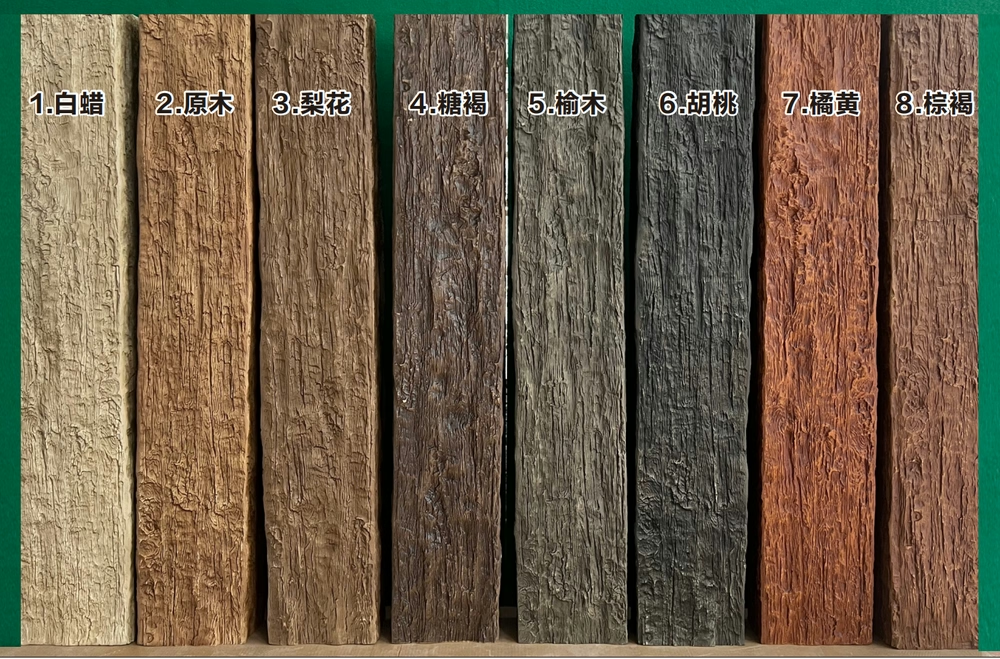
Because the visible surfaces of a 3-sided hollow beam are fully accessible during the finishing process, manufacturers can offer an extensive range of texture options. Hand-scraped finishes that replicate the look of old-growth pine planks sit alongside coarse-sawn textures that suggest barn wood or weathered fencing material. The color palette ranges from pale honey oak tones through walnut and espresso finishes to whitewashed coastal styles.
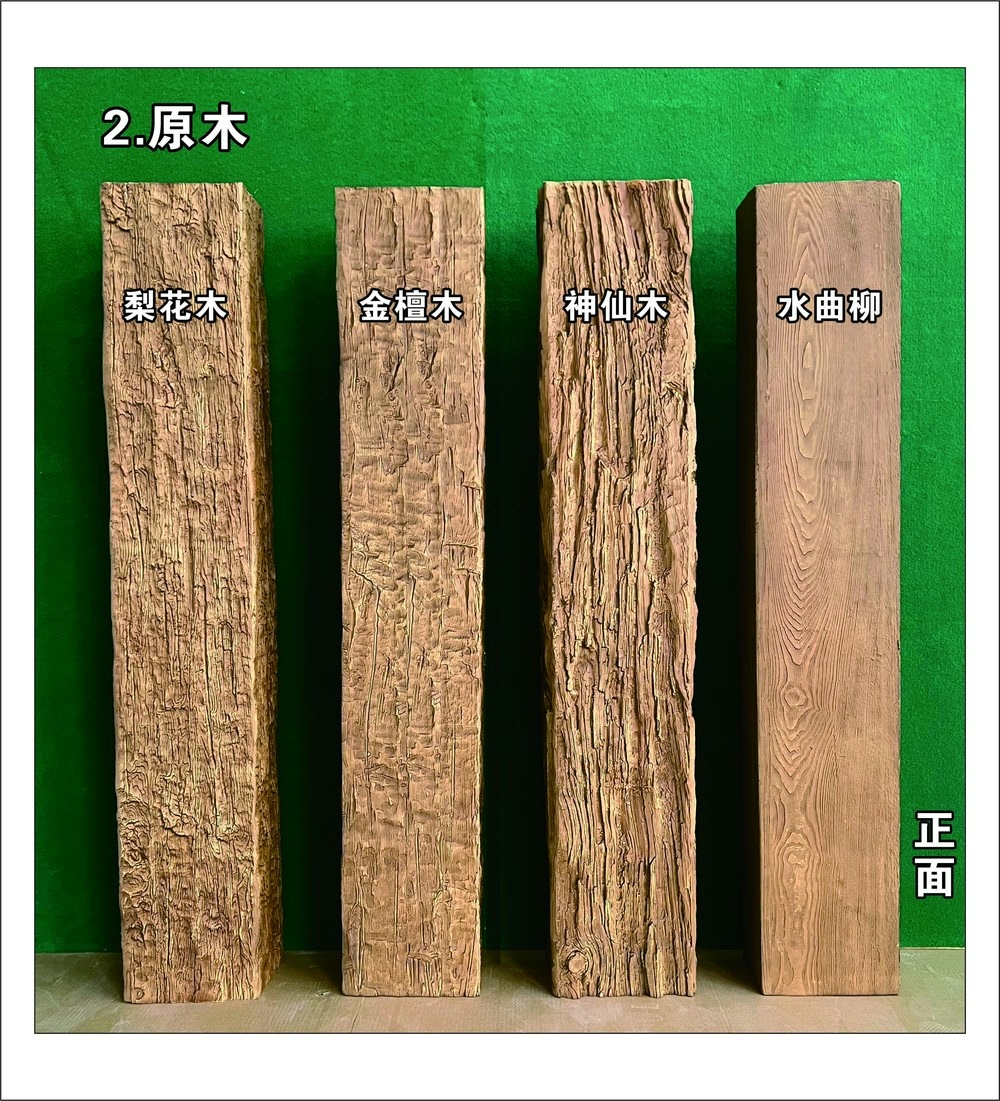
Textured wraps applied over the polyurethane core use high-definition embossing to create deep, authentic-looking grain patterns. The embossing depth matters — lighter relief patterns look flat under directional lighting, while deeper relief captures shadows that make the surface read as genuinely dimensional. Quality hollow beams in this category typically feature embossing depths of 2 to 4 millimeters across the grain surfaces, which creates the play of light and shadow that makes real wood look alive.
Why Hollow Polyurethane Beats Solid Alternatives in Many Applications
Choosing a 3-sided hollow polyurethane beam over a solid wood beam is fundamentally a question of what you're optimizing for. If raw material authenticity and the possibility of future structural use matter more than weight and installation speed, solid timber still has its place. But for the overwhelming majority of interior decorative beam installations — ceilings, accent walls, mantels, and architectural trim — the hollow polyurethane alternative performs as well visually while dramatically outperforming real wood in handling and logistics.
The hollow profile also makes thermal and acoustic engineering possible in ways that solid beams cannot match. The air gap inside the beam provides a small measure of thermal insulation between the room and the ceiling structure above. While this isn't a substitute for proper insulation materials, it does reduce thermal bridging through exposed beam elements and contributes to more consistent room temperatures in climates with significant heating and cooling demands.
Acoustically, the hollow interior of a 3-sided beam can be filled with acoustic insulation material during installation to improve sound dampening in rooms with challenging reverberation characteristics. This is particularly valuable in large open-plan spaces like great rooms, restaurants, and event halls where hard ceiling surfaces can create uncomfortable echo and noise buildup.
Sourcing the Right Hollow Beam for Your Project
Finding a reliable supplier for 3-sided hollow polyurethane beams means evaluating a few key dimensions beyond price. First, confirm the exact profile dimensions — the visible face width, overall depth, and wall thickness of the hollow section all affect how convincingly the beam will read from below. Beams with very thin walls can flex or dent over time, so ask about core density and recommended load limits for any mounting hardware.
Second, review the finishing process and whether the texture is applied to the mold directly or as a separate wrapping layer. Mold-applied textures tend to hold up better over decades because they are an integral part of the polyurethane rather than a surface film that can peel or delaminate. Request sample pieces whenever possible before committing to a full project order.
Finally, discuss lead times and shipping logistics with your supplier. Even though hollow beams are dramatically lighter than solid wood equivalents, the dimensional footprint of long-span beams can still affect freight costs. Experienced suppliers will have standardized packaging and shipping protocols that protect the finished surfaces during transit and minimize the risk of damage on arrival.
Technical References
ASTM standards cited in every specification
Test Data
Lab results from internal testing program
Updated 2026
Reviewed against current product specs


