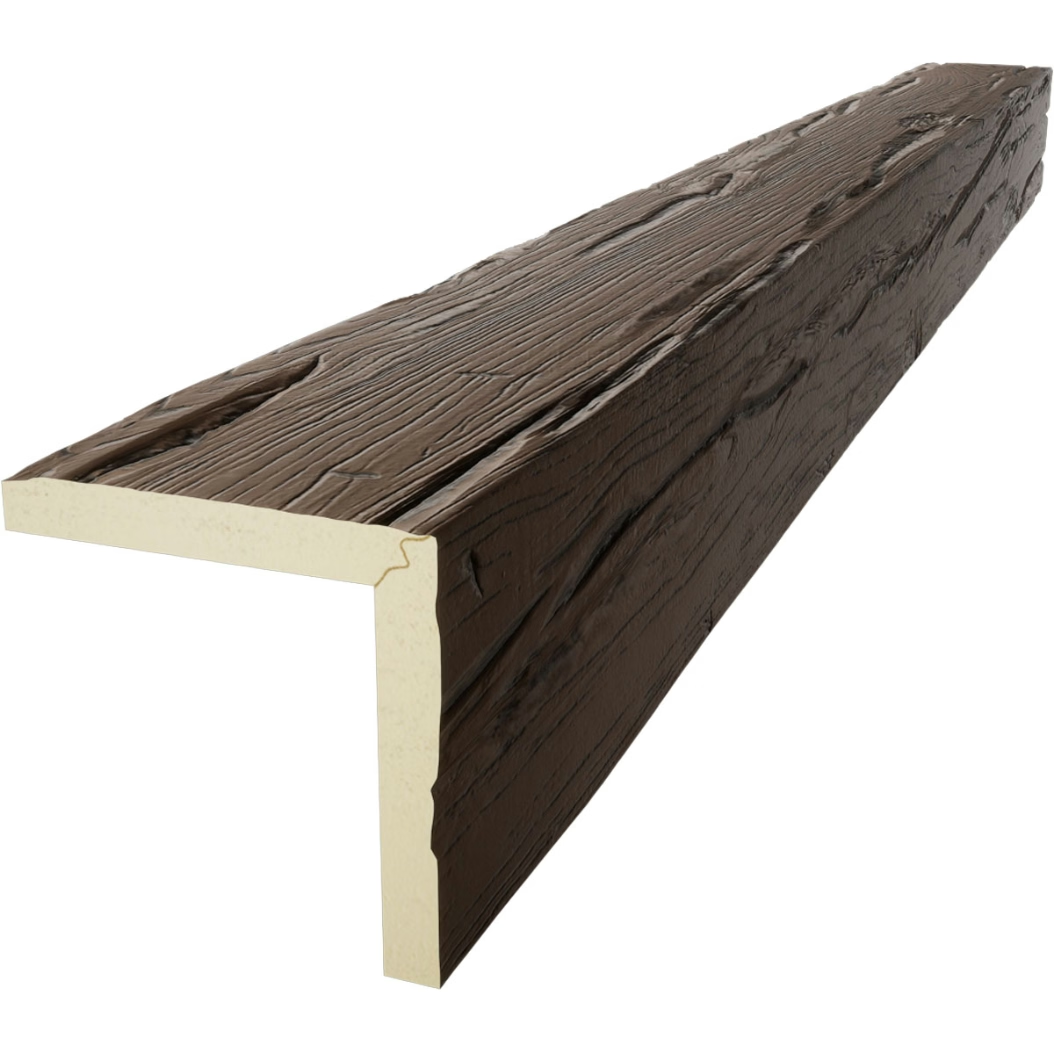
If you were to cut through a polyurethane faux wood beam and examine its cross-section, you would encounter a structure that defies the assumptions many people make about foam materials. Rather than a uniform mass of solid foam, quality hollow core beams feature a carefully engineered interior cavity that reduces weight while maintaining structural performance, a sophisticated design that combines practical handling advantages with genuine engineering integrity.
The hollow core in these beams is not merely an absence of material; it is a deliberate architectural feature created during the manufacturing process. The beam is essentially cast in two halves, each half forming one wall and one flange of the final cross-section. When these halves are joined along their longitudinal edges, they create a single beam with an enclosed interior space that runs the full length. This construction method allows the manufacturer to tune wall thickness, flange dimensions, and overall profile while maintaining precise control over the final weight.
The engineering rationale for hollow construction rests on basic principles of structural mechanics. In a beam spanning between two supports, the material at the top and bottom edges carries the most stress under load, while the material in the middle contributes relatively little to the beam's bending resistance. A hollow cross-section concentrates material where it does the most structural work, achieving good performance with significantly less material than a solid cross-section would require. This efficiency translates directly into the weight savings that make hollow core beams practical for single-person installation.
Weight Reduction Through Hollow Construction
The weight comparison between hollow and solid beam alternatives illustrates the magnitude of savings that hollow construction provides. A solid four-inch-by-six-inch polyurethane beam, if such a thing were manufactured, might weigh approximately 8 to 10 pounds per linear foot depending on foam density. The hollow equivalent, with interior cavity taking up roughly 40 percent of the cross-sectional area, might weigh 4 to 6 pounds per linear foot, representing a 40 to 50 percent weight reduction from the hollow design alone.
When these numbers are scaled to a typical room installation, the practical impact becomes clear. A living room requiring forty linear feet of beam in a solid construction would impose approximately 400 to 500 pounds of dead load on the ceiling structure and require multiple workers for safe installation. The same room with hollow core beams would impose 200 to 300 pounds of load and could be installed by a single person working carefully over a weekend. The structural implications for older homes with limited ceiling load capacity are substantial.
The weight reduction also affects shipping and handling throughout the supply chain, from manufacturer to distributor to end customer. Lighter products consume less fuel during transportation, reducing both costs and environmental impact. Retail distributors can handle more units per shipment, improving inventory availability. Customers receiving deliveries find the packages manageable without specialized equipment. Each step in the distribution chain benefits from the weight savings that hollow construction provides.
Mounting Systems Designed for Hollow Profiles
The interior cavity of hollow core beams is not simply wasted space; it serves as a mounting channel that accommodates the hardware systems used to attach beams to ceiling structures. The standard mounting approach involves installing a backing rail inside the cavity that spans between ceiling joists, with the rail sized to nest precisely within the beam's interior dimensions. When the beam is positioned over this rail, the rail's edges engage with the beam's interior walls, providing a secure friction fit that holds the beam in place while adhesive provides permanent bonding.
This keyed mounting system offers several advantages over alternative attachment methods. The rail distributes the beam's load across multiple ceiling joists, preventing localized stress concentrations that might damage the ceiling structure. The friction fit during installation holds the beam steady while adhesive sets, eliminating the frustrating sliding and shifting that can occur with purely adhesive installations. The concealed mounting means no visible brackets or hardware distracts from the beam's appearance once installation is complete.
Alternative mounting systems for hollow beams include surface-mounted clips that attach to the beam's interior top surface and engage with mounting rails on the ceiling, and through-bolting for applications requiring maximum security. Surface clip systems offer faster installation but may not provide the same load distribution benefits as full-length rail systems. Through-bolting, while more invasive, allows beams to be secured with mechanical fasteners that remain functional even if adhesive bond fails, providing redundant security for critical applications.
The cavity also provides a channel for running electrical wiring, low-voltage cables, or other building services that need to traverse the beam's length. This routing capability can simplify ceiling electrical work by eliminating the need to drill through joists or run cables around beam positions. The interior cavity typically provides adequate space for standard electrical Romex wiring, allowing electricians to snake cables through beams during rough-in rather than modifying ceiling framing.
Thermal and Acoustic Properties of Hollow Construction
The enclosed air space within hollow core beams provides marginal but measurable benefits in thermal and acoustic performance that compound across a full ceiling installation. Air is a relatively poor conductor of heat compared to solid foam, which means the interior cavity provides a small amount of thermal resistance that supplements the insulation value of the surrounding ceiling. While this benefit is modest in isolation, it contributes to overall ceiling thermal performance when multiple beams are installed across a room.
Acoustic properties of hollow beams differ subtly from solid alternatives. The air cavity can resonate at certain frequencies depending on its dimensions, potentially amplifying low-frequency sounds slightly. In most residential applications, this effect is negligible and often imperceptible against the background of typical household noise. For home theaters or music rooms where acoustic precision matters, specifying beams with insulating foam fill rather than empty cavities may provide better acoustic performance by eliminating the resonance possibility.
The thermal mass of a ceiling beam system affects how quickly a room responds to heating and cooling inputs. Solid timber beams, with their high thermal mass, tend to moderate temperature swings by absorbing and releasing heat slowly. Hollow core foam beams, with dramatically lower thermal mass, have minimal effect on room temperature regulation, which can be either an advantage or disadvantage depending on the heating and cooling system design. In well-insulated homes with responsive HVAC systems, the difference is imperceptible; in poorly insulated or passively heated spaces, the lack of thermal mass moderation may be noticeable.
Selecting Hollow Core Beams for Specific Applications
Choosing the right hollow core beam specification depends on understanding how beam dimensions, wall thickness, and profile style interact with the requirements of the specific installation. Larger beams with thicker walls provide more substantial visual presence and greater mounting surface for hardware, but they also cost more and may be overkill for modest ceiling spans. Smaller beams with thinner walls are more economical and easier to handle, but may appear insubstantial in large rooms or require more frequent mounting support.
The visual weight of a beam affects how it interacts with the room's overall proportions. Hollow core construction, while providing excellent structural performance, can sometimes produce beams that appear visually light compared to solid timber equivalents, which may or may not suit the intended aesthetic. In rooms where substantial visual weight is desired, selecting beams with thicker wall sections or choosing more deeply profiled designs that create stronger shadow lines can compensate for the inherent visual lightness of hollow construction.
Length availability varies by manufacturer and beam profile, with longer continuous lengths commanding premium pricing due to the manufacturing complexity of producing defect-free long molds. Most residential installations use standard-length beams that are joined at mounting rails to achieve longer spans, with the joins concealed by decorative plates or located at positions where they blend naturally with the overall design. Understanding this joining approach helps buyers plan their material orders accurately and avoid the disappointment of discovering mid-project that desired lengths are unavailable.
Quality variations among hollow core beams from different manufacturers relate primarily to wall thickness consistency, surface finish quality, and the precision of the interior cavity dimensions. Beams with inconsistent wall thickness may appear slightly irregular once installed, with visible variations in shadow depth across the beam's surface. Quality-control conscious manufacturers maintain tight tolerances throughout production, resulting in beams that install cleanly and present consistent appearance across an entire installation.
The hollow core design philosophy represents a thoughtful balance between structural performance, handling practicality, and material efficiency that makes polyurethane faux beams viable for a much broader range of applications than solid alternatives could address. By understanding the engineering behind hollow construction, buyers can specify products with confidence that their selected beams will perform as needed for the specific requirements of their project.
Technical References
ASTM standards cited in every specification
Test Data
Lab results from internal testing program
Updated 2026
Reviewed against current product specs


