
The visual weight of structural timber creates atmosphere that no other material quite replicates. The mass of substantial beams, the warmth of natural grain, the honest expression of load-bearing elements—these qualities have made timber a beloved building material across cultures and centuries. Yet structural timber brings requirements that modern construction often cannot satisfy: adequate support structures, ceiling heights that accommodate timber depth, and budgets that stretch to material and installation costs. Polyurethane faux beams resolve these conflicts, serving as structural timber alternatives that deliver aesthetics while avoiding practical constraints.
The key distinction between structural timber and its alternatives lies in what each actually does. Structural timber bears loads—the ceiling weight, snow accumulation, occupancy forces, dynamic movement. Decorative alternatives bear nothing except their own modest weight. This functional difference enables alternatives to achieve timber appearance without timber substance, creating the visual impression of structural commitment while avoiding the actual commitment.
When Structural Timber Falls Short
Authentic timber works only in appropriate contexts:
New construction designed for timber accommodates beam weight and attachment requirements from the start. Engineering calculations verify capacity; structural connections transfer loads safely. These buildings can incorporate genuine timber without compromise.
Renovation projects with adequate structure might support timber addition if engineering assessment confirms capacity. However, assessment costs, potential reinforcement requirements, and permit complications often make this path expensive and uncertain.
Buildings with existing timber already display the aesthetic, making enhancement through additional timber unnecessary or impractical. Adding timber to timber-rich spaces risks overload rather than aesthetic improvement.
Spaces with height constraints cannot sacrifice ceiling clearance for timber depth. A twelve-inch timber beam might be structurally appropriate but practically impossible in eight-foot ceiling spaces.
Faux Timber Advantages
Polyurethane alternatives overcome authentic timber limitations:
Height requirements shrink dramatically with faux timber. The apparent depth of substantial beams occupies minimal actual clearance. Beams that read as massive structural elements stand only inches thick, preserving ceiling height that authentic timber would consume.
Structural requirements disappear with decorative alternatives. No engineering assessment, no load calculations, no reinforcement design—faux timber simply attaches to existing ceilings without affecting structural performance.
Installation complexity simplifies when weight becomes negligible. The specialized handling, equipment, and skills that timber installation requires aren't necessary for lightweight alternatives.
Material availability expands beyond what timber supply can offer. Custom profiles, unusual species, non-standard dimensions—all achievable with polyurethane production that natural timber markets cannot match.
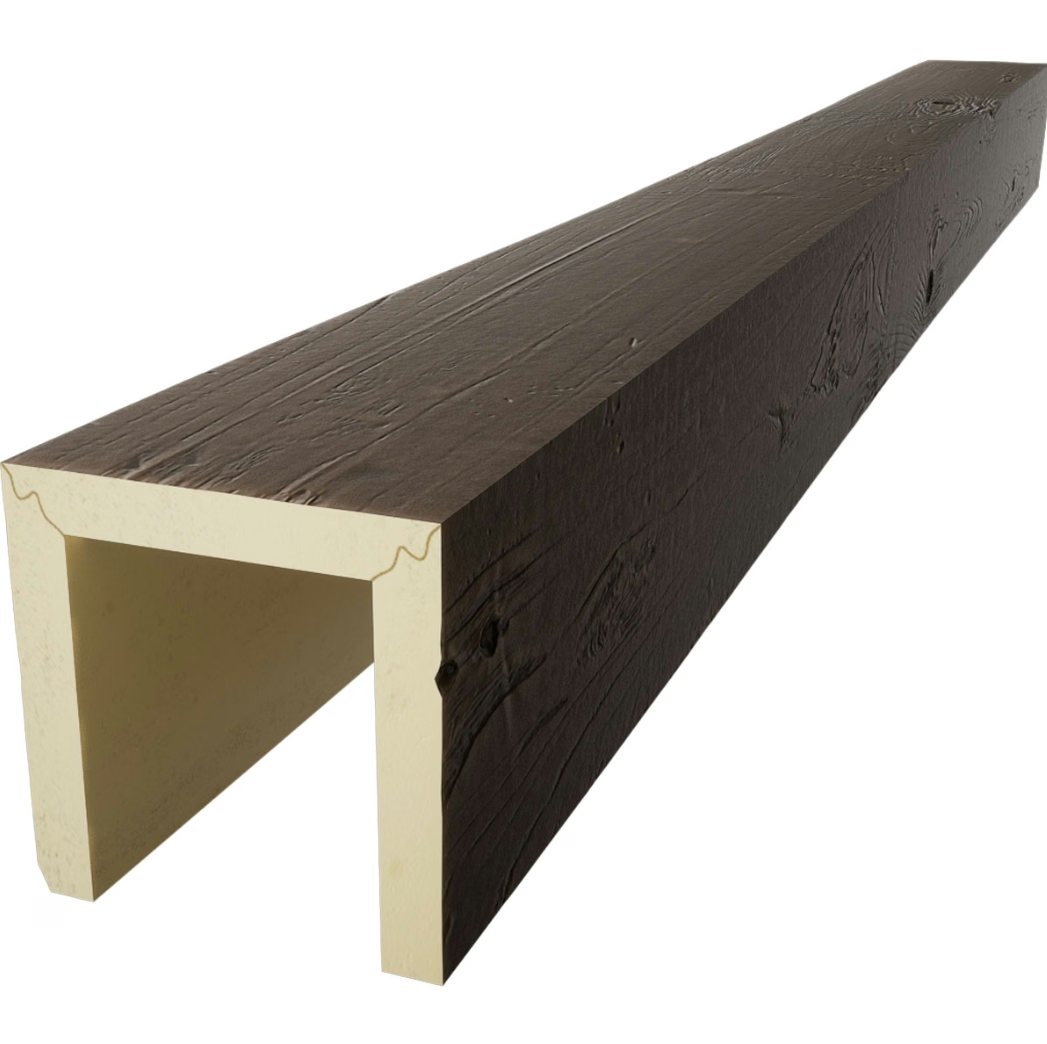
Visual Authenticity
Modern polyurethane technology achieves remarkable timber authenticity:
Grain reproduction captures the random complexity of natural wood. Premium products reproduce fine grain detail, annual ring patterns, and growth variations that distinguish genuine timber from flat imitations.
Texture variations include hand-hewn marks, saw blade patterns, and weathering effects. These details add authenticity that smooth surfaces cannot achieve. The textures catch light differently throughout the day, creating the living quality that distinguishes real timber.
Color depth builds through layered staining that mimics natural wood coloration. Surface color plus underlying variation creates dimensionality that single-coat finishes cannot replicate.
Profile accuracy ensures beams maintain consistent cross-sections throughout their length. Timber warps, twists, and cups over time; quality faux timber remains stable indefinitely.
Scale and Proportion
Faux timber allows scale decisions based purely on aesthetics:
Massive beams become possible in spaces where authentic timber of equivalent scale would require engineering review and structural modification. The visual impact of giant timbers no longer requires structural justification.
Fine proportions suit contemporary spaces that massive timber would overwhelm. Faux timber's lighter visual weight doesn't compete with modern furniture and finishes the way genuine timber might.
Consistent sizing eliminates the variations that affect timber selection. Every beam matches specifications precisely, enabling patterns and arrangements that natural timber's inconsistencies would prevent.
Long spans proceed without the deflection concerns that affect long timber members. Faux timber's engineered construction resists sagging that natural timber might exhibit over extended spans.
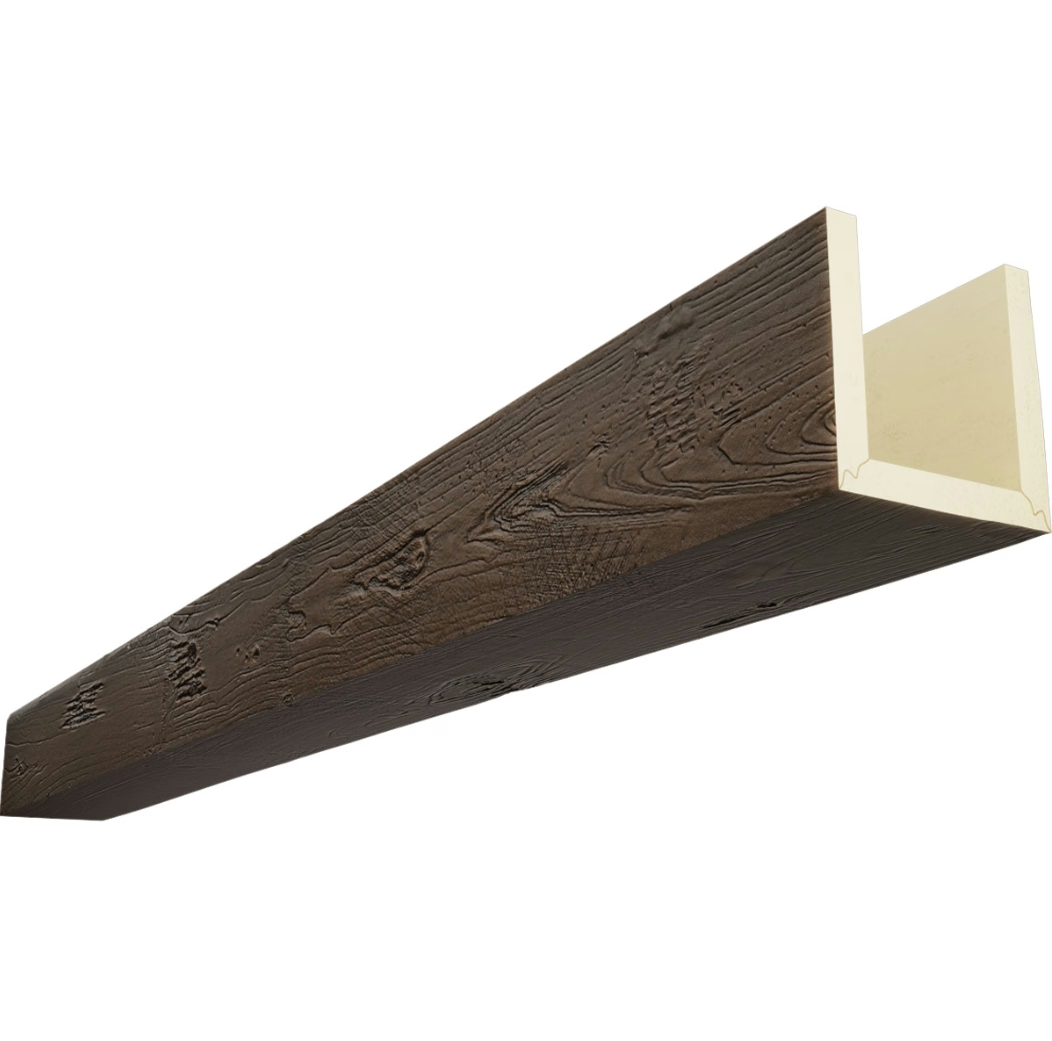
Weight Comparison
The practical difference between authentic and faux timber:
Solid timber at 40 pounds per cubic foot means a 6"×10"×12' beam weighs approximately 200 pounds. Multiple beams multiply this weight; ceiling systems must accommodate these cumulative loads.
Polyurethane faux timber at 6 to 10 pounds per cubic foot means a comparable beam might weigh 30 to 50 pounds. The reduction isn't marginal—it's transformational for installation feasibility.
Load implications ripple through project decisions. Heavy timber requires engineering, permits, potentially structural modification. Lightweight faux timber requires adhesive, fasteners, and standard precautions.
Installation Approaches
Faux timber installation differs fundamentally from structural timber:
Direct ceiling attachment using construction adhesive and mechanical fasteners works for most residential applications. This simple approach achieves secure mounting without specialized structural elements.
Suspended mounting using aircraft cables or threaded rods provides alternative attachment for ceilings without accessible joists. This approach positions beams below structural elements while remaining hidden within the beam hollow.
Cleat systems using metal brackets engage beam profiles, providing secure attachment points that hide behind beam surfaces. These systems enable clean installation while maintaining reliable connection.
Floating installation using boards spanning between structural elements provides mounting surfaces for beam attachment. This approach accommodates irregular joist spacing or non-standard ceiling construction.
Finish Coordination
Faux timber finishes can integrate or contrast with surroundings:
Matching existing timber creates visual continuity between faux beams and authentic woodwork. Color matching services produce finishes calibrated to existing wood species and coloration.
Deliberate contrast establishes faux timber as distinct element rather than imitation. Different species, darker tones, or painted finishes create distinction that acknowledges the decorative nature of the installation.
Two-tone treatment applies different finishes to different beam faces. Darker undersides create shadow depth; lighter tops reflect light. This treatment enhances dimensionality beyond what single finishes provide.
Environmental Considerations
Faux timber offers environmental advantages:
Reduced harvesting pressure follows from decreased timber demand. While sustainable forestry has improved substantially, reducing timber consumption in favor of alternatives eases pressure on forest ecosystems.
Transportation efficiency improves with lightweight materials. The fuel consumption per linear foot shipped decreases substantially when materials weigh less.
Manufacturing efficiency allows precise material usage without the waste that sawing and planing timber generates. Composite construction concentrates material where functional requirements exist.
Service life extension reduces replacement frequency. Buildings that maintain faux timber appearances for decades consume fewer resources than those replacing natural timber periodically.
Commercial Viability
Commercial applications benefit from faux timber characteristics:
Hospitality environments achieve timber aesthetics without maintenance concerns. Hotels, restaurants, and entertainment venues benefit from durable surfaces that resist the wear commercial traffic imposes.
Retail spaces add warmth without permanence. Stores that periodically reconfigure can install faux timber that accommodates change without major construction investment.
Office buildings incorporate timber aesthetics in tenant improvement projects. The lightweight nature accommodates suspended ceiling systems and lightweight structural elements common in commercial construction.
Quality Indicators
Quality faux timber products share characteristics:
Wall thickness provides structural integrity for fastening. Walls too thin accept fasteners poorly and flex excessively. Products with adequate wall thickness perform reliably.
Surface density affects finish acceptance and durability. Higher-density surfaces accept stains and paints more convincingly; they also resist impact damage better.
Manufacturing precision ensures consistent profiles throughout production runs. Premium products maintain specifications from first piece to last.
Warranty coverage indicates manufacturer confidence. Extended warranties suggest products designed for long-term performance.
The availability of quality faux timber alternatives means that timber aesthetics need not remain aspirational. Spaces that cannot accommodate authentic timber—due to height, structure, or budget—achieve equivalent visual impact through alternatives engineered specifically for this purpose.
Technical References
ASTM standards cited in every specification
Test Data
Lab results from internal testing program
Updated 2026
Reviewed against current product specs


