
The intersection of material science and traditional craftsmanship produces modern foam core faux timber beams. These engineered products combine the best properties of foam insulation with the visual character of natural timber, creating beams that insulate while they decorate, reduce weight while maintaining appearance, and perform better than timber alternatives across multiple metrics. Understanding foam core construction reveals why these products represent genuine advancement rather than mere imitation.
Foam core technology isn't new—insulated panels, structural foam cores, and composite materials have served various applications for decades. Applying this technology to architectural trim products, however, represents recent innovation that addresses longstanding limitations of traditional materials. The result combines practical benefits with aesthetic satisfaction in ways that earlier alternatives could not achieve.
Foam Core Technology Explained
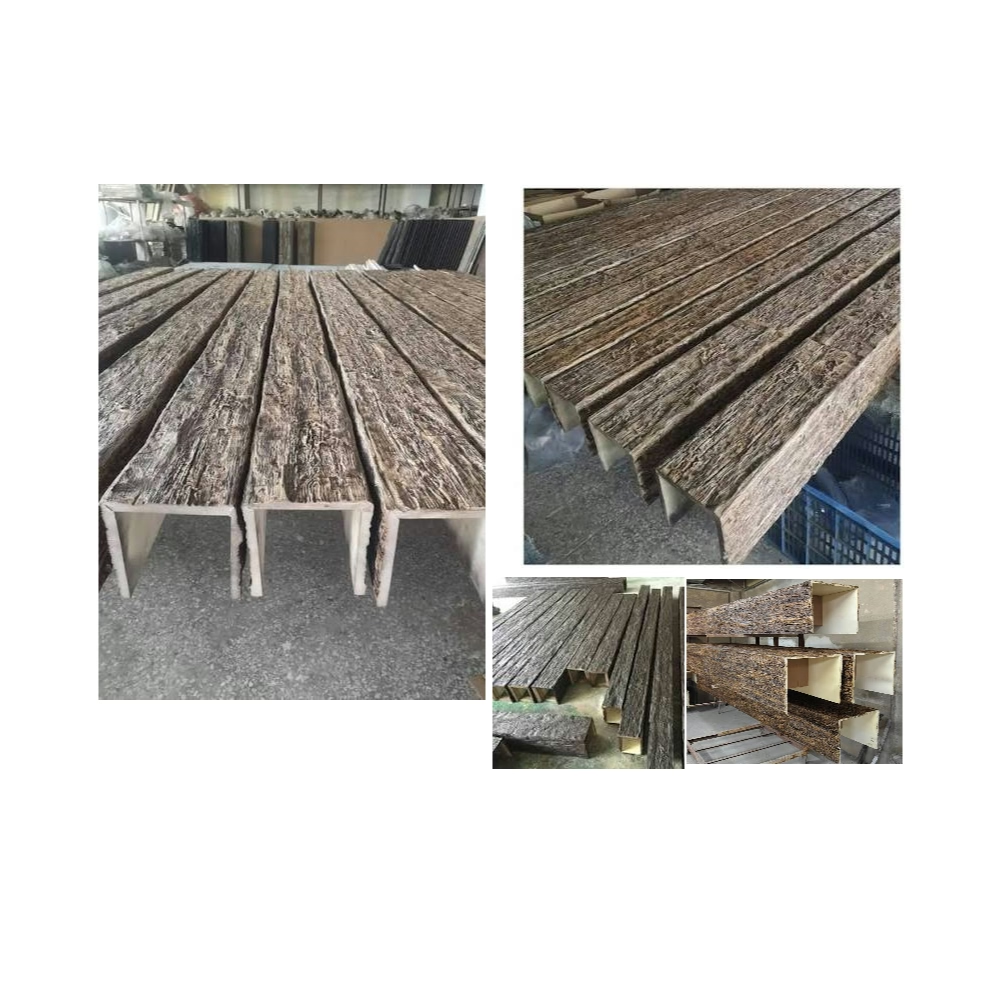
The term "foam core" describes construction where foam occupies interior volumes while higher-density materials form visible surfaces. In beam manufacturing, this means:
Polyurethane foam interior provides bulk, rigidity, and insulation without significant weight. The foam fills the beam profile between outer skins, maintaining shape and resisting compression. Different foam densities serve different structural requirements.
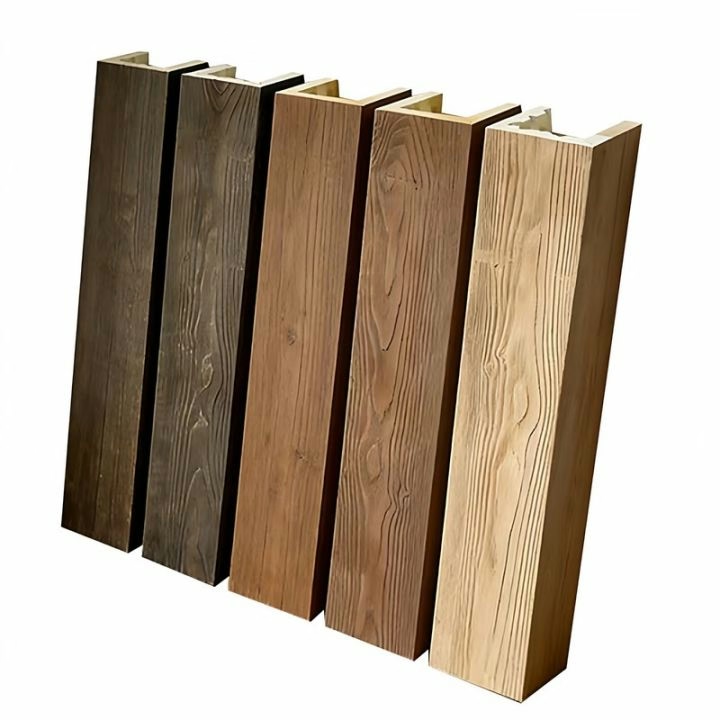
High-density outer skins form the visible surfaces that capture timber aesthetics. These skins receive wood grain textures, accept stains and finishes, and resist the surface damage that daily use might cause. The density here serves appearance and durability.
Bonded interfaces connect foam cores to outer skins continuously. The bond must remain intact through temperature changes, humidity fluctuations, and the minor stresses that installation and use impose.
Density and Performance Relationships
Foam density significantly affects beam performance:
Low-density foams (2 to 4 pounds per cubic foot) minimize weight dramatically but may compress under fastener pressure or flex excessively across spans. These foams suit shorter spans and lighter beam profiles.
Medium-density foams (4 to 6 pounds per cubic foot) balance weight reduction with structural performance. Most residential applications perform well with this density range.
High-density foams (6 to 10 pounds per cubic foot) approach the weight of solid materials but provide superior rigidity and fastener holding. These foams suit commercial applications or premium residential installations.
The relationship between foam density and skin density affects overall performance. Matching these characteristics ensures that outer skins and inner cores work together rather than competing.
Thermal Performance Benefits
Foam cores provide insulation that solid timber cannot match:
R-values for polyurethane foam range from R-3 to R-7 per inch depending on formulation. A four-inch-thick beam section provides R-12 to R-28 of insulation at the ceiling plane.
Thermal bridging through ceiling structure decreases when foam-core beams replace solid timber. The foam interrupts heat flow through beam sections that would otherwise conduct temperature between conditioned and unconditioned spaces.
Condensation resistance improves when foam-core beams maintain surface temperatures closer to interior conditions. Solid timber conducts cold from unconditioned attics more readily, potentially creating condensation issues.
Energy efficiency benefits follow from reduced thermal bridging. Buildings with foam-core beam ceilings may require less HVAC capacity or achieve more consistent temperatures.
Acoustic Properties
Foam core construction affects room acoustics:
Sound absorption within foam cores reduces echo and reverberation. The open-cell structure of many foam formulations traps sound energy that would otherwise reflect.
Reduced drumming follows from foam's damping characteristics. Impact noise that would resonate through solid timber dissipates more readily in foam-core beams.
Improved speech clarity results from reduced reverberation. Rooms with foam-core beams often feel quieter and more comfortable for conversation.
Mass air resonance that affects hollow beams doesn't occur in foam-filled sections. The foam prevents the air column resonance that produces hollow drumming sounds.
Structural Performance
Despite lightweight construction, foam-core beams perform structurally:
Span capability depends on profile design and foam density. Quality foam-core beams span 12 to 16 feet in typical residential applications without excessive deflection.
Fastener holding requires appropriate density at fastener locations. Higher-density foam near surfaces provides adequate grip for mounting hardware.
Flexural rigidity in foam-core construction rivals solid materials of equivalent dimensions. The high-density skins carry bending stresses; the foam core maintains separation between skins.
Impact resistance from foam cores actually exceeds solid materials in some respects. Foam absorbs impact energy that might crack or shatter solid polyurethane or wood.
Weight Comparison
Foam-core construction dramatically reduces weight:
Solid polyurethane at approximately 10 pounds per cubic foot means a 6"×8"×12' beam weighs roughly 40 pounds.
Foam-core beam with equivalent dimensions might weigh 15 to 25 pounds depending on skin and foam densities.
Weight reduction of 40% to 60% compared to solid polyurethane translates to easier handling and simpler mounting.
Comparison to timber shows even greater savings. Timber at 40 to 50 pounds per cubic foot creates beams weighing 160 to 200 pounds; foam-core alternatives might weigh 15 to 25 pounds.
Installation Advantages
Foam-core beams offer practical installation benefits:
Single-person handling becomes genuinely possible for foam-core products. The weight reduction from foam construction enables one-person installation even for long spans.
Reduced fatigue follows from lighter materials. Installers can work more productively when not struggling with heavy pieces.
Simple tools handle foam-core installation without specialized equipment. Standard woodworking tools cut foam cores cleanly without tear-out.
Quick positioning proceeds more easily when beams can be adjusted with minimal force. Precise alignment happens more readily with lightweight materials.
Finish Quality
Foam-core construction supports quality finishing:
Surface consistency ensures uniform finish acceptance across beam surfaces. The manufacturing process creates consistent skin characteristics throughout.
Detail reproduction captures fine grain and texture in high-density skins. These details accept stain and finish convincingly.
Edge quality at cuts remains clean without exposed foam. Proper cutting technique seals foam edges; trim pieces hide cut ends when necessary.
Finish durability on foam-core beams matches or exceeds solid polyurethane. Quality finishes resist UV, abrasion, and cleaning.
Applications for Foam-Core Beams
Various applications benefit from foam-core characteristics:
Residential ceilings in living rooms, bedrooms, and dining areas gain warmth and architectural interest. The insulation benefit adds practical value beyond aesthetics.
Basement finishing where ceiling height is limited benefits from the minimal depth that foam-core profiles provide. Preserving headroom while adding visual interest suits these constrained spaces.
Condo and apartment ceilings in multi-story buildings benefit from reduced weight that building structures accommodate easily. The sound absorption characteristics also help with noise between units.
Commercial spaces including restaurants, retail, and hospitality venues benefit from foam-core durability and the acoustic improvements these beams provide.
Moisture and Mold Resistance
Foam-core construction resists moisture issues:
Closed-cell foam doesn't absorb water, preventing the moisture accumulation that leads to mold growth. This resistance makes foam-core beams suitable for bathrooms, kitchens, and other humid spaces.
No organic material means nothing for mold to consume. Unlike wood, foam-core beams don't provide food for mold organisms.
Dimensional stability in the presence of humidity prevents the warping and cupping that affects timber. Foam doesn't expand when it absorbs moisture because it doesn't absorb moisture.
Environmental Considerations
Foam-core production has environmental implications:
Manufacturing efficiency reduces waste compared to wood processing. The precision of foam production generates less scrap than sawing timber.
Insulation benefits over beam service life may offset production impacts through reduced energy consumption. Buildings that lose less conditioned air through ceilings require less HVAC energy.
Service life extending to decades reduces replacement frequency. Products that last longer consume fewer resources over building lifespan.
Recyclability options are emerging as foam recycling infrastructure develops. Some manufacturers accept returned products for recycling into new materials.
Quality Indicators
Quality foam-core beams share these characteristics:
Consistent skin thickness ensures uniform appearance and performance. Variations might indicate manufacturing problems.
Dense, closed-cell foam resists compression and maintains shape. Testing with fingernail pressure reveals whether foam density is adequate.
Strong bond between skin and core prevents delamination. Tapping the beam should produce consistent sound throughout; hollow sounds might indicate bond failures.
Surface quality in high-density skins resists scratching and shows consistent texture. Visible imperfections might indicate quality control issues.
Cost Considerations
Foam-core beams typically cost more than basic hollow alternatives:
Material costs reflect the additional manufacturing complexity. Foam cores require additional production steps beyond hollow shell formation.
Handling savings during installation offset higher material costs partially. Reduced labor time and simpler installation translate to savings.
Performance benefits including insulation and acoustics provide value beyond mere aesthetics. These practical benefits justify premium pricing for many applications.
Lifecycle economics favor quality foam-core products. Products that last decades without replacement deliver better value than cheaper alternatives requiring frequent replacement.
Foam-core faux timber beams represent material innovation applied to traditional aesthetic goals. The combination of authentic timber appearance with foam technology benefits—weight reduction, thermal performance, acoustic improvement—delivers comprehensive value that solid materials cannot match. These beams prove that advancement and tradition can coexist productively.
Technical References
ASTM standards cited in every specification
Test Data
Lab results from internal testing program
Updated 2026
Reviewed against current product specs


