
The construction industry has long grappled with a fundamental tension: the desire for authentic wood aesthetics versus the practical demands of modern building requirements. Heavy solid timber brings undeniable beauty and structural credibility, but it also brings weight complications, installation challenges, and cost considerations that can derail otherwise well-planned projects. Lightweight polyurethane faux beams emerged as a response to these challenges, offering a compelling middle ground that deserves careful examination.
Consider the scenario facing general contractor Robert Chen during a recent restaurant renovation project in Portland. The building's upper floor housed a mezzanine dining area where the owner wanted exposed beams to create a rustic lodge atmosphere. Initial engineering assessments revealed that the existing floor structure could not support the weight of real Douglas fir beams without substantial reinforcement work. The reinforcement estimate alone—$35,000 and three additional weeks of labor—threatened to cancel the entire design direction. Robert proposed PU faux beams as an alternative, and the project proceeded with full client satisfaction and a final budget well under the original estimate.
Understanding the Weight Differential
The mathematical reality of weight differences between authentic timber and PU faux alternatives deserves explicit examination. A standard 6-inch by 8-inch by 12-foot solid oak beam weighs approximately 340 pounds. The same dimensional appearance in polyurethane might weigh 12 to 15 pounds. This represents a weight reduction of roughly 95%, a differential that fundamentally changes what becomes possible in building applications.
This weight disparity affects every stage of a project's lifecycle. During transportation, a single heavy timber beam may require a box truck or flatbed, specialized loading equipment, and driver precautions for unbalanced loads. PU faux beams ship via standard parcel services for smaller orders or standard freight for larger quantities, with no special handling requirements. The logistics simplification alone influences total project costs and scheduling flexibility.
On the job site, workers can hand-carry PU beams up stairs, through doorways, and around corners without difficulty. Two workers can position and secure these beams in the same time one worker might spend merely maneuvering a comparable timber beam into place. This efficiency translates directly to labor cost savings and faster project completion. For multi-story buildings without freight elevator access, the practical implications become even more pronounced.
Structural Considerations and Building Codes
Building codes exist to ensure occupant safety, and they address beam installations in specific ways. Load-bearing elements must meet certain criteria for strength and fire resistance. Decorative elements, by contrast, face fewer restrictions since they do not support structural loads. This distinction creates an interesting regulatory landscape for beam products.
Authentic timber beams often serve dual purposes in older construction—they provide visual appeal while simultaneously bearing loads. Modern building practices typically separate structural and decorative functions, which opens the door for lightweight alternatives that carry no structural responsibility. PU faux beams fall squarely into the decorative category, and their installation does not require engineering sign-offs or special inspections in most jurisdictions.
That said, proper installation remains essential for safety and longevity. Beams must be securely fastened to mounting surfaces capable of supporting their weight through normal building movement and any incidental contact. The mounting hardware and methods matter more than the beam material itself. Manufacturer guidelines and local building department requirements should guide installation decisions, regardless of whether you choose timber or PU products.

Cost Comparison Beyond Purchase Price
Responsible material comparison requires examining total project costs, not merely unit prices. While PU faux beams typically cost less per linear foot than comparable hardwood timbers, the cost differential extends across multiple categories that compound during actual projects.
Foundation and structural costs represent the most dramatic difference. Buildings with adequate structural capacity for heavy timber beams already carry those costs in their original construction. Adding timber beams within this capacity incurs no additional structural expense. However, many buildings—particularly those with floor/ceiling assemblies not designed for heavy loads—require reinforcement before timber installation. This work involves engineering fees, materials, and specialized labor that can exceed the cost of the beams themselves by factors of three to ten.
Installation labor differs substantially between the two options. Skilled carpenters charge premium rates for heavy timber work, and the physical demands of maneuvering large beams justify these prices. PU beam installation, while requiring care and precision, falls within the capabilities of competent general contractors or even skilled homeowners. This accessibility opens possibilities for cost savings through competitive bidding among a larger pool of qualified installers.
Maintenance costs also favor PU faux beams over time. Natural wood requires periodic refinishing, insect treatment in some climates, and monitoring for moisture damage. Polyurethane products resist these degradation mechanisms and maintain their appearance with minimal intervention. The long-term cost of ownership tilts further toward PU alternatives when maintenance expenses accumulate over years of service.
Aesthetic Qualities and Realism
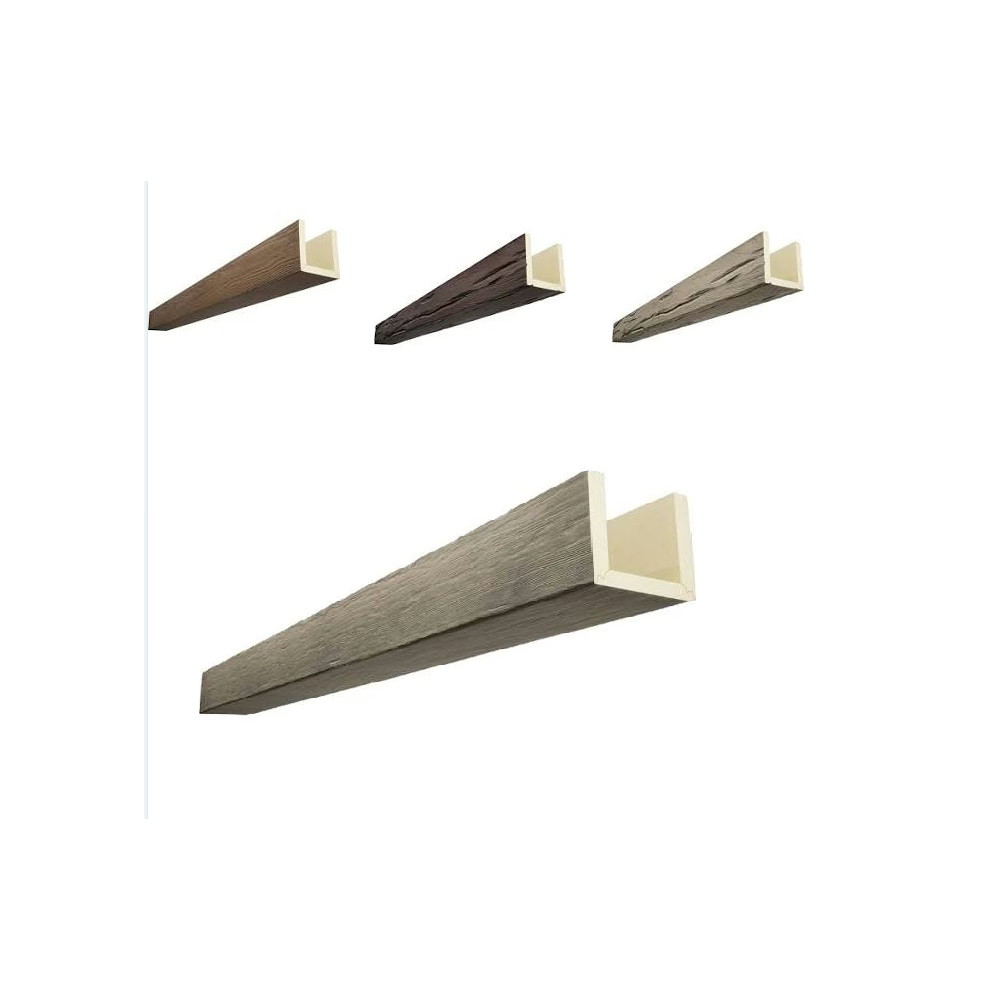
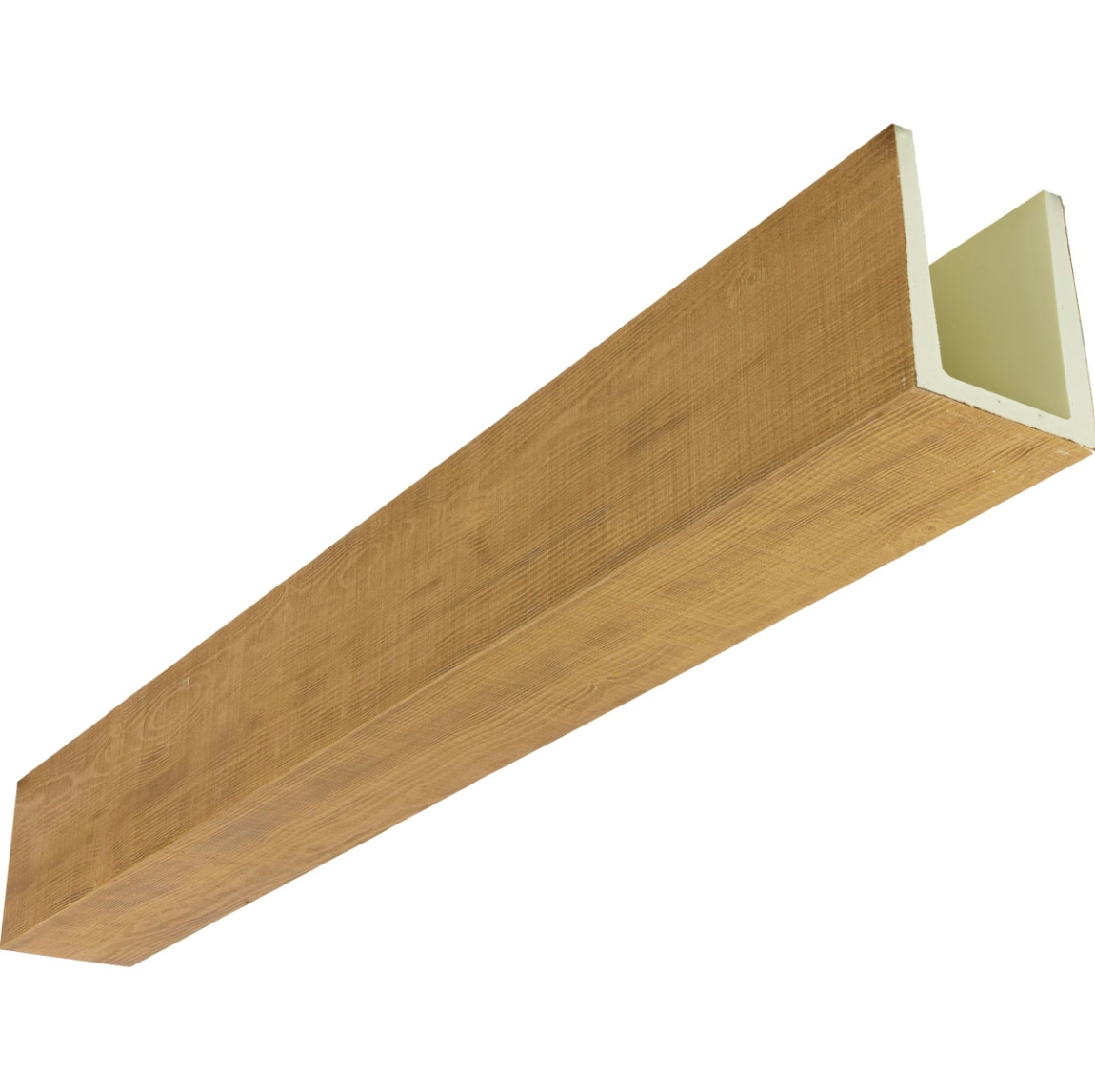
Modern PU faux beam technology produces remarkably convincing wood replicas. Through advanced molding processes, manufacturers capture the subtle variations in grain patterns, knots, and surface textures that characterize natural wood. Color application techniques create depth and authenticity that casual observers cannot distinguish from genuine timber at normal viewing distances.
The consistency of PU products actually offers aesthetic advantages in some applications. Natural wood varies from piece to piece, even within the same species and harvest batch. Achieving visual uniformity with real timber requires careful selection and sometimes staining adjustments. PU beams, by contrast, arrive with predictable, repeatable appearance characteristics that simplify design coordination and ensure matching installations across large spaces.
However, some projects genuinely benefit from wood's natural variation. Exposed beam installations in ultra-rustic settings where every imperfection contributes to the overall character may still favor authentic timber. The decision ultimately depends on specific project goals, design context, and client preferences. The key is recognizing that PU faux beams represent a deliberate design choice, not a compromise—a product optimized for certain applications rather than a universal substitute.
Making the Practical Choice
Robert Chen's restaurant project illustrates the decision-making process that increasingly favors PU faux beams in contemporary construction. The client achieved their aesthetic vision, the building structure remained unmodified, the project completed ahead of schedule, and the budget stayed under control. Everyone involved considered the outcome a success by any reasonable measure.
The choice between heavy timber and lightweight alternatives need not be ideological. Both products serve legitimate purposes, and intelligent design responds to specific project requirements rather than abstract preferences. Lightweight PU faux beams earn their place in the material palette through demonstrated advantages in weight, installation efficiency, structural compatibility, and total project economics. These practical benefits explain their growing presence in residential remodels, commercial renovations, and new construction projects across diverse design styles and building types.
Technical References
ASTM standards cited in every specification
Test Data
Lab results from internal testing program
Updated 2026
Reviewed against current product specs


