The boundary between residential and commercial design has blurred considerably over recent decades. What once were clearly distinct categories now overlap in countless ways—home offices that function like business environments, hospitality spaces that aspire to residential comfort, retail environments that aim for intimate residential feeling. This convergence creates interesting opportunities for materials that serve both contexts effectively.
Synthetic wood polyurethane beams occupy a unique position in this landscape. They deliver the warmth and character that residential spaces require while providing the durability and consistency that commercial applications demand. This dual capability makes them increasingly popular across the full spectrum of projects, from single-family homes to international hotel chains.
Understanding how these materials serve both residential and commercial contexts helps designers and property owners make selections that work effectively regardless of application category.

The Convergence of Residential and Commercial
Design trends increasingly treat the distinction between residential and commercial as a spectrum rather than a binary. Sophisticated homeowners expect their spaces to perform like professional environments while providing personal comfort. Commercial spaces aim for the welcoming atmosphere once reserved for private homes. This convergence drives material selections that serve both goals.
Consumer expectations have elevated across the board. Residential clients who stay in design-forward hotels bring those experiences home, expecting similar aesthetics and performance in their own spaces. Commercial clients who appreciate how hospitality design creates comfort seek similar qualities in their offices and retail environments. Materials must meet these elevated expectations regardless of where they're installed.
The operational demands of commercial spaces have influenced residential thinking as well. Homeowners who once accepted periodic maintenance now prefer solutions that look after themselves. The low-maintenance proposition that works in hotels and offices appeals equally to busy families who don't want to spend weekends caring for their homes. Synthetic wood beams offer this maintenance-free experience in any context.
Residential Applications and Requirements
Home installations represent the largest market for synthetic wood beams in terms of sheer number of projects. Even though each residential project involves fewer beams than typical commercial work, the cumulative volume is substantial. Understanding residential requirements helps serve this market effectively.
Aesthetic requirements in homes often emphasize warmth, character, and connection to natural materials. Homeowners typically want spaces that feel inviting and lived-in, spaces that age gracefully while accommodating family life. The wood aesthetic that synthetic beams provide contributes to these goals without the complications that natural wood introduces.
Budget considerations matter in residential contexts where homeowners are often self-funding projects against competing priorities. The value proposition of synthetic beams—higher initial cost offset by eliminated maintenance—resonates with homeowners who think in terms of long-term value rather than initial expense. Financing and payment options sometimes help bridge the gap for larger projects.
Accessibility for maintenance influences product selection. Homeowners with vaulted ceilings or multi-story homes face practical challenges accessing ceiling beams for any maintenance need. Products that require no maintenance address this challenge completely, while products that need occasional attention become problematic when access is difficult.
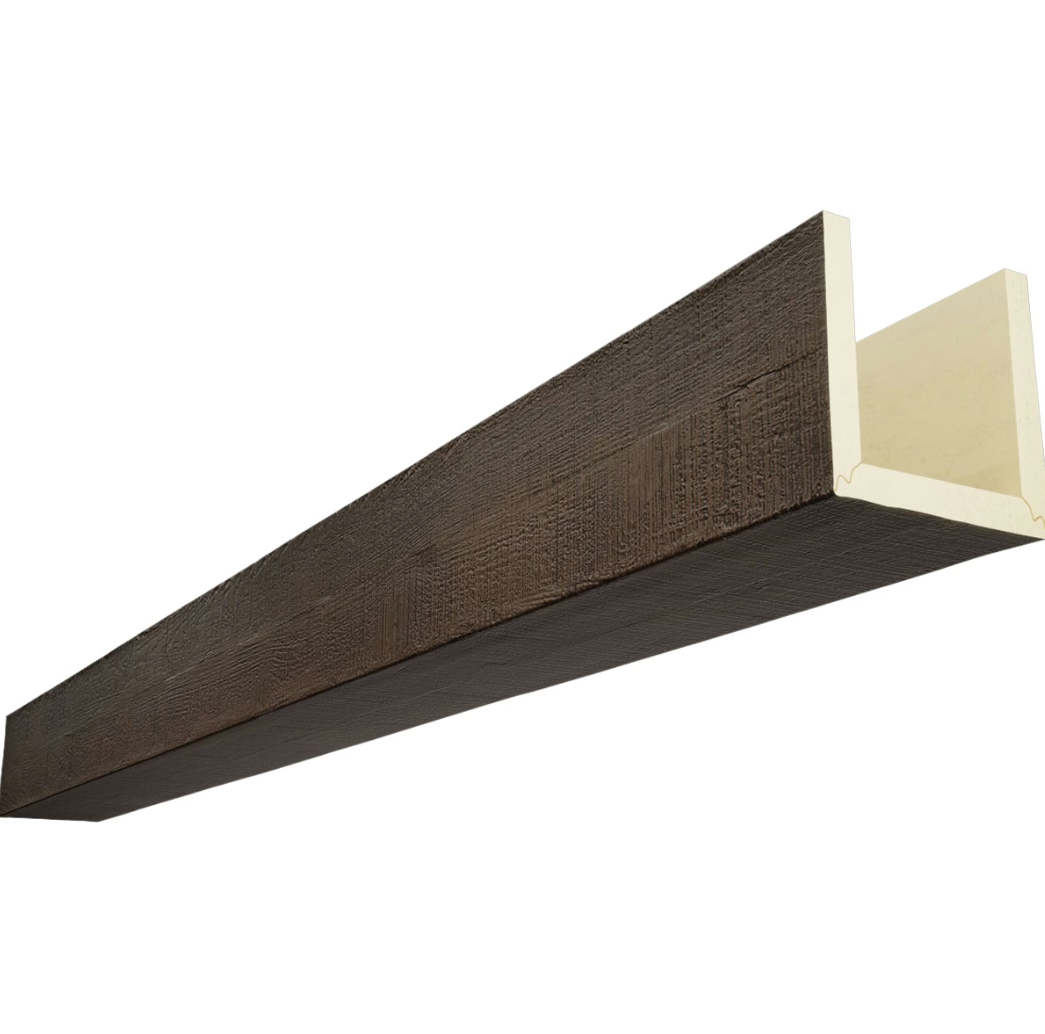
Commercial Applications and Requirements
Commercial projects present different requirements that might seem to conflict with residential needs but actually complement them. The key is understanding how the same material properties serve both contexts differently.
Scale creates unique challenges in commercial work. A single project might require hundreds of identical beams across multiple spaces and floors. Every beam must match every other beam precisely, creating visual consistency that residential projects rarely require. Manufacturing capabilities that ensure this consistency become critical when specifications involve large quantities.
Performance requirements escalate in commercial contexts. Higher traffic means more physical contact and potential impact. Longer operating hours might mean more exposure to environmental factors. Cleaning protocols might involve stronger chemicals or more frequent attention. Products must tolerate these conditions while maintaining appearance.
Operational constraints shape commercial material selection. Hospitality properties cannot close for refinishing work; retail spaces cannot interrupt business for extended periods. Materials that require no maintenance avoid these operational complications entirely, contributing to the smooth functioning that commercial operations require.

Bridging the Two Worlds
The beauty of synthetic wood polyurethane beams lies in their ability to serve both markets with the same underlying product. Quality products perform in residential contexts where they might see light use but where aesthetics matter enormously. They perform equally well in demanding commercial contexts where they face heavy use and operational pressure.
This versatility benefits manufacturers and suppliers who can serve diverse markets from the same production capabilities. It benefits designers who can specify familiar products regardless of project type. It benefits property owners who might have both residential and commercial interests and want consistent solutions.
The technical characteristics that make these beams work in both contexts include impact resistance that handles commercial traffic without showing every contact, finish durability that survives commercial cleaning protocols, dimensional stability that maintains appearance through humidity and temperature changes, and UV resistance that preserves color in any application.
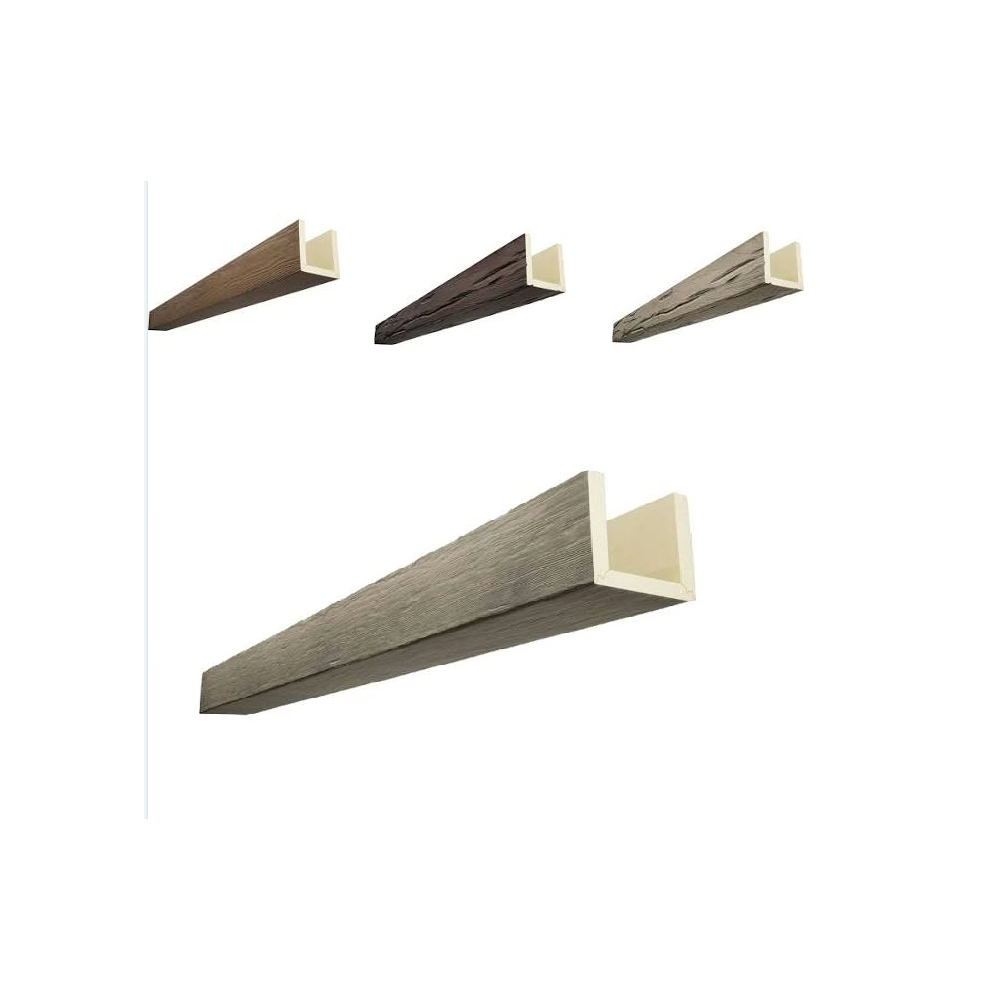
Specification Strategies
Translating material capability into appropriate specifications requires attention to both context-specific requirements and shared needs. The specification process should address factors relevant to the intended application while ensuring baseline quality that serves any use.
For residential projects, focus on aesthetic matching to the overall design intent. Work with suppliers who can provide samples that accurately represent what will be installed. Consider the specific environmental conditions of the home—sun exposure, humidity levels, access for cleaning—and specify products accordingly.
For commercial projects, emphasize performance specifications that ensure reliability under demanding conditions. Request documentation of testing and certifications that demonstrate performance claims. Consider the total cost of ownership including maintenance requirements and expected service life, not just initial cost.
In both contexts, work with suppliers who understand the full range of applications. Their expertise helps navigate specifications that serve your specific needs while avoiding over-specification that adds unnecessary cost.
Quality Across the Spectrum
Not all synthetic wood beams are created equal, and quality variation affects performance in both residential and commercial contexts. The difference between premium and economy products might not be apparent initially but becomes significant over time.
Premium products use higher-quality formulations with better UV stabilizers, more durable surface finishes, and tighter manufacturing tolerances. These products cost more initially but provide better long-term value through extended service life and reduced maintenance needs. The premium is usually modest relative to the total project value and the benefits it delivers.
Economy products might appear attractive from an initial cost perspective but often reveal limitations over time. Faster fading, less effective impact resistance, and finish failures that require remediation can turn initial savings into long-term expense. In commercial applications, these failures affect guest experience and brand perception in ways that far exceed the initial cost difference.
For projects where budget is genuinely constrained, consider reducing quantity rather than quality. Installing fewer, better beams might achieve the design intent more effectively than installing more, lesser beams. The beams you can afford should be beams you're proud of.
Long-Term Performance Perspective
Both residential and commercial projects benefit from long-term thinking about material performance. The decision to install synthetic wood beams reflects commitment to the space—they will remain in place for years or decades, creating the atmosphere that the space provides.
Thinking in terms of total cost of ownership rather than initial cost reveals the true value proposition. A beam that costs twice as much initially but lasts three times as long costs less per year of service. A beam that requires no maintenance costs less than one requiring annual attention, even if the maintenance itself seems inexpensive.
The environmental implications of material choice also merit consideration. Products that last longer require fewer replacements, reducing the material and energy consumption associated with manufacturing and disposal. For projects where sustainability matters, durable products that avoid replacement cycles provide meaningful benefits.
Making the Right Choice
The choice between residential and commercial-grade products, when such distinction exists, should reflect honest assessment of actual conditions. A beam installed in a quiet home office faces very different conditions than one in a busy hotel corridor. Specifying commercial-grade products everywhere might add unnecessary cost; specifying residential products in demanding applications invites problems.
Assess the actual conditions honestly. Consider traffic levels, cleaning requirements, environmental factors, and the likelihood of physical contact. Then specify products that match those conditions with appropriate margin for unexpected factors. When in doubt, err toward slightly higher quality than marginally lower cost.
The goal is achieving installations that perform reliably, look beautiful, and contribute positively to the spaces they inhabit. Synthetic wood polyurethane beams serve this goal in both residential and commercial contexts, providing the aesthetic warmth of wood without its practical limitations.
Investment That Serves Both Markets
The versatility of synthetic wood beams reflects thoughtful engineering that serves diverse needs from a common platform. This versatility benefits everyone involved in the building and design industries—manufacturers, suppliers, designers, and property owners alike.
When you choose synthetic wood beams for any project, you're selecting materials that work as hard as you need them to, in any context. The same beam that welcomes guests in a boutique hotel adorns the ceiling of a family home. The same durability that survives commercial traffic provides insurance against the accidents of daily family life. This flexibility makes synthetic wood beams a smart choice for any application where authentic wood aesthetics should combine with lasting performance.
Technical References
ASTM standards cited in every specification
Test Data
Lab results from internal testing program
Updated 2026
Reviewed against current product specs


