Every exposed surface in an occupied space faces potential contact. Walls get bumped by furniture and vacuum cleaners. Floors endure footsteps and chair legs. Ceiling beams—though less frequently contacted than walls or floors—still face risks from moving furniture, overhead work, and the general activity of daily life. For beams that must look pristine despite these exposures, wear resistance becomes a critical selection criterion.
The wear resistance of polyurethane beams depends on both the underlying material properties and the surface treatments applied during manufacturing. Understanding these factors helps specify products that maintain their appearance through years of contact, abrasion, and incidental abuse that would damage lesser materials.

Understanding Wear and Impact Damage
The term "wear" encompasses several distinct forms of material degradation. Physical impact creates dents and chips. Abrasion produces scratches and surface damage. Friction generates heat that can affect surface properties. Each type of damage requires different material characteristics to resist.
Impact damage occurs when beams contact other objects with force concentrated over a small area. The classic example is a beam struck by furniture being moved—potentially causing a dent or chip depending on the force and object involved. Impact resistance measures how well the material absorbs and distributes impact energy without permanent damage.
Abrasion damage develops gradually through repeated contact that removes small amounts of material from the surface. The cleaning cloth that wipes across a beam surface hundreds of times per year creates cumulative abrasion. Foot traffic below beams stirs air that carries particles against beam surfaces. These effects are subtle individually but accumulate over time into visible surface degradation.
Surface scratching represents a middle ground between impact and abrasion. A single scratch from a sharp object might occur in an instant; preventing it requires scratch resistance. Preventing the countless micro-scratches from cleaning and contact requires abrasion resistance. Quality products address both concerns.
Material Properties That Resist Wear
Polyurethane's molecular structure provides inherent advantages for wear resistance. Unlike wood, which has a fibrous structure that can split along grain lines, polyurethane distributes stress more uniformly. This characteristic makes it more resistant to the localized damage that creates dents and chips.
The density of polyurethane foam affects wear resistance significantly. Higher-density formulations resist impact better because they contain more material per volume to absorb energy. The trade-off is increased weight and cost, but the performance benefits often justify this in applications where wear resistance matters.
Formulation additives enhance specific performance characteristics. Impact modifiers help the material absorb and distribute impact energy without permanent deformation. Scratch-resistant additives create harder surfaces that resist scratching. These additives are part of the manufacturing expertise that distinguishes quality products from economy alternatives.
Closed-cell foam structures resist moisture absorption and provide dimensional stability that contributes to long-term wear resistance. Open-cell foams might absorb cleaning solutions or environmental moisture, potentially affecting internal structure over time. Quality architectural products typically use closed-cell formulations that maintain properties over extended service.

Surface Finish Considerations
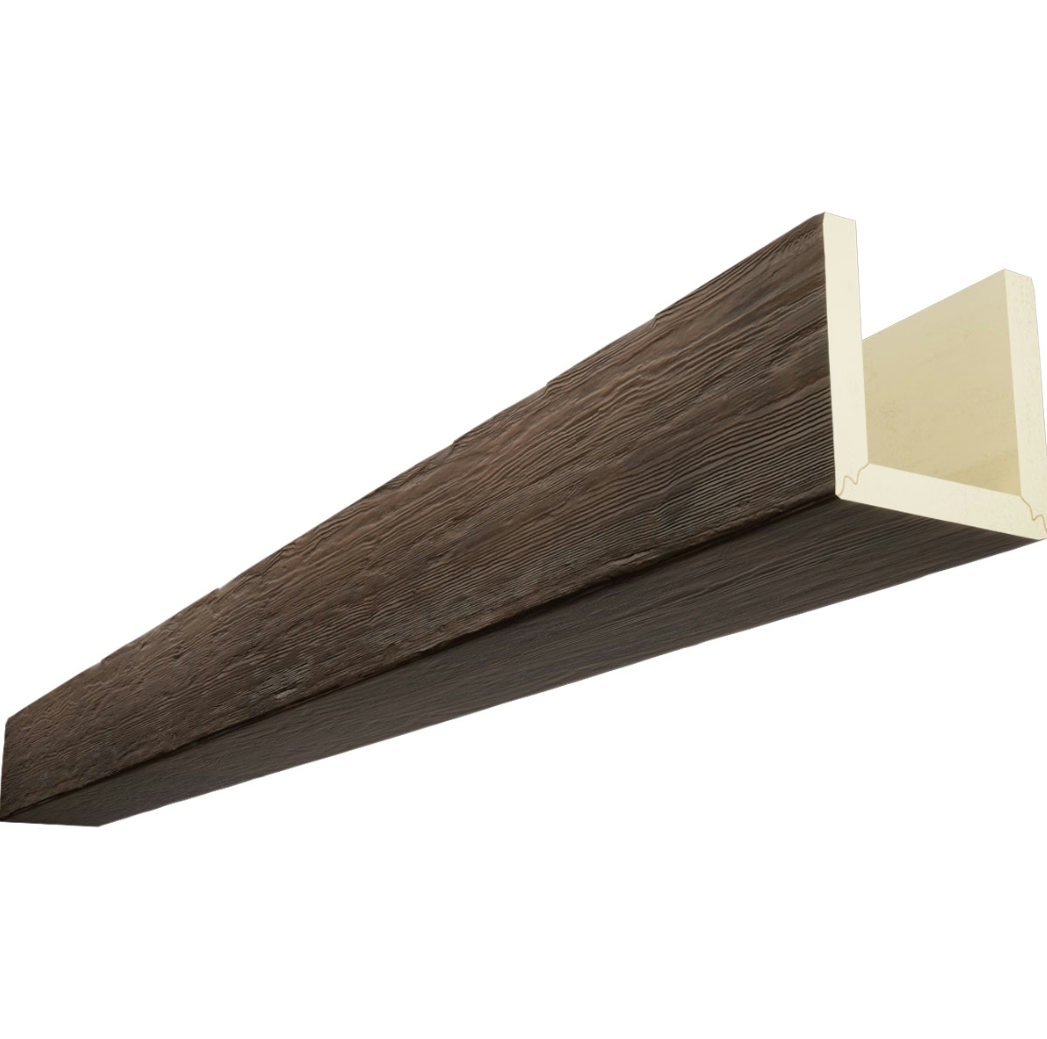
The surface finish applied to polyurethane beams contributes significantly to wear resistance. These finishes provide the visible surface that contacts cleaning materials, fingers, and accidental impacts. The quality and type of finish directly affects how the beam responds to wear.
Film-forming finishes create a continuous protective layer over the underlying foam. These finishes might be urethanes, acrylics, or hybrid systems that balance hardness, flexibility, and durability. Higher-quality finishes provide better scratch and impact resistance while maintaining the realistic wood appearance that polyurethane beams are chosen for.
The adhesion between finish and substrate affects long-term wear resistance. Finishes that bond strongly resist the delamination that can occur when finishes separate from underlying material under stress. Quality control during manufacturing ensures consistent adhesion; premium products often include adhesion promoters or surface treatments that enhance this critical bond.
Finish thickness affects both appearance and durability. Too thin, and the finish provides insufficient protection. Too thick, and it might crack under stress or look artificial. Quality manufacturers calibrate finish thickness to optimize both performance and appearance.
Applications Where Wear Resistance Matters
While wear resistance benefits any installation, some applications demand it absolutely. Understanding where these demands exist helps prioritize appropriate specifications.
High-traffic commercial spaces face the most demanding wear conditions. Hotel corridors where guests pass with luggage, retail environments where merchandise and equipment move, restaurant dining rooms where servers work throughout service—all these spaces test beam durability continuously. Commercial-grade products designed for these applications provide the wear resistance these conditions require.
Family homes with active children and pets present residential wear challenges. Kids running through hallways, pets jumping to investigate ceiling details, furniture rearrangement that occasionally contacts beam surfaces—these conditions might not match commercial traffic but exceed what quiet adult households experience. Considering actual family activity when selecting products ensures appropriate wear resistance.
Spaces with frequent furniture movement—living rooms where sofas get repositioned for cleaning, dining rooms where tables move to accommodate gatherings—benefit from enhanced wear resistance. Even occasional impact from furniture corners can damage surfaces that aren't adequately protected.
Specifying for Wear Resistance
Translating wear resistance requirements into product specifications helps ensure selections perform as needed. Several approaches help communicate requirements clearly.
Request documentation of testing results. Manufacturers who have tested their products for impact resistance, abrasion resistance, and related characteristics can provide data supporting their claims. Look for tests conducted to recognized standards with results that demonstrate meaningful performance.
Ask about formulation specifics. Quality manufacturers can explain what makes their products resistant to wear, including any additives or treatments that enhance performance. Vague answers about "premium quality" without specific technical explanation should prompt additional questions.
Request samples and test them yourself. Try scratching the surface with a fingernail or key. Press on the surface with a blunt object to assess impact response. These simple tests reveal performance characteristics that documentation might not capture.
Maintenance of Wear-Resistant Surfaces
Even the most wear-resistant surfaces benefit from appropriate maintenance practices. Understanding how to care for wear-resistant polyurethane beams helps maintain their appearance over extended service.
Routine cleaning with soft materials prevents unnecessary abrasion. Microfiber cloths, soft brushes, and gentle cleaning solutions clean effectively without damaging surfaces. Avoid abrasive scrubbers, harsh chemicals, or high-pressure cleaning that might affect surface integrity.
Prompt attention to spills and contamination prevents staining and potential surface damage. Most common household spills clean easily with mild soap solution; allowing spills to dry and accumulate makes cleaning more challenging and potentially more damaging.
Professional cleaning for commercial applications should include guidance on appropriate products and methods. Establish protocols that cleaning staff can follow consistently, avoiding products or techniques that might damage beam surfaces even if they clean effectively.
Long-Term Wear Performance
The true test of wear resistance occurs over extended periods of service, not in initial specification or short-term testing. Understanding how wear-resistant products perform over years helps set realistic expectations.
Quality wear-resistant beams typically maintain appearance for many years in demanding applications. The initial surface that looked pristine at installation remains largely unchanged after extended service. Any changes that occur should be subtle and uniform, not localized damage or uneven wear patterns.
When wear-related issues do occur, they typically manifest as localized damage from specific incidents rather than uniform degradation. A dent from furniture impact, a scratch from a specific event, a chip from an unusual circumstance—these localized issues are often repairable without beam replacement. Widespread or uniform wear issues might indicate inappropriate product selection or unusual conditions that warrant investigation.
Cost-Benefit of Wear Resistance
Enhanced wear resistance typically adds to product cost, raising the question of whether the investment is worthwhile. The answer depends on actual conditions and priorities.
In applications where wear is likely, the cost of enhanced wear resistance often pays for itself through extended service life and reduced maintenance needs. Avoiding a single repair or replacement event often exceeds the additional cost of wear-resistant specification.
In applications where wear is unlikely—formal living spaces with limited traffic, ceilings well above reach—the investment in enhanced wear resistance might not provide proportionate value. Honest assessment of actual conditions guides appropriate specification.
The cost of poor wear performance—damaged beams that require repair or replacement, degraded appearance that affects room aesthetics—often exceeds the investment in adequate wear resistance. When in doubt, specifying for the conditions that actually exist, with some margin for unexpected factors, usually proves most economical.
Building with Wear Resistance in Mind
The selection of wear-resistant polyurethane beams reflects thoughtful consideration of how spaces will actually be used. It acknowledges that beautiful materials must also be practical materials, capable of withstanding the realities of daily life without constant protection or careful handling.
These beams serve spaces where life happens—where families live, where businesses operate, where the beautiful ceiling that architects designed must continue looking beautiful despite everything that occurs below it. The wear resistance built into quality products provides the durability that makes this possible.
When you specify wear-resistant beams, you're choosing solutions that serve their purpose reliably. Your installations will maintain their beauty through years of use, providing the aesthetic contribution you intended without becoming maintenance burdens that demand attention. This reliability represents the kind of value that justifies thoughtful material selection.
Technical References
ASTM standards cited in every specification
Test Data
Lab results from internal testing program
Updated 2026
Reviewed against current product specs