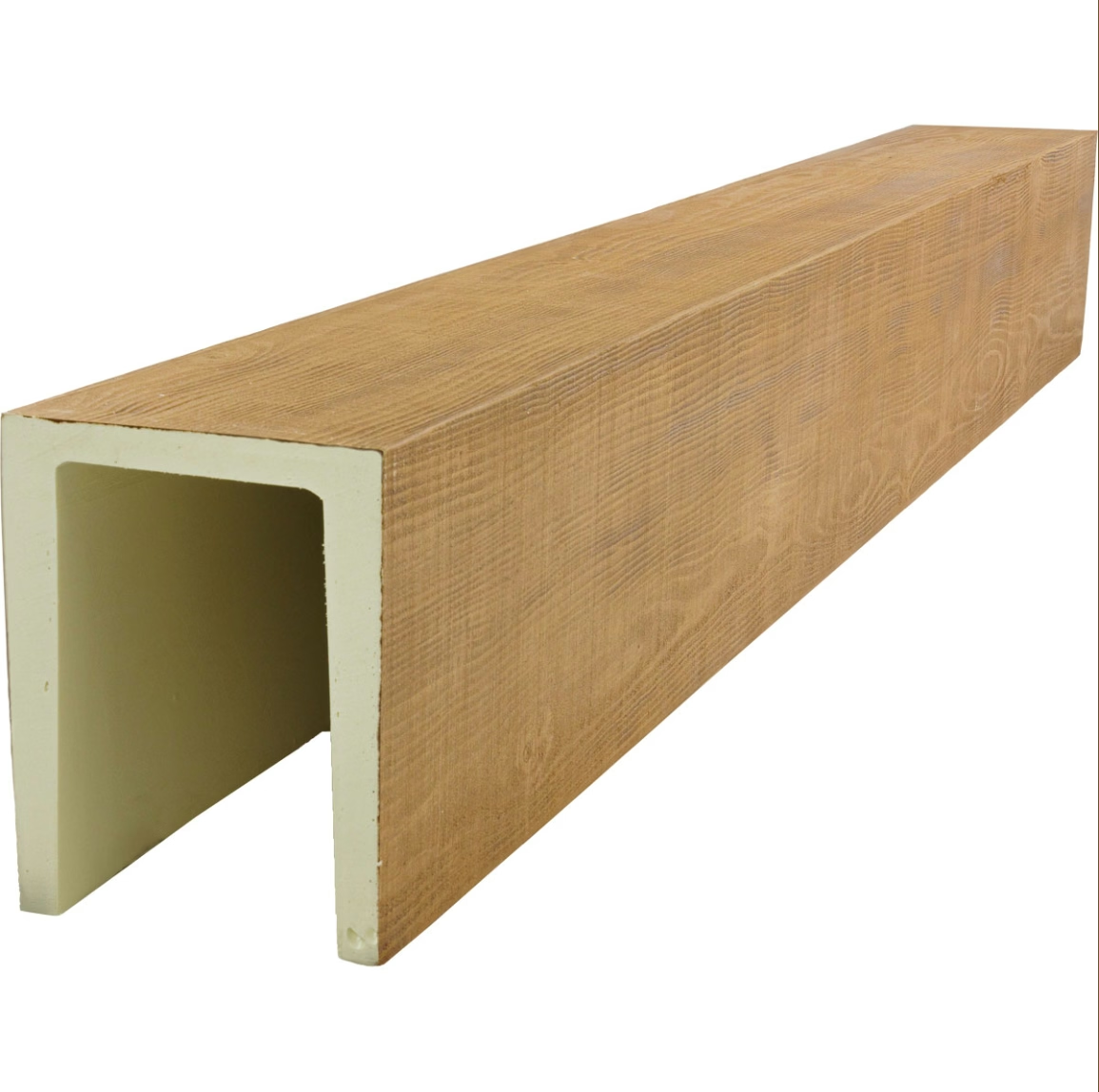
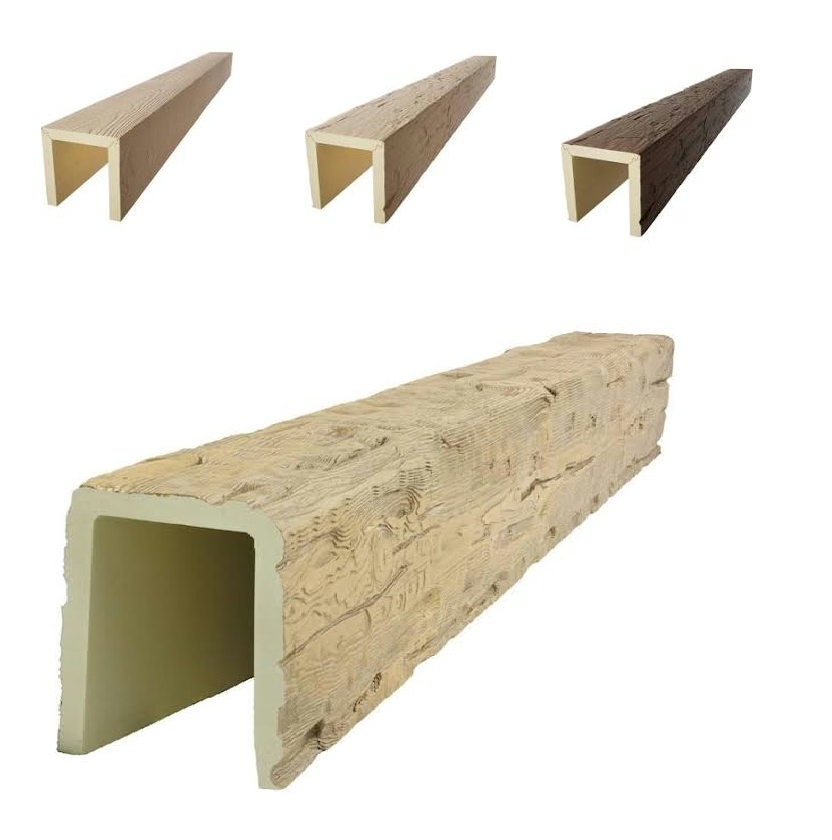
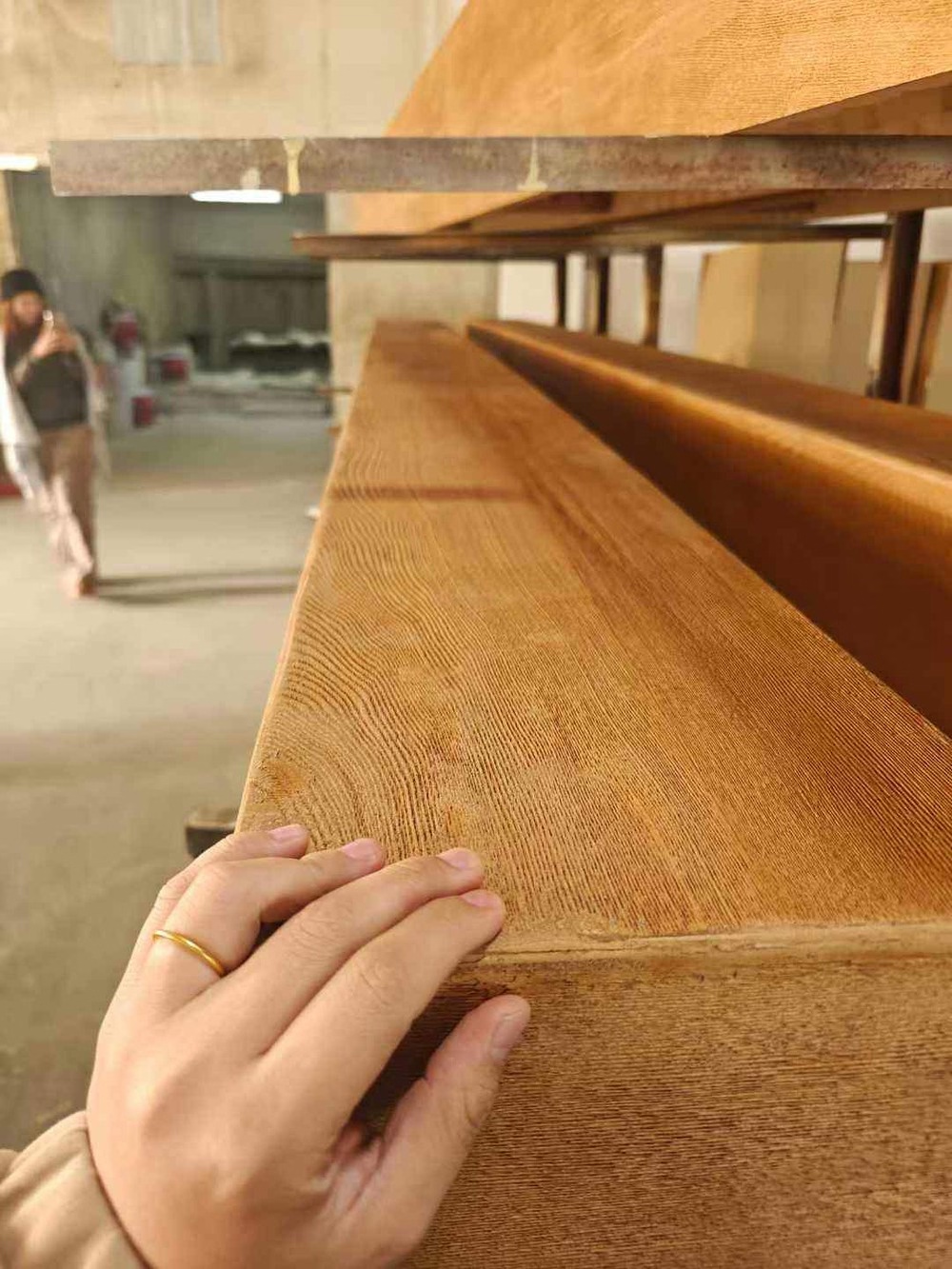
Understanding why polyurethane faux timber beams deliver reliable long-term performance requires examination of the material science underlying their construction. The polyurethane formulations used in beam production are not commodity plastics but engineered materials selected for specific performance characteristics including dimensional stability, surface durability, and environmental resistance. This technical foundation explains why these products meet or exceed the performance of traditional timber while offering practical advantages that natural materials cannot match.
Material selection for beam production begins with formulations optimized for construction applications rather than general-purpose use. The specific density, hardness, and flexibility characteristics required for beam performance are achieved through careful control of chemical composition and processing conditions. This engineering approach produces consistent material properties batch after batch, eliminating the variability inherent in natural materials harvested from different trees, growing conditions, and sections of the same log.
Material Properties and Performance Characteristics
Polyurethane's cellular structure provides the combination of lightweight and strength that distinguishes these beams from alternative products. The closed-cell formulation creates internal air pockets that reduce weight while maintaining structural integrity. Compression testing demonstrates that the material resists crushing forces without permanent deformation, explaining why beams maintain their shape under loads that might dent or damage other materials.
Dimensional stability represents a critical performance characteristic for ceiling beam applications. Natural timber expands and contracts with humidity changes, creating gaps, warping, and stress on mounting systems. Polyurethane absorbs minimal moisture, maintaining consistent dimensions across humidity ranges encountered in typical building environments. This stability eliminates the seasonal adjustments and repairs that timber beams require to maintain appearance.
Surface hardness and scratch resistance derive from the cured polyurethane formulation, which achieves hardness levels comparable to softwoods while maintaining sufficient flexibility to resist cracking under impact. The smooth, consistent surface accepts stains and finishes uniformly, allowing factory application of durable coatings that would be difficult to replicate in field conditions. This surface quality remains stable over years of service without the gradual roughening that affects natural timber.
UV resistance in polyurethane formulations prevents the degradation that limits outdoor service life of many plastic materials. Additive packages incorporated during production provide protection against ultraviolet radiation, maintaining surface appearance and mechanical properties despite prolonged sun exposure. This UV stability proves essential for exterior applications and interior installations with significant daylight exposure.

Accelerated Aging and Durability Testing
Laboratory testing supplements real-world experience by subjecting beam materials to conditions more severe than normal service environments. Accelerated aging protocols expose samples to elevated temperature, humidity cycling, and UV radiation levels designed to simulate years of exposure in compressed timeframes. These tests reveal failure modes that might not emerge for years in actual installations.
Temperature cycling tests expose beams to ranges from below freezing to elevated temperatures that might occur in unconditioned spaces or exterior applications. Multiple cycles reveal any tendency toward cracking, delamination, or dimensional change that could compromise long-term performance. Our formulations pass these tests with no measurable degradation, validating service temperature ranges specified for various applications.
Humidity exposure testing evaluates material behavior in conditions more extreme than typical building environments. Sustained high humidity, cyclic humidity exposure, and rapid transitions between dry and humid conditions all challenge dimensional stability and surface adhesion. Polyurethane's moisture resistance proves advantageous in these tests, with minimal absorption and no associated dimensional changes.
Impact testing assesses resistance to the acute impacts that occur during installation and service. Drop weight tests determine energy absorption capacity and failure modes under controlled conditions. These tests establish guidelines for handling and installation that, when followed, prevent damage during the most vulnerable phase of beam service life. The results also inform maintenance recommendations for protecting beams from potential impact sources.

Formulation Consistency and Quality Control
Batch-to-batch consistency distinguishes quality polyurethane production from commodity alternatives. Our manufacturing processes incorporate raw material specifications, mixing protocols, and curing conditions that produce consistent results regardless of production timing or operator. Statistical process control monitors key characteristics during production, with automatic rejection of any material falling outside acceptable ranges.
Raw material sourcing from established suppliers ensures starting material quality. Supplier qualification includes testing of incoming materials against specifications, with certificates of analysis required for each shipment. Long-term supplier relationships enable collaboration on formulation improvements while maintaining supply reliability. This sourcing discipline prevents quality variations that could affect finished product performance.
Finished product testing provides final confirmation of material properties before shipment. Random sampling from production batches subjects beams to compression, impact, and adhesion testing that verifies compliance with specifications. Test results are documented and retained, enabling traceability if questions arise about specific production periods. This testing commitment provides quality assurance that distinguishes premium products from lowest-bid alternatives.
The combination of material science, laboratory testing, and real-world experience creates a comprehensive performance foundation for polyurethane faux timber beams. Project teams specifying these products can rely on documented evidence rather than manufacturer claims alone. This transparency builds confidence that the performance expectations established during specification will be achieved throughout the installation's service life.

Technical References
ASTM standards cited in every specification
Test Data
Lab results from internal testing program
Updated 2026
Reviewed against current product specs