
The appeal of wood beam aesthetics often confronts the reality of finishing work. Staining requires skill and ventilation. Sealing demands proper application technique. Touch-up repair requires color matching that defeats even experienced finishers. These finishing challenges add complexity, cost, and uncertainty to projects where simplicity would be welcome. Pre-finished polyurethane beams eliminate these concerns entirely.
Factory finishing represents a fundamental advantage that polyurethane brings to decorative beam applications. Controlled environment, precise application, and quality materials combine to create surfaces that field finishing cannot match. The beam arrives at the installation site with a finish so complete that nothing remains except mounting. This convenience transforms what could be a multi-day finishing project into a simple installation.
The Factory Finishing Advantage
Factory finishing occurs under conditions that field finishing cannot replicate. Climate-controlled spray booths eliminate dust contamination that mars field-applied finishes. Calibrated spray equipment applies consistent coating thickness across all surfaces. Temperature and humidity control optimize curing conditions. Quality materials specified for industrial use outperform consumer products available to field applicators.
These controlled conditions produce surfaces with uniform color and texture that field application rarely achieves. Each beam from a production run matches the next, eliminating the batch variation that occurs when finishing materials age, conditions change, or applicator technique varies. This consistency matters when multiple beams occupy the same space.
The materials themselves differ between factory and field application. Industrial finishes contain higher solids content, better UV inhibitors, and more durable binder systems than consumer products. These formulations provide longer service life and better resistance to environmental exposure. The finish quality that results from these materials exceeds what field application could achieve even with skilled labor.
Finish Types and Their Characteristics
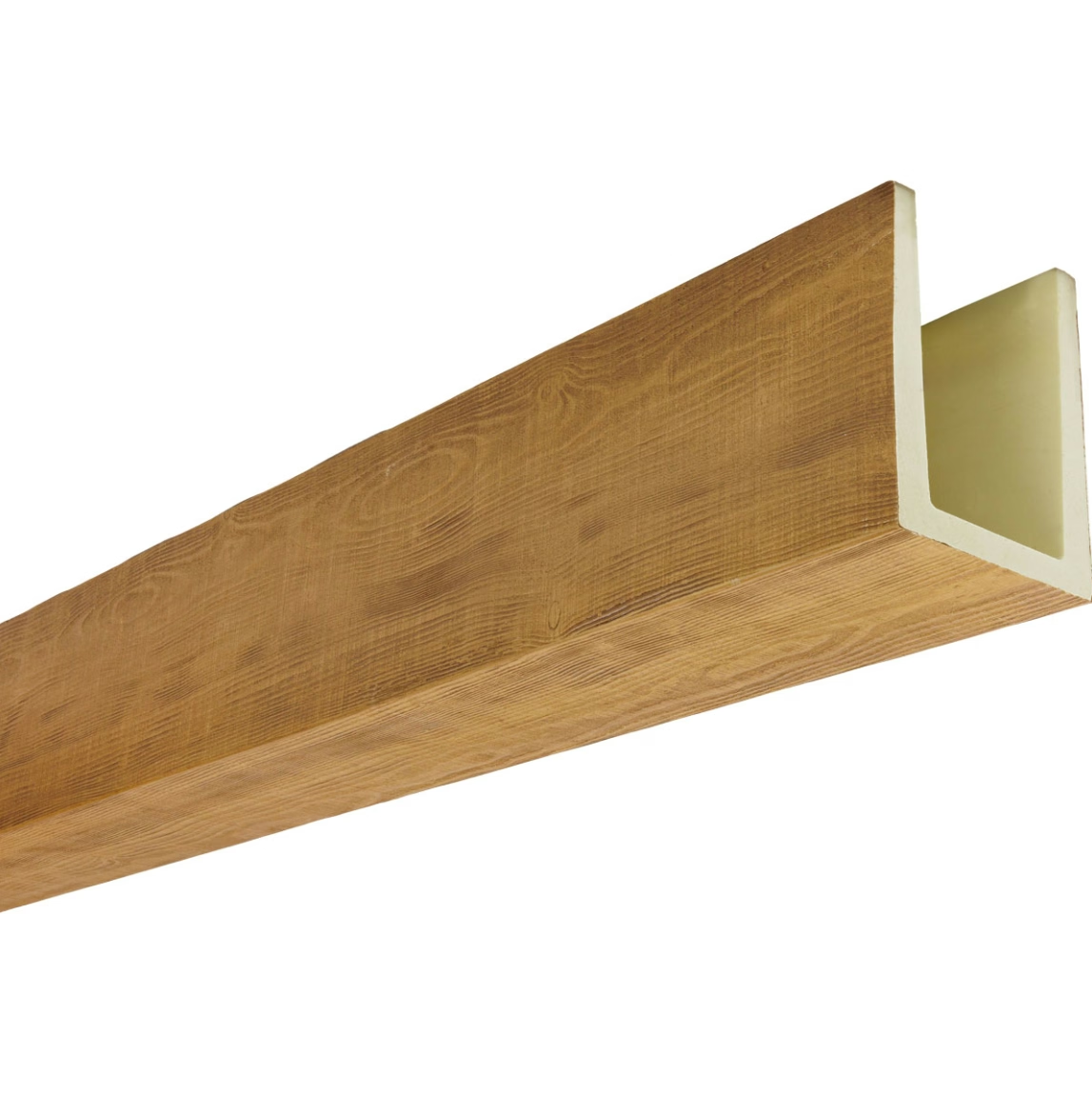
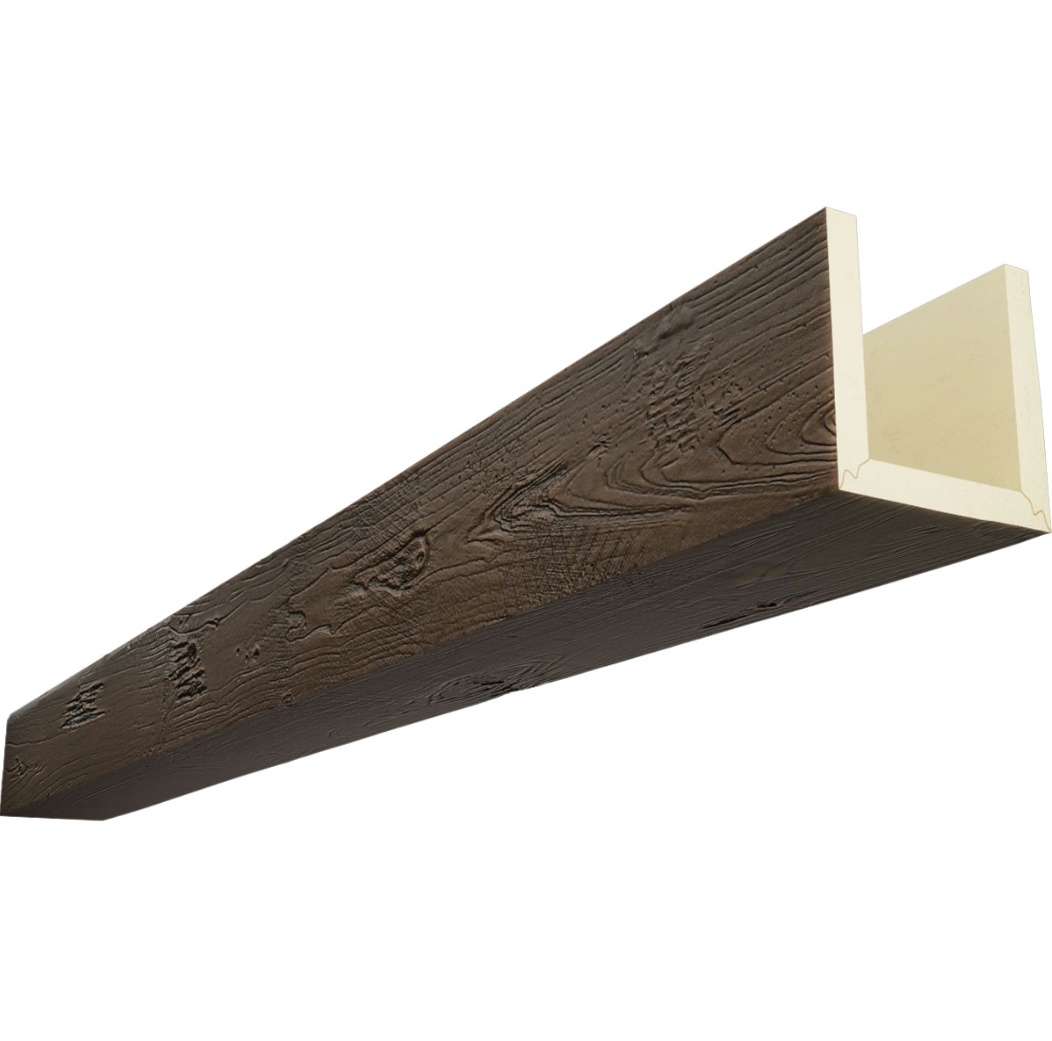
Stained finishes attempt to replicate natural wood coloring through pigment application over prepared surfaces. Factory staining benefits from controlled conditions that produce natural-looking color development. Multiple stain layers build depth and variation that mimics genuine wood without the inconsistency of hand-applied stains.
Painted finishes offer uniform color that stained finishes cannot always achieve. Solid colors hide surface variations and provide consistent appearance across all beams. Paint selection should consider the UV exposure and cleaning requirements specific to the installation location. Higher-quality paints resist yellowing and maintain color more consistently over time.
Natural or clear finishes preserve the polyurethane's own color while providing protection. These finishes work well when the polyurethane's own appearance sufficiently approximates wood or when a non-wood aesthetic is desired. UV-stable clear coats prevent the yellowing that unprotected polyurethane might experience.

Installation Benefits of Pre-Finished Products
The most immediate installation benefit is time savings. No finishing work means no drying time between coats, no overnight cure requirements, no weather-related application restrictions. Beams arrive, beams install, project completes. This compressed timeline can matter significantly for projects with tight schedules.
Field finishing typically requires workspace for paint storage, application equipment, and cure staging. Pre-finished beams eliminate these requirements, simplifying logistics particularly for retrofit installations where workspace might be limited or inconvenient. The installation can proceed without the mess and equipment that finishing would create.
Quality consistency follows from eliminating field finishing variability. The installer focuses entirely on proper mounting rather than dividing attention between installation and finishing concerns. The factory finish quality remains consistent regardless of installer skill with finishing equipment. This reliability benefits both professional contractors and DIY installers.
Maintenance Implications
Pre-finished surfaces maintain their appearance longer than field-finished alternatives. The factory-applied coating bonds more completely with the substrate than field-applied finishes can achieve. This improved adhesion resists the chipping, peeling, and wear that eventually affects field-finished surfaces.
Cleaning becomes simpler with pre-finished surfaces. The smooth, complete coating resists staining and accepts cleaning without damage. Light dusting, occasional wiping, and periodic washing maintain appearance without special treatments or products. This cleanability supports maintenance in commercial environments and reduces effort required in residential applications.
Touch-up needs diminish substantially with pre-finished products. Field-finished beams eventually show wear, scratches, or damage that requires attention. Pre-finished beams maintain their coating integrity longer, reducing touch-up frequency. When damage does occur, factory-finished surfaces may require professional repair that field finishing would also need.
Selecting Pre-Finished Products
Finish quality varies between manufacturers even among pre-finished products. Examining actual samples reveals coating thickness, color consistency, and surface quality that differentiate premium from budget offerings. The few minutes spent with samples prevent disappointment with delivered products.
Finish compatibility with installation environment matters for long-term performance. Beams in high-humidity environments benefit from finishes with moisture resistance. Sunlit installations need UV stability that prevents color shift. Food preparation areas might require chemical resistance for cleaning product compatibility. These application-specific requirements should guide finish selection.
Color matching between beams should be verified before installation. Even pre-finished products can show variation between pieces from different batches or production runs. Checking all beams under actual lighting conditions before installation prevents discovering mismatches after mounting has begun.
Cost Considerations
Pre-finished products typically cost more than unfinished alternatives, reflecting the value of factory finishing. This initial cost premium should be evaluated against field finishing costs that it replaces. Labor for staining, materials for finish products, and time for curing all contribute to finishing cost that pre-finished products eliminate.
The total project comparison often favors pre-finished options despite higher unit prices. Professional finishing labor rates frequently exceed material cost differences. The convenience value of immediate installation has worth for projects with schedule constraints. The quality assurance of factory finishing has value for projects where appearance is critical.
Budget projects might still benefit from pre-finished products when considering total cost rather than unit price. The cost of finishing materials and the value of time spent finishing might exceed the premium for pre-finished products. DIY installers should value their time appropriately when making this comparison.
Technical References
ASTM standards cited in every specification
Test Data
Lab results from internal testing program
Updated 2026
Reviewed against current product specs


