
Every renovation project navigates the tension between aspiration and budget. The ceiling beam aesthetic that would complete a design might seem financially out of reach. Yet the expectation that quality must cost premium prices often reflects outdated assumptions rather than current market reality. Polyurethane faux beams have matured significantly, offering quality levels that challenge assumptions about what's possible at various price points.
Finding genuine value requires moving beyond surface price comparison to understand what differentiates products at different quality levels. The least expensive beam might prove more expensive over time if it requires early replacement or fails to satisfy aesthetically. Conversely, premium products might not deliver proportional improvements over mid-range alternatives. Strategic buyers understand these dynamics and select accordingly.
Defining Quality Dimensions
Aesthetic quality encompasses the visual characteristics that make beams satisfying to observe. Grain realism, color depth, surface consistency, and detail reproduction all contribute. Higher aesthetic quality generally correlates with more sophisticated manufacturing—better molds, multiple-color finishing, tighter quality control. This manufacturing investment translates directly into appearance that justifies itself.
Durability quality affects how beams age and maintain appearance over time. Impact resistance, UV stability, surface hardness, and finish adhesion all factor into longevity. Better durability often comes from formulation optimization, premium additives, and testing-based refinement. These quality investments prevent the degradation that eventually makes lower-quality products disappointing.
Dimensional quality relates to how precisely beams match specifications. Length accuracy, width consistency, profile precision, and squareness all affect installation experience and finished appearance. Better dimensional quality typically reflects better tooling, tighter process control, and more sophisticated manufacturing equipment.
Price Tier Analysis
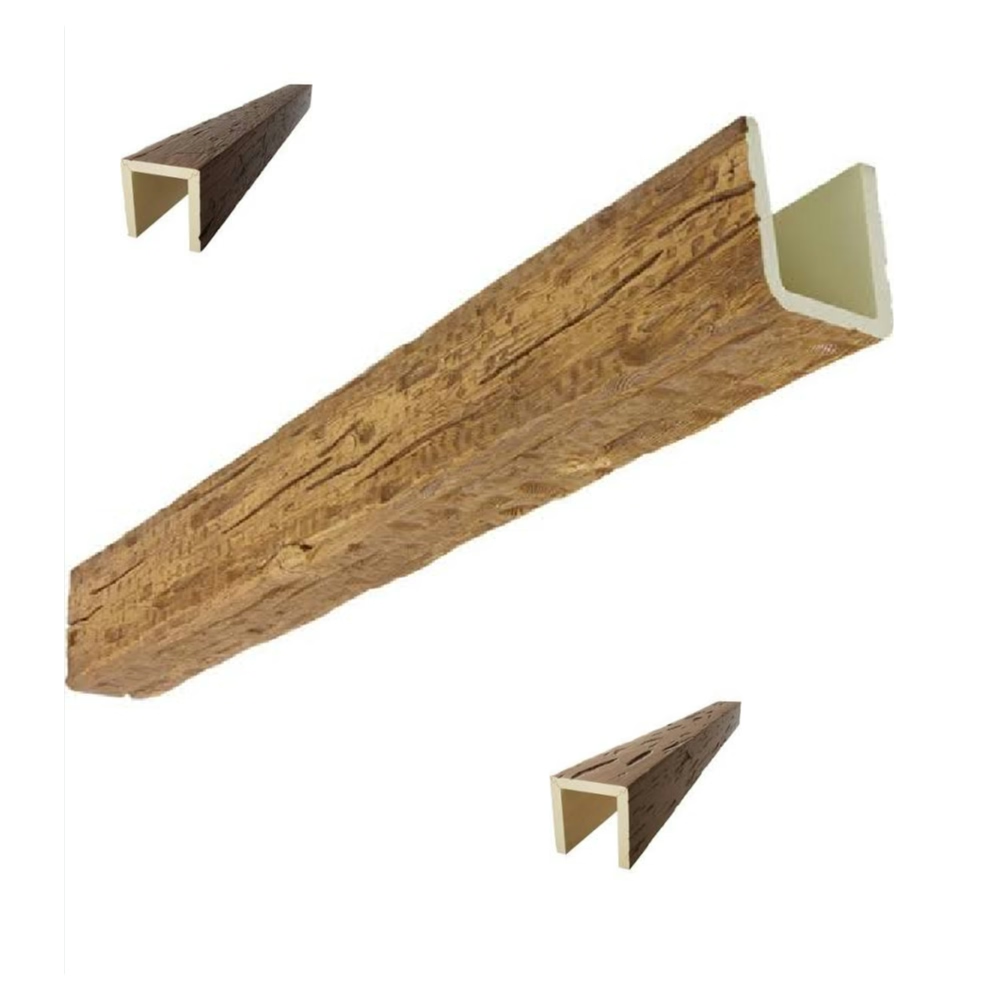
Entry-level products typically occupy the lowest price tier while meeting basic expectations for the category. These beams deliver recognizable wood beam appearance without the refinements that premium products provide. Surface detail might be simplified, color consistency might show variation, and durability might be adequate rather than exceptional. For budget-constrained projects or temporary installations, these products serve their purpose.
Mid-range products represent the practical optimum for most renovation projects. The step up from entry-level typically includes better surface detail, more consistent coloring, improved durability, and more reliable dimensional accuracy. This improvement comes at a price premium that most projects find worthwhile for permanent installations.
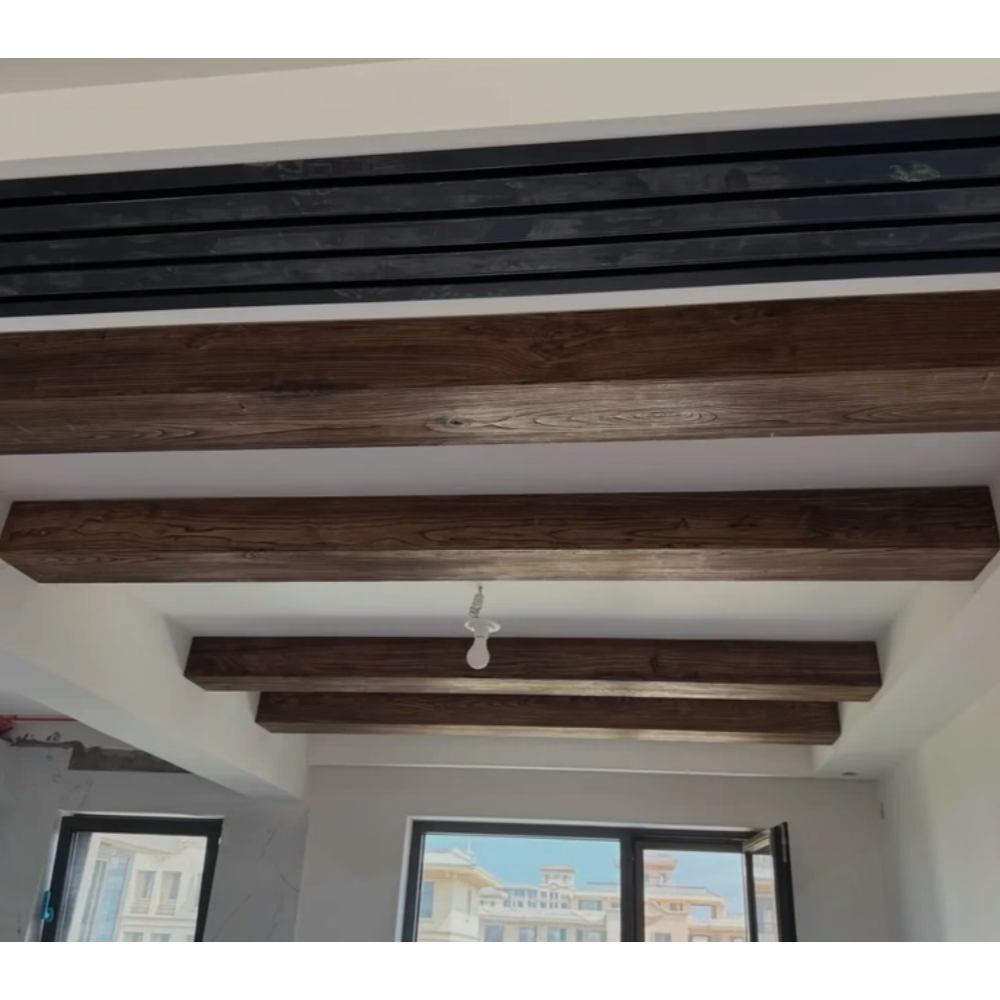
Premium products push quality toward its practical maximum. Surface detail approaches photographic realism. Color matching between pieces achieves consistency that casual observation cannot distinguish from perfect. Durability extends to match or exceed genuine timber. These maximum quality levels come at maximum prices that only specialized applications or quality-focused buyers typically justify.

Strategic Value Approaches
Direct manufacturer purchasing eliminates distributor and retailer margins that add to base costs. Many manufacturers sell directly to qualified buyers at prices below what retail channels charge. This direct purchasing works particularly well for larger projects where shipping costs become a smaller percentage of total savings.
Sample ordering before bulk purchase prevents investing heavily in products that disappoint upon delivery. The small cost of samples prevents the much larger cost of regret when installed products fail to satisfy. This sampling discipline costs little and protects significant investment.
Volume consideration affects per-unit pricing substantially. Larger orders command better pricing through spreading fixed costs over more units. Projects that can consolidate orders across multiple spaces or phases benefit from this volume economy. Even projects with smaller requirements might identify adjacent projects for combined ordering.
Application-Specific Value Optimization
Not all installations justify premium quality products. Understanding which applications benefit from higher quality helps allocate budget appropriately. High-visibility installations—living room ceilings, main entryways, spaces where design impact matters—justify quality investment. Lower-visibility installations—closets, secondary rooms, spaces with limited viewing—might accept budget alternatives.
Viewing distance affects quality requirements significantly. Beams seen from across large rooms need less detail than those seen up close. Beams in rooms with high ceilings receive less scrutiny than those in low-ceiling spaces where close inspection is likely. Matching quality to these application characteristics optimizes value.
Finishing compatibility differs between quality levels. Some budget beams accept paint or stain poorly, limiting finishing options. Better beams accept a wider range of finishing products, enabling customization that budget products might prevent. If finishing flexibility matters, quality investment might prove necessary despite higher initial cost.
Hidden Cost Factors
Shipping costs can exceed product costs for smaller orders. Consolidated ordering reduces per-unit shipping. Local sourcing might eliminate shipping entirely. These logistics factors affect total cost and should factor into purchasing decisions alongside unit prices.
Installation complexity affects total project cost more than many buyers realize. Beams requiring complex mounting systems, extensive preparation, or specialized finishing might cost more in labor than the beams themselves. Simpler products that reduce installation complexity might provide better total value despite higher unit prices.
Replacement likelihood affects total cost of ownership. A cheaper beam requiring replacement in five years might cost more over twenty years than a more expensive beam lasting the same period. Calculating annualized cost rather than initial cost provides clearer value comparison.
Quality Verification Before Purchase
Physical samples reveal quality characteristics that photographs cannot capture. Texture depth, surface consistency, color accuracy, and physical feel become apparent through actual examination. This verification prevents purchasing based on inadequate information that often leads to disappointment.
Warranty terms indicate manufacturer confidence in their products. Longer warranties covering more conditions suggest products that manufacturers believe will perform well. Short or limited warranties might indicate products that manufacturers don't trust to perform.
Reference projects from actual installations provide the most reliable quality evidence. Walking through completed projects or speaking with previous buyers reveals practical experience that specifications cannot fully convey. This reference intelligence often proves most valuable when evaluating products for specific applications.
Technical References
ASTM standards cited in every specification
Test Data
Lab results from internal testing program
Updated 2026
Reviewed against current product specs


