The conversation around indoor air quality has shifted dramatically over the past two decades. What once seemed like fringe concern has become mainstream expectation, particularly in spaces where occupants spend extended periods. Parents worry about children's bedrooms, healthcare administrators scrutinize material choices in patient areas, and office workers increasingly notice when their environments feel stale or irritating. Within this context, the materials that compose interior spaces deserve renewed scrutiny.
Decorative beams present an interesting case study in this evolution. Traditional timber beams bring genuine character to spaces, but they also carry environmental and health implications that many specifications overlook. Reclaimed wood might seem like an eco-friendly choice until one considers the transportation energy required to move old beams from source to site. Fresh timber raises concerns about sustainable forestry practices and the chemical treatments required to prevent pest damage and decay.
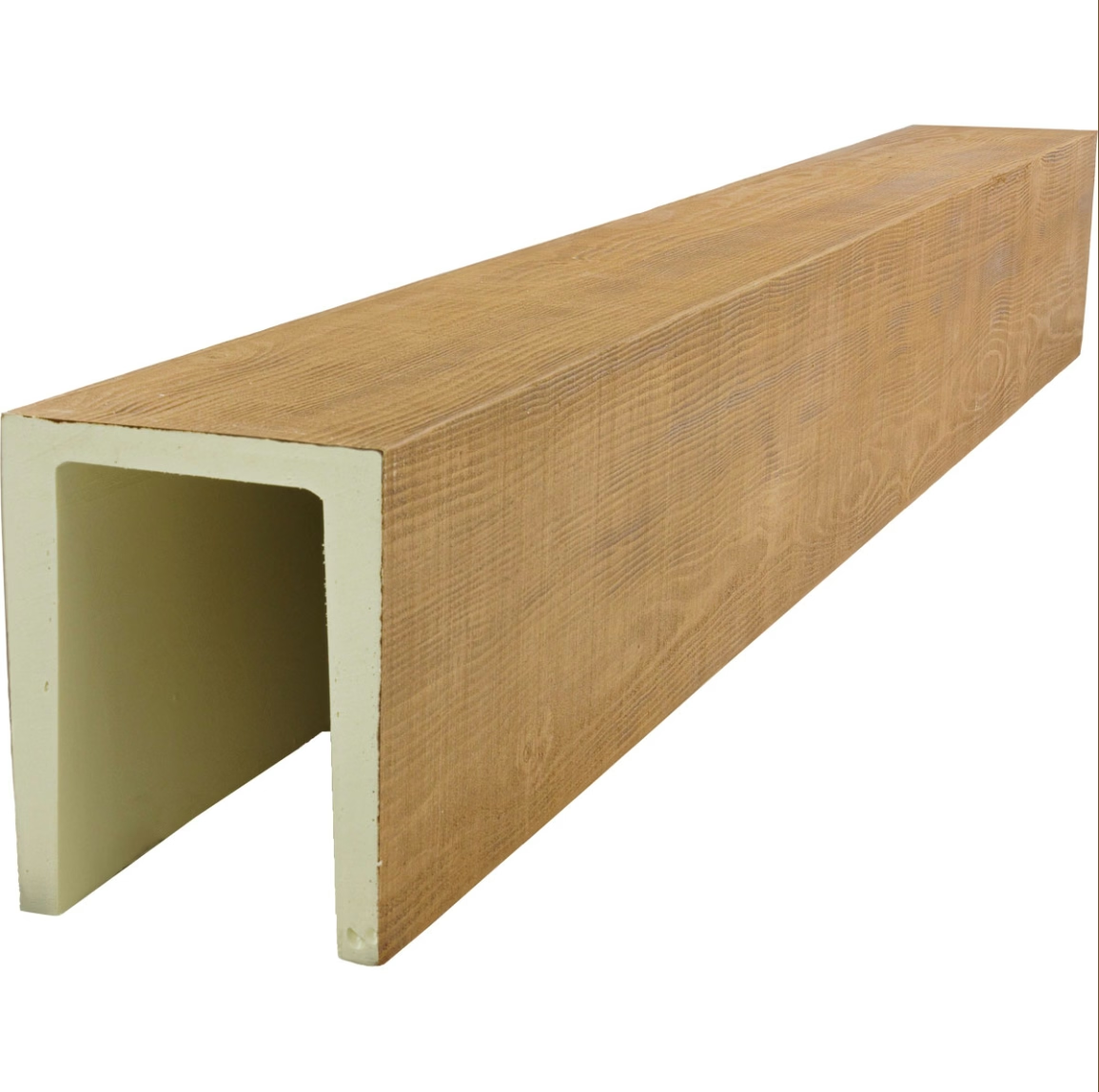
Low-VOC eco-friendly faux timber beams constructed from polyurethane represent an alternative that addresses many of these concerns while delivering the aesthetic outcomes that designers and occupants desire. Understanding the full picture requires examining how these products perform across environmental, health, and sustainability dimensions.
Understanding VOC Emissions
Volatile organic compounds describe a broad category of chemicals that evaporate at room temperature, releasing vapors that mixing with breathing air. The term encompasses thousands of distinct compounds with varying toxicity profiles, from relatively benign substances that occur naturally to highly regulated industrial chemicals with documented health effects.
Common sources in interior environments include paints, adhesives, sealants, cleaning products, and building materials of various types. The concentration of these compounds in indoor air can exceed outdoor levels by factors of two to five times or more, depending on material selection and ventilation rates. Prolonged exposure to elevated VOC levels has been associated with respiratory irritation, headaches, fatigue, and more serious conditions for sensitive individuals.
Regulatory frameworks address VOC content in various product categories, with paint and coating regulations being the most established. Building certification systems like LEED, WELL, and others award credits for material selections that minimize VOC emissions, creating market incentives for manufacturers to reformulate products toward lower-emission alternatives.
Polyurethane Faux Beam VOC Profiles
Modern polyurethane formulations have evolved substantially from earlier generations that released significant emissions during curing and use. Contemporary low-VOC formulations achieve emission levels that meet or exceed requirements for indoor use in sensitive environments like schools and healthcare facilities.
Manufacturing advances enable foam production with reduced catalyst levels and alternative blowing agents that minimize VOC generation. The resulting products cure completely during production, leaving minimal residual compounds available for emission. Third-party testing and certification verify these claims, providing specifiers with documented evidence of product performance.
The factory-controlled production environment also contributes to emission control. Unlike on-site finishing, where environmental conditions and application technique introduce variability, factory finishing occurs in controlled settings with calibrated equipment. This consistency produces uniform coverage and complete curing before products ship, eliminating the emission concerns that accompany wet finishing applications.
Independent testing laboratories provide emission certification that building standards recognize. Products bearing GREENGUARD Gold, SCS Indoor Advantage, or equivalent certifications have demonstrated low emission levels through standardized chamber testing. These certifications simplify specification for projects targeting building certifications, as the documentation requirements are already satisfied.
Sustainability Considerations
Beyond indoor air quality impacts, sustainable design professionals evaluate material choices through broader environmental lenses. The extraction, manufacturing, transportation, and disposal phases all contribute to a product's overall sustainability profile, and faux timber beams present some interesting trade-offs worth understanding.
Polyurethane foam derives from petroleum feedstocks, which raises legitimate concerns about resource depletion and the environmental impacts of petrochemical production. However, the durability of finished products—typically rated for fifty years or more of service—substantially extends their functional lifespan compared to natural wood alternatives that may require replacement due to decay, damage, or style changes. This longevity partially offsets the upstream environmental costs of raw material extraction.
The lightweight nature of polyurethane beams contributes to sustainability through transportation efficiency. A pickup truck can deliver enough faux beams for a large residence, while equivalent timber products might require a semi-truck. This difference in logistics reduces fuel consumption and associated emissions across the supply chain.
End-of-life considerations remain challenging for polyurethane products. Unlike natural wood, which decomposes naturally or burns cleanly, polyurethane does not biodegrade readily and presents recycling challenges. However, the long service life means that disposal concerns remain remote for products installed today, and industry developments in recycling technology continue to emerge.
Applications in Sensitive Environments
Certain building types present heightened concerns about indoor air quality that make low-VOC material selection particularly important. Understanding how low-VOC faux timber beams perform in these applications helps specifiers make informed decisions for their specific project types.
Residential interiors represent the most intimate exposure scenario, where occupants experience prolonged contact with material emissions in sleeping areas, children's rooms, and family spaces. Low-VOC faux beams contribute to healthier home environments without sacrificing the aesthetic qualities that make beam installations desirable. Parents appreciate the warmth these products add while knowing that air quality remains protected.
Educational facilities house children who face heightened vulnerability to respiratory impacts from airborne contaminants. Schools, daycare centers, and libraries benefit from material selections that minimize emission sources, particularly in spaces where students spend full days. The durability of polyurethane also proves valuable in these high-traffic environments where impacts and cleaning occur frequently.
Healthcare environments present perhaps the most stringent requirements, with infection control protocols and chemical sensitivity among patient populations demanding careful material evaluation. Low-VOC faux beams contribute to healing environments without introducing emission concerns that could complicate patient care. The material's resistance to moisture and cleaning chemicals also supports the sanitation protocols these facilities maintain.
Integration with Green Building Certifications
Building certification systems provide frameworks for evaluating and recognizing sustainable design achievements. Low-VOC faux timber beams can contribute points toward several certification categories, depending on the specific system and project characteristics.
LEED (Leadership in Energy and Environmental Design) awards credits for low-VOC materials in several categories, including interior paints and coatings, adhesives and sealants, and composite wood products. While faux timber beams may not qualify under all categories, the documentation that manufacturers provide supports credit claims where applicable. The overall contribution to indoor environmental quality addresses LEED's integrative approach to building performance.
WELL Building Standard emphasizes human health and wellness as central to building performance. The standard includes provisions for material selection that minimize VOC exposure and support occupant health. Faux timber beams with certified low-VOC performance contribute to WELL compliance, particularly in the Air quality concept provisions.
Other certification systems, including Green Globes, Living Building Challenge, and regional programs, similarly recognize low-VOC material selections. The specific requirements vary, but the underlying principle—that buildings should support occupant health—unites these frameworks. Documentation from manufacturers simplifies the compliance path considerably.
Design Applications and Aesthetic Flexibility
Addressing environmental and health concerns does not require accepting design compromises. Low-VOC eco-friendly faux timber beams offer the aesthetic flexibility that interior designers require while meeting the performance requirements that health-conscious building standards demand.
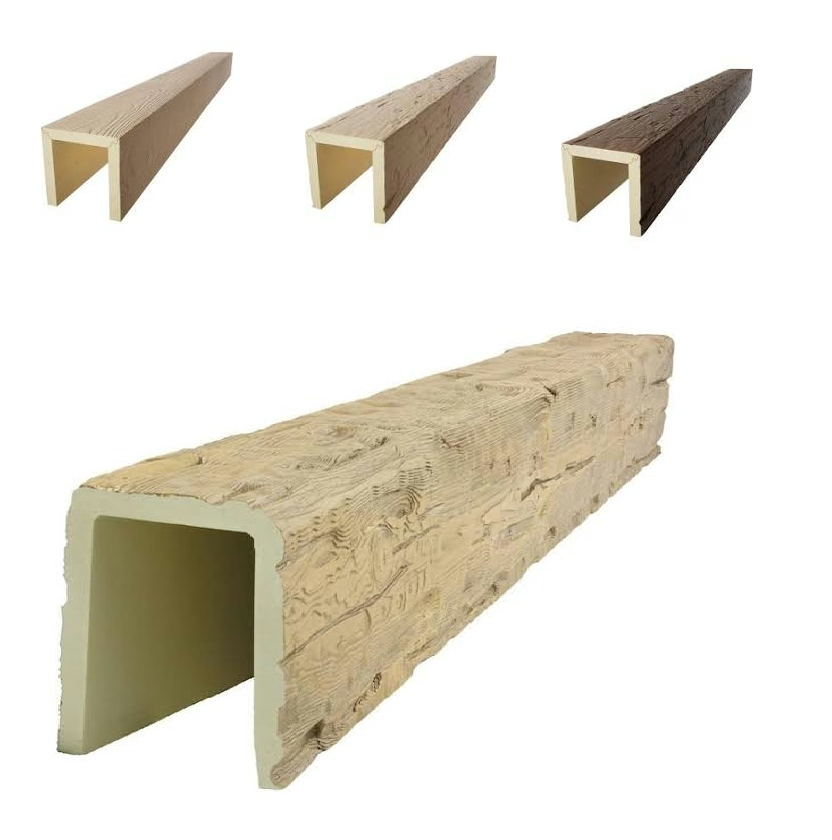
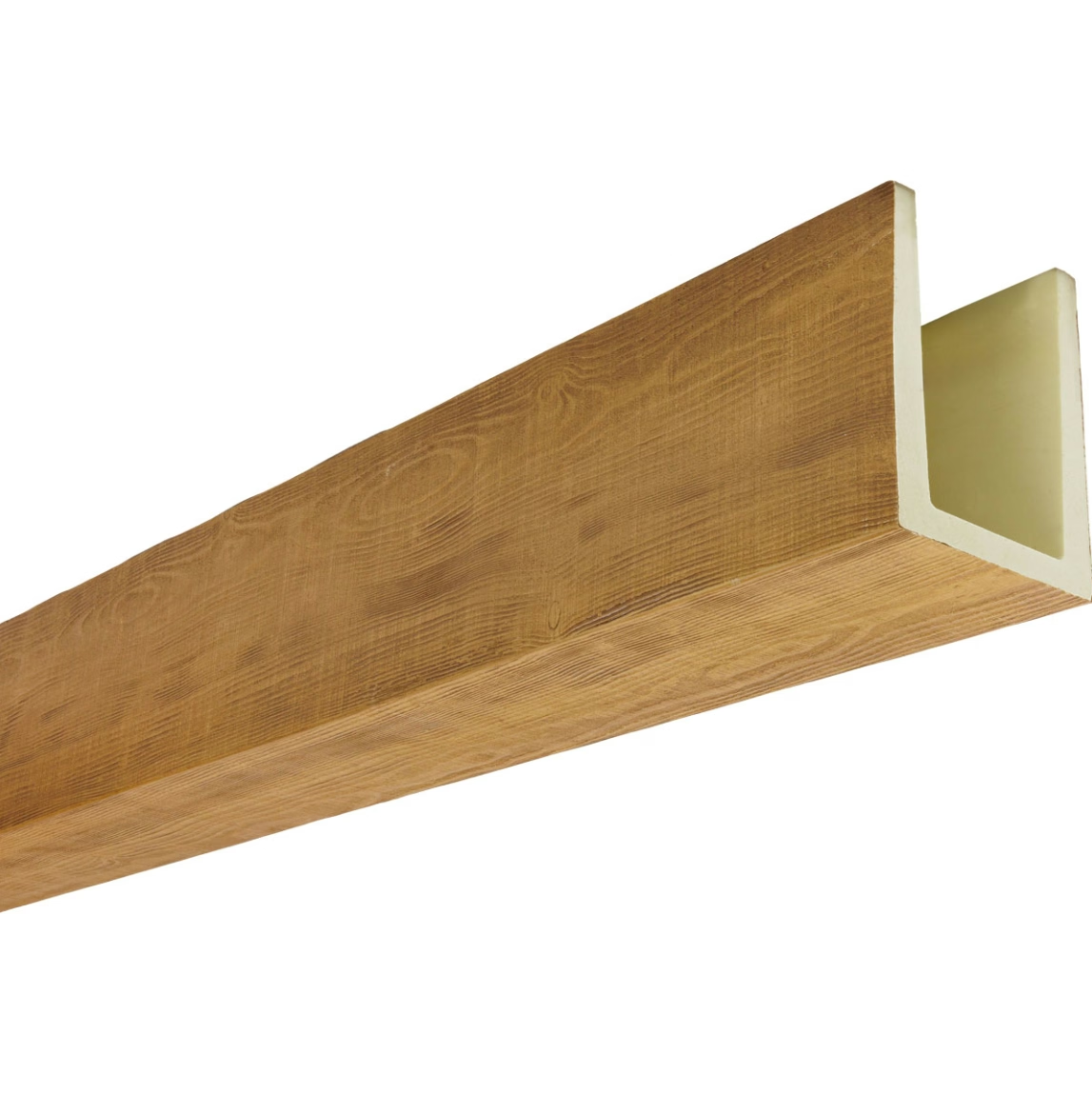
The manufacturing process enables precise reproduction of wood grain textures, knot patterns, and surface variations that create authentic timber character. Whether the project requires the bold grain of reclaimed barn wood, the refined figure of architectural grade timber, or the consistent appearance of factory-finished products, manufacturers can match specifications closely.
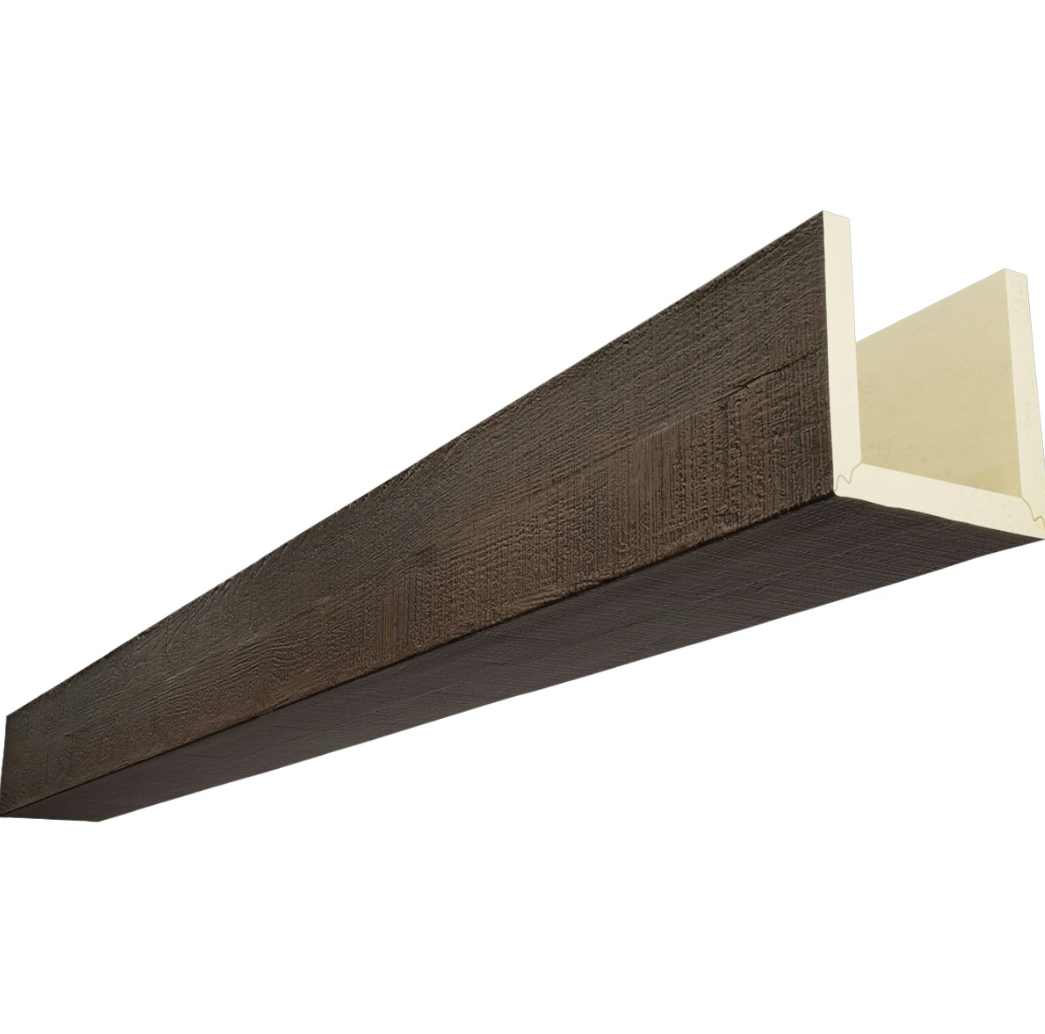
Finish options span the complete range from raw, paintable surfaces to factory-applied stains and paints in any color. This flexibility enables coordination with any design palette, from natural wood tones that complement other timber elements to painted finishes that integrate with contemporary interior schemes. The consistency of factory finishing ensures that color selections remain stable across large installations and over time.
Profile options similarly provide unlimited design flexibility. Standard configurations include box beams, U-shapes, and decorative corbels, while custom tooling enables unique profiles for distinctive applications. This variety ensures that aesthetic goals remain achievable regardless of the complexity that specific projects present.
The combination of environmental responsibility, health considerations, and design flexibility positions low-VOC eco-friendly faux timber beams as a compelling choice for projects where these factors matter. The material performance that polyurethane provides, combined with modern low-emission formulations, delivers the best of multiple worlds that earlier material options could not reconcile.
Technical References
ASTM standards cited in every specification
Test Data
Lab results from internal testing program
Updated 2026
Reviewed against current product specs