The places where we spend our time profoundly affect how we feel. This connection between environment and wellbeing has driven significant changes in how architects, builders, and homeowners approach material selection. What once seemed like purely aesthetic decisions now carry health implications that responsible specifiers must consider. Nowhere is this more relevant than in the materials that occupy our living spaces, including the decorative elements that define a room's character.
Ceiling beams occupy substantial visual real estate in any room they occupy. Their presence shapes how we perceive space, affects lighting dynamics, and contributes to the overall atmosphere that makes a house feel like home. Yet these benefits arrive embedded in materials whose health impacts we rarely consider thoroughly. The adhesives that secure beams, the finishes that protect their surfaces, and the materials from which they're constructed all interact with the air we breathe.
Polyurethane faux ceiling beams represent a category where significant manufacturing advances have transformed what were once problematic materials into options suitable for even the most health-conscious applications. Understanding these advances helps explain why specifiers increasingly choose these products for projects where indoor air quality remains a priority.
The Evolution of Polyurethane Formulations
Polyurethane chemistry has evolved dramatically since the material first entered widespread commercial use. Early formulations prioritized performance characteristics—durability, adhesion, flexibility—while giving less attention to the compounds released during production and use. These early products often carried noticeable odors and continued emitting low levels of volatile compounds throughout their service lives.
Modern manufacturing has fundamentally changed this picture. Advanced formulation techniques enable foam production with substantially reduced VOC generation, while alternative catalyst systems and blowing agents minimize the emission potential of finished products. The result is a material that maintains its physical performance characteristics while meeting stringent indoor air quality requirements.
The shift toward water-based finishing systems has further improved emission profiles. Where once solvent-based coatings contributed significant VOC loads during application and curing, water-based alternatives achieve comparable durability with minimal emissions. Factory application in controlled environments ensures complete curing before products reach installation sites, eliminating the emission concerns that accompany field finishing.
These advances did not happen accidentally. Regulatory pressure, market demand, and manufacturer innovation combined to drive the industry toward better environmental performance. Today, specifiers can choose from multiple product lines specifically formulated for low-emission applications, with third-party certification providing verification that claims match reality.
Manufacturing Controls and Quality Assurance
Factory production offers advantages beyond formulation improvements. Controlled manufacturing environments enable quality assurance measures that eliminate the variability that affects site-finished products. Every step of production occurs according to documented procedures, with testing at critical points verifying that products meet specifications.
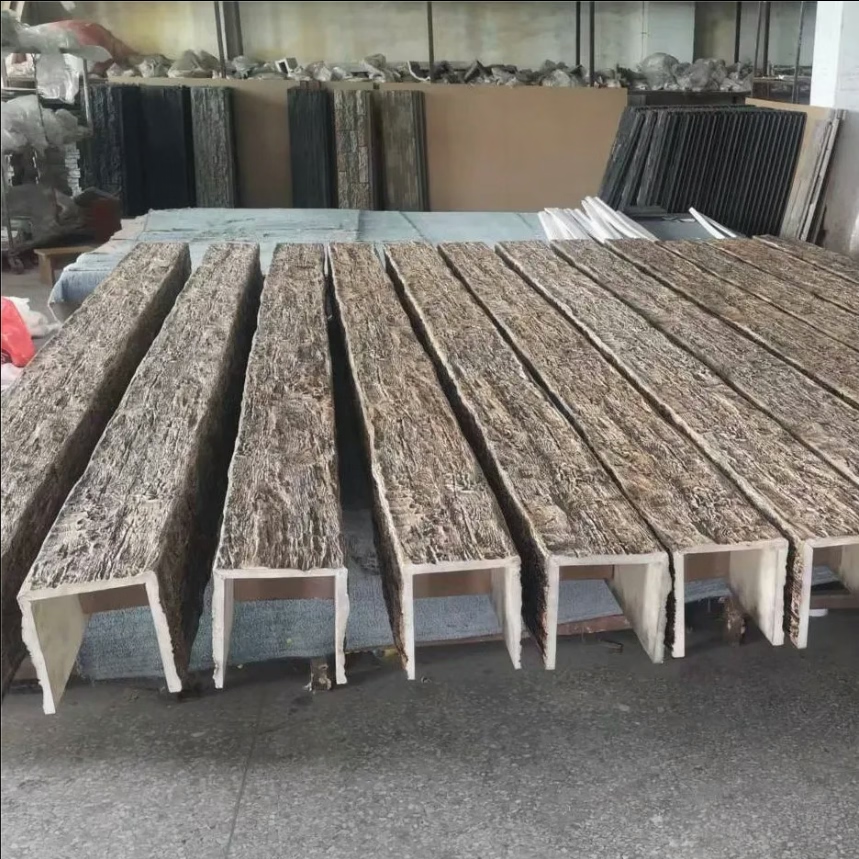
Raw material inspection ensures that incoming components meet formulation requirements before entering production. Mixing procedures follow precise protocols that ensure consistent foam characteristics across production runs. Curing conditions are monitored and controlled, ensuring complete reaction before products proceed to finishing stages.
Finishing operations occur in ventilation systems designed to capture and control emissions. Workers benefit from protective equipment and engineering controls that minimize their exposure during application. The finished products cure completely within the factory environment, reaching their final emission-stable condition before packaging and shipping.
Testing laboratories verify emission performance through standardized chamber testing. Products meeting established thresholds receive certification that specifiers can document for project compliance. These certifications, including GREENGUARD and similar programs, represent investment in quality systems that ensure consistent performance batch after batch.
Health Implications of Material Selection
The health implications of material choices extend across occupant populations with varying sensitivities. While most individuals experience no acute effects from typical VOC exposures, sensitive populations may notice irritation, headaches, or respiratory symptoms even at relatively low concentration levels. These effects, while usually temporary, undermine the comfort and productivity that interior spaces should support.
Children face particular vulnerability due to their developing respiratory systems and higher breathing rates relative to body size. Schools, daycare facilities, and family homes benefit from material selections that minimize emission sources, particularly in spaces where young people spend extended periods. The long-term health implications of chronic low-level exposure remain subjects of ongoing research, but the precautionary principle suggests minimizing unnecessary exposures.
Elderly individuals and those with pre-existing respiratory conditions similarly benefit from reduced exposure to airborne irritants. Senior living facilities, healthcare environments, and residences where immunocompromised individuals reside should prioritize materials with documented low-emission performance. The incremental cost of these products often proves negligible compared to the health benefits they support.
Even healthy adults experience subtle effects from VOC exposure that affect cognitive performance and subjective comfort. Research has demonstrated measurable impacts on decision-making and task performance in environments with elevated VOC levels. Office spaces, classrooms, and other work environments benefit from low-emission material selections that support occupant performance and wellbeing.
Certification Systems and Compliance Pathways
Building certification systems provide frameworks for documenting and verifying sustainable design achievements. Understanding how these systems address material emissions helps specifiers navigate compliance requirements efficiently.
LEED certification from the US Green Building Council awards points for material selections that minimize VOC contributions. The Indoor Environmental Quality credit category specifically addresses emissions from paints, coatings, adhesives, and flooring. While structural and decorative beams may not qualify under all subcategories, documentation from manufacturers supports point claims where applicable.
WELL Building Standard emphasizes human health as its central organizing principle. Material restrictions in the Air quality concept require documentation of VOC content and emissions for certain product categories. Low-VOC certified beams contribute to WELL compliance documentation, simplifying the certification process for projects targeting this standard.
Local building codes and health regulations may also impose requirements on material selection in specific applications. Schools, healthcare facilities, and public buildings often face stricter requirements than residential construction. Specifying products with recognized certifications provides documentation that satisfies code officials and regulatory inspectors.
Design Integration and Performance
Achieving design goals while maintaining air quality priorities requires selecting products that perform across multiple dimensions. Polyurethane faux ceiling beams offer advantages beyond their emission characteristics that make them attractive for design-conscious applications.
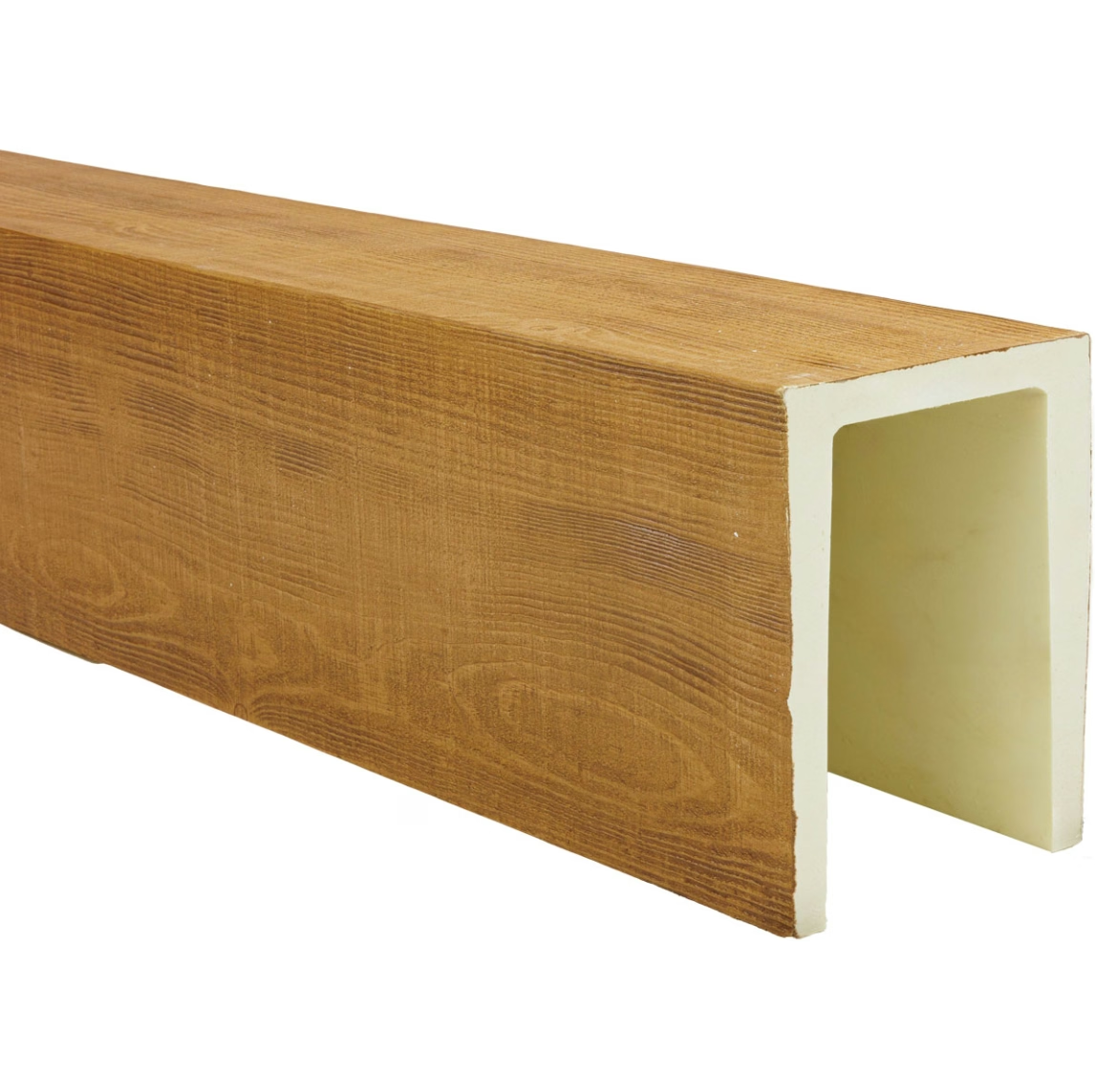
The material accepts detailed texturing that reproduces authentic wood grain with remarkable fidelity. Mold-making techniques capture the subtle variations that distinguish premium timber, transferring these details to foam products consistently. The resulting appearance satisfies even discerning observers who might question whether the beams are genuine timber or engineered alternatives.
Structural performance meets practical requirements without the weight penalties that accompany natural timber. Lightweight construction simplifies handling and installation, reducing labor costs and structural loading. The material resists impacts, moisture, and temperature variations that would damage natural wood, maintaining appearance through years of service.
Finish durability ensures that aesthetic quality persists throughout the product lifecycle. Factory-applied coatings resist scratching, UV degradation, and cleaning chemicals that would affect site-finished surfaces. This durability translates to maintained appearance without the refinishing cycles that natural wood requires, reducing lifecycle maintenance requirements.
Making Informed Specification Decisions
Responsible material selection requires evaluating products across environmental, health, and performance dimensions. Low-VOC eco-friendly polyurethane faux ceiling beams score well across all these criteria, making them appropriate choices for projects where these factors matter.
Requesting documentation from manufacturers enables verification of emission claims. Product data sheets should specify VOC content and cite any third-party certifications that verify performance. For projects requiring code compliance or certification credits, pre-construction documentation review prevents delays during inspection.
Comparing products across manufacturers reveals variation in formulation and performance. Not all low-VOC claims carry the same weight; certifications from recognized testing laboratories provide more reliable verification than manufacturer self-declaration. Building specification writers should establish documentation requirements early in the design process to ensure that selected products meet project needs.
The cumulative impact of material choices shapes overall building performance. While individual product selections may seem minor in isolation, the aggregate effect of many low-emission choices creates indoor environments that genuinely support occupant health. Ceiling beams, though not among the highest-emission material categories, contribute to this cumulative effect and deserve consideration within the broader context of material specification.
Choosing low-VOC polyurethane faux ceiling beams represents one decision within a comprehensive approach to healthy interior environments. When combined with appropriate ventilation, source control, and other IAQ strategies, these products help create spaces where occupants breathe easier and feel better, which ultimately remains the fundamental purpose of building design.
Technical References
ASTM standards cited in every specification
Test Data
Lab results from internal testing program
Updated 2026
Reviewed against current product specs


