Wood grain is the fingerprint of the tree that produced it. Each species carries a characteristic grain pattern — the arrangement of growth rings, medullary rays, and annual ring variations — that distinguishes it from every other timber. Mahogany's grain is among the most distinctive: the famous cathedral grain pattern, with its tall, narrow arches of darker grain rising between lighter zones, creates a visual rhythm that is immediately recognizable and deeply associated with the material's prestige. Polyurethane faux beams that accurately replicate this cathedral grain pattern offer premium interiors an authentic wood aesthetic that is difficult to distinguish from the genuine material.
Understanding Mahogany Grain Anatomy
The cathedral grain pattern that defines mahogany's appearance is created by the way the tree's growth rings interact with the surface of a flatsawn board. In genuine mahogany, the growth rings are relatively flat and consistent, creating long, flowing lines of darker latewood that arch gently upward in the center of each annual ring. Between these arches, the lighter earlywood creates zones of softer, less pronounced figure.
This pattern is not merely decorative; it is a record of the tree's growth history. The width of the growth rings, the consistency of the ring pattern, and the presence or absence of figure — the shimmering, three-dimensional quality that appears when the wood is viewed from different angles — all speak to the conditions under which the tree grew. Fine mahogany, with tight growth rings and consistent figure, came from old-growth trees that grew slowly over centuries. The cathedral grain pattern is therefore not just a visual feature; it is a marker of the material's quality and provenance.
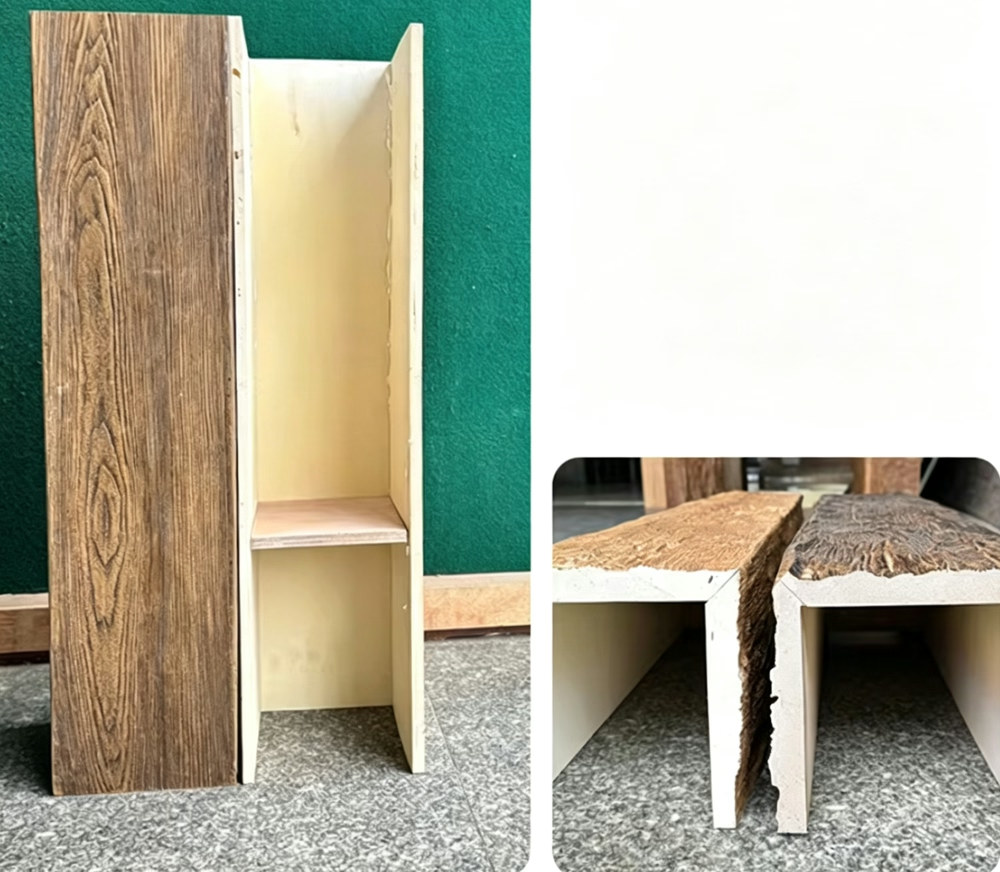
Premium polyurethane faux beams replicate this grain pattern through multi-stage molding and embossing processes that capture the dimensional quality of real cathedral grain. The result is not a flat printed pattern but a surface with actual texture — peaks and valleys that catch light differently across the grain, creating the same shimmering figure that distinguishes genuine mahogany from printed imitations.
The Authenticity Challenge in Faux Wood Products
The market for faux wood products is vast, and the quality spectrum is correspondingly wide. At the lower end, faux wood products use simple printed patterns that read as flat and unconvincing from any reasonable viewing distance. At the upper end, premium products use multi-layer processes that produce surfaces that are genuinely difficult to distinguish from natural wood — not because they look the same from across the room, but because they behave the same way as light moves across their surfaces throughout the day.
The difference between these quality levels is most apparent in the grain. A printed grain pattern has no depth; it looks the same from every angle and under every lighting condition. A genuine wood surface changes as the light changes — the cathedral arches appear to deepen or flatten, the figure shifts between visible and subtle, and the overall texture seems to breathe as the viewing angle and illumination change. Premium polyurethane beams achieve this same responsive quality, which is why they read as genuine even to observers who know what they are looking at.
The consistency of grain across a beam installation matters as well. Natural mahogany varies from board to board, sometimes dramatically, and an installation of genuine mahogany beams might include pieces with very different grain patterns and figure intensity. Premium faux beams are manufactured with controlled grain patterns that provide visual consistency across the installation while maintaining enough natural variation to avoid looking obviously artificial.
Design Applications for Authentic Grain Beams
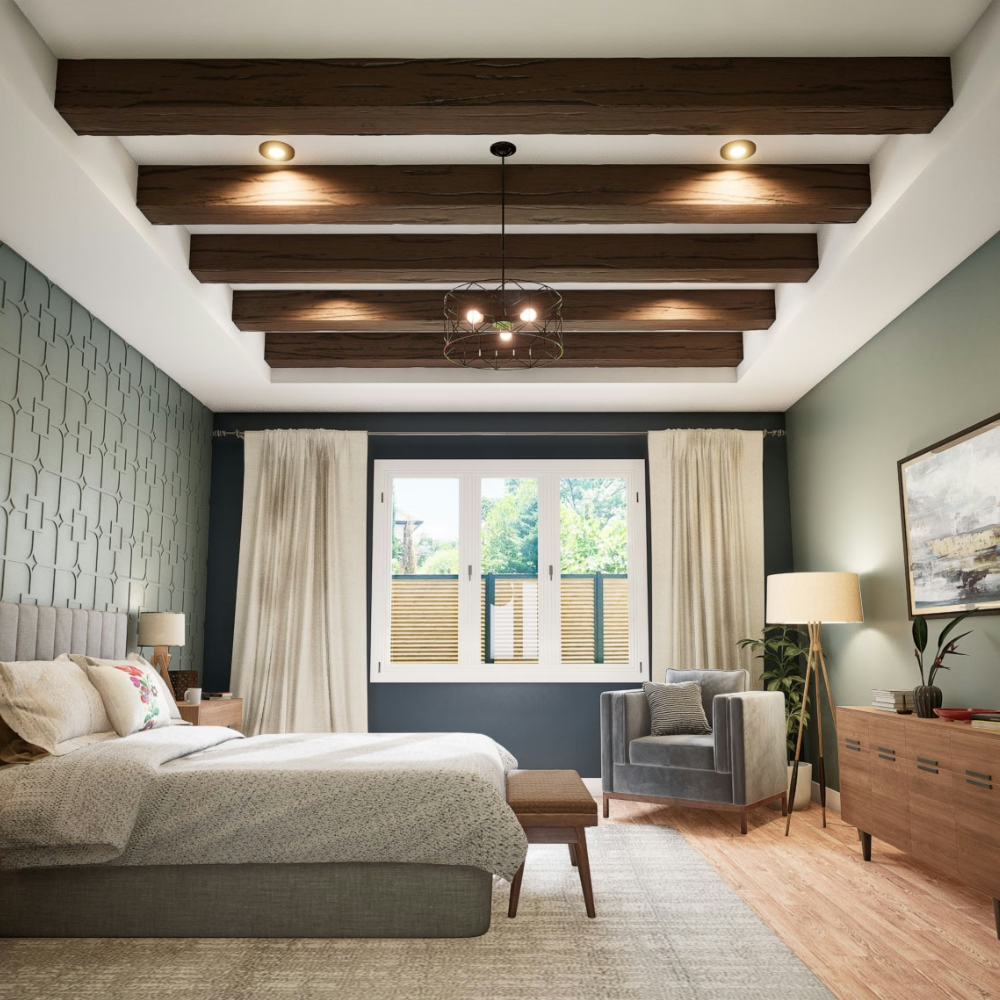
The authentic cathedral grain pattern of premium mahogany faux beams opens up design applications that would be impractical or impossible with natural timber. Long, continuous beam runs — spanning entire room widths or running the full length of a corridor — require consistent grain quality that natural mahogany cannot guarantee across multiple boards. Polyurethane beams, manufactured to consistent specifications, deliver that consistency without sacrificing visual quality.
Beams in curved or radiused applications represent another area where faux technology excels. Natural mahogany cannot be bent to match curved ceiling profiles without extensive steam-bending processes that risk cracking or checking. Polyurethane beams can be manufactured in curved profiles or bent on-site to match radius conditions, allowing design expressions that would be structurally impractical with genuine timber.
Large-scale commercial installations benefit from the consistency of faux mahogany beams in ways that residential designers might not immediately appreciate. In a hotel corridor spanning hundreds of linear meters, every beam must match every other beam in profile and finish if the installation is to read as coherent. Natural timber variation makes this consistency challenging to achieve and expensive to maintain. Polyurethane beams eliminate this variability, producing an installation that looks identical from the first beam to the last.
Finish Options for Mahogany Grain Beams
Premium mahogany grain beams are available in multiple finish options that expand their design versatility beyond the classic reddish-brown mahogany tones. While the traditional mahogany finish remains the most requested, lighter and darker variants serve different aesthetic purposes.
Natural mahogany finishes in pale or blonde tones reproduce the appearance of younger mahogany or lighter species with similar grain patterns. These finishes work well in contemporary interiors where the warmth of the grain is desired without the depth of the traditional mahogany color. The pale natural finish reflects more light, making it appropriate for rooms with limited natural illumination.
Dark mahogany finishes — approaching espresso or ebony tones — create a more dramatic effect. These deep finishes suppress the grain pattern visually while maintaining the beam's overall shape and presence. Dark mahogany beams are particularly effective in contemporary interiors with light walls and minimal furniture, where the dark ceiling element provides visual anchor without the full warmth of a traditional mahogany finish.
Caring for Mahogany Grain Beam Surfaces
The care regimen for premium mahogany grain polyurethane beams is straightforward and undemanding. Unlike genuine mahogany, which benefits from periodic oiling or waxing to maintain its color depth, polyurethane beams maintain their appearance indefinitely without treatment. The color is dimensional — built into the material throughout rather than applied to the surface — which means that it cannot fade, peel, or wear away under normal use.
Routine cleaning involves dusting with a soft cloth or gentle vacuuming to remove accumulated particles. For more thorough cleaning, a soft cloth dampened with mild soap solution removes fingerprints, cooking grease, or environmental contaminants without risk of surface damage. Abrasive cleaners or pads should be avoided, as they can dull the surface finish over repeated use.
In commercial applications — hotel lobbies, restaurant dining rooms, retail environments — the cleaning frequency should increase proportionally to traffic levels. Daily dusting and weekly cleaning is typically sufficient to maintain the appearance of mahogany grain beams in busy commercial spaces. The maintenance simplicity of polyurethane makes this cleaning schedule practical and cost-effective.
The Value Proposition of Premium Grain Beams
For projects that demand the aesthetic quality of genuine mahogany grain without its practical limitations, premium polyurethane faux beams represent the optimal specification. The cathedral grain pattern is reproduced with sufficient fidelity to satisfy the most detail-oriented clients. The finish quality is maintained indefinitely without ongoing treatment. The installation is faster, simpler, and less expensive than genuine timber. And the material performs better in the humidity-fluctuating, UV-intensive, and maintenance-demanding conditions that characterize real-world interior environments.
These advantages are not compromises; they are improvements. Premium faux beams deliver more of what clients actually want — the appearance of mahogany, the warmth of timber, the character of crafted detail — while eliminating the inconveniences and limitations that would otherwise attach to those qualities.
Technical References
ASTM standards cited in every specification
Test Data
Lab results from internal testing program
Updated 2026
Reviewed against current product specs


