The specification process for high-end interior projects is an exercise in comprehensive evaluation. Every material decision is scrutinized for visual quality, performance characteristics, maintenance requirements, installation practicality, and long-term value. In this evaluation, decorative ceiling beams occupy an interesting position: they are highly visible design elements that contribute disproportionately to a room's character, yet they are often specified with less rigor than wall or floor finishes that receive more direct occupant contact. The result is a category of specification inconsistency that premium polyurethane decorative beams are specifically designed to resolve.
The Visual Impact of Decorative Ceiling Beams
A room without ceiling beams has a fundamentally different character from the same room with beams. The ceiling — the fifth wall, as designers call it — is the largest unbroken surface in most interiors. Without treatment, it is visually passive, contributing nothing to the room's atmosphere beyond its color. Beams transform this surface from passive to active, introducing rhythm, texture, shadow, and the irreplaceable warmth of wood grain.
This transformation is measurable in psychological terms. Spaces with timber ceiling beams are consistently perceived as warmer, more crafted, and more inviting than equivalent spaces without beams. The effect is immediate and universal — visitors register the presence of beams before they consciously process any other design element, and their overall impression of the space is colored by this first observation.
For interior designers, this immediate impact is both an opportunity and a responsibility. The opportunity is to create a design element that delivers disproportionate value relative to its cost and complexity. The responsibility is to specify beams with enough visual quality and design coherence that they enhance rather than undermine the overall design. Premium decorative ceiling beams fulfill this responsibility by providing the visual quality that justifies their inclusion.
Profile Selection for Different Interior Contexts
The profile of a decorative ceiling beam — its cross-sectional shape and dimensional proportions — is the primary determinant of its visual character. Different profiles suit different interior contexts, and the specification should be driven by the room's architectural style, ceiling height, and overall design vocabulary rather than by product availability.
Classic profiles with chamfered edges and subtle detailing suit traditional, transitional, and classical interiors. These profiles echo the proportions and details of genuine structural timber beams, creating an authentic appearance that reads as honest and crafted. The chamfer edge creates interesting shadow lines that animate the beam's lower surface as light moves across the ceiling throughout the day.
Contemporary profiles — clean-lined box beams, minimal reveals, geometric cross sections — suit modern and minimalist interiors. These profiles derive their character from proportion and finish rather than ornamentation. A perfectly proportioned contemporary box beam in a rich wood finish can be as visually compelling as the most elaborately detailed traditional beam, and it does so through the elegance of its geometry rather than through decorative elements.
Rustic profiles with pronounced texture, irregular edges, and visible grain work best in farmhouse, lodge, and industrial-chic interiors. These profiles prioritize authenticity and natural character over refinement, and they pair naturally with other rustic materials: stone, brick, wrought iron, and weathered metal.
Finish Quality and Its Effect on Perception
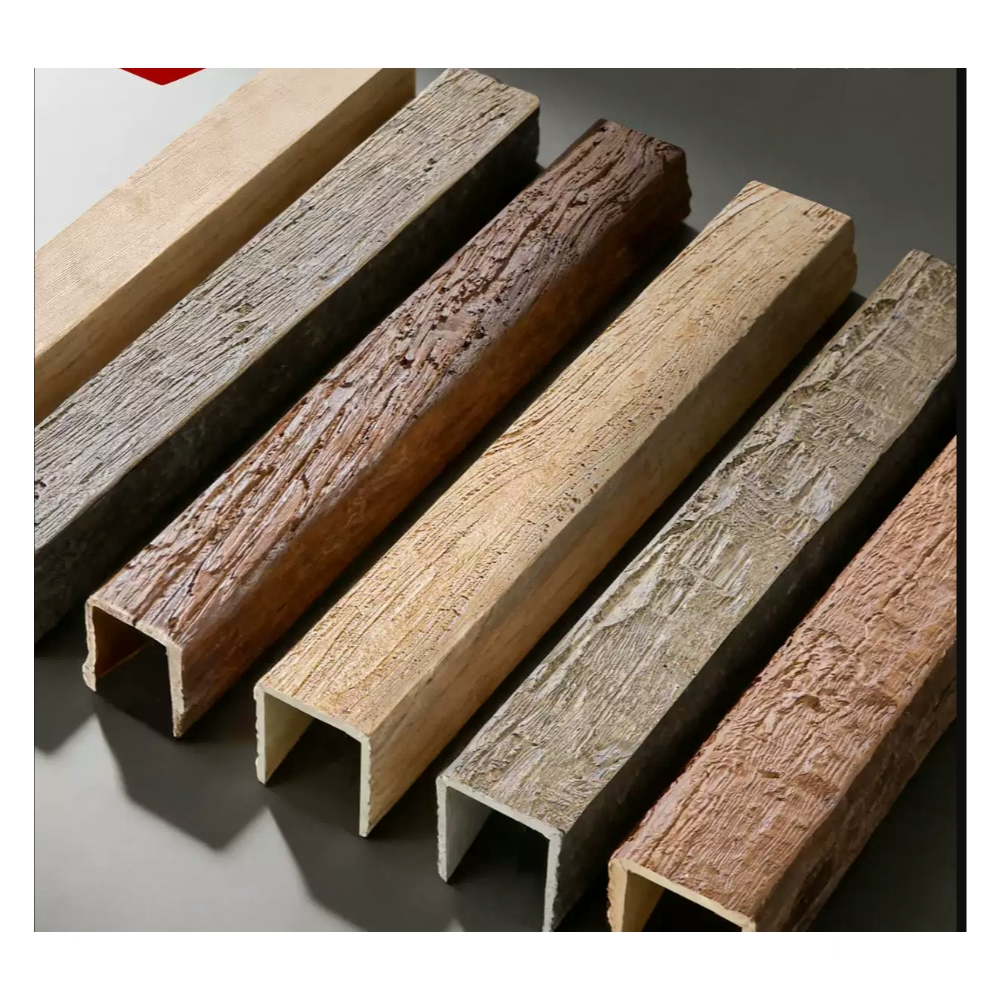
The finish of a decorative ceiling beam determines its color, texture, and surface quality. These characteristics are the primary determinants of how the beam is perceived — whether it reads as premium or budget, authentic or imitation, refined or crude. The difference between a premium finish and a standard finish is immediately apparent to any observer, regardless of their expertise.
Premium finishes on polyurethane beams are achieved through multi-layer application processes that build color depth throughout the material. The surface texture replicates the fine grain and dimensional variation of genuine timber, with actual relief rather than printed texture. The result is a finish that behaves like genuine wood under all lighting conditions and viewing angles.
Standard finishes, by contrast, often rely on single-layer application or printed patterns that look flat and unconvincing at close range. They may photograph acceptably from a distance but fail under the direct scrutiny that high-end interior projects inevitably receive. The additional cost of premium finishes is modest relative to the overall project budget, but the visual improvement is substantial.
The Practical Advantages of Polyurethane in High-End Projects
Beyond aesthetics, polyurethane decorative beams offer practical advantages that make them better suited to high-end interior projects than genuine timber.
The weight advantage is significant for projects with upper-floor installations, suspended ceilings, or existing structures with limited load capacity. Polyurethane beams can be installed without structural reinforcement that genuine timber of equivalent visual presence would require.
The dimensional stability of polyurethane ensures that beams maintain their alignment and appearance regardless of environmental conditions. Natural timber expands and contracts with humidity changes, which can eventually manifest as visible gaps, misalignment, or finish damage. Polyurethane does not exhibit these behaviors, ensuring that the installation remains as perfect years after installation as it was on the day it was completed.
The consistency of manufactured polyurethane eliminates the quality variability that characterizes natural timber. Every beam in an installation matches the specification precisely, eliminating the inspection, selection, and occasional rejection that natural timber requires. For projects with demanding design standards, this consistency is not merely convenient; it is essential.
Coordinating Beams With Lighting and Other Ceiling Elements
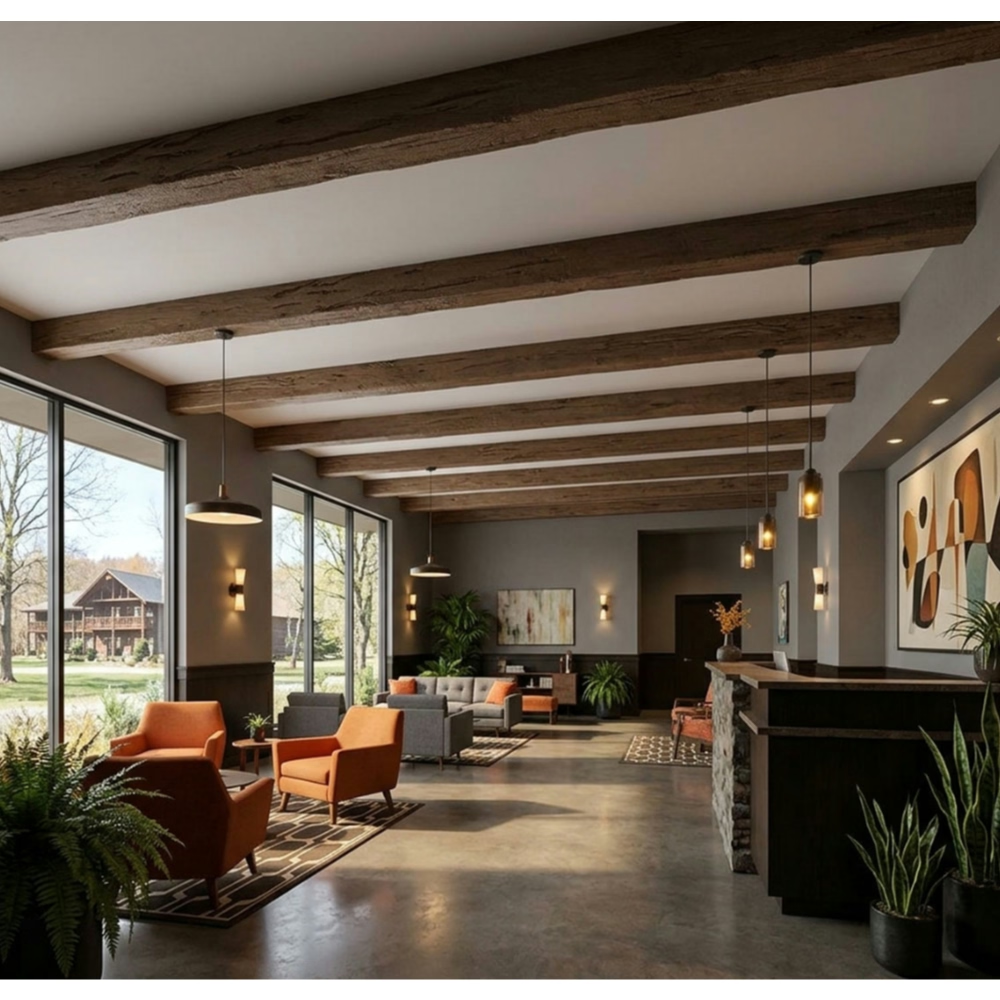
Decorative ceiling beams do not exist in isolation. They interact with every other element that occupies the ceiling plane: light fixtures, HVAC grilles, sprinkler heads, smoke detectors, acoustic panels, and the ceiling surface itself. Successful beam installations address these interactions as design opportunities rather than technical obstacles.
Light fixtures can be mounted to beam surfaces, suspended from beams, or positioned between beams. Each approach creates a different relationship between light and wood, and each produces a distinct visual effect. Pendant fixtures hung from beam surfaces create the impression of fixtures that belong in the space rather than being added as afterthoughts. Recessed fixtures between beams create linear lighting patterns that reinforce the beam rhythm.
HVAC grilles and other mechanical penetrations can be detailed to coordinate with the beam arrangement. Grilles positioned to align with beam bays, or custom grille frames finished to match the beam color, integrate mechanical systems into the beam design rather than disrupting it. This level of coordination requires early planning and close collaboration between the design team, the beam manufacturer, and the mechanical contractor.
Long-Term Value and Design Investment
Premium decorative ceiling beams represent an investment in the long-term quality of the interior. Unlike fashion-driven finishes that may feel dated within a decade, timber beams are a classic architectural element that has been valued for centuries and will continue to be valued for centuries more. The warmth, texture, and character they bring to an interior are not subject to design trend cycles in the way that furniture styles, color palettes, or decorative accessories are.
This timeless quality makes beam installations particularly valuable in properties that are intended for long-term ownership or that serve as investment assets. The beams contribute to the property's market value, its rental potential, and its ongoing appeal to discriminating occupants. Unlike finishes that require periodic updating, quality beam installations deliver their design value indefinitely with minimal maintenance.
The premium specification of high-end interior projects deserves the premium quality that decorative ceiling beams can provide. When every other element in the room has been selected for its quality and visual contribution, the ceiling beams should do the same. Premium polyurethane decorative beams make this quality possible without the compromises that lesser materials would introduce.
Technical References
ASTM standards cited in every specification
Test Data
Lab results from internal testing program
Updated 2026
Reviewed against current product specs


