Teak occupies a singular position among world timbers—revered for centuries for its exceptional durability, distinctive grain patterns, and warm golden hues that deepen beautifully with age. This Asian hardwood has decorated the finest interiors, adorned luxury yachts, and furnished grand estates across cultures and continents. Its popularity stems from a rare combination of beauty and resilience that has never been successfully replicated by lesser species. Until now.
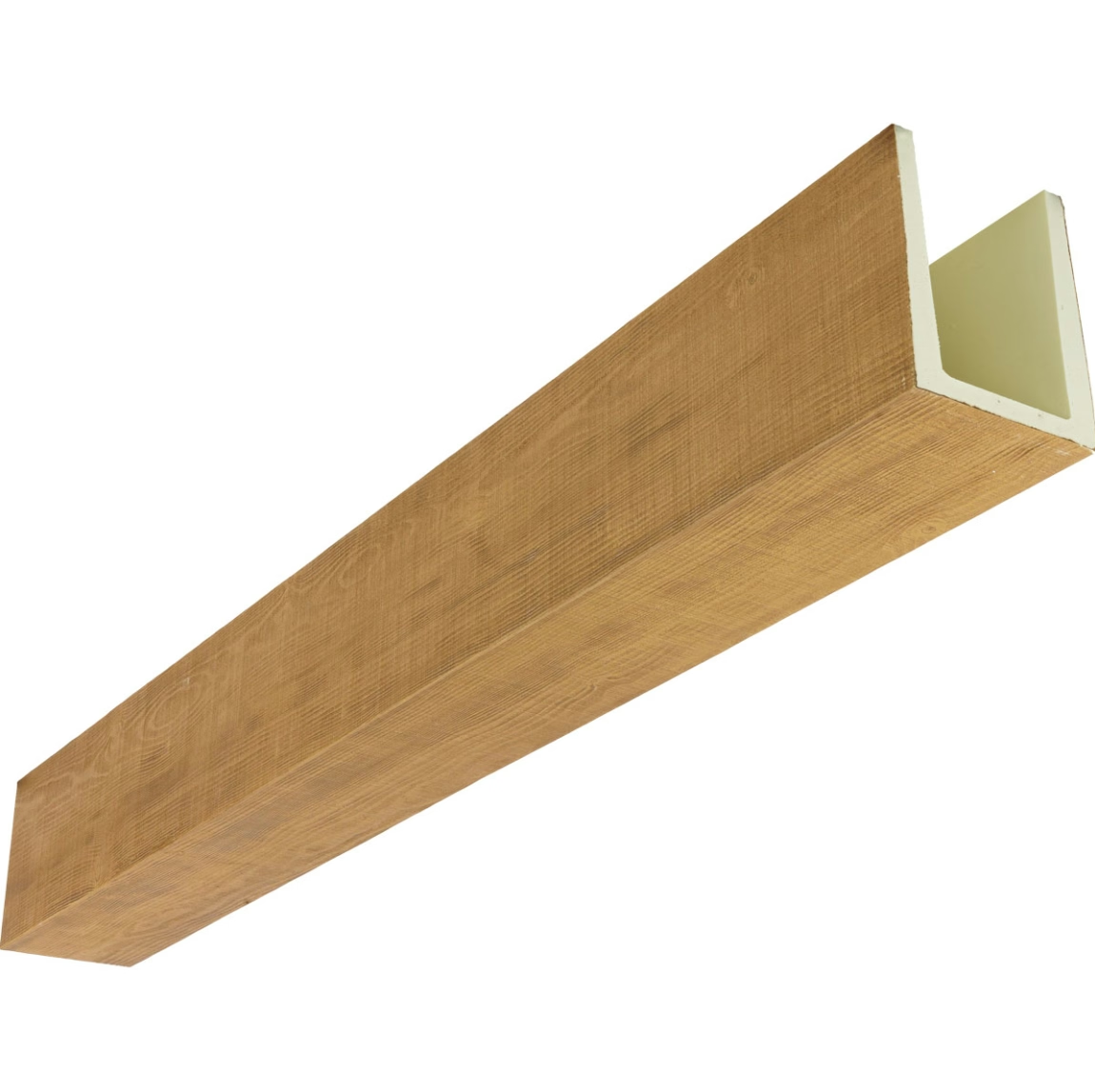
Modern polyurethane technology has enabled the creation of faux teak beams that capture the species' distinctive character with remarkable fidelity. Advanced molding processes reproduce every aspect of teak's famous grain—the subtle rippling, the occasional dark streaks, the interplay of golden and amber tones that makes each piece unique. Meanwhile, the polyurethane core provides performance characteristics that even the finest natural teak cannot match.
Understanding Teak's Distinctive Characteristics
Authentic teak derives its reputation from botanical properties developed over decades of slow growth in tropical forests. The wood's natural oils provide moisture resistance and insect deterrence that protect the living tree and continue protecting the lumber throughout its service life. These oils contribute to teak's distinctive golden color and contribute to the characteristic texture that woodworkers have prized for generations.
Grain patterns in teak range from straight and uniform to dramatically figured, with characteristics varying by origin, age, and individual tree variation. Burmese teak, generally considered the finest variety, features tight, consistent grain with warm honey coloring. Indonesian teak may display more dramatic figuring and darker tones. Each source produces recognizable characteristics that experienced observers can identify.
The aging process transforms teak progressively. Freshly milled teak displays bright golden tones that gradually deepen through amber to rich honey-brown. Surface oxidation creates silver-gray patina when teak weathers naturally, while oiled surfaces maintain golden warmth indefinitely. These aging characteristics contribute to teak's sense of timelessness—pieces seem to belong to earlier eras while remaining perfectly serviceable.
The Manufacturing of Faux Teak Beams
Premium polyurethane faux teak beams begin with detailed mold-making processes that capture authentic wood characteristics. Craftspeople select exemplary teak samples, preparing surfaces to highlight grain detail while preserving natural variation. High-quality silicone molds capture every nuance of the original surface, enabling faithful reproduction across multiple beam units.
The polyurethane formulation itself contributes to realistic appearance. Premium manufacturers use multi-component systems that achieve proper flow during injection while maintaining dimensional stability after cure. The material must fill mold details completely while avoiding the gas bubbles or voids that would compromise surface quality.
Surface finishing transforms raw molded parts into convincing wood imitations. Multiple finish steps layer color and texture, building depth that approaches natural teak's complexity. Hand application of certain finishes ensures that each beam receives individual attention, creating subtle variations that prevent the repetitive appearance of purely mechanical production.
Color and Finish Options
Faux teak beams are available across a range of finish options that accommodate diverse design contexts. Understanding these variations helps in selecting appropriate specifications for specific applications.
Light teak finishes capture freshly milled wood appearance with bright golden tones and minimal aging. These contemporary treatments suit modern interiors seeking warmth without period associations. The fresh appearance complements current design trends toward natural materials in clean, minimal settings.
Golden teak finishes represent the classic appearance that most designers envision when specifying teak. Warm honey tones with subtle amber highlights create the rich warmth associated with fine teak furniture and architectural detail. This versatile finish coordinates comfortably with most neutral palettes while providing enough character to anchor room design.
Dark teak finishes reference aged wood with deeper brown tones and more pronounced grain contrast. These traditional treatments suit period interiors, classical architectural contexts, and settings seeking maximum visual weight. The darker palette creates formal atmosphere while maintaining the warmth that distinguishes wood from painted alternatives.
Application in Residential Interiors
Residential applications benefit from teak beam aesthetics in contexts ranging from contemporary minimalism to traditional elegance. The species' versatility enables integration across design vocabularies when appropriately specified.
Living rooms and great rooms often feature teak beams as focal points that establish room character. The substantial presence these elements provide creates visual anchoring for furniture arrangement and defines spatial hierarchy within open floor plans. Position beams to frame conversation areas or highlight architectural features like fireplaces or significant windows.
Kitchens present more demanding applications where beams must withstand temperature fluctuation, humidity variation, and occasional moisture exposure. Faux teak handles these conditions without the maintenance demands that natural teak would require near cooking and cleaning activities. The material resists staining and moisture damage while maintaining its appearance through years of kitchen use.
Master bedrooms benefit from the warm enclosure that teak beams provide. The organic texture overhead creates psychological comfort that promotes rest and relaxation, while the species' associations with quality and craftsmanship reinforce the sense of sanctuary that primary bedrooms should provide.
Commercial and Hospitality Applications
Commercial interiors demand materials that withstand intensive use while maintaining consistent appearance. Teak grain faux beams satisfy these requirements while providing the aesthetic refinement that upscale commercial environments require.
Restaurant applications range from casual dining to fine dining contexts, with beam treatment scaling accordingly. Casual establishments might feature lighter teak finishes with simple beam profiles that establish warmth without formality. Fine dining venues benefit from richer finishes and more substantial profiles that complement elevated design expectations.
Hotel installations include guest rooms, suites, and public areas. Consistent appearance across multiple units supports brand standards while creating memorable experiences for guests. The durability advantage proves particularly valuable in high-traffic areas where maintenance demands would otherwise prove challenging.
Spa and wellness environments benefit from teak's associations with natural luxury. The warm golden tones create atmosphere conducive to relaxation, while moisture-resistant performance handles humid spa conditions without deterioration. Some spa designs intentionally reference teak's nautical associations, connecting wellness to ocean journeys and tropical destinations.
Installation Best Practices
Successful faux teak beam installation requires attention to fundamentals that ensure secure mounting and seamless appearance. Understanding these requirements helps in planning installations and evaluating contractor qualifications.
Surface preparation ensures proper adhesion and secure mounting. Existing ceiling conditions should be assessed before installation, with any repairs completed before beam mounting begins. Painted surfaces may require sanding or priming to achieve adequate bond strength for adhesive attachment.
Mounting systems vary by beam size, ceiling construction, and aesthetic requirements. Standard installations use concealed brackets and adhesive combinations that provide secure attachment while hiding mounting hardware. Heavier beams may require additional support through ceiling joist attachment where construction permits.
Professional installation ensures proper handling, precise alignment, and clean joints between beam sections. Experienced installers understand how to manage corners, transitions, and light fixture integration while maintaining consistent alignment throughout the installation.
Maintenance Advantages Over Natural Teak
One of faux teak's most compelling advantages over natural wood lies in maintenance simplicity. While authentic teak requires periodic oiling to maintain its characteristic golden color, polyurethane faux beams need no such treatment.
Natural teak exposed to sunlight gradually silver without regular oiling, creating the weathered appearance that some designers appreciate but many find undesirable. Maintaining golden tones requires annual or semi-annual oiling with appropriate teak oils, a maintenance commitment that building managers often find burdensome.
Faux teak maintains consistent appearance indefinitely without treatment. The color is engineered into the surface layers, eliminating fading, silvering, and the uneven weathering that affects natural wood. This permanence simplifies maintenance planning while ensuring consistent appearance across all installed beams.
Cleaning faux teak requires only the mild soap and water that household maintenance normally involves. The non-porous surface resists staining from spills, cosmetics, and the various substances that accumulate in living spaces. Natural teak's porosity makes it susceptible to staining that oiling cannot fully prevent.
Environmental Considerations
Sustainable design increasingly influences material selection across residential and commercial applications. Faux teak presents interesting considerations in this context, with advantages and disadvantages relative to natural alternatives.
Natural teak has faced significant sustainability challenges, with old-growth forests depleted across traditional growing regions. Contemporary teak production occurs in plantation forests, with certification systems like FSC providing chain-of-custody verification. However, the long growth cycles required for quality timber mean that even certified teak involves extended timeframes from planting to harvest.
Polyurethane production involves petroleum-derived raw materials and manufacturing energy. However, the material's exceptional durability—spanning decades without replacement—distributes this initial impact across extended service periods. Additionally, some manufacturers incorporate recycled content into polyurethane formulations, reducing virgin material requirements.
The longevity comparison favors faux products. Natural teak, despite its reputation for durability, eventually requires replacement as surfaces wear and structural integrity degrades. Polyurethane faux beams routinely outlast natural wood in service applications, ultimately reducing cumulative resource consumption.
Cost Considerations
Budget planning for faux teak beam installation should account for material costs, installation expenses, and long-term financial implications. Comprehensive evaluation enables informed decision-making that balances aesthetic goals against financial constraints.
Material costs for quality faux teak beams typically fall below equivalent natural teak products of comparable visual impact. The premium for authentic old-growth teak significantly exceeds polyurethane alternatives, while plantation-grown teak of equivalent appearance may cost substantially more than faux options.
Installation expenses may favor natural wood in some contexts. Traditional woodworkers understand authentic timber handling, while polyurethane installation requires different techniques that not all contractors master. However, the lightweight nature of polyurethane often simplifies handling enough to offset specialized installation requirements.
Lifecycle cost analysis favors polyurethane when accounting for maintenance requirements. Natural teak's periodic oiling, refinishing, and eventual replacement all carry costs that polyurethane eliminates entirely. These avoided expenses often exceed initial cost premiums within the first few years of service.
Design Coordination Guidelines
Successful teak beam integration requires coordination with surrounding materials, finishes, and design elements. Understanding these relationships ensures cohesive results that enhance rather than compromise overall design composition.
Wall colors should complement rather than compete with teak warmth. Warm neutrals—cream, ecru, soft beige—allow teak to dominate without harsh contrast. Cool grays create complementary contrast that some designers appreciate, though the relationship may feel less harmonious than warm-on-warm combinations.
Flooring materials require similar consideration. Hardwood floors in species complementing teak—either matching for unity or contrasting for interest—create material continuity that ties rooms together. Stone floors in warm tones harmonize naturally, while cooler stone may require area rugs to bridge the visual gap.
Furniture finishes should relate to beam treatment without requiring exact matching. Different wood species on furniture and beams create the material variety that prevents monotony, while maintaining tonal harmony prevents discord. The goal is deliberate composition rather than random accumulation.

Luxury teak grain polyurethane faux wood ceiling beams offer compelling alternatives to natural teak in applications where the species' distinctive beauty is desired without its maintenance demands. The realistic appearance, exceptional durability, and straightforward care requirements make these products increasingly popular across residential and commercial applications.
Whether you're designing a contemporary living room seeking warmth or a commercial space requiring durable aesthetic refinement, teak grain faux beams deserve serious consideration. The investment provides lasting beauty without the ongoing commitment that natural wood requires.
Selecting Quality Products
Not all faux teak beams achieve equivalent quality, and specification decisions significantly affect installation results. Understanding what distinguishes premium products helps in making informed purchasing decisions.
Surface detail quality varies dramatically between manufacturers. Premium products feature grain patterns with natural variation—subtle differences between beams that prevent repetitive appearance. Lower-quality alternatives may show obvious mold seams, uniform patterns that repeat across multiple pieces, or simplified texture that fails to capture teak's characteristic complexity.
Finish adhesion determines long-term appearance retention. Quality products apply finishes that bond chemically with polyurethane substrate, maintaining appearance through cleaning and environmental exposure. Inferior finishes may chip, peel, or wear prematurely, compromising appearance long before the structural core requires replacement.
Manufacturer support and warranty coverage indicate product confidence. Reputable manufacturers stand behind their products with meaningful warranties and responsive customer service. Verify coverage terms, claim processes, and manufacturer availability before purchasing.
Customization Opportunities
Beyond standard catalog offerings, custom fabrication enables unique specifications that match specific design visions. Understanding available customization options expands the range of achievable results.
Custom profile development creates beam shapes beyond standard catalog options. Whether matching unique existing details, creating entirely original forms, or referencing specific architectural elements, custom molding expands available possibilities.
Color matching services enable precise coordination with existing materials. Provide samples of materials to match, and manufacturers can develop custom finishes that integrate seamlessly with surrounding elements. This service proves particularly valuable in renovation projects where new beams must coordinate with existing woodwork.
Climate Performance
Teak grain faux beams perform reliably across diverse climate conditions that would challenge natural wood alternatives. Understanding these performance characteristics helps in specifying appropriate products for specific applications.
Humid environments—coastal locations, tropical climates, pool-adjacent spaces—typically damage natural wood despite teak's natural oils. Polyurethane's complete moisture resistance handles these conditions without deterioration, swelling, or mold growth that affects natural alternatives.
Temperature cycling affects natural wood through expansion and contraction that eventually manifests as checks, gaps, and structural compromise. Polyurethane tolerates thermal cycling without dimensional change, maintaining tight joints and secure mounting through years of seasonal variation.
UV exposure in sunlit spaces gradually degrades natural wood surfaces, creating uneven weathering and color change. Quality faux teak products incorporate UV stabilizers that resist this degradation, maintaining consistent appearance despite direct sun exposure.

Teak grain polyurethane faux wood ceiling beams represent significant advancement in architectural materials, providing aesthetic refinement previously available only through expensive natural wood. The combination of realistic appearance, exceptional durability, and minimal maintenance makes these products attractive across diverse applications.
Consider how teak grain faux beams might enhance your next project. The investment provides lasting beauty without the ongoing commitment that natural wood demands.
Technical References
ASTM standards cited in every specification
Test Data
Lab results from internal testing program
Updated 2026
Reviewed against current product specs


