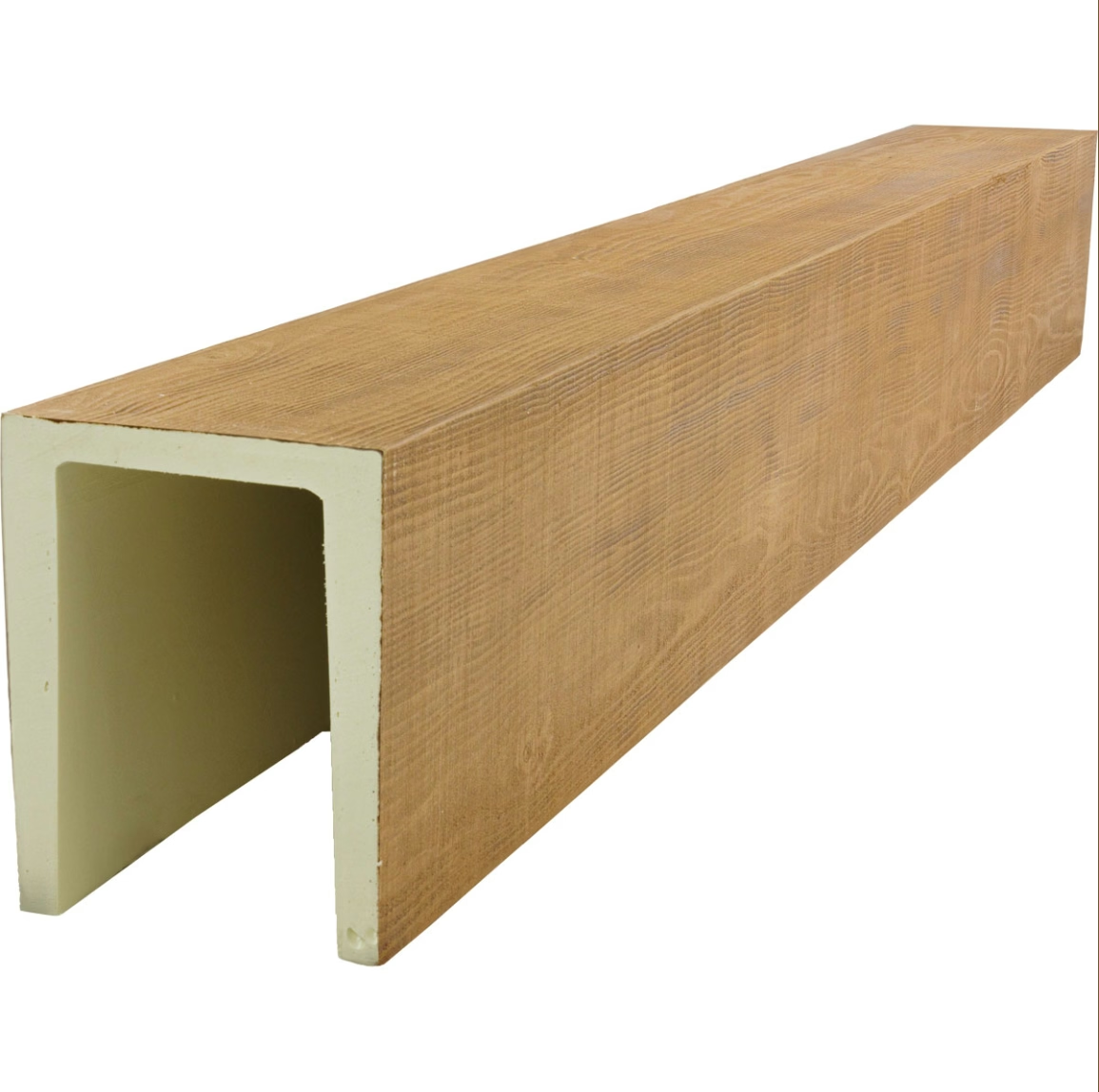
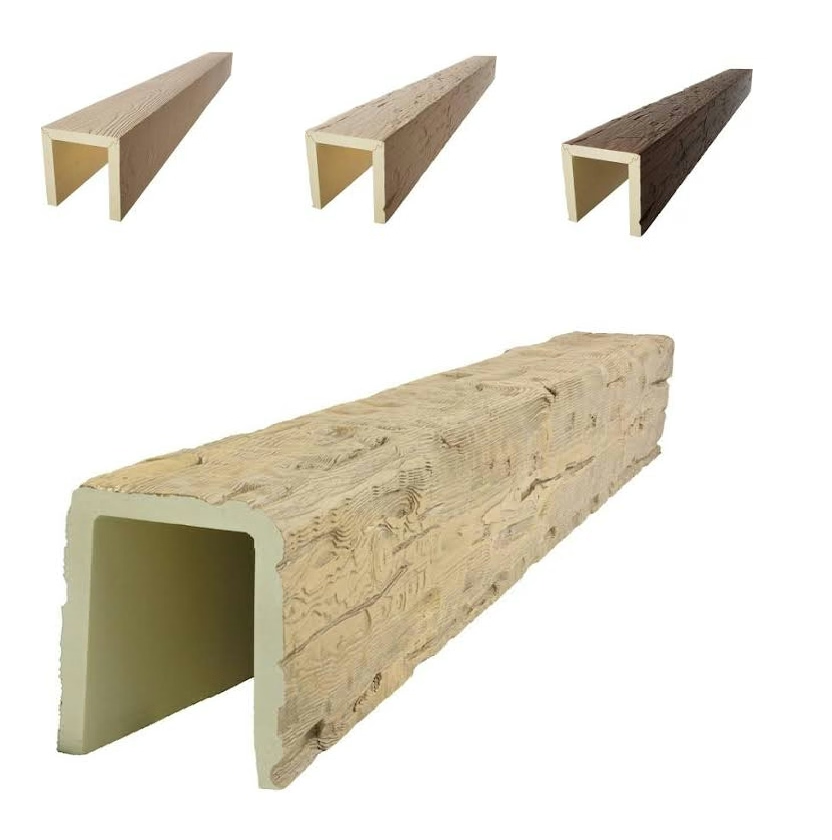
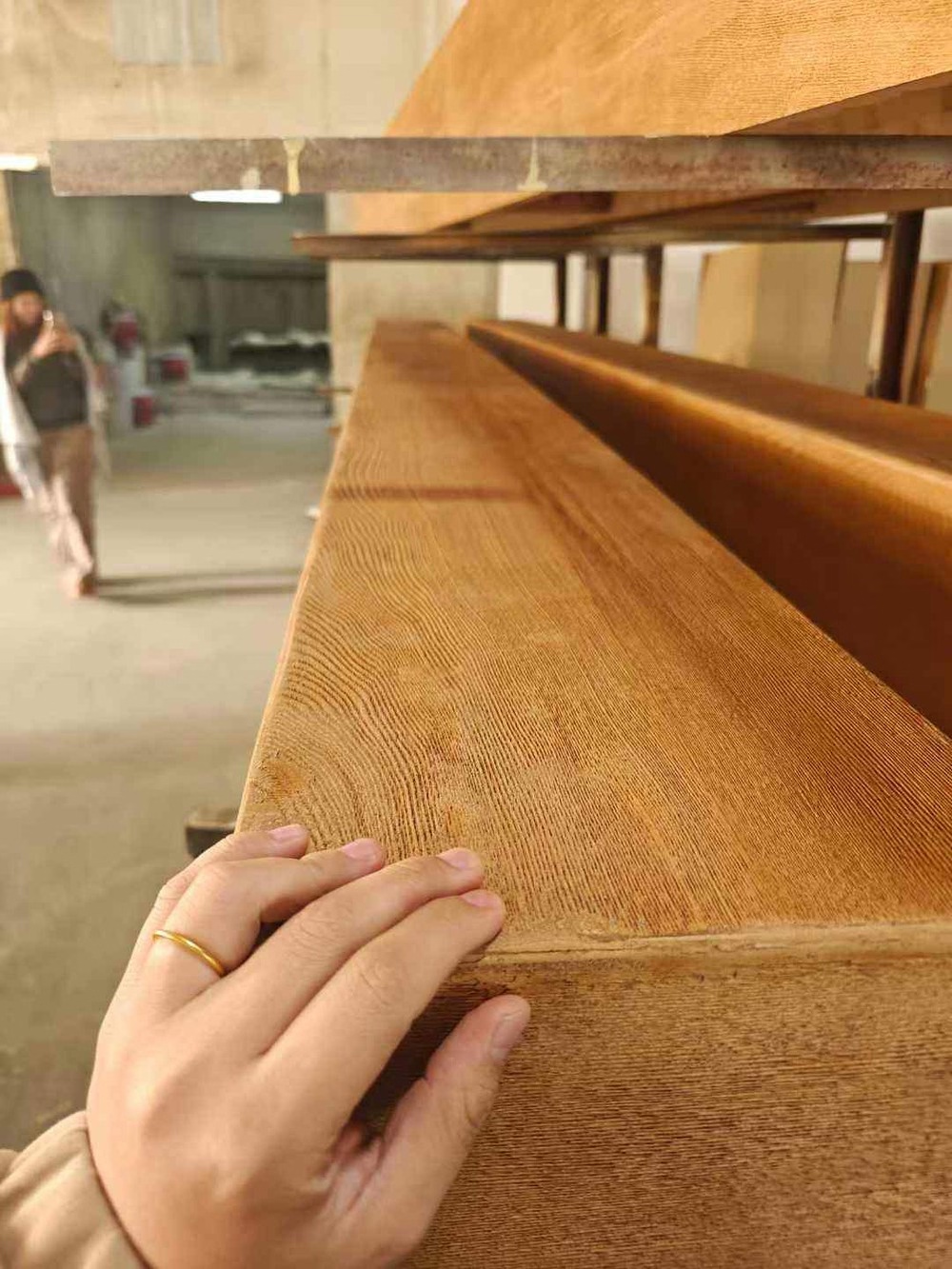
Material selection involves trade-offs that extend beyond initial appearance and cost, with long-term maintenance requirements significantly affecting ownership experience. When selecting ceiling beams, understanding the practical differences between faux and solid wood options enables decisions that align with actual lifestyle and maintenance capabilities. What appears more economical initially may prove more burdensome over time, while higher upfront investment might deliver years of maintenance-free satisfaction.
This comprehensive comparison examines maintenance requirements across multiple dimensions, providing the information necessary for informed decision-making. The goal is not to declare universal winners but to clarify trade-offs so that readers can select materials appropriate to their specific circumstances.
Initial Maintenance Requirements
The maintenance relationship between faux and solid wood begins at installation, with different requirements establishing ownership patterns that continue throughout service life.
Solid wood beams require no initial treatment upon installation if properly finished before delivery. However, any cutting, drilling, or modification during installation exposes raw wood that requires immediate sealing to prevent moisture absorption and finish mismatch. Installers must have appropriate finishing products available and skilled application technique.
Polyurethane faux beams arrive pre-finished from manufacturers, requiring no site finishing regardless of modification requirements. Cutting and drilling produce edges that match finished surfaces without additional treatment, simplifying installation that solid wood would complicate.
Edge sealing for solid wood becomes critical if modifications occur after factory finishing. The mismatch between factory-applied finish and field-applied sealant may become visible, particularly on lighter-colored beams where color differences prove more apparent.
Routine Cleaning Requirements
Regular cleaning represents the most frequent maintenance activity for ceiling beams in both residential and commercial settings. The cleaning approach and frequency differ significantly between materials.
Solid wood beams accumulate dust in grain patterns and surface texture, requiring attention that smooth surfaces would not demand. The cleaning frequency depends on environmental conditions—dusty environments, HVAC airflow patterns, and occupancy levels all affect dust accumulation rates. Typically, weekly dusting with appropriate tools maintains appearance.
Polyurethane faux beams with textured surfaces accumulate similar dust but resist the deeper penetration that natural wood grain permits. The non-porous surface allows dust to sit atop texture rather than settling into recesses, making removal easier and more thorough. Less frequent attention typically maintains equivalent appearance.
Cleaning products require careful selection for solid wood, as harsh chemicals may damage finishes or wood surfaces beneath. pH-neutral cleaners safe for wood finishes prevent damage that would require refinishing to correct. Polyurethane tolerates a broader range of cleaning products without damage risk.

Moisture Sensitivity and Humidity Response
Moisture represents one of the most significant maintenance concerns for solid wood, affecting both appearance and structural integrity over time.
Solid wood absorbs atmospheric moisture, expanding and contracting with humidity variations. This dimensional change manifests as gaps between beams and adjacent surfaces, visible movement in joint locations, and eventual checking or cracking as wood fibers separate. In severe cases, sustained high humidity promotes mold growth on wood surfaces.
Humidity cycling affects solid wood differently based on species characteristics. Dense hardwoods like oak expand and contract less dramatically than softer species, but all natural wood responds to moisture changes. Premium solid wood products may incorporate engineered construction that reduces movement, but this approach adds cost while addressing only dimensional concerns.
Polyurethane faux beams exhibit no moisture absorption or dimensional change regardless of atmospheric conditions. The closed-cell structure prevents moisture penetration entirely, eliminating the movement, gaps, and structural concerns that affect natural wood. This stability proves particularly valuable in humid climates, coastal environments, and spaces with variable climate control.
UV Exposure and Sunlight Effects
Ceiling beams often receive significant sunlight exposure through windows and skylights, with UV radiation affecting materials differently based on composition.
Solid wood responds to UV exposure through surface degradation that lightens wood color and eventually breaks down surface fibers. The effect progresses gradually—months or years depending on exposure intensity—but eventually requires intervention through sanding, refinishing, or acceptance of weathered appearance. Some species resist UV degradation better than others, but none remains completely unaffected.
Surface finishes on solid wood provide limited UV protection, with the finish type determining effectiveness and longevity. Oil finishes offer minimal protection, requiring frequent reapplication. Polyurethane topcoats provide better resistance but eventually fail, exposing underlying wood to direct UV attack.
Polyurethane faux beams incorporate UV stabilizers that resist degradation from sunlight exposure. Premium products maintain appearance for years despite direct sun exposure, though exact performance depends on formulation quality and exposure intensity. Less expensive alternatives may show eventual surface chalking or color shift under intense UV conditions.
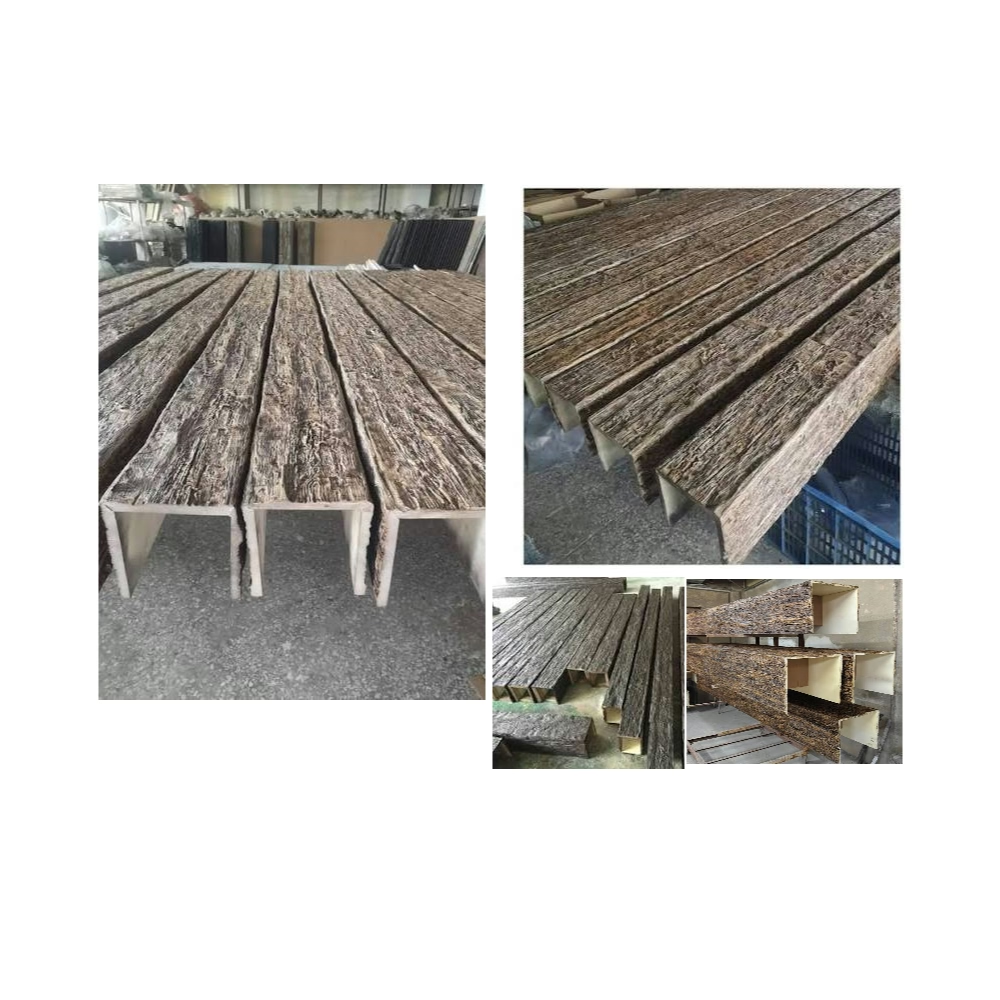
Impact Resistance and Damage Susceptibility
Ceiling beams in active environments face occasional impact from objects moved beneath them—ladder impacts, thrown items, or accidental contact during furniture rearrangement. Impact resistance affects both appearance maintenance and repair requirements.
Solid wood dents and mars relatively easily, with impact damage revealing the softer wood beneath surface treatments. Deep dents may require wood filler application and refinishing to conceal, while surface scratches can often be addressed through localized refinishing. The visibility of impact damage varies with finish type—darker finishes and stains tend to hide minor damage better than light natural finishes.
Polyurethane's resilience absorbs impacts that would dent natural wood, with the material's flexibility distributing force rather than fracturing. However, severe impacts may still cause surface damage including gouges or finish disruption. The repairability of such damage depends on severity and finish type.
Scratch resistance differs between materials, with polyurethane's harder surface generally providing better resistance to surface abrasion. Natural wood's softer surface scratches more readily, though scratch visibility varies with finish type and wood species.
Long-Term Refinishing Requirements
Even with excellent routine maintenance, solid wood beams eventually require refinishing to address accumulated wear, damage, and surface degradation. This periodic requirement represents significant maintenance commitment that polyurethane eliminates.
Solid wood refinishing involves complete surface preparation including cleaning, sanding to remove old finish, and potentially stain application before new topcoats. The process requires skill for quality results, typically demanding professional attention or significant DIY learning investment. The disruption—furniture relocation, coverage requirements, ventilation during finishing—affects space usability for extended periods.
The refinishing frequency depends on use intensity, environmental conditions, and original finish quality. High-traffic commercial applications may require refinishing every three to five years, while residential installations might extend to ten years or more. Each refinishing cycle represents significant cost and disruption.
Polyurethane faux beams require no refinishing regardless of service duration. Surface damage that would require refinishing natural wood may be addressed through simpler repair methods—or may not occur at all given the material's durability. The elimination of refinishing cycles represents substantial long-term maintenance savings.
Pest Resistance and Biological Concerns
Organic materials face biological threats that synthetic alternatives avoid entirely. Wood-boring insects, fungal organisms, and other biological agents affect solid wood but not polyurethane.
Solid wood requires chemical treatment to resist insect attack, with effectiveness depending on treatment quality and ongoing maintenance. Termites, wood-boring beetles, and carpenter ants all threaten wood structural elements, potentially causing damage that isn't immediately apparent. Professional inspections during property maintenance should include wood element assessment.
Fungal decay affects solid wood exposed to sustained moisture, with rot developing in conditions that promote mold and mildew growth. Even treated wood may succumb to fungal attack if moisture exposure exceeds treatment protection. The structural implications of wood rot—particularly in load-bearing elements—demand serious attention.
Polyurethane provides no food source for biological organisms, eliminating pest and decay concerns entirely. This resistance proves particularly valuable in environments where pest management proves difficult—remote properties, agricultural settings, or buildings with historical pest problems.
Climate Zone Performance Variations
Maintenance requirements vary by climate zone, with some regions presenting challenges that affect one material significantly while leaving the other unaffected.
Humid subtropical and tropical climates create ongoing moisture challenges that stress solid wood continuously. The persistent humidity promotes expansion, contraction, and potential biological growth that demands constant attention. Polyurethane's moisture resistance provides decisive advantage in these environments.
Dry desert climates present different challenges through low humidity that causes solid wood to contract, potentially creating gaps and joint separations. Temperature extremes in desert regions compound stress on wood elements. Polyurethane tolerates these conditions without the dimensional changes that affect natural wood.
Cold climate applications face freeze-thaw cycling that affects moisture-containing materials. Solid wood with moisture content may suffer internal damage during freezing cycles, while polyurethane's closed-cell structure prevents moisture infiltration that would cause such problems.
Commercial Environment Performance
Commercial applications with intensive use and demanding maintenance schedules highlight differences between materials particularly clearly.
High-traffic commercial spaces—hotels, restaurants, retail environments—generate maintenance challenges that stress both materials. The consistent quality that commercial operations require demands materials that maintain appearance despite demanding conditions. Polyurethane's durability and cleanability provide advantages that solid wood cannot match.
Cleaning frequency in commercial environments may exceed residential standards dramatically, with daily or multiple-daily cleaning common in some settings. Products that tolerate frequent cleaning without surface degradation prove essential, and polyurethane's chemical resistance provides broader cleaning product options than solid wood permits.
Staff training requirements differ between materials. Solid wood care demands understanding of appropriate products and techniques that polyurethane does not require. This training complexity increases labor costs and introduces variability where staff understanding varies.
Lifecycle Cost Comparison
Total ownership costs over beam lifespans reveal the true economic relationship between materials, with initial cost differences often reversed when lifecycle costs accumulate.
Solid wood lifecycle costs include routine cleaning supplies, periodic refinishing materials and labor, potential repair costs for damage or pest issues, and eventual replacement when service life ends. These costs accumulate substantially over decades of service.
Polyurethane lifecycle costs are essentially limited to routine cleaning—the material requires no refinishing, rarely needs repair, and typically outlasts the buildings in which it's installed. The minimal ongoing expense often makes higher initial costs more economical over time.
Breakeven analysis depends on specific product costs, local labor rates, climate conditions, and use intensity. In general, the more demanding the conditions and the longer the service period, the more favorably polyurethane compares economically.
Aesthetic Longevity Considerations
Beyond practical maintenance, aesthetic appearance over time differs between materials in ways that affect long-term satisfaction.
Solid wood develops patina through use and aging—subtle color changes, surface wear patterns, and the character that time deposits. Some homeowners appreciate this aging, considering it enhancement rather than degradation. Others find accumulated aging less appealing than original appearance.
Polyurethane maintains consistent appearance from installation throughout service life, neither developing desirable patina nor undesirable degradation. For homeowners who value consistent appearance, this predictability proves advantageous. Those who appreciate aged character may find polyurethane's consistency less appealing.
The relationship between aesthetic preferences and maintenance requirements deserves consideration. Solid wood's aging character comes packaged with the maintenance burden that aging necessitates. Polyurethane's consistency comes with the trade-off of never developing the character that aging provides.
Making Informed Material Selection
Comparing maintenance requirements reveals clear distinctions between faux and solid wood beams that should inform material selection based on actual circumstances.
Choose solid wood when: patina development aligns with aesthetic preferences, traditional authenticity matters more than practical convenience, maintenance capabilities and budget support ongoing care, and environmental conditions won't excessively stress wood materials.
Choose polyurethane faux beams when: maintenance-free ownership is preferred, humid or demanding environments make wood care challenging, commercial durability requirements exceed residential standards, and consistent appearance over time is desired.
The comparison reveals that neither material universally outperforms the other—each serves different needs and preferences appropriately. Informed selection based on honest assessment of circumstances produces satisfaction that uninformed choices cannot guarantee.

Maintenance comparison reveals fundamental differences between faux and solid wood beams that significantly affect ownership experience. These practical distinctions should inform material selection decisions, ensuring that chosen materials align with actual maintenance capabilities and preferences.
Consider your specific circumstances when evaluating beam materials. The investment in appropriate material selection returns through years of satisfying ownership rather than maintenance frustration.
Environmental Factors and Material Selection
Environmental conditions significantly influence which material serves specific applications more effectively.
Coastal environments present severe challenges for solid wood, with salt air accelerating corrosion of any metal fasteners and salt spray settling on surfaces. Polyurethane's complete moisture and salt resistance provides decisive advantage in these demanding locations.
Indoor pool areas, spa facilities, and other high-humidity interior spaces create conditions that stress solid wood continuously. Condensation, splashing, and ambient moisture all affect wood elements, potentially causing swelling, delamination, or biological growth. Polyurethane tolerates these conditions indefinitely.
Kitchens and bathrooms present similar challenges through moisture, temperature variation, and cooking-related substances. Solid wood in these locations requires careful finish selection and ongoing maintenance that polyurethane eliminates.
Professional Maintenance Services
Both materials may eventually require professional attention, though the nature and frequency of such services differs substantially.
Solid wood refinishing requires skilled craftspeople whose services command premium pricing. Finding qualified contractors may prove challenging in some areas, and scheduling availability may require extended lead times. The disruption that refinishing creates—furniture relocation, space unavailability—affects property usability during service.
Polyurethane repair, when necessary, typically involves simpler techniques than wood refinishing. Surface damage may be addressed through patching compounds and refinishing that less skilled technicians can perform. Major damage may require section replacement rather than extensive repair.
Regular inspection services benefit both materials, with professionals identifying potential issues before they become serious problems. The inspection focus differs—wood inspection emphasizes structural integrity and finish condition, while polyurethane inspection emphasizes mounting security and surface condition.
Resale and Property Value Considerations
Material selection affects property value through both aesthetic appeal and perceived maintenance requirements among prospective buyers.
Properties with solid wood beam installations may appeal to buyers who appreciate authentic materials and traditional craftsmanship. However, visible wear or maintenance neglect may deter buyers concerned about ongoing care requirements.
Properties with polyurethane beams may appeal to maintenance-conscious buyers who value durability and simplicity. The material's practical advantages translate to buyer appeal in markets where maintenance concerns influence purchasing decisions.
Documentation of material selection and maintenance history supports property value by demonstrating care and condition regardless of material type. Records of professional inspections, cleaning schedules, and any repairs completed provide evidence of responsible ownership.
Long-Term Satisfaction Factors
Ultimately, material selection should align with personal preferences, maintenance capabilities, and long-term expectations to produce satisfying ownership experiences.
Honest self-assessment prevents mismatches between material characteristics and actual needs. Choosing solid wood for its authentic appeal while lacking maintenance capabilities produces frustration. Choosing polyurethane for its practical advantages while preferring aged character produces disappointment.
Consultation with professionals experienced in both materials provides perspective that individual research may not achieve. Their familiarity with client experiences across material options informs recommendations that account for factors that prospective buyers might overlook.
Consider visiting properties with both materials installed to experience actual appearance and maintenance requirements before committing to material selection. First-hand observation provides insight that descriptions cannot convey.

Maintenance comparison between faux and solid wood beams reveals practical differences that should guide material selection. Each material serves different needs appropriately, with the optimal choice depending on specific circumstances, preferences, and maintenance capabilities.
Approach material selection with clear understanding of what each choice entails. The investment in informed selection returns through years of satisfying ownership rather than unexpected maintenance burden.
Technical References
ASTM standards cited in every specification
Test Data
Lab results from internal testing program
Updated 2026
Reviewed against current product specs