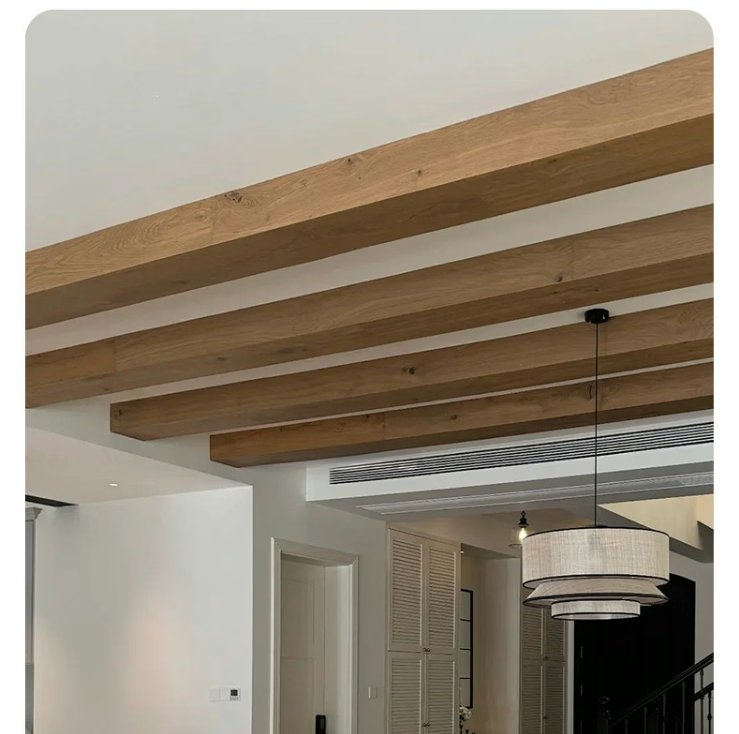
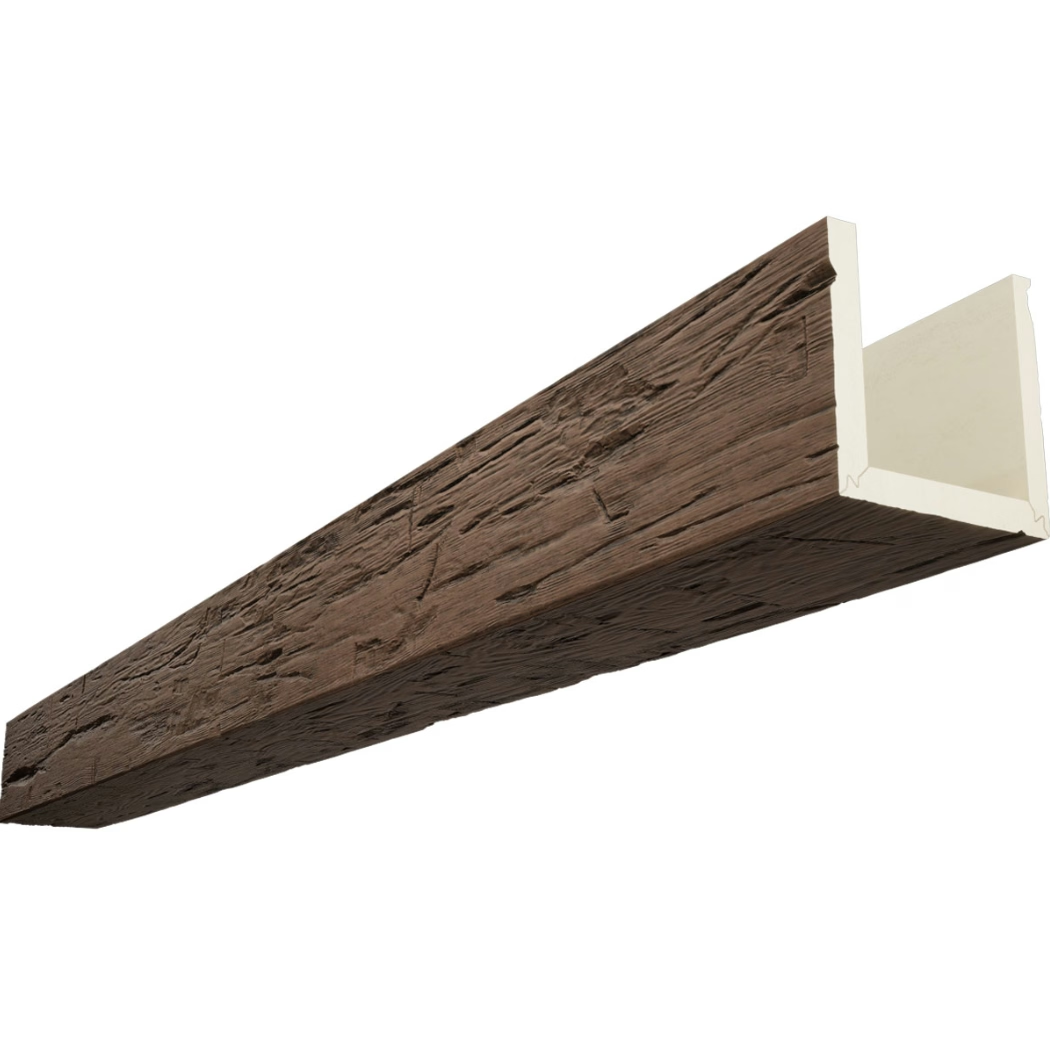
When sourcing decorative ceiling faux beams for resale or large-scale projects, establishing direct relationships with manufacturers transforms your supply chain economics. The difference between purchasing through distributors versus working straight from production facilities can represent thirty to forty percent in cost savings, depending on order volumes and product specifications. This substantial margin improvement makes direct manufacturer partnerships particularly attractive for retailers, interior design firms, and construction companies that regularly specify faux wood beams in their projects.
The polyurethane beam industry has matured significantly over the past decade, with manufacturers developing increasingly sophisticated production capabilities that rival traditional wood and plaster products. Modern manufacturing processes allow for detailed wood grain textures, authentic color variations, and structural integrity that withstands the rigors of shipping and installation. For buyers seeking consistent quality across large inventories, direct manufacturer relationships provide visibility into production methods and quality control protocols that distributors typically cannot offer.
Understanding Manufacturing Capabilities and Production Processes
Polyurethane faux beam production begins with specialized molding processes that capture the organic variations found in natural wood. Manufacturers use high-density polyurethane formulations that resist moisture, warping, and insect damage—advantages that natural wood cannot match in humid environments or exterior applications. The production workflow typically involves mixing two-component polyurethane systems, pouring into precision-engineered molds, and allowing controlled curing under specific temperature conditions. This process repeatability ensures each beam meets exact dimensional tolerances while maintaining the subtle imperfections that make faux beams appear authentic.

Quality-focused manufacturers employ multiple inspection stages throughout production. Raw material testing verifies polyurethane component ratios meet specifications before mixing. In-process checks confirm proper fill, cure, and release from molds. Final inspection examines surface quality, dimensional accuracy, and packaging integrity before shipment. When you work directly with manufacturers, you gain access to quality documentation, batch testing results, and the ability to request specific formulations suited to your market requirements—whether that means enhanced UV resistance for sun-exposed installations or fire-retardant treatments for commercial building codes.
Production capacity varies considerably among manufacturers, ranging from small workshops producing a few hundred units monthly to large-scale facilities capable of manufacturing tens of thousands of beams per month. Understanding these capacity constraints matters when planning inventory purchases or project timelines. Direct manufacturer conversations reveal realistic lead times, allow for production scheduling negotiations, and sometimes enable capacity reservations that protect your supply during peak demand seasons.
Negotiating Terms and Building Long-Term Partnerships
Wholesale pricing structures typically follow tiered models based on order volume, with meaningful discounts appearing at quantities as low as fifty units for standard products. However, the most significant pricing improvements come through long-term partnership agreements that commit buyers to annual purchase volumes in exchange for guaranteed pricing and priority production allocation. These partnership structures benefit both parties—manufacturers gain predictable demand for production planning while buyers secure stable pricing and supply guarantees during industry shortages.
Payment terms represent another negotiation area where direct manufacturer relationships offer flexibility. While distributors typically require full payment upfront or strict net-30 terms, manufacturers often accommodateLetters of Credit, payment schedules tied to production milestones, or open account arrangements for established partners. These arrangements improve cash flow management for businesses that need to maintain inventory readiness without tying up significant capital in pre-purchased stock.
Communication channels also improve dramatically when working directly with manufacturers rather than through sales representatives at distribution companies. Technical questions about installation methods, load-bearing specifications, or custom finishing requirements reach engineering and production teams who can provide authoritative answers. Product development discussions become possible—some manufacturers welcome collaborative input from major buyers who understand market demands, potentially resulting in exclusive products or modifications that differentiate your inventory from competitors.
Logistics, Shipping, and Supply Chain Considerations
Direct manufacturer relationships shift logistics responsibilities to buyers, requiring careful planning for freight coordination, customs clearance (for international shipments), and domestic distribution. Most manufacturers maintain relationships with freight forwarders experienced in handling oversized polyurethane products, and many offer consolidated shipping options that combine multiple orders into single shipments, reducing per-unit transportation costs.
Packaging optimization significantly impacts shipping costs for faux beams. Manufacturers understand the challenges of protecting fragile polyurethane products during transit and develop packaging solutions balancing protection with freight efficiency. Standard packaging involves foam wrapping for surface protection, cardboard sleeves for scratch prevention, and wooden crating for ocean freight or bulk domestic shipments. Understanding these packaging options helps buyers request appropriate protection levels for their distribution channels—retail packaging for showroom displays requires different handling than direct-to-contractor bulk shipping.
Lead time planning becomes more critical when bypassing distributor inventory buffers. Manufacturers typically require four to eight weeks for standard orders, with longer periods for custom colors, non-standard lengths, or container quantities requiring production scheduling. Building these lead times into project planning and customer quote timelines prevents disappointment and positions your business as reliable rather than rushed.
Quality Verification and Defect Management
Direct manufacturer relationships streamline defect resolution processes that can become complicated when intermediaries are involved. Manufacturing defects, shipping damage, or specification discrepancies can be addressed directly with production managers who understand root causes and implement corrective actions. This direct accountability often results in faster resolution, credit issuance, or replacement shipments compared to distributor-mediated claims that require manufacturer involvement anyway.
Before establishing major purchase commitments, prudent buyers request sample orders that allow thorough quality evaluation. These samples should undergo realistic handling—stored in varying conditions, installed using intended methods, and examined for surface finish durability. Some manufacturers offer sample programs with partial or full credit toward subsequent orders, reducing financial barriers to quality verification.
Establishing clear quality specifications in purchase agreements prevents disputes and establishes performance baselines. Documenting expected tolerances for dimensions, color consistency across batches, surface finish requirements, and packaging specifications creates mutual understanding and reference points for any quality discussions that arise during the partnership.

Strategic Advantages for Market Positioning
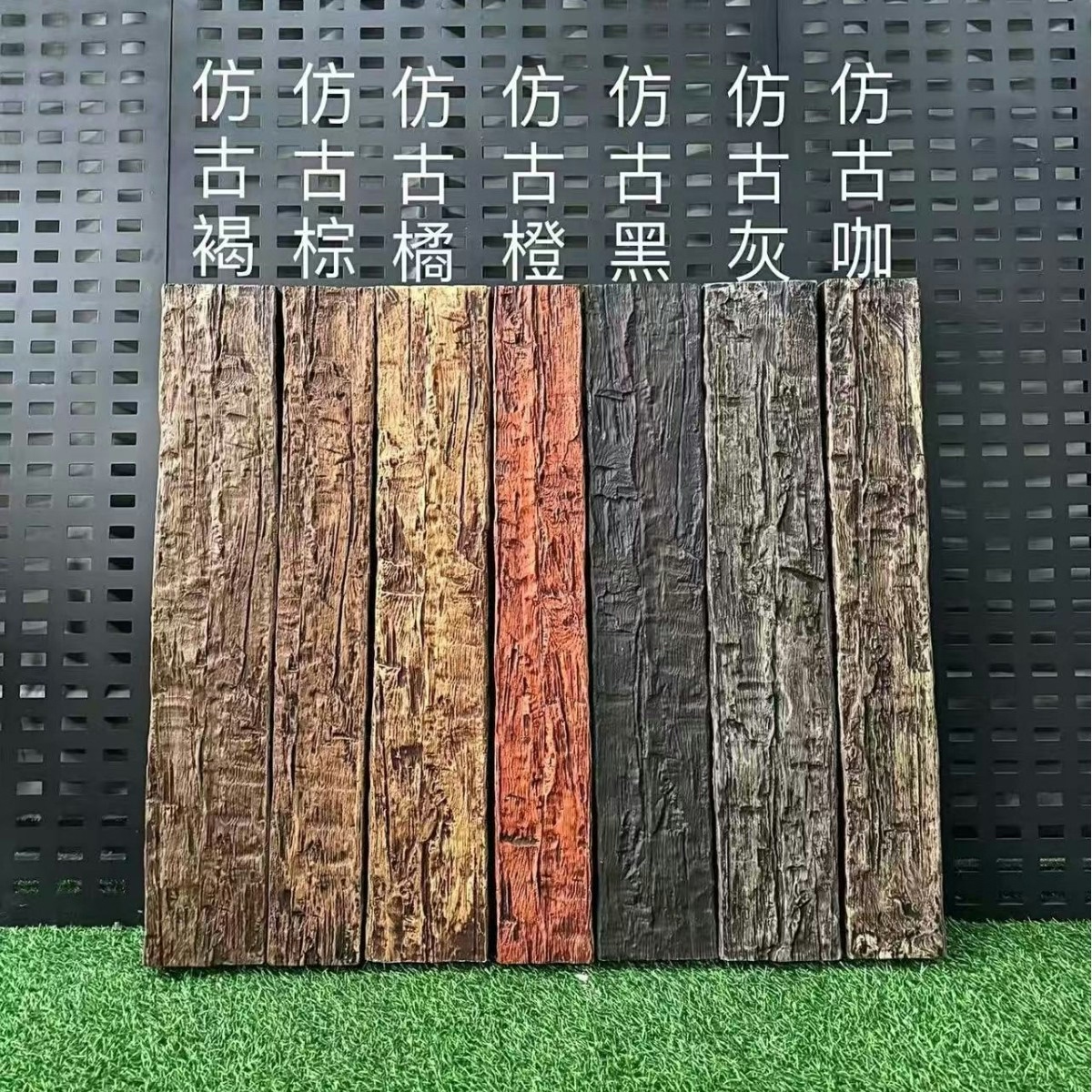
Businesses that establish direct manufacturer partnerships gain competitive advantages beyond pure pricing. Access to new product developments before market release allows early inventory positioning. Custom product capabilities—special colors, non-standard dimensions, unique textures—create offerings unavailable from competitors sourcing through common distributors. Flexible production scheduling enables responsive inventory management that distributors cannot match when their stock depends on central warehouse allocations.
The knowledge gained through direct manufacturer relationships also improves internal expertise. Understanding production processes, material properties, and quality considerations translates into better customer service, more accurate project estimates, and improved installation outcomes. This expertise becomes a competitive differentiator when customers compare proposals from multiple vendors.
Long-term success in the decorative ceiling market depends on reliable supply, consistent quality, and competitive pricing—three areas where direct manufacturer partnerships provide meaningful advantages. Building these relationships requires investment in relationship development and logistics planning, but the returns in margin improvement, supply reliability, and market flexibility make the effort worthwhile for serious players in the faux wood beam distribution space.
Technical References
ASTM standards cited in every specification
Test Data
Lab results from internal testing program
Updated 2026
Reviewed against current product specs