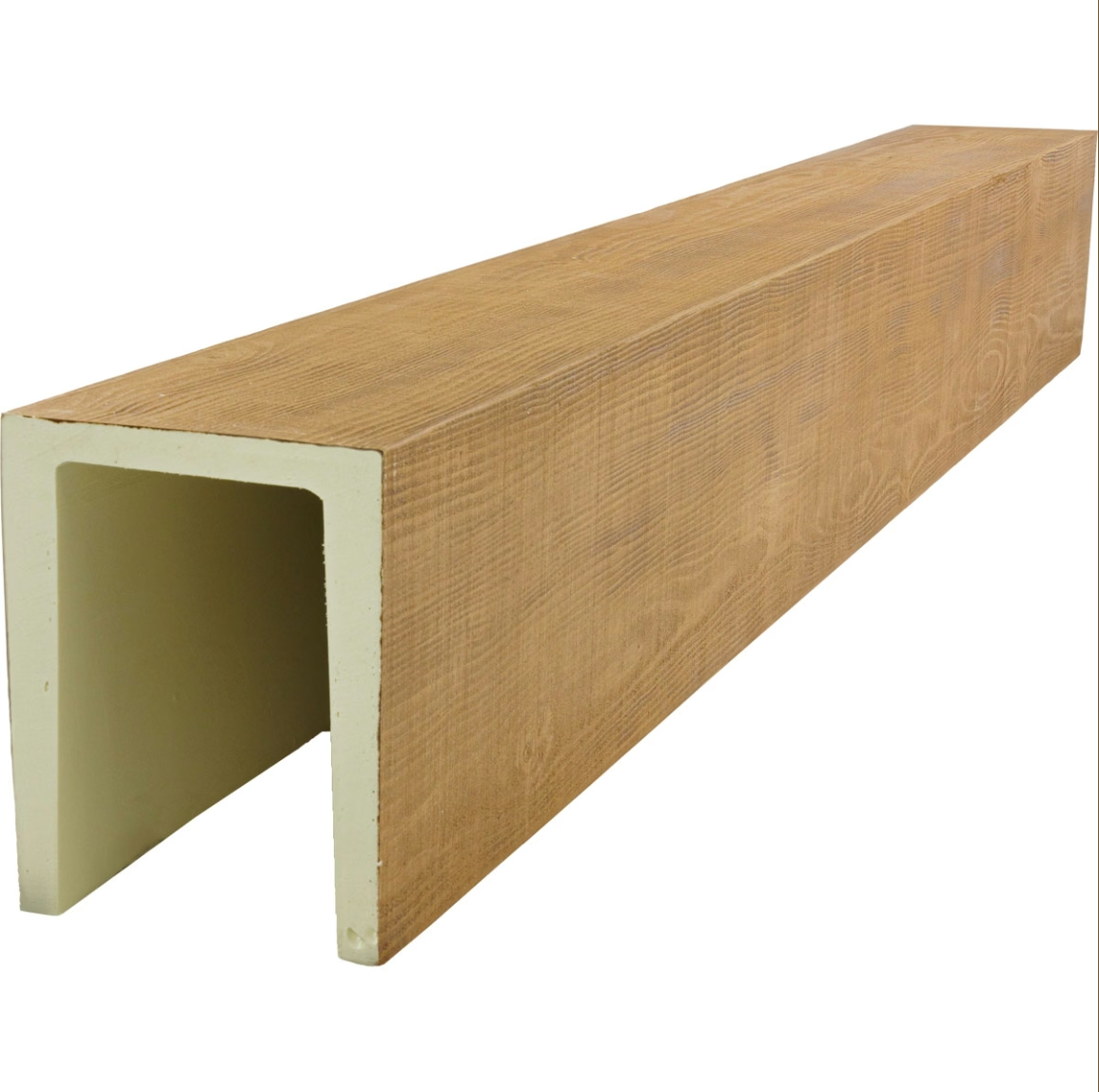
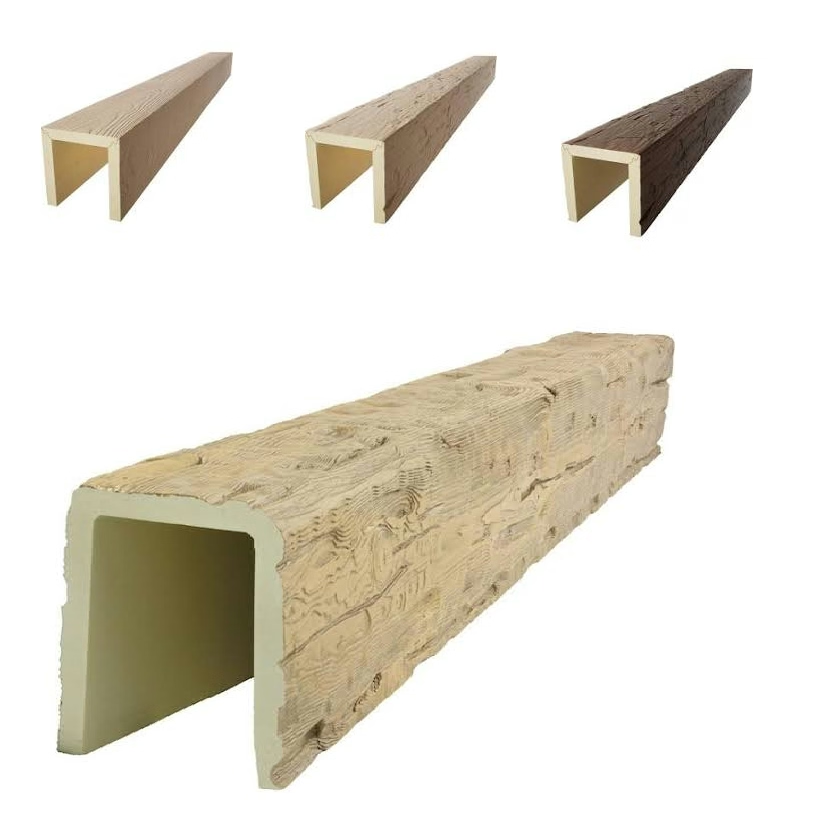
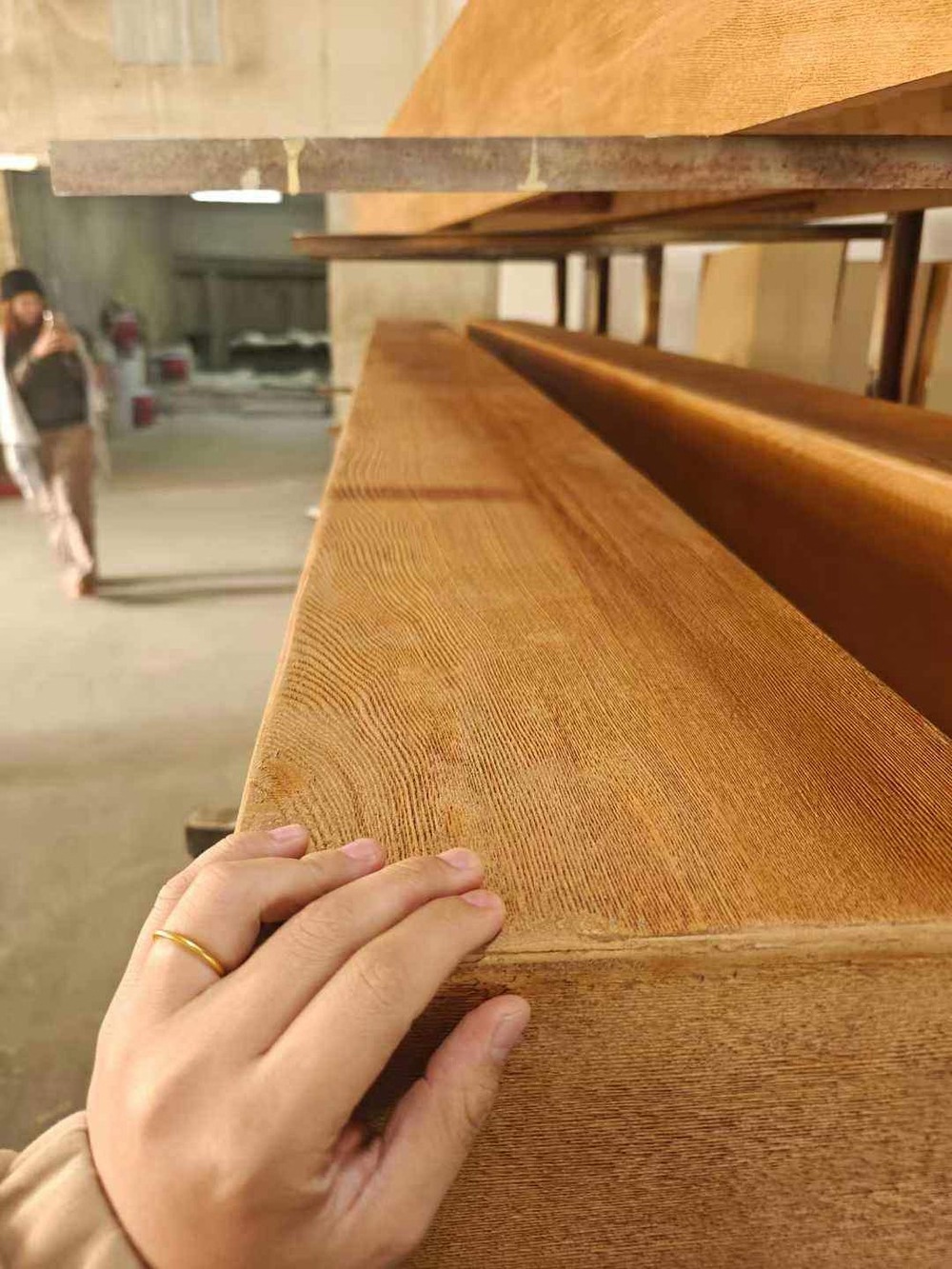
Cracking represents one of the most visible and aesthetically damaging failure modes in architectural wood elements. The fractures that appear across wood grain interrupt the smooth surfaces that make timber appealing, creating visual discontinuities that immediately communicate age and deterioration. Understanding why wood cracks and how polyurethane's different material properties affect its crack resistance provides essential guidance for anyone selecting between these materials for long-term installations.
The physics of cracking involves stress concentrations exceeding the material's strength at localized points. These stress concentrations can result from external loads, internal material stresses, or environmental factors that cause uneven dimensional changes. Wood's anisotropic structure—meaning it behaves differently along different grain directions—creates complex stress patterns that often resolve through cracking when drying or environmental stresses exceed the wood's tensile strength perpendicular to grain.
Wood's Natural Tendency Toward Cracking
Solid wood contains moisture throughout its cellular structure, and this moisture content changes continuously in response to ambient humidity. As wood dries, cells shrink more along radial and tangential directions than along the grain, creating internal stresses that manifest as checks (surface cracks following annual ring contours) and splits (cracks running through the entire cross-section, typically along grain lines).
The juvenile wood near a tree's center contains more moisture and shrinks more during drying than the mature wood closer to the bark. This differential shrinkage generates stresses that can exceed the wood's strength, producing cracks that originate at the pith and extend outward. Even wood that survives initial drying may crack later if exposed to environments significantly different from its equilibrium moisture content.
Knots and other grain irregularities concentrate stresses, making these features common crack initiation sites. The change in grain direction around knots creates discontinuity in the wood's mechanical properties, and stress cannot flow smoothly through these irregularities. Over time, fatigue at these stress concentrations produces cracks that may not appear for years after installation.

Polyurethane's Resistance to Cracking
Polyurethane's molecular structure differs fundamentally from wood's cellular composition, and this difference explains its superior crack resistance in most architectural applications. The polymer chains that constitute polyurethane can flex and redistribute stresses rather than concentrating them at discrete points as wood grain irregularities do. This stress distribution capability allows polyurethane to accommodate dimensional changes without cracking.
The manufacturing process for polyurethane architectural elements occurs under controlled conditions that produce consistent material properties throughout each piece. Unlike wood, which varies naturally between and even within individual trees, polyurethane achieves reproducibility that enables reliable performance predictions. This consistency means that crack-resistant formulations can be consistently reproduced across production runs.
Polyurethane's thermal expansion coefficient differs from wood's, and in most interior environments these differences matter less than the material's humidity response. Because polyurethane absorbs minimal moisture, it doesn't experience the drying-related shrinkage that produces wood's characteristic checking and splitting. This dimensional stability represents one of the most practically significant advantages of polyurethane in variable interior environments.
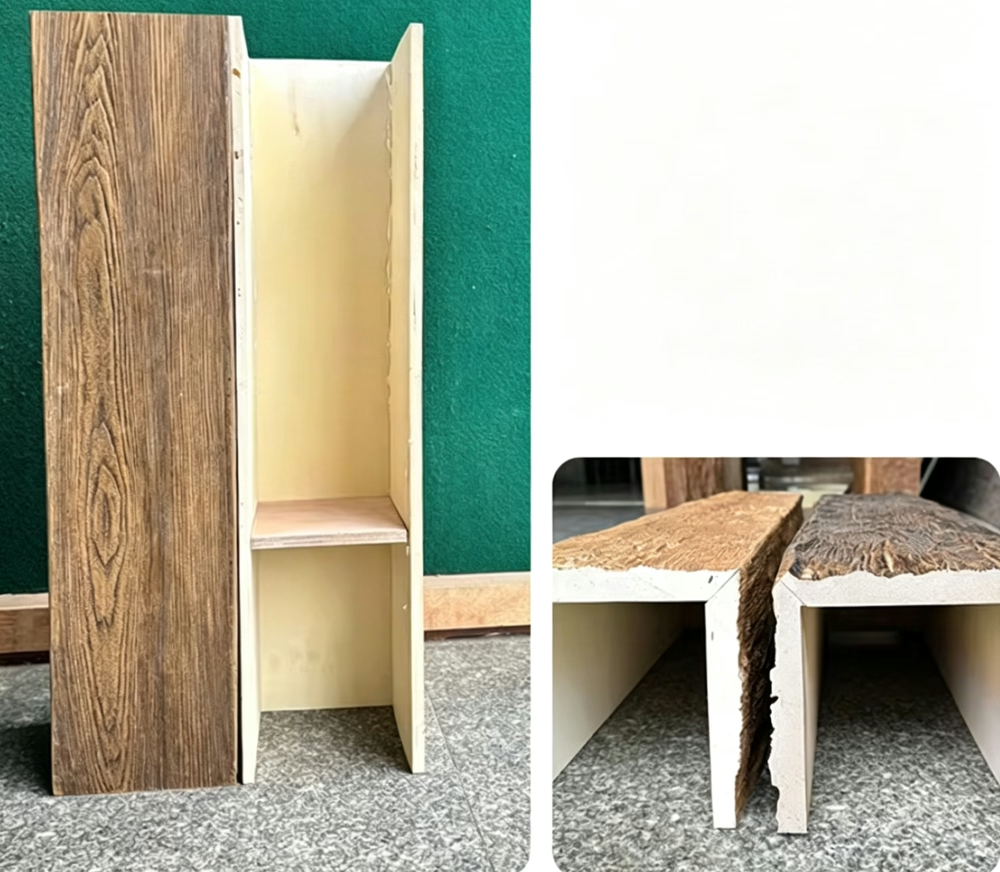
Environmental Factors Affecting Crack Development
Temperature fluctuations create stress in wood as the material expands and contracts with heating and cooling cycles. While these dimensional changes are smaller than those caused by moisture variation, repeated cycling produces fatigue that can eventually cause cracking in susceptible wood elements. Polyurethane's lower thermal expansion coefficient and its ability to accommodate stress through polymer chain flexibility make it more resistant to temperature-related damage.
Direct sunlight accelerates wood drying and can create surface temperature gradients that promote checking. The exposed surface dries and shrinks while the underlying wood retains moisture, generating stress that manifests as surface cracks. UV radiation also degrades wood surfaces chemically, weakening the material and making it more susceptible to crack initiation. Polyurethane's UV resistance, when properly formulated, significantly reduces these concerns.
HVAC systems that maintain consistent interior humidity reduce—but do not eliminate—wood's cracking tendencies. Even in climate-controlled environments, wood responds to the small humidity variations that any system permits, and these responses accumulate over time into the visible cracking that mars many wood installations. Polyurethane's near-zero moisture absorption eliminates this humidity-driven cracking mechanism entirely.
Comparative Performance in Long-Term Installations
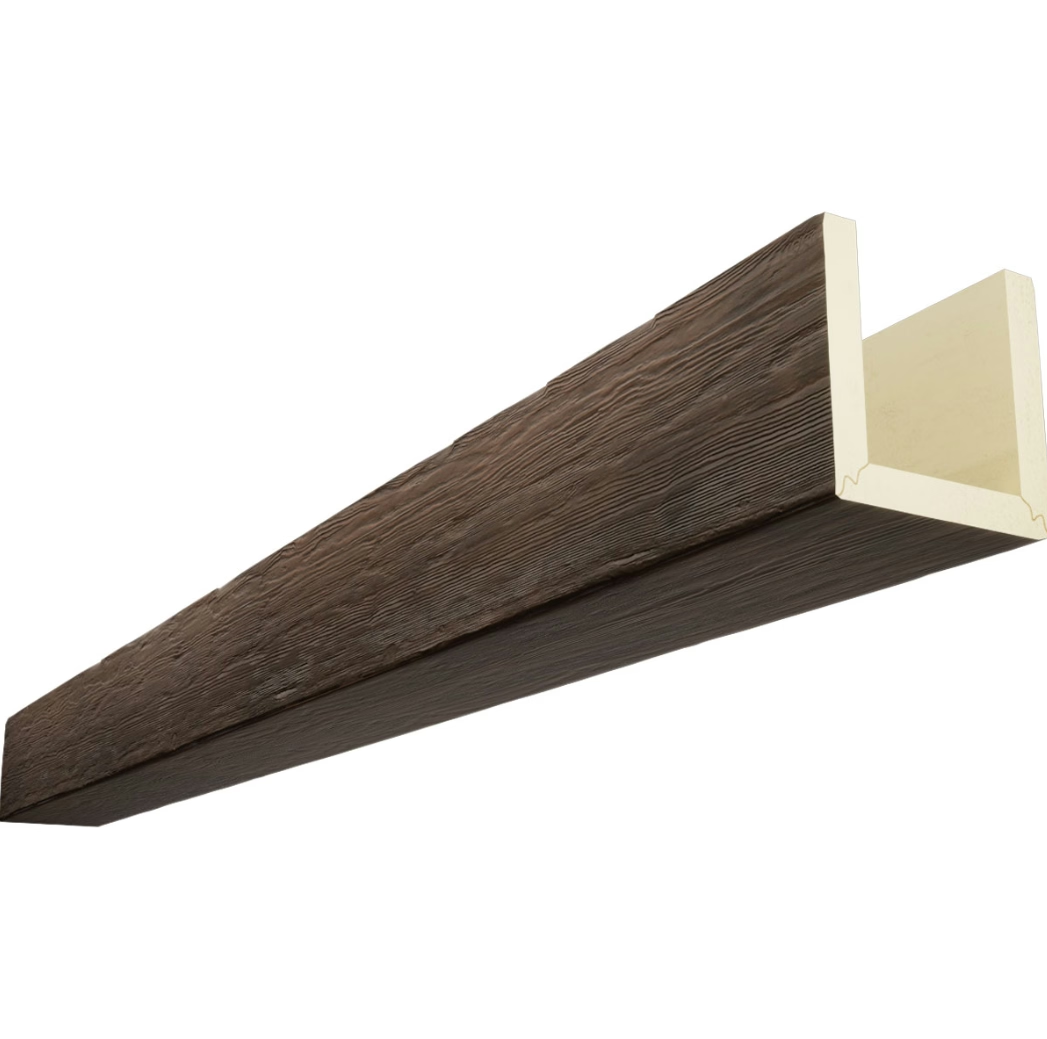
Documented long-term performance of polyurethane faux beams shows crack rates dramatically lower than those observed in solid wood installations over equivalent periods. Interior installations in typical residential and commercial environments show essentially no cracking in quality polyurethane products, while wood installations in the same conditions show measurable crack incidence that increases with installation age.
The difference becomes more pronounced in challenging environments. Vacation properties that experience extended periods without climate control may see rapid deterioration in wood elements while polyurethane remains unaffected. Commercial spaces with high occupant density and correspondingly variable environmental conditions stress wood more than polyurethane. These real-world differences explain why polyurethane has gained acceptance in commercial applications where maintenance costs and appearance standards drive material selection.
Exceptions exist in both directions. Premium-grade wood that has been carefully dried and installed in stable environments can provide decades of crack-free service. Conversely, poorly formulated polyurethane products—particularly those with inadequate UV stabilization or improper installation—can develop surface cracking that quality products avoid. Individual product evaluation remains essential regardless of material category.
Design and Installation Practices That Affect Performance
Proper installation technique affects crack resistance regardless of material choice. Wood installations benefit from allowing sufficient time for the material to acclimate to installation environment before hanging, reducing the stress that occurs as the wood equilibrates to its final conditions. Polyurethane installations, while less sensitive to these issues, still benefit from installation practices that avoid overstressing the material at connection points.
Support spacing appropriate for the beam material prevents sagging and the stress concentrations that can eventually produce cracking. Wood beams require closer support spacing than steel alternatives of similar dimensions because wood's lower modulus of elasticity allows more deflection under load. Polyurethane beams, while lighter than wood, should be installed according to manufacturer recommendations for support spacing to prevent stress-related issues.
Environmental control in occupied spaces benefits all architectural elements, but this benefit is particularly significant for wood. Maintaining relative humidity between thirty and fifty percent—typical comfort range for occupants—also falls within the range where wood experiences minimal dimensional change. Polyurethane, with its near-zero moisture response, tolerates wider humidity ranges without concern for dimensional stability.
Making Informed Material Selection Decisions
The crack resistance comparison favors polyurethane for most applications, but the decision framework should consider factors beyond cracking alone. Aesthetic preferences may favor authentic wood despite its maintenance requirements. Sustainability considerations might favor renewable wood resources over petroleum-derived polymers. Cost comparisons should include not just initial purchase price but maintenance costs over the expected service life.
For applications where crack resistance is the primary concern—high humidity environments, minimally climate-controlled spaces, locations where maintenance access is difficult—polyurethane provides clear advantages. For applications where wood's authentic character is essential and maintenance resources are available, proper wood selection and installation can provide acceptable long-term performance despite the inherent cracking tendencies of the material.
The analysis suggests that polyurethane faux beams represent the more practical choice for the majority of ceiling beam applications, with solid wood reserved for situations where specific aesthetic requirements or client preferences justify the additional maintenance commitment. Understanding the basis for this recommendation enables confident material selection decisions that align with each project's unique requirements.
Technical References
ASTM standards cited in every specification
Test Data
Lab results from internal testing program
Updated 2026
Reviewed against current product specs