
Two materials dominate the manufactured faux beam market: polyurethane and fiberglass. Both offer significant advantages over solid timber—lighter weight, more consistent quality, easier installation—while providing the wood-like appearance that makes decorative beams attractive. However, these materials differ in ways that affect their suitability for specific applications, and understanding these differences enables informed selection that serves each project's unique requirements.
The competition between polyurethane and fiberglass has intensified as both industries have developed improved formulations addressing earlier limitations. Polyurethane has enhanced its fire resistance and UV stability, while fiberglass has developed resins that accept more convincing wood-grain textures. This convergence means the choice between materials has become less about inherent superiority and more about application-specific fit.
Appearance and Surface Quality
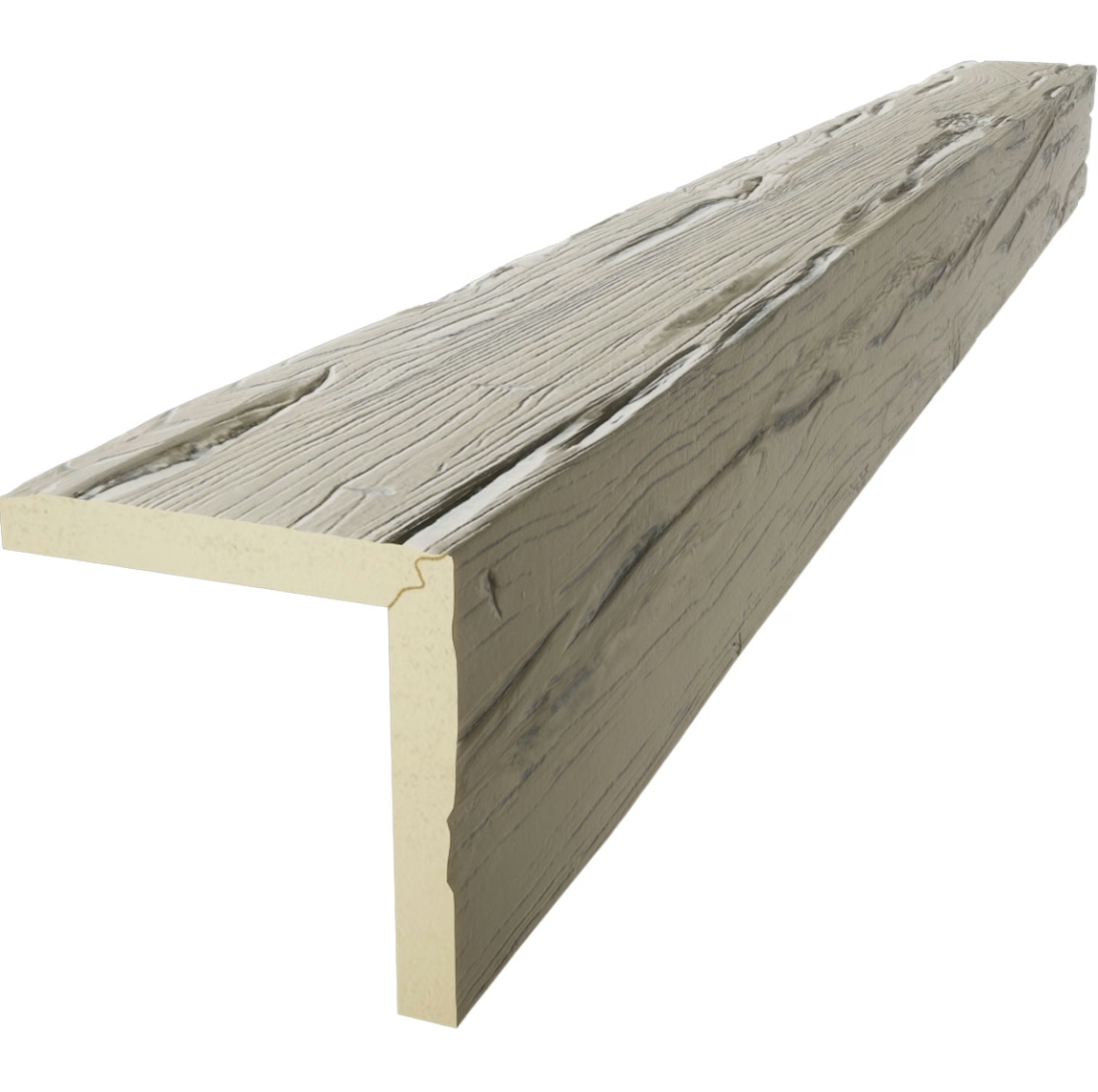
Polyurethane's surface accepts detailed texturing that convincingly simulates wood grain, saw marks, and natural weathering. The material can be molded with undercuts and complex profiles that capture the subtlety of hand-carved details. Paint and stain adhere well to polyurethane surfaces, allowing color matching and finish effects that enhance authenticity. The material holds fine edges without chipping, producing crisp detail definition.
Fiberglass surface quality depends heavily on the quality of the original mold and the finishing process applied after molding. Early fiberglass products showed obvious fiber patterns and required heavy gel coat finishes that reduced authenticity. Modern formulations with improved surface veils and high-quality molds produce results that approach polyurethane in detail reproduction, though the material's hardness makes achieving certain wood-like textures more challenging.
Both materials can convincingly replicate the appearance of various wood species when properly finished. The deciding factor often lies in the specific profile being replicated—some wood details transfer better to one material than the other depending on geometry and texture depth. Requesting samples before committing to large purchases reveals how well each material will represent the intended wood species and beam profile.
Weight and Handling Characteristics
Both polyurethane and fiberglass are substantially lighter than solid timber, but differences exist within this comparison. Polyurethane densities typically range from one to three pounds per cubic foot, while fiberglass falls in the one to four pounds per cubic foot range depending on wall thickness and core construction. For most beam sizes, these differences translate to handling advantages for polyurethane.
Polyurethane beams often feel less dense and slightly softer to the touch, which affects how they respond to impact and how they can be worked if modification is needed. The material accepts fasteners without predrilling in most cases, though pilot holes prevent splitting if screws must be placed near edges. Fiberglass requires more care with fasteners because the material can crack if over-tightened.
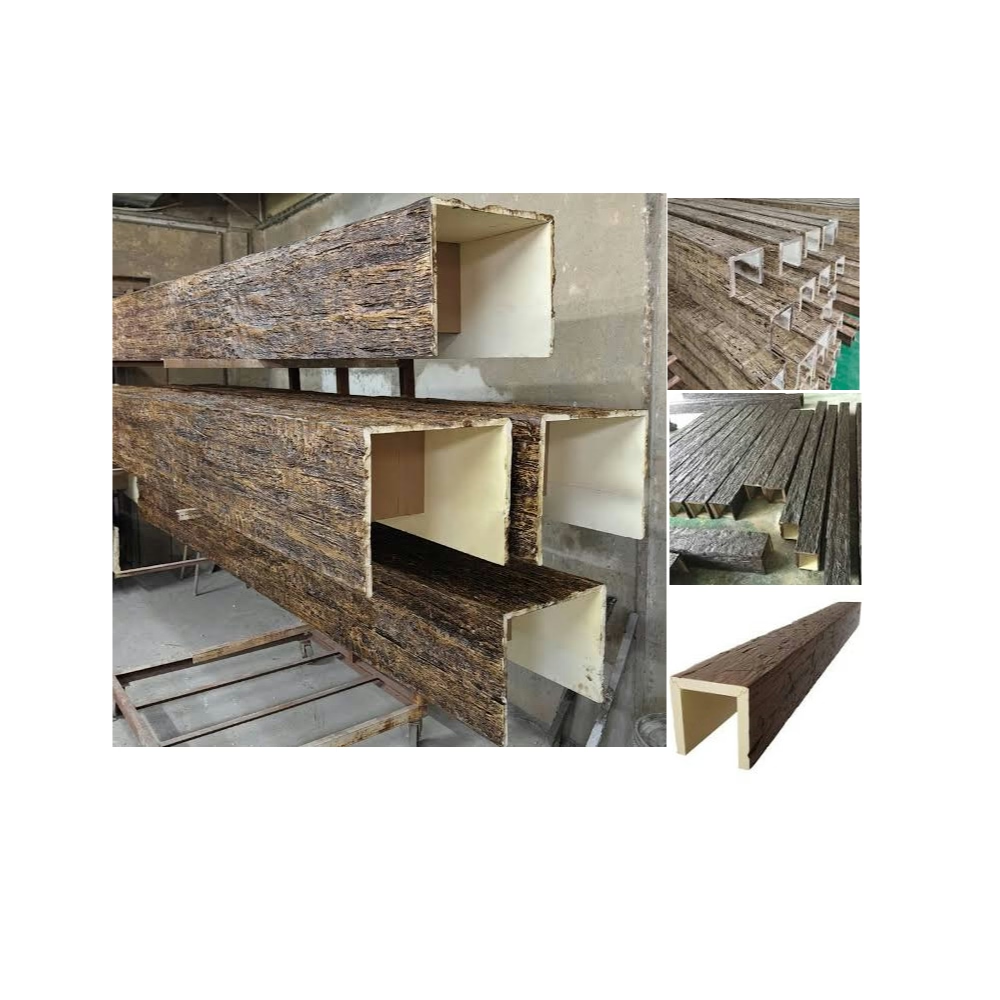
Hollow fiberglass beams can achieve lower weights than solid polyurethane of equivalent appearance because the hollow core eliminates material from the interior where it contributes nothing to visual effect. This construction option makes fiberglass competitive on weight for applications requiring very large beams with substantial visual presence.

Structural Properties and Load Capacity
Fiberglass exhibits higher tensile strength than polyurethane, which affects how each material performs under load. Fiberglass beams can span longer distances without intermediate support while maintaining structural integrity, making them suitable for applications where support points are limited. Polyurethane beams rely more heavily on their mounting systems for load capacity because the material itself offers less inherent strength.
The mounting requirements reflect these structural differences. Fiberglass often requires fewer support points and less robust mounting hardware because the material handles load more efficiently. Polyurethane installations benefit from closer support spacing and proper load distribution across mounting surfaces. Manufacturer specifications for each product should guide installation planning.
For most residential decorative applications where beams serve purely aesthetic functions, both materials provide adequate structural performance. The choice rarely comes down to load capacity in these contexts because the mounting systems can be designed to work with either material. Commercial applications with higher loading or longer spans may favor fiberglass's structural advantages.
Environmental Resistance and Durability
UV resistance represents a critical performance difference between the materials. Standard polyurethane degrades when exposed to sustained sunlight, requiring UV-stabilized formulations for outdoor or sun-exposed applications. Fiberglass inherently resists UV degradation better than polyurethane, though the gel coat finishes often applied to fiberglass can chalk and fade under UV exposure.
Moisture affects both materials minimally compared to wood, but differences exist. Polyurethane absorbs slightly more moisture than fiberglass when submerged, though neither material experiences dimensional change from humidity exposure the way wood does. Both resist biological decay completely, eliminating the rot concerns that affect wood alternatives.
Thermal cycling affects both materials similarly, with expansion and contraction occurring at rates dependent on the specific formulations employed. These dimensional changes remain small enough in typical interior applications that they do not produce visible problems. Exterior applications require attention to expansion accommodation during installation to prevent buckling or joint separation as temperatures vary.
Fire Performance Considerations
Fire ratings matter significantly in commercial applications and may affect material selection for residential projects in fire-prone regions. Standard polyurethane formulations burn when exposed to flame and may contribute to fire spread. Fire-rated polyurethane products incorporate flame retardants that limit combustion and reduce smoke development, meeting code requirements for many applications.
Fiberglass composites can be formulated with fire retardant resins that provide similar performance to fire-rated polyurethane. The specific fire rating achieved depends on the formulation and the testing standards applied. For applications requiring specific fire ratings, verifying that products are tested and rated for the applicable standards is essential before purchase.
Both materials can achieve acceptable fire ratings for most building code requirements when properly formulated. The key lies in specifying products with appropriate ratings rather than assuming standard formulations will meet requirements that vary by jurisdiction and building type.
Cost Comparison and Value Assessment
Material costs for polyurethane and fiberglass beams overlap significantly, with the specific price depending on profile complexity, size, finish quality, and quantity ordered. Simple profiles in standard finishes often price comparably between materials, while complex profiles or premium finishes may favor one material depending on manufacturing efficiency for that particular product.
Installation cost differences can affect the total project cost more significantly than material prices alone. Polyurethane's easier handling and simpler fastening requirements may reduce labor costs compared to fiberglass, particularly for complex installations requiring multiple joints and modifications. These practical advantages sometimes make polyurethane the more economical choice despite similar material pricing.
Long-term value depends on maintenance requirements and expected service life. Both materials offer decades of service with minimal maintenance in appropriate applications. The choice between materials may come down to specific application requirements—structural needs favoring fiberglass, detail requirements favoring polyurethane, or cost factors determining which product offers the best value for the specific profile and finish needed.
Technical References
ASTM standards cited in every specification
Test Data
Lab results from internal testing program
Updated 2026
Reviewed against current product specs


