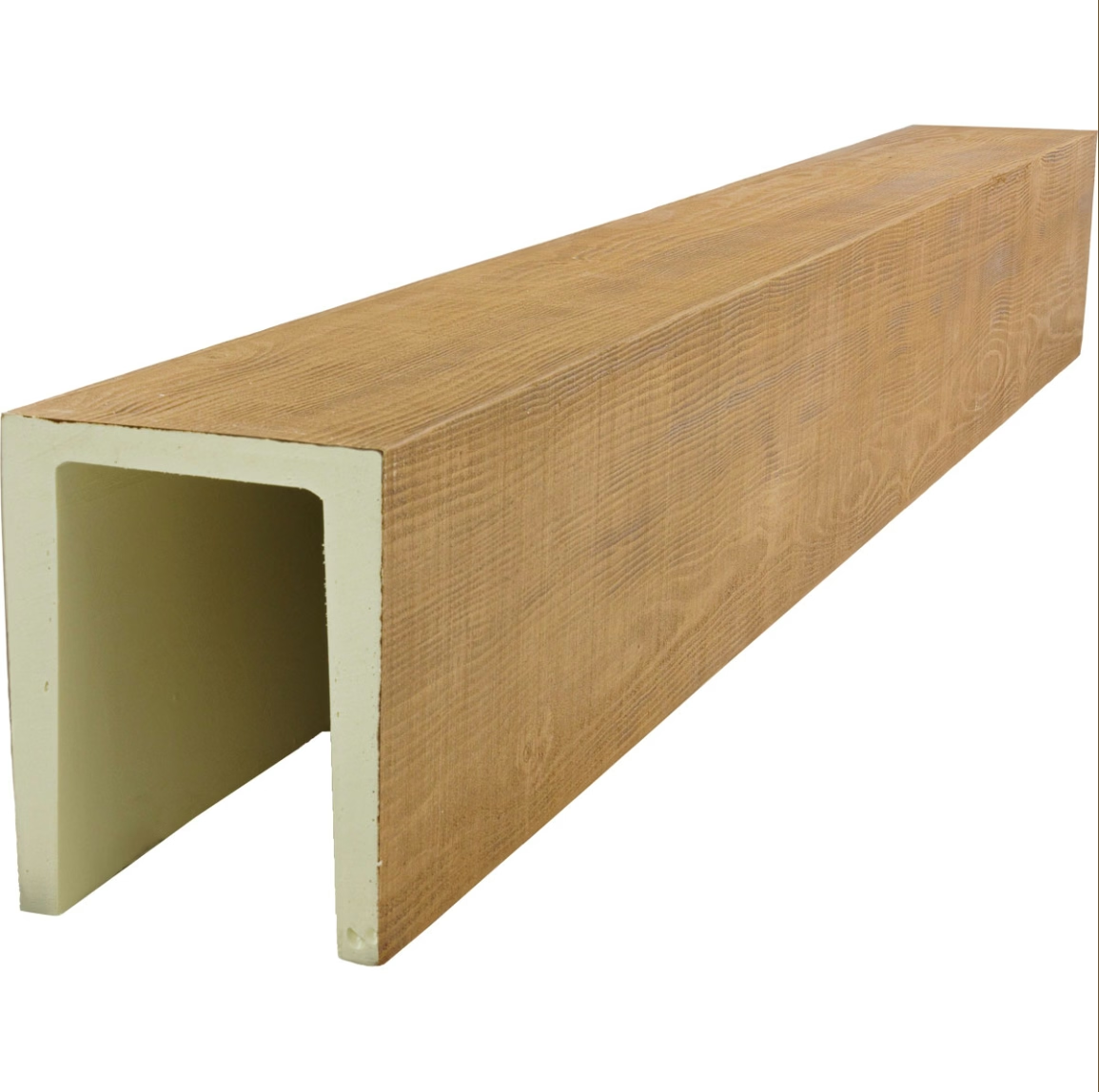
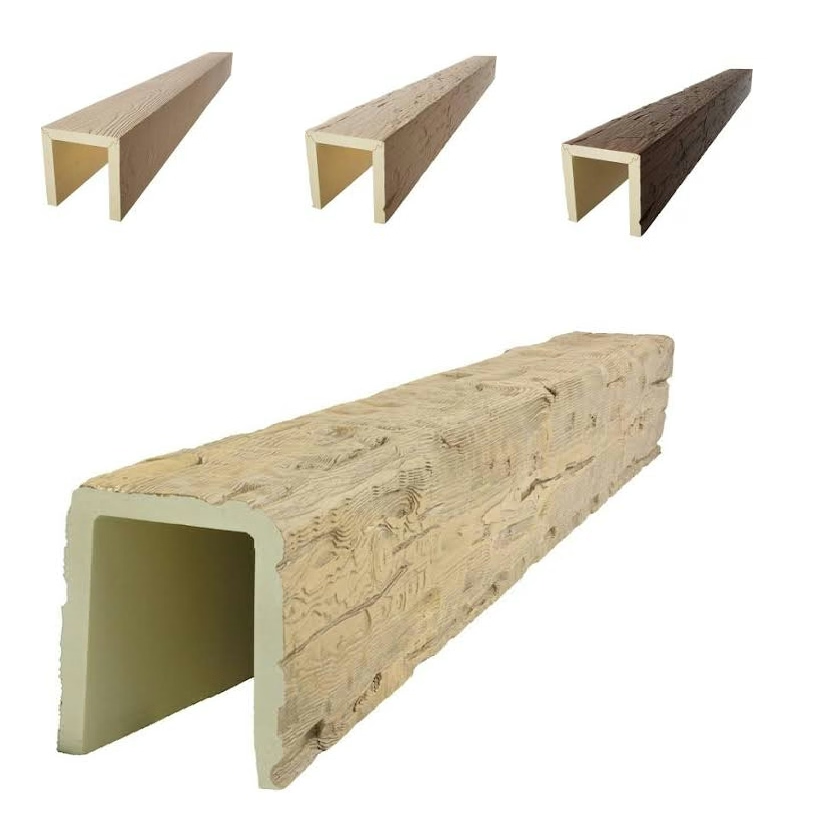
Hollow construction represents one of the most significant innovations in faux beam technology, combining visual impact with practical advantages that expand installation possibilities. These engineered products deliver the authentic appearance of solid timber while eliminating the weight penalties that complicate solid beam handling and mounting. For contractors and homeowners seeking design excellence without structural complications, hollow polyurethane beams offer compelling advantages across diverse project types.
The manufacturing process creates hollow beams through precision molding techniques that form interior cavities during production. The resulting products maintain authentic exterior appearances while achieving weight reductions that single installers can manage beams of substantial length. This combination of aesthetics and practicality has made hollow beams the preferred choice for most residential and commercial applications.
Understanding Hollow Beam Construction
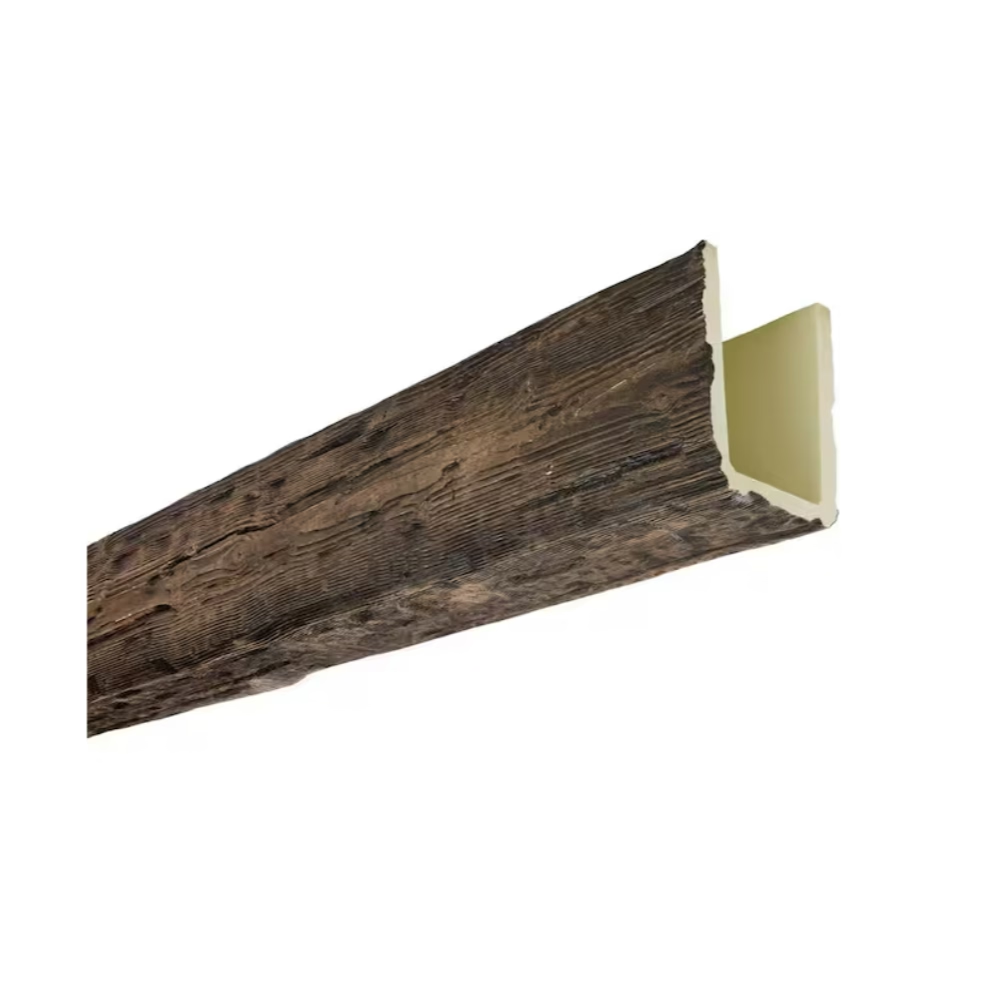
The interior cavity of hollow polyurethane beams is not empty space but engineered structure designed for specific performance characteristics. Some products feature interior webbing that provides dimensional stability and fastener attachment points. Others maintain smooth interior surfaces that reduce material usage while preserving exterior appearance. Each design represents trade-offs between weight, strength, fastener security, and manufacturing cost.
Wall thickness in hollow beams typically ranges from one to two inches, providing sufficient material for authentic wood grain replication while minimizing unnecessary weight. The exterior surfaces incorporate detailed textures that capture natural wood characteristics including grain patterns, weathering effects, and color variations. From normal viewing distances, hollow beams appear identical to solid timber of equivalent profile.
Structural performance of hollow beams addresses typical installation loads without concern for the self-weight limitations that restrict solid timber applications. The material density provides adequate compressive strength for ceiling mounting while the engineered cavity design prevents crushing or deformation under normal conditions. Careful installation techniques ensure secure attachment that performs reliably throughout the service life.
Weight Comparisons and Handling Benefits
The weight advantage of hollow beams becomes immediately apparent during handling and installation. A ten-foot hollow beam might weigh fifteen to twenty pounds compared to fifty pounds or more for solid timber of equivalent dimensions. This reduction transforms installation requirements, allowing single-person handling where two-person teams would be necessary for solid materials.
Ceiling structures承受 less loading from hollow beam installations, expanding the range of applications where beam aesthetics can be employed. Standard ceiling joists and furring systems support hollow beams without reinforcement, while solid timber might require additional structural framing. This weight advantage proves particularly valuable in upper-floor installations where building structure limitations constrain available options.
Transportation and storage logistics simplify substantially with reduced weight. Vehicles can transport more linear footage per trip, reducing delivery costs and enabling larger installations from single shipments. On-site storage requirements decrease proportionally, with hollow beams stacking and storing more efficiently than heavier alternatives.

Installation Advantages for Contractors
Professional contractors appreciate the installation efficiency that hollow beams provide. Faster handling translates directly to reduced labor costs, improving project profitability while maintaining competitive pricing. The single-person installation capability eliminates scheduling complications that arise when solid timber requires multiple workers for overhead placement.
The consistent dimensions of manufactured hollow beams simplify layout and fitting. Unlike natural timber that may vary substantially across lengths, hollow beams maintain precise measurements throughout. This predictability allows accurate material estimation, reducing waste from cuts that miss intended dimensions and eliminating callback issues from visible gaps or misalignments.
Fastening systems designed specifically for hollow beam installation provide secure attachment without requiring specialized hardware. The material accepts screws and nails reliably, with interior mounting blocks in quality products providing secure attachment points that prevent fastener pull-through. This compatibility with standard installation methods reduces tool requirements and learning curves.
Concealed Component Opportunities
The interior cavity of hollow beams creates opportunities for concealed components that enhance functionality without compromising appearance. Electrical wiring can pass through beam interiors, eliminating visible conduit runs that would otherwise require concealment through alternative methods. Low-voltage cables for lighting systems, speakers, and smart home technology install invisibly within beam cavities.
HVAC ductwork smaller than beam interior dimensions can route through cavities, using the beam as a concealed chase. This application proves particularly valuable in renovations where existing ductwork conflicts with aesthetic beam installation. The beam provides the concealment while maintaining the structural integrity required for ceiling mounting.
Recessed lighting fixtures designed for beam integration install within beam profiles, creating lighting effects that appear to emanate from the beam itself. These integrated fixtures eliminate visible housing and trim that would interrupt beam appearance, producing clean lighting effects that complement rather than compromise ceiling aesthetics.
Application Scenarios for Hollow Beams
Residential great rooms and living areas benefit from hollow beam installations that establish architectural character without imposing excessive ceiling loads. The visual impact rivals solid timber while installation proceeds faster and with less structural concern. Homeowners receive the aesthetic benefits while contractors complete installations more efficiently.
Kitchen applications particularly favor hollow beams due to the reduced weight concerns over food preparation areas. Islands and eating areas can receive beam treatments overhead without engineering evaluation or structural modification. The speed of hollow beam installation minimizes kitchen downtime during renovation projects, reducing the disruption that extended construction periods create.
Bedroom ceiling treatments with hollow beams create intimate atmospheres conducive to restful sleep. The architectural character transforms standard rooms into distinctive spaces with genuine personality. Hollow construction ensures that ceiling loads remain within normal ranges, even when multiple beams create substantial cumulative weight.
Commercial and Hospitality Applications
Restaurant dining rooms frequently incorporate hollow beams as primary design elements. The speed of installation reduces construction time and associated revenue loss, while the durability handles the demanding conditions of food service environments. Acoustic benefits from beam surfaces improve customer comfort without compromising the design quality that distinguishes competitive establishments.
Hotel common areas benefit from hollow beam treatments that establish premium atmospheres without structural complications. Lobby installations can proceed without engineering review, accelerating project schedules while delivering the grand aesthetics that luxury properties require. The durability handles continuous guest traffic without appearance degradation.
Retail environments utilize hollow beams to create distinctive shopping atmospheres within competitive mall settings. The installation speed minimizes store closure duration, reducing lost revenue during renovation periods. The visual character helps establish brand identity that differentiates retailers from surrounding tenants.
Finish Options and Aesthetic Variety
Hollow beams are available in finishes ranging from natural wood appearances to painted surfaces ready for custom coloring. Stained finishes capture the rich tones of oak, walnut, cherry, and other popular wood species. The consistent material accepts stain application uniformly, eliminating the blotching and color variation that affects natural wood with irregular grain density.
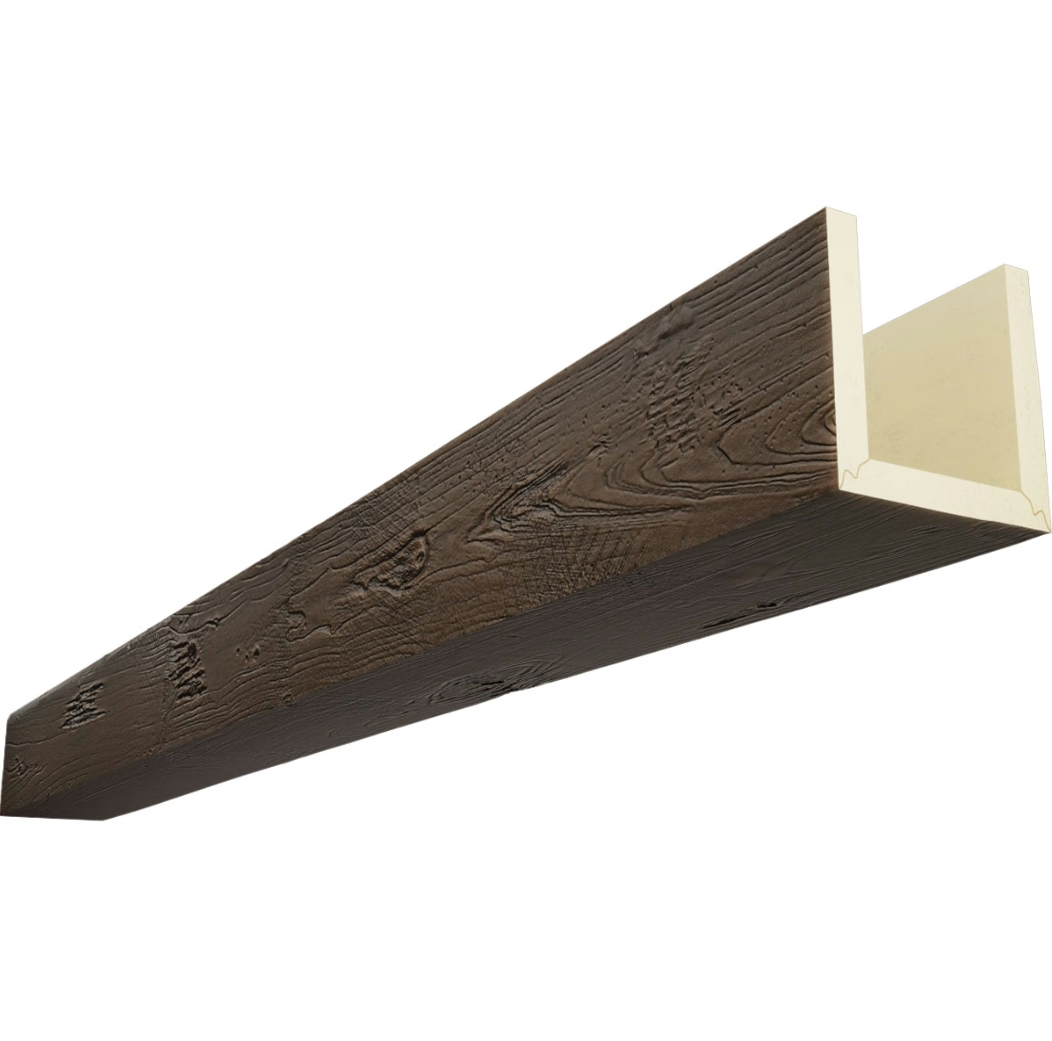
Distressed and weathered finishes provide authentic aged appearances without the cost or availability concerns of genuine antique timber. Hand-scraped textures, concentrated grain patterns, and darkened crevices create surfaces that appear to have accumulated decades of character. These treatments distinguish premium hollow beams from budget alternatives that lack such authentic detail.
Paint-grade hollow beams accept primer and paint application readily, allowing complete color customization to match any design palette. The smooth, consistent surface provides excellent paint adhesion and coverage, producing professional results with standard painting techniques. Custom color matching to existing millwork ensures integration with surrounding architectural elements.
Maintenance and Durability Considerations
Hollow polyurethane beams resist the moisture absorption, insect activity, and decay that affect natural wood in challenging conditions. These resistances translate to extended service life with minimal maintenance requirements. Periodic cleaning with mild detergents maintains appearance quality without specialized care products or professional attention.
Surface damage from impacts or scratches can often be repaired without beam replacement. The homogeneous material accepts patching compounds that fill minor damage seamlessly. Significant damage may require section replacement, but the modular nature of beam installations typically allows this without disturbing adjacent elements.
Inspection of hollow beam installations should verify secure attachment and intact surfaces during routine building maintenance. Early identification of potential issues allows intervention before problems progress. Documentation of installation conditions supports warranty claims should manufacturer defects become apparent.
Selecting Appropriate Hollow Beam Products
Quality varies substantially across hollow beam manufacturers, with corresponding variation in appearance, durability, and performance. Higher-density formulations provide superior impact resistance and fastener-holding capability. Thicker wall sections increase durability at the cost of additional weight. Surface detail quality determines how authentically beams replicate natural wood appearance.
Warranty terms indicate manufacturer confidence in product performance. Extended warranties suggest products designed for long-term reliability, while minimal warranty coverage may indicate products expected to require replacement. The warranty should address surface finish retention, structural integrity, and installation system performance.
Fire ratings may be required for commercial applications depending on building codes and occupancy types. Products with tested fire resistance ratings provide documentation that satisfies code requirements and insurance considerations. Understanding applicable requirements before specifying products prevents delays during permitting and inspection processes.
Technical References
ASTM standards cited in every specification
Test Data
Lab results from internal testing program
Updated 2026
Reviewed against current product specs