Texture forms the foundation of convincing wood reproduction. Color alone cannot capture the complexity of natural materials; it is texture that distinguishes genuine wood from flat printed imitations. When light falls across a wood surface, it interacts with physical texture in ways that create the visual depth and subtle variation that the eye recognizes as authentic. Capturing this textural complexity represents the primary technical challenge in developing faux wood products that satisfy careful inspection rather than merely approximating appearance from a distance.
Cedar presents distinctive textural characteristics that reflect its unique cellular structure and growth patterns. The wood's pronounced earlywood and latewood bands create visible ridges along the grain that catch light differently as viewing angles change. Where grain runs straight, these bands create the subtle striped appearance typical of the species; where grain curves around knots or figure, the bands create more dramatic effects. The overall surface texture ranges from relatively smooth in planed stock to notably rough in skip-planed or resawn materials, with each variation offering different aesthetic possibilities.
Modern manufacturing techniques capture cedar's textural complexity through careful mold-making processes that preserve every surface detail. Rather than attempting to artificially create texture through surface treatment, manufacturers begin with authentic cedar samples and use them to create molds that will reproduce the exact surface character. When polyurethane is cast into these molds, it captures not just the visible patterns but the three-dimensional texture as well — every ridge, valley, and irregularity faithfully reproduced at scales from visible patterns down to individual cell impressions.
The Science of Wood Texture Reproduction
Understanding what makes wood texture authentic requires examination at multiple scales. At the macroscopic level, wood surfaces show grain patterns — the alternating light and dark bands of annual growth rings, interrupted by knots and other features. At the microscopic level, individual wood cells create subtle texture through their orientation and arrangement. At the molecular level, the composite structure of cell walls creates surface properties that affect how light interacts with the material. Convincing reproduction must address all these levels simultaneously.
Mold making for wood texture reproduction follows a precise sequence. First, authentic wood samples are selected for their exemplary textural qualities — clear grain for basic patterns, prominent features for special effects. These samples are then treated to prepare them for molding, typically through stabilizing treatments that prevent the wood from outgassing or reacting with mold materials. Liquid rubber compounds are applied in layers, each curing before the next is added, until a complete negative of the wood surface exists. This negative becomes the cavity into which polyurethane will be cast.
The casting process itself requires careful control of material properties and processing conditions. Polyurethane must flow completely into every mold cavity, filling even the finest textural details without trapping air or creating voids. Cure timing must allow for complete polymerization while preventing excessive shrinkage that might distort fine details. Quality control procedures inspect finished pieces for complete textural reproduction, rejecting any that fail to capture the expected surface character.
The finished texture must then be colored to match the natural cedar appearance. Surface coatings are formulated to enhance rather than obscure the underlying texture, with careful attention to how the color interacts with the three-dimensional surface. The goal is creating appearance that reads as authentic wood under any viewing condition, from direct overhead to acute angles, in bright sunlight and soft interior lighting.

Architectural Applications and Design Integration
The textural authenticity of quality cedar texture PU beams enables architectural applications that demand visual credibility. These beams can stand alongside genuine timber without obvious visual disparity — close inspection reveals the material difference, but casual viewing from normal distances presents unified appearance. This visual integration enables mixed-material designs where faux and authentic elements work together, each contributing its particular advantages.
Structural ceiling applications represent the most common use for cedar texture beams. The overhead position means these beams are typically viewed from below and at distances that emphasize overall effect rather than fine detail. In these contexts, texture authenticity ensures the beams contribute the same visual warmth and organic character as genuine timber. The lightweight construction simplifies installation in existing structures where structural reinforcement might otherwise be required.
Accent beam installations use cedar texture beams to introduce wood character without comprehensive ceiling treatment. A single beam across a room, or a pair flanking a central fixture, can transform the feeling of a space while limiting material costs and installation complexity. The texture adds visual interest even when only a small area receives treatment, ensuring the accent beams make strong statements despite their limited extent.
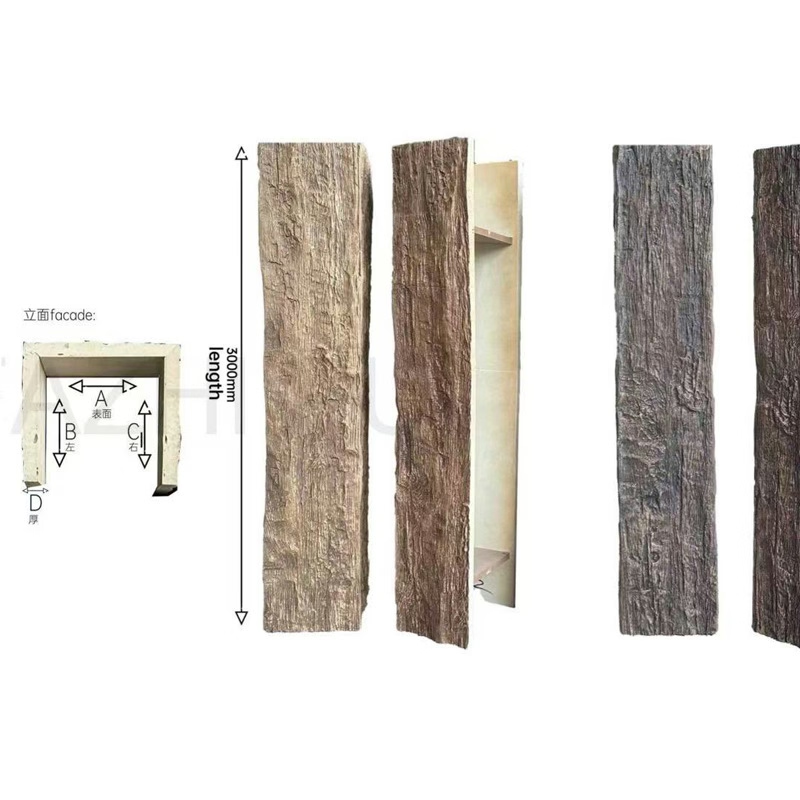
Feature wall applications extend cedar texture beams beyond traditional ceiling uses. Wood-textured beams applied to walls create dramatic visual statements that can serve as focal points or backgrounds for display. The three-dimensional nature of the texture creates shadow and highlight effects that enhance the visual impact beyond what flat paneling could achieve. These unconventional applications demonstrate the versatility that authentic texture reproduction enables.

Material Performance Comparisons
When comparing cedar texture PU beams to authentic timber, the performance differences often prove decisive for project decisions. Weight represents the most immediately apparent distinction — PU beams weigh a fraction of equivalent timber sections, with corresponding reductions in structural demands and handling requirements. A timber beam that would require multiple installers and potentially equipment assistance can often be handled by one person when manufactured in polyurethane.
Moisture response differs fundamentally between the materials. Cedar's natural durability includes some resistance to moisture, but the material still absorbs and releases water with changing humidity. This absorption causes dimensional changes that can lead to warping, splitting, and surface degradation over time. Polyurethane's complete moisture resistance eliminates these concerns entirely, making the material suitable for applications ranging from dry interiors to humid bathrooms.
Biological resistance presents another significant contrast. Cedar contains natural compounds that resist insect attack and fungal decay, but these protections can be overwhelmed under sufficiently challenging conditions. Polyurethane provides no food value or habitat for biological organisms, ensuring that beams remain structurally sound regardless of surrounding conditions. This resistance proves particularly valuable in tropical or subtropical climates where biological threats are most severe.
Thermal expansion behavior favors manufactured materials for most architectural applications. Wood expands and contracts with temperature changes in ways that can stress joints and connections. While cedar's dimensional stability is better than many species, it cannot match the consistency of manufactured polyurethane. This stability ensures long-term joint integrity and prevents the development of gaps or protrusions that might compromise appearance.
Economic Considerations for Project Planning
Budget planning for cedar texture beams should consider more than initial material costs. While PU beams often price competitively with mid-range natural cedar, the total project cost includes installation, finishing, and ongoing maintenance that differ significantly between materials. When all factors are included, PU beams frequently prove more economical despite comparable or slightly higher initial pricing.
Installation cost advantages can be substantial depending on project conditions. Reduced handling requirements translate directly to labor savings, particularly in existing construction where access limitations complicate material movement. Faster installation reduces disruption to ongoing operations in commercial projects or accelerates project completion in new construction. These schedule advantages can generate indirect savings beyond the direct labor reduction.
Maintenance cost differences compound over building lifespans. Natural cedar requires periodic inspection, cleaning, and potential refinishing to maintain its appearance and structural integrity. Each maintenance cycle represents direct expenditure plus the opportunity cost of disruption. PU beams require no such maintenance, eliminating these recurring costs entirely. Over a building's expected lifespan, maintenance savings often exceed the initial material cost differential.
For large-scale projects involving multiple beams across extended areas, the consistency advantages of manufactured production provide meaningful project management benefits. Every beam arrives matching specifications exactly, with no variation requiring on-site adjustment or acceptance decisions. This predictability simplifies procurement, reduces waste, and ensures uniform appearance throughout finished installations.
Quality Assessment and Selection Criteria
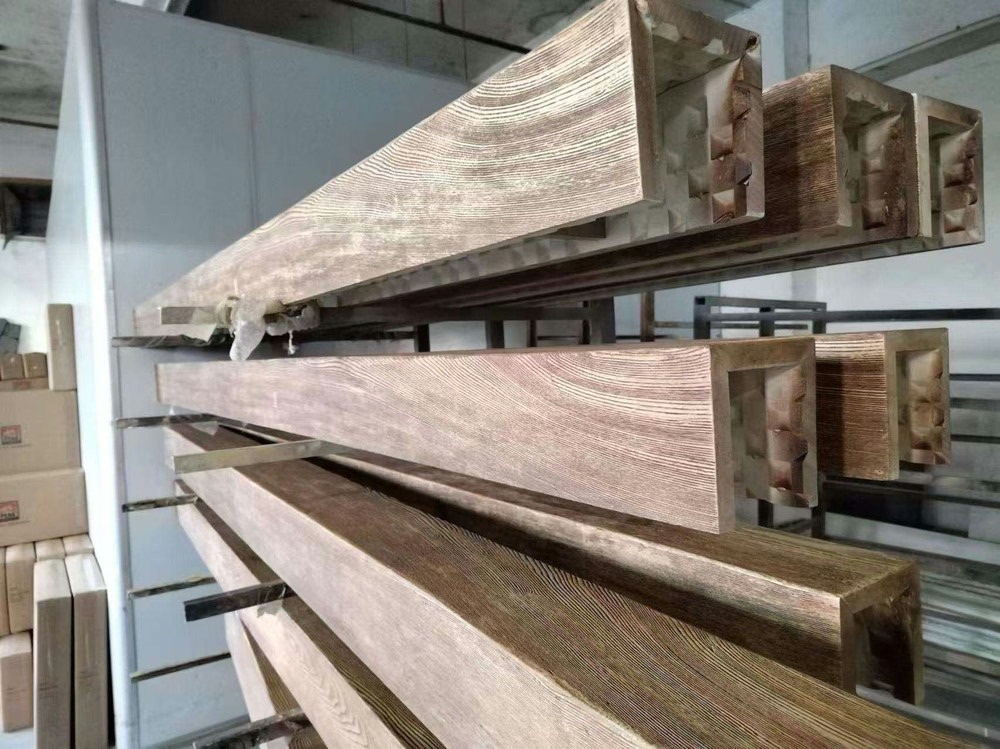
Identifying quality cedar texture beams requires attention to several characteristics. Surface texture should show consistent reproduction of wood grain patterns with no obvious defects or incomplete areas. Color application should be even and appropriate to the cedar species being simulated, with realistic variation rather than flat solid coloration. Edge details should be clean and well-defined, with no flashing or excess material that would require trimming.
Structural integrity can be assessed through visual inspection and simple testing. Quality beams will feel solid and consistent when handled, with no soft spots or areas that flex excessively. Visible delamination, bubbling, or surface irregularities may indicate manufacturing defects that will affect long-term performance. Working with established manufacturers who provide quality guarantees reduces these risks.
Warranty coverage provides additional assurance of material quality. Manufacturers confident in their products typically offer meaningful warranties covering appearance and structural performance. These warranties should be reviewed carefully to understand what is covered and what conditions might void coverage. The warranty duration and claim process provide insight into the manufacturer's commitment to customer satisfaction.
The cedar texture PU faux timber beams represent sophisticated manufacturing applied to a straightforward aesthetic goal — bringing authentic cedar character to applications where natural material proves impractical. Through careful attention to texture reproduction, color accuracy, and material performance, these beams enable design visions that might otherwise remain unrealized due to material limitations.
Technical References
ASTM standards cited in every specification
Test Data
Lab results from internal testing program
Updated 2026
Reviewed against current product specs


