The Douglas fir holds a special position among North American softwoods, not merely for its economic importance as a construction material but for its distinctive visual character that has shaped the appearance of countless buildings across the continent. The species name pseudotsuga translates to "false hemlock," though the tree bears no close resemblance to hemlocks, instead occupying its own distinct category among conifers. Its dominance in Pacific Northwest forests and its subsequent ubiquity in American construction created cultural associations that extend far beyond mere economics into the realm of visual identity.
Texture constitutes the foundation of convincing wood reproduction, the element that distinguishes authentic appearance from flat imitation. When examining wood closely, the interplay between grain pattern and surface texture creates the visual complexity that the eye recognizes as natural rather than artificial. Douglas fir presents distinctive textural characteristics derived from its growth pattern and cellular structure — characteristics that sophisticated manufacturing processes now reproduce with remarkable accuracy in polyurethane.
The combination of authentic texture reproduction with the practical advantages of polyurethane creates products that serve applications impossible for natural timber. Weight limitations, moisture sensitivity, and maintenance requirements that constrain natural wood use become irrelevant with manufactured materials designed for specific performance requirements. The result expands the range of contexts where wood aesthetics can appear while reducing the compromises that authentic materials would demand.
Douglas Fir's Distinctive Textural Characteristics
Understanding Douglas fir texture requires appreciation of how the species differs from other common softwoods. The wood's growth rings are typically distinct, with pronounced color differentiation between earlywood and latewood bands. This contrast creates the prominent grain lines that characterize Douglas fir appearance, with the latewood bands appearing darker and denser than the surrounding earlywood. The resulting pattern is bolder than species like pine or spruce, yet less dramatic than the oak or ash grain patterns that many consumers find familiar.
The surface texture of planed Douglas fir shows characteristics that reflect its cellular structure. Pores are visible to the naked eye as small dots or lines where growth ring boundaries intersect the surface. This grain pattern is particularly apparent in flat-sawn boards, where ring patterns appear as flowing curves or the classic cathedral arches. Quarter-sawn surfaces display the distinctive vertical grain lines that have made Douglas fir popular for flooring applications where durability and appearance both matter.
Natural variation within Douglas fir creates ranges of appearance that manufacturing must accommodate. Growth rate affects ring width and proportion, with fast-grown timber showing wide rings and subtle color contrast while slow-grown material displays narrow rings with more pronounced figure. Knot frequency varies with tree structure, creating boards ranging from clear to heavily featured. These variations mean no two Douglas fir pieces look identical, a characteristic that authentic reproduction must preserve rather than eliminate.
The aging behavior of Douglas fir affects both color and texture over time. Fresh-cut fir displays pale pinkish tones that deepen to rich amber with light exposure. Surface texture can become more pronounced as softer earlywood erodes slightly faster than denser latewood, creating subtle relief that enhances grain visibility. These changes occur over months and years rather than days, meaning installed fir gradually evolves in character while maintaining essential identifying features.

Manufacturing Texture Reproduction
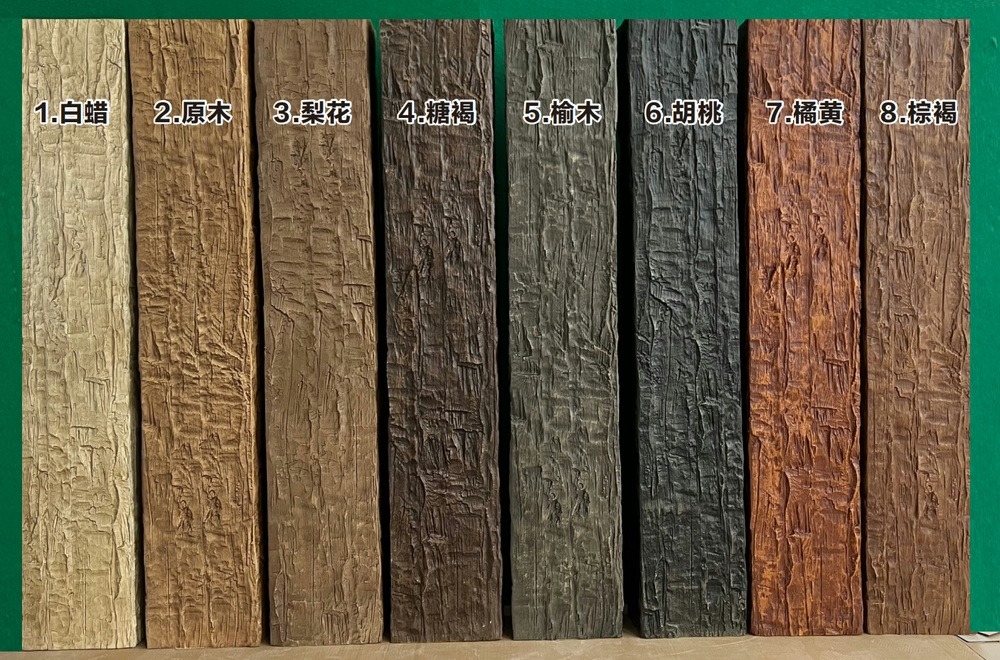
Creating convincing Douglas fir texture reproduction requires sophisticated mold-making and casting processes. The journey begins with authentic samples selected for their exemplary fir characteristics — clear grain definition, appropriate color range, and surface texture representative of the species. These samples undergo preparation that stabilizes their surfaces for molding while preserving every microscopic detail.
Mold construction uses liquid rubber compounds applied in multiple layers, with each layer allowed to cure before the next is added. The resulting flexible molds capture surface texture at molecular resolution, preserving every ridge, valley, and irregularity that contributes to authentic appearance. When polyurethane is cast into these molds, it reproduces the original texture exactly, creating surfaces that respond to light and touch like genuine wood.
Surface coloring follows texture reproduction, with careful attention to how color interacts with three-dimensional surface detail. Douglas fir's characteristic warm tones must be applied in ways that enhance rather than obscure texture. Darker colors placed in grooves and lighter colors on ridges create the depth perception that distinguishes authentic wood from flat painted surfaces. This color-texture interaction accounts for much of what makes wood appear genuine rather than simulated.
Quality control procedures inspect finished pieces at multiple scales. Macroscopic examination verifies overall appearance and color accuracy; microscopic inspection confirms texture reproduction quality. Any pieces failing to meet standards are rejected and reprocessed, ensuring consistent quality across all shipped products. This attention to detail distinguishes premium reproduction from commodity alternatives.
Rustic Design Applications
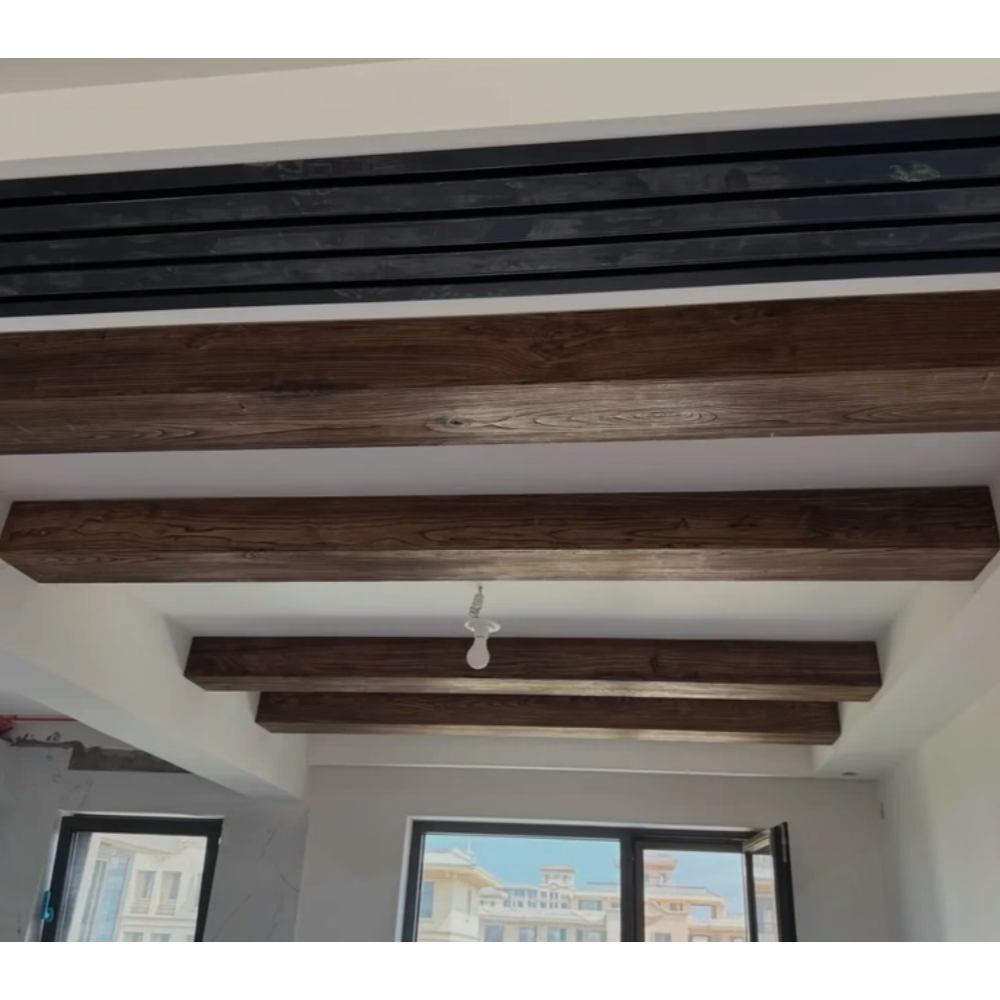
Cabin and lodge interiors represent natural applications for Douglas fir texture beams. The wood's associations with mountain forests and rustic building traditions align perfectly with these spaces' design intent. Beams with authentic Douglas fir texture add presence and character that transform bare ceiling planes into architectural features. The prominent grain pattern creates visual interest that justifies attention without demanding it.
Great rooms with vaulted ceilings provide dramatic settings for Douglas fir beam installations. The height of these spaces supports substantial beams that would overwhelm lower ceilings, while the open geometry allows beams to be appreciated from multiple angles and distances. Natural light washing across textured surfaces creates subtle changes in appearance throughout the day, ensuring beams remain visually engaging rather than becoming invisible through familiarity.
Kitchens and dining areas gain warmth and character from Douglas fir beams positioned above islands, tables, and food preparation zones. The organic texture softens the functional nature of these spaces, creating atmospheres more conducive to gathering and lingering. The wood's moisture resistance handles kitchen humidity without complaint, while the texture provides forgiving surfaces that hide minor accumulations better than smooth finishes would.
Outdoor living spaces under covered areas can incorporate Douglas fir texture beams to extend interior aesthetics into transitional zones. The material's resistance to moisture and UV exposure ensures long-term performance despite environmental challenges. This indoor-outdoor continuity creates larger-feeling spaces while maintaining distinct character for each zone.

Material Performance Comparison
Comparing Douglas fir texture PU beams to natural Douglas fir timber reveals performance differences that often prove decisive in application decisions. Weight represents the most immediately apparent distinction — polyurethane beams weigh a fraction of equivalent timber sections, with corresponding reductions in structural demands and handling complexity. A timber beam requiring multiple installers and potential equipment assistance might be managed by one person when manufactured in polyurethane.
Moisture response differs fundamentally between materials. Natural Douglas fir absorbs and releases moisture with changing humidity, causing dimensional changes that can stress joints and connections. Polyurethane's complete moisture resistance eliminates these concerns entirely, making the material suitable for applications ranging from dry interiors to humid bathrooms. This stability ensures long-term fit without the seasonal movement that affects organic wood.
Biological resistance provides additional advantages over natural wood. While Douglas fir contains natural compounds offering some resistance to decay and insect attack, these protections can be overwhelmed under challenging conditions. Polyurethane provides no food value or habitat for biological organisms, ensuring consistent structural integrity regardless of environmental pressures. This resistance proves particularly valuable in tropical climates or subterranean applications.
Thermal expansion behavior favors manufactured materials for most architectural applications. Wood expands and contracts with temperature changes in ways that affect fit and appearance; polyurethane's dimensional stability ensures consistent performance across temperature ranges. This stability simplifies detailing and ensures long-term joint integrity without adjustment or repair.
Installation and Long-Term Care
Installing Douglas fir texture PU beams follows standard procedures adapted for the material's specific properties. Lightweight construction simplifies handling — beams can often be positioned by one person where timber equivalents would require multiple installers. Standard woodworking tools handle cutting and fitting, with carbide-tipped blades recommended for clean cuts through the dense material.
Mounting methods depend on application requirements and beam size. Adhesive bonding provides strong, invisible attachment in many residential applications. Mechanical fastening with finish nails or screws offers additional security where desired. Structural applications may require specialized mounting systems with provisions for load transfer, though decorative beams typically mount with simpler methods.
Ongoing care for Douglas fir texture beams requires minimal effort. The textured surface hides minor dust and accumulations better than smooth surfaces, reducing cleaning frequency. When cleaning is needed, simple dusting or wiping with a damp cloth suffices. The sealed surface prevents staining from common household substances, and any damage can be repaired with filler compounds designed for polyurethane.
The combination of authentic texture reproduction and modern material performance makes Douglas fir texture PU beams uniquely valuable for rustic design applications. They deliver the natural character that rustic spaces require while eliminating the practical limitations that constrain natural wood use. For homeowners and designers seeking genuine Douglas fir appearance without compromise, these beams merit serious consideration.
Technical References
ASTM standards cited in every specification
Test Data
Lab results from internal testing program
Updated 2026
Reviewed against current product specs


