Humidity presents one of the most challenging environmental conditions for interior wood elements. Spaces like bathrooms, pools, indoor spas, and kitchens experience moisture levels that fluctuate dramatically—from steam-filled air after hot showers to relatively dry conditions during ventilation. Natural wood absorbs this moisture, swelling when humid and contracting when dry, eventually developing the mold, mildew, and rot that shortens service life significantly. Natural mildew-resistant faux wood beams address these challenges directly, providing the aesthetic warmth of wood in environments where genuine timber would deteriorate rapidly.

The biology of wood degradation in humid environments involves several interconnected processes. Mold and mildew colonize wood surfaces when moisture content exceeds approximately 20%, feeding on wood fibers and producing the dark discoloration and musty odors that characterize degraded timber. Bacteria accelerate this process in continuously wet conditions. Meanwhile, repeated swelling and shrinking stresses wood fibers, eventually causing cracking, splitting, and structural compromise. Polyurethane faux beams eliminate these biological and mechanical vulnerabilities entirely.
Understanding Humidity Challenges
Indoor humidity levels fluctuate significantly based on activities, seasons, and HVAC system performance. A bathroom during a hot shower might reach 90% relative humidity or higher, then drop to ambient levels within an hour as ventilation removes moisture-laden air. This cycling creates demanding conditions for any hygroscopic material—materials that absorb and release moisture with environmental changes.
Natural wood responds to these fluctuations by absorbing moisture during humid periods and releasing it when conditions dry. This response produces visible dimensional changes—swelling when humid, shrinking when dry—that accumulate over time into permanent distortion. In beam applications, this movement stresses mounting hardware and can eventually compromise structural integrity. In decorative applications, movement creates gaps, misalignment, and appearance deterioration.
Biological degradation compounds physical stress. Mold and mildew colonies produce enzymes that break down wood fibers, creating the soft, punky material that characterizes advanced decay. These organisms thrive in the same warm, humid conditions that buildings typically maintain for human comfort. Once established, biological degradation progresses until wood structure fails or treatment intervenes.
The Technology of Mildew Resistance
Polyurethane faux beams resist moisture-related problems through fundamental material properties rather than surface treatments. The closed-cell structure of quality polyurethane absorbs essentially no water, remaining dimensionally stable regardless of surrounding humidity. This stability prevents both the physical stress that moisture cycling creates and the biological conditions that support mold and mildew growth.
Antimicrobial additives in premium formulations provide additional protection. These compounds inhibit the growth of mold, mildew, and bacteria on beam surfaces, preventing colonization even if accumulated dust provides organic matter for feeding. While the material's inherent properties resist biological growth, antimicrobial additives provide insurance against the occasional conditions that might otherwise support surface colonization.
Surface finish quality contributes to overall performance in humid environments. Premium finishes create seamless barriers that prevent moisture penetration at the surface level. Lesser finishes might contain microscopic pinholes or discontinuities that allow moisture access to the substrate beneath. Quality control during manufacturing ensures that finishes meet specifications for humid environment performance.
Applications in High-Humidity Spaces
Bathrooms represent the most common high-humidity application for faux wood beams. Master bathrooms with steam showers, spa-like soaking tubs, and insufficient ventilation create environments that would quickly degrade natural wood. Faux beams maintain their appearance indefinitely despite the challenging conditions, providing the warmth and character that makes spa-like bathrooms feel luxurious rather than merely functional.
Indoor pools and natatoriums present extreme humidity challenges that few materials can withstand. Chlorinated air accelerates corrosion and degradation of many building materials, but polyurethane resists these chemical effects while maintaining appearance and structural integrity. Beams in these environments contribute warmth and visual interest that makes pool spaces more inviting than industrial alternatives would allow.
Kitchens, while less humid than bathrooms during normal use, experience significant moisture during cooking and dishwasher operation. Open-plan kitchens that flow into living areas extend these conditions throughout larger spaces, requiring materials that tolerate humidity throughout. Faux wood beams in kitchen applications provide design continuity that connects cooking areas to adjacent spaces while handling the moisture that serious cooking generates.
Design Considerations for Humid Environments
Beam placement in humid environments should consider ventilation patterns and moisture concentration. Areas immediately above showers or tubs experience the highest humidity levels; beams positioned here require maximum moisture resistance. More distant locations experience lower average humidity and might accommodate products with less rigorous specifications. Understanding specific conditions helps in planning appropriate installations.
Mounting hardware selection matters in humid environments where metal corrosion threatens long-term integrity. Stainless steel, marine-grade aluminum, or coated fasteners resist the elevated humidity that these spaces experience. Standard zinc-plated hardware might corrode rapidly, eventually failing and allowing beams to shift or fall. Quality installations specify appropriate hardware for the environmental conditions.
Ventilation system design directly affects humidity levels and thus beam performance. Adequate exhaust ventilation removes moisture-laden air before it can accumulate to damaging levels. Timer-based or humidity-sensor-controlled exhaust fans provide automated moisture management that protects all vulnerable materials, including any that might be present despite faux wood beam resistance. Building codes increasingly require adequate ventilation in bathrooms and kitchens for exactly these reasons.
Maintenance in Humid Spaces
Cleaning protocols for faux wood beams in humid environments should acknowledge the conditions where they operate. While polyurethane resists biological growth, accumulated dust and organic matter can provide food for mold that might grow on dust rather than on the beam material itself. Regular cleaning removes this potential food source, maintaining the clean appearance that well-designed spaces deserve.
Cleaning products should be selected carefully. Harsh chemicals might damage beam finishes, while residue from cleaning agents might attract dirt or support biological growth. Mild soap solutions with thorough rinsing typically provide adequate cleaning without the risks that stronger products might introduce. Testing cleaning products on inconspicuous areas before full application prevents unexpected finish damage.
Inspection routines help identify potential problems before they become serious. While faux beams resist moisture damage, surrounding materials might not. Periodic inspection of mounting hardware, adjacent surfaces, and sealants identifies deterioration that might eventually affect beam installations. Early intervention prevents minor issues from becoming major problems requiring extensive repair.
Comparative Performance
Natural wood in humid environments requires protective treatments that must be reapplied periodically to maintain effectiveness. Oil-based sealants, marine varnishes, and specialized wood preservatives all provide moisture resistance, but each eventually fails and requires renewal. The maintenance burden of these treatments accumulates significantly over the service life of natural wood installations.
Pressure-treated lumber provides improved moisture resistance but introduces greenish coloring and often visible preservatives that limit aesthetic applications. Treatment chemicals affect finish adhesion and appearance in ways that make pressure-treated lumber unsuitable for visible beam installations where appearance matters. The practical protection that treatment provides comes at significant aesthetic cost.
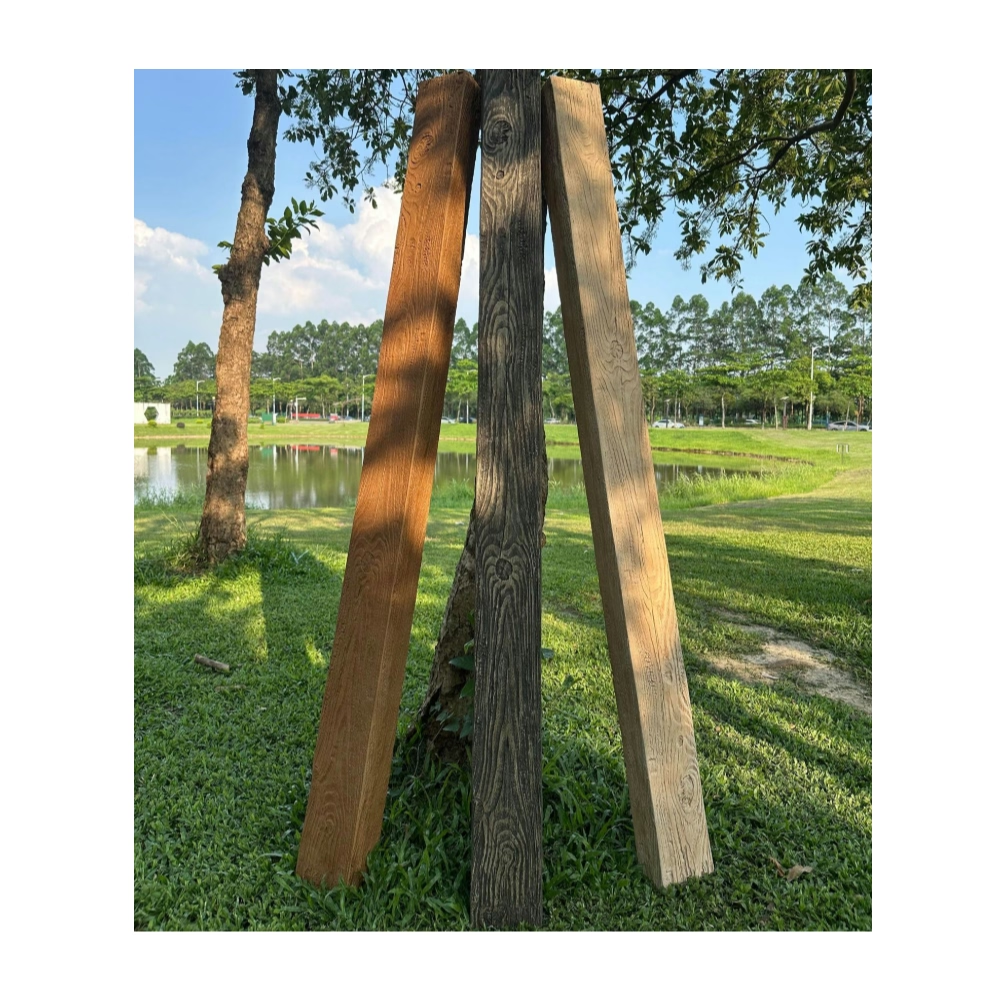
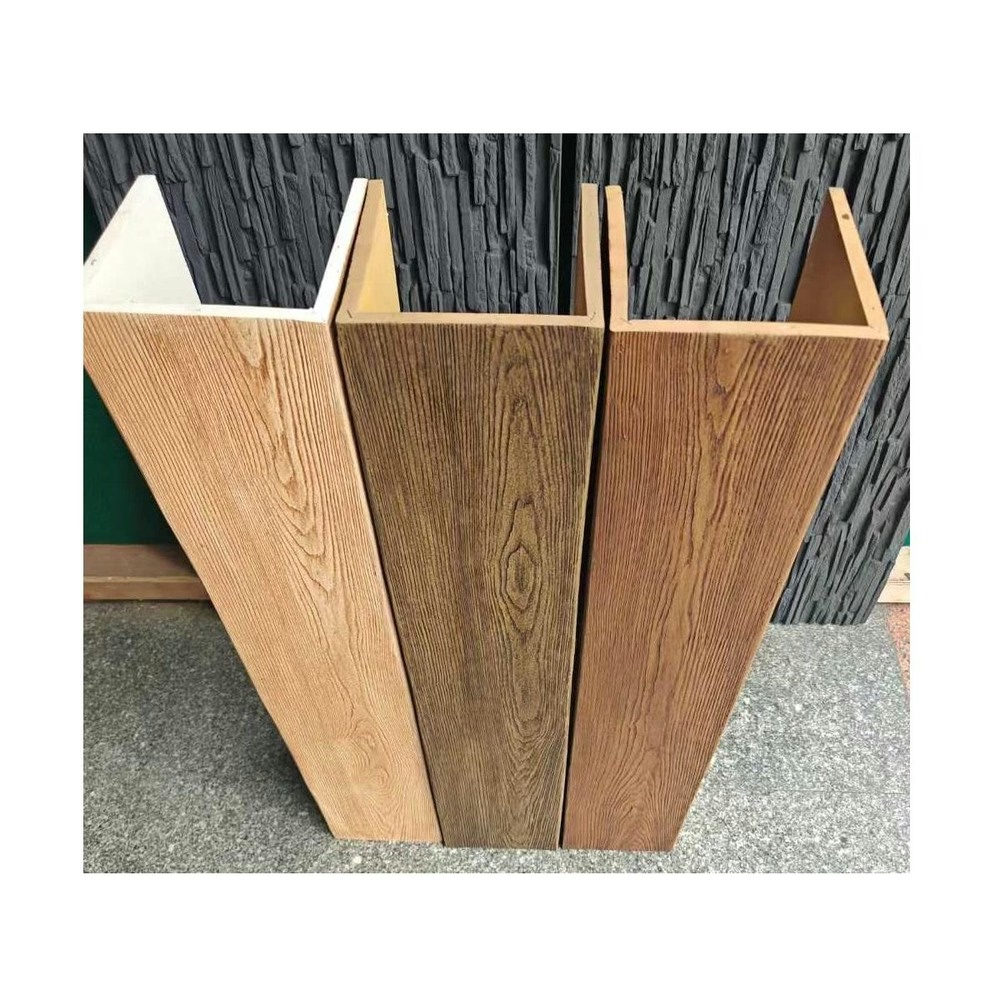
Synthetic alternatives like cellular PVC avoid moisture problems but typically lack the authentic wood appearance that many designers seek. PVC products often appear obviously plastic, with repeating patterns and uniform surfaces that betray their manufactured nature. Polyurethane faux beams achieve wood-like appearance through embossed textures and carefully matched coloring while maintaining the moisture resistance that synthetic alternatives provide.
Long-Term Value Considerations
The initial cost of quality mildew-resistant faux beams may exceed natural wood alternatives, but lifecycle cost analysis often favors manufactured products. Maintenance costs for natural wood include periodic refinishing, treatment renewal, and eventual replacement when degradation becomes unsightly or structurally concerning. Faux beams require only routine cleaning, with no ongoing treatment costs throughout their extended service life.
Warranty coverage provides assurance against manufacturing defects that might affect long-term performance. Quality manufacturers offer warranties of five years or longer, covering finish adhesion, structural integrity, and resistance to the environmental conditions these products are designed to withstand. Understanding warranty terms helps in evaluating the confidence that manufacturers have in their products.
The investment value of mildew-resistant beams extends beyond direct costs to include the avoided disruption of repairs or replacements. Natural wood degradation typically occurs gradually, with visible signs of problems appearing only after significant internal damage has occurred. By the time deterioration becomes obvious, replacement may be the only viable option. Faux beams maintain consistent appearance, eliminating the gradual decline that characterizes natural wood in challenging environments.
Selecting Appropriate Products
Product specifications should explicitly address humid environment performance. Manufacturers who design for these conditions include appropriate material selections, antimicrobial additives, and quality control processes that ensure consistent results. Products without explicit humid environment ratings may perform adequately but lack the documented assurance that demanding applications require.
Finish specifications deserve particular attention. The finish system applied to faux beams determines both appearance and moisture resistance. Premium finishes provide seamless barriers that prevent moisture penetration while maintaining authentic wood appearance. Understanding finish composition and application methods helps in evaluating whether products will perform adequately over time.
Sample evaluation under actual or simulated conditions provides valuable information beyond visual inspection. Exposing samples to steam, humidity cycling, or other challenging conditions reveals how products respond to the specific environments where they'll be installed. While quality products should perform adequately without such testing, the confirmation that realistic testing provides offers valuable assurance for significant installations.
Technical References
ASTM standards cited in every specification
Test Data
Lab results from internal testing program
Updated 2026
Reviewed against current product specs


