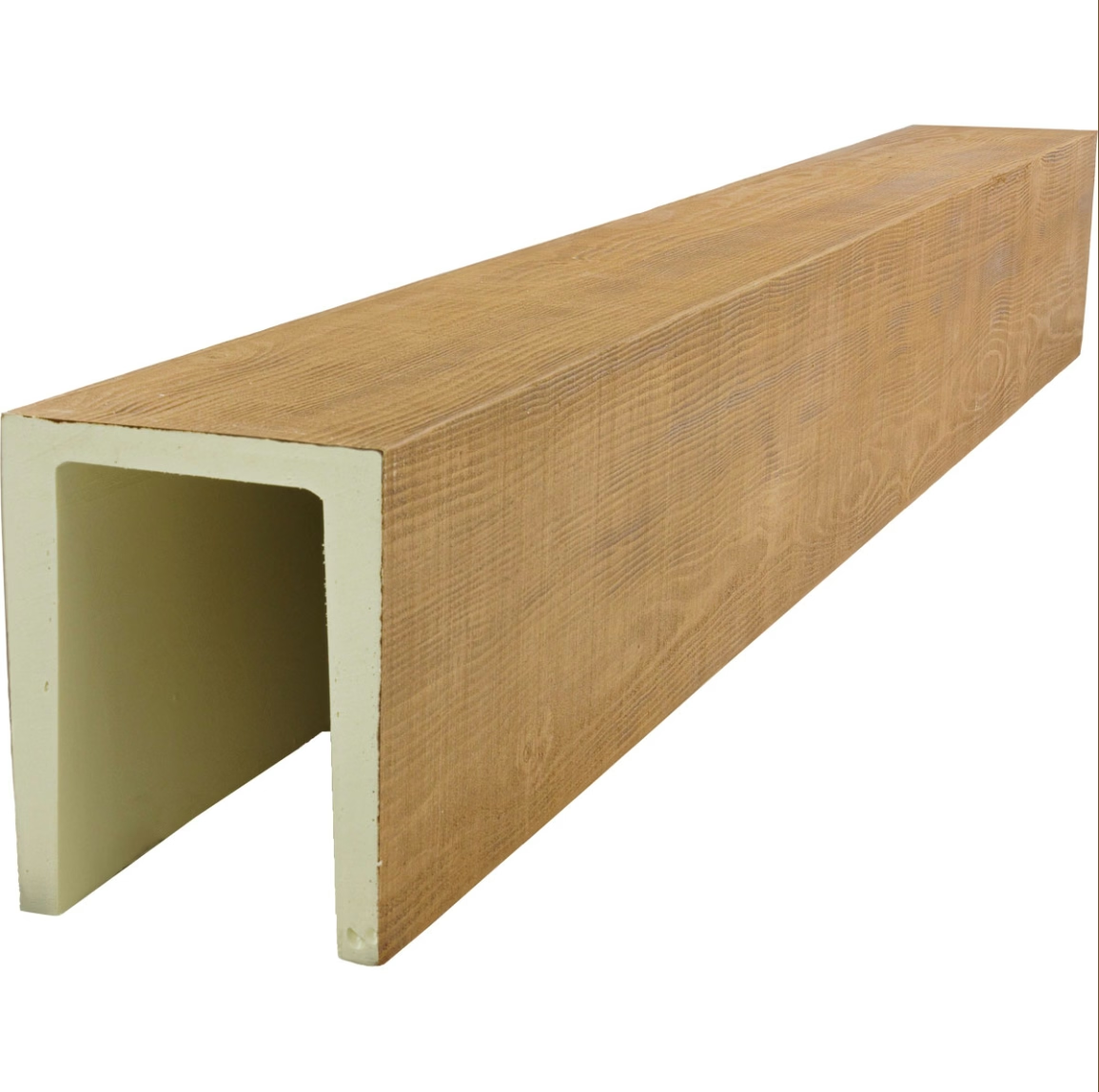
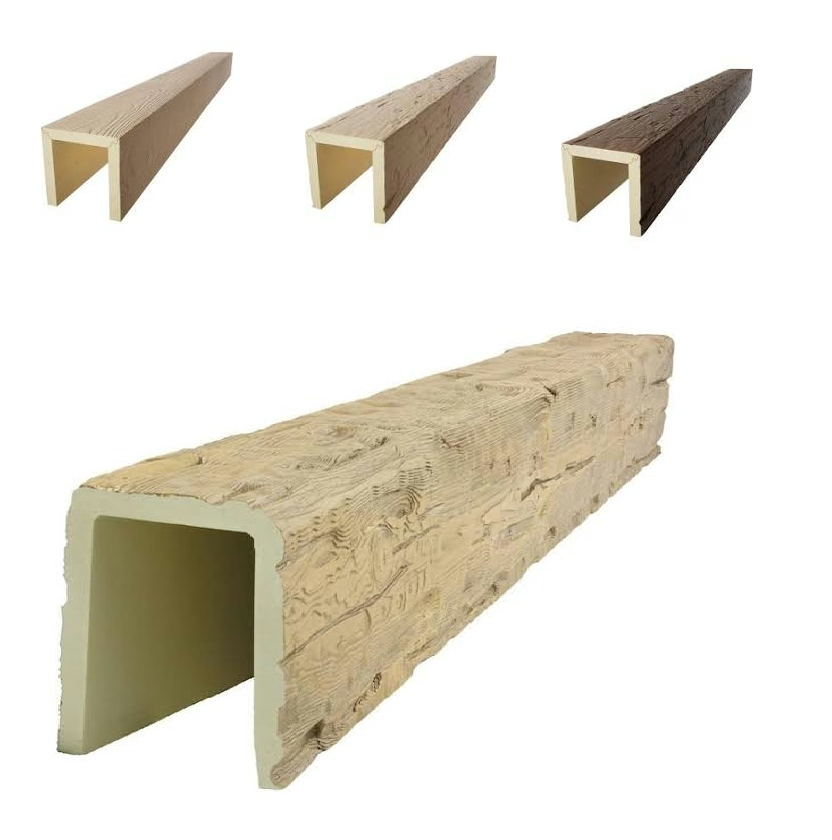
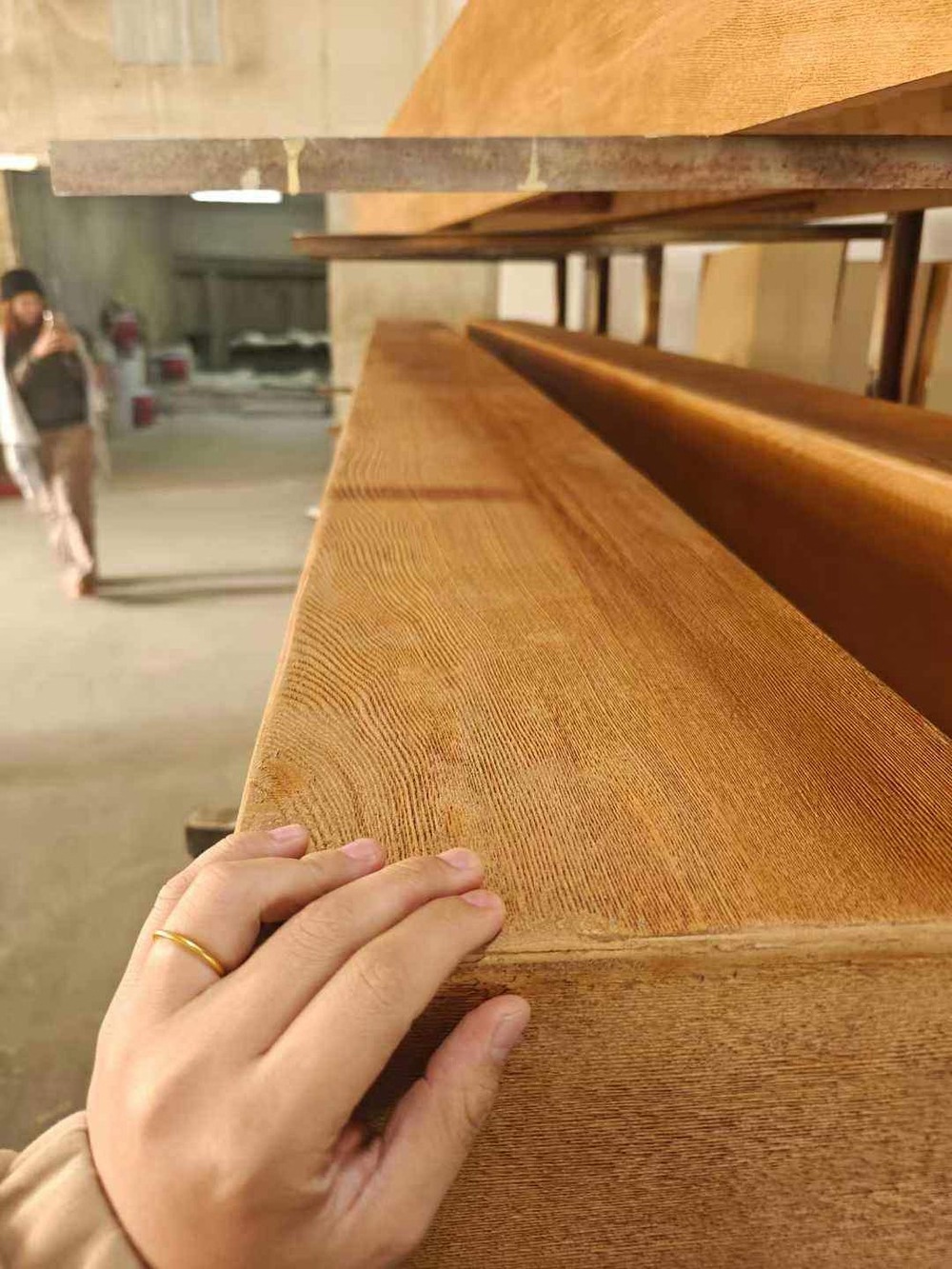
Among the infinite variations that wood presents, few capture attention as immediately as wild grain patterns. Where conventional lumber displays relatively uniform grain lines running parallel across the board surface, wild grain specimens show dramatic figure—waves and curls, burl formations, crotch wood swirls, and spalting patterns that suggest transformation in progress. These distinctive patterns have driven collectors to treasure exceptional boards for centuries, incorporating them into furniture and architectural elements where their visual drama could be showcased. Natural wild grain texture PU faux timber beams bring this dramatic character to ceiling installations without the expense, inconsistency, and supply limitations that genuine wild grain timber presents.
Understanding why certain wood develops wild grain patterns requires appreciation for the biological processes that create them. Grain direction follows wood fiber orientation, which in turn reflects how trees grow in response to light exposure, wind stress, branch attachment, and countless environmental factors. Most commercial lumber comes from relatively straight-grained sections where these factors created uniform growth. But at branch attachments, compression wood zones, or areas responding to unusual stress, fiber orientation becomes chaotic, producing the wild patterns that distinguish figured wood.
The most prized wild grain patterns occur in specific species that exhibit the tendency more prominently than others. Figured maple develops the characteristic "tiger stripe" or "curly" figure when medullary rays orient perpendicular to normal grain direction. Claro walnut produces dramatic crotch patterns where major branches meet the trunk. Birds-eye maple creates small, numerous focal points across the surface. Each pattern type carries its own character and aesthetic associations, providing designers with options that range from subtle shimmer to bold abstraction.
Capturing wild grain authenticity in polyurethane requires manufacturing approaches that go beyond simple wood-grain replication. Standard wood-grain texturing produces relatively uniform patterns suitable for most applications. Wild grain, however, demands the dramatic variation and unpredictable movement that characterize exceptional specimens. Achieving this requires molds taken from genuinely figured wood, careful selection of which patterns to reproduce, and manufacturing processes that preserve the three-dimensional quality that distinguishes real wild grain from flat printed imitations.
The visual impact of wild grain beams in interior spaces differs fundamentally from conventional wood alternatives. Where standard grain patterns provide texture and interest at a secondary level, wild grain commands attention as a primary focal point. A ceiling adorned with dramatic wild grain beams becomes a design statement rather than mere architectural support, contributing as much visual interest as feature walls, artwork collections, or statement furniture. This central role requires confidence in the chosen pattern and commitment to an interior language that accommodates such boldness.
Consider a great room where the homeowners sought visual interest that would justify the substantial renovation budget. Conventional approaches—architectural molding, coffered ceilings, decorative medallions—seemed insufficiently distinctive. Wild grain faux beams offered an alternative that would create immediate, unmistakable character. The beams, spanning the room's width in parallel formation, displayed swirling patterns that shifted with viewing angle and illumination, creating surfaces that rewarded extended observation. Friends visiting for the first time invariably looked up, their attention captured by the dramatic ceiling treatment.
The organic authenticity of quality wild grain beams extends beyond visual appearance to tactile experience. Genuine figured wood presents different surface qualities across its extent—smoother where fibers run true, more textured where grain orientation creates interference patterns. This variation creates a haptic dimension that flat printed surfaces cannot replicate. Quality faux beams preserve these tactile characteristics through texturing that matches the visual pattern, allowing visitors who touch the beams to confirm what their eyes perceive.
Scaling considerations for wild grain beams differ from conventional alternatives. The dramatic patterns that make these beams distinctive become more apparent at larger sizes, where individual swirls and figure elements occupy substantial visual real estate. Smaller beams risk losing pattern clarity, with the intricate variations becoming muddled at reduced scales. For most interior applications, beam depths of eight inches or greater allow wild grain patterns to display fully without overwhelming the spaces they occupy.
The consistency advantage of polyurethane wild grain beams becomes particularly significant when multiple beams are installed in proximity. Genuine figured wood from different boards—even from the same tree—presents variations that may or may not coordinate well together. One beam might display bold, dramatic figure while its neighbor shows more restrained patterns. These inconsistencies, while natural in authentic timber, create jarring effects when designers intend uniform ceiling treatments. Faux beams can be manufactured to match patterns across an installation, ensuring that every beam contributes equally to the intended visual effect.
Installation scenarios that benefit from wild grain consistency include parallel beam arrangements, symmetrical layouts, and designs where multiple beams appear in the same visual field. A pair of beams flanking a central skylight, for instance, reads most effectively when both display similar figure intensity and pattern character. Achieving this with genuine timber would require examining numerous boards and selecting matching specimens—a process that adds expense and uncertainty. Faux alternatives provide guaranteed coordination without requiring expert evaluation.
Color treatment for wild grain beams requires similar attention to preserve pattern distinction. The tonal variation within wild grain—lighter where figure elements approach the surface, darker in shadowed depressions—creates the three-dimensional quality that distinguishes figured wood. Staining and finishing processes must preserve rather than flatten this variation, applying color in ways that enhance rather than obscure the natural pattern. Quality manufacturers understand this balance, producing finishes that maintain wild grain drama while providing the protection and color consistency that polyurethane requires.
Lighting design for spaces with wild grain beams should account for how different illumination angles affect pattern visibility. Side lighting from windows creates shadows that emphasize texture variation, making figure patterns more apparent. Overhead lighting tends to flatten appearance, reducing the three-dimensional quality. Combining both illumination types allows wild grain beams to perform throughout the day, shifting from dramatic to subtle and back as light conditions change. Task and accent lighting positioned to graze beam surfaces at low angles maximizes visual impact for evening gatherings.
The psychological effect of wild grain patterns in interior spaces relates to how organic complexity affects human perception and mood. Research in environmental psychology suggests that exposure to natural patterns—even reproductions of natural patterns—reduces stress and promotes positive emotional states. Wild grain's intense organic variation provides substantial exposure to such patterns, creating beneficial psychological effects that complement the aesthetic appeal. Spaces with wild grain beams may simply feel more comfortable and alive than those with more uniform surfaces.
Complementary material choices help wild grain beams achieve their full potential without overwhelming surrounding elements. Solid colors in muted tones provide backgrounds that allow beam patterns to stand out without competing for attention. Textured surfaces at similar scales—stone, brick, linen—introduce additional organic character without creating pattern-on-pattern conflicts. And deliberately simple furniture and accessories prevent visual competition that might dilute the impact of dramatic ceiling treatment.
The cost-benefit analysis for wild grain faux beams versus genuine figured timber often surprises those unfamiliar with premium wood markets. Exceptional wild grain specimens command prices that reflect their rarity and desirability—thousands of dollars per board foot for museum-quality pieces. Even commercial-grade figured lumber costs substantially more than equivalent straight-grain material. Polyurethane alternatives, while priced at a premium over standard faux beams, cost fractions of comparable genuine timber, making dramatic wild grain aesthetics accessible to projects with moderate budgets.
Maintenance considerations for wild grain beams are minimal compared to genuine figured wood. The inherent instability of wild grain patterns in authentic timber—where figured sections may respond differently to humidity than straight-grained areas, creating stress and potential cracking—does not affect manufactured polyurethane. The consistent response to environmental conditions means wild grain pattern integrity remains stable indefinitely, without the concern that genuine figured wood might develop checks or splits that mar pattern continuity.
For designers specifying wild grain faux beams, requesting detailed pattern documentation helps ensure appropriate selection. Photographs showing pattern variation across beam lengths, close-up details of specific figure elements, and sample installations demonstrating real-world appearance provide more reliable selection basis than catalog descriptions alone. Many manufacturers welcome sample requests, allowing physical evaluation before committing to substantial purchases.
The enduring appeal of wild grain patterns reflects something fundamental about human aesthetic preferences. The organic complexity, the evidence of natural processes creating unique patterns, the suggestion of living systems expressing themselves through visible structure—these qualities resonate at levels deeper than conscious preference. By bringing wild grain character to ceiling installations, wild grain PU faux beams allow spaces to benefit from this resonance, creating environments that feel inherently alive and engaging.
Technical References
ASTM standards cited in every specification
Test Data
Lab results from internal testing program
Updated 2026
Reviewed against current product specs