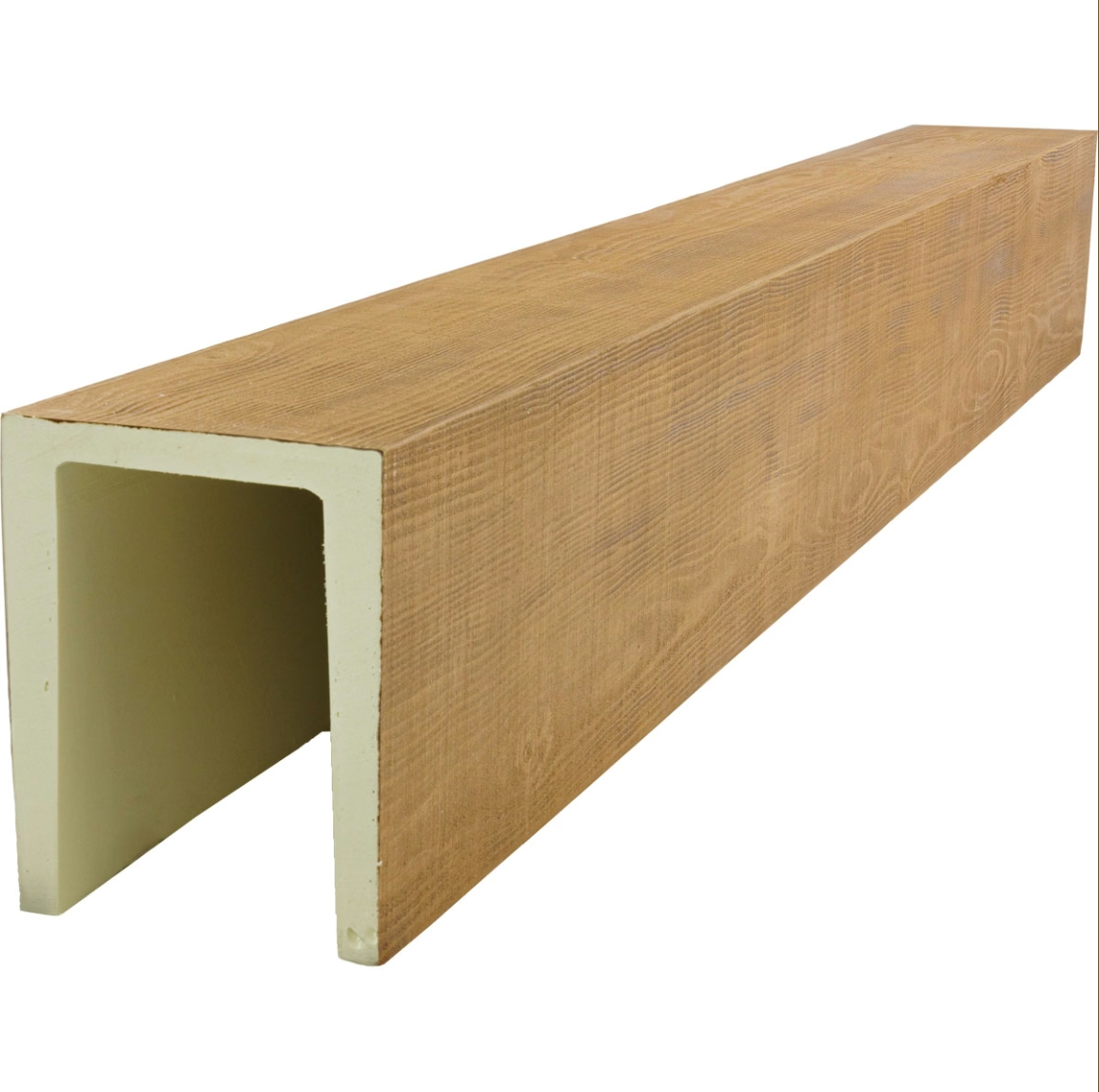
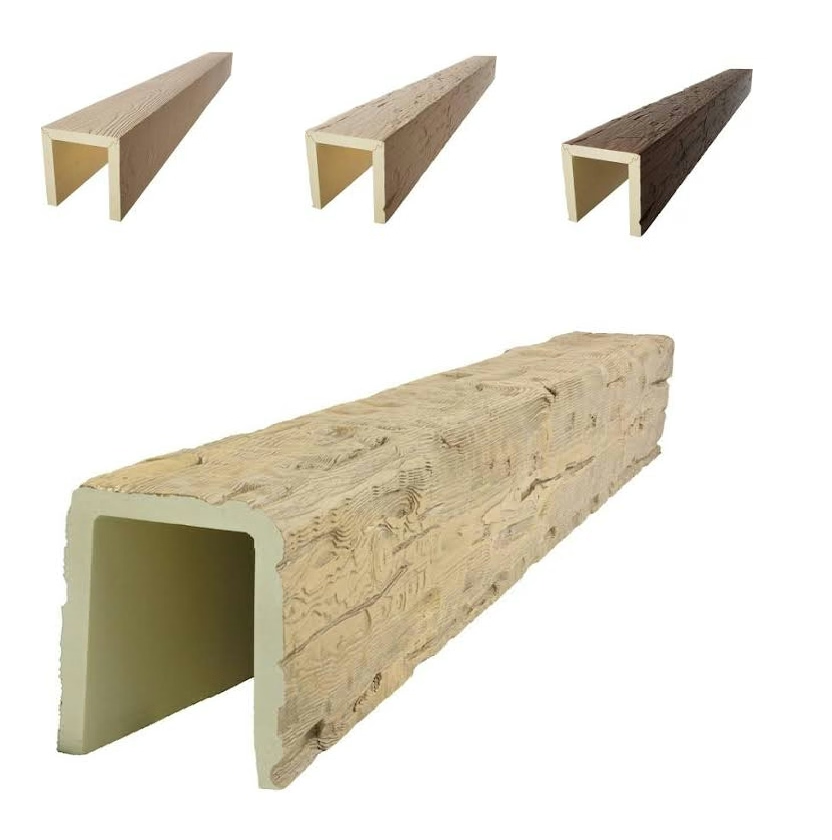
The desire for wood's warmth and character in interior spaces confronts every designer with a fundamental choice—authentic material that carries authentic limitations, or synthetic alternatives that might fail to satisfy the aesthetic sensibilities they were meant to address. For too long, this choice felt binary: accept genuine timber's expense, weight, and maintenance demands, or settle for faux alternatives that betrayed their artificial nature at close inspection. Natural wood look PU faux decorative beams represent a third option—manufactured products sophisticated enough to satisfy demanding eyes while eliminating the practical concerns that have traditionally accompanied wood specifications.
The evolution of polyurethane manufacturing has progressed substantially from early products that prioritized cost reduction over authentic appearance. Modern formulations and production techniques capture wood's essential characteristics with remarkable fidelity, producing surfaces that read as genuine to casual observers and satisfy close examination. This manufacturing advancement has transformed faux beams from budget compromise to legitimate design choice, allowing architects and designers to specify manufactured products with confidence rather than apology.
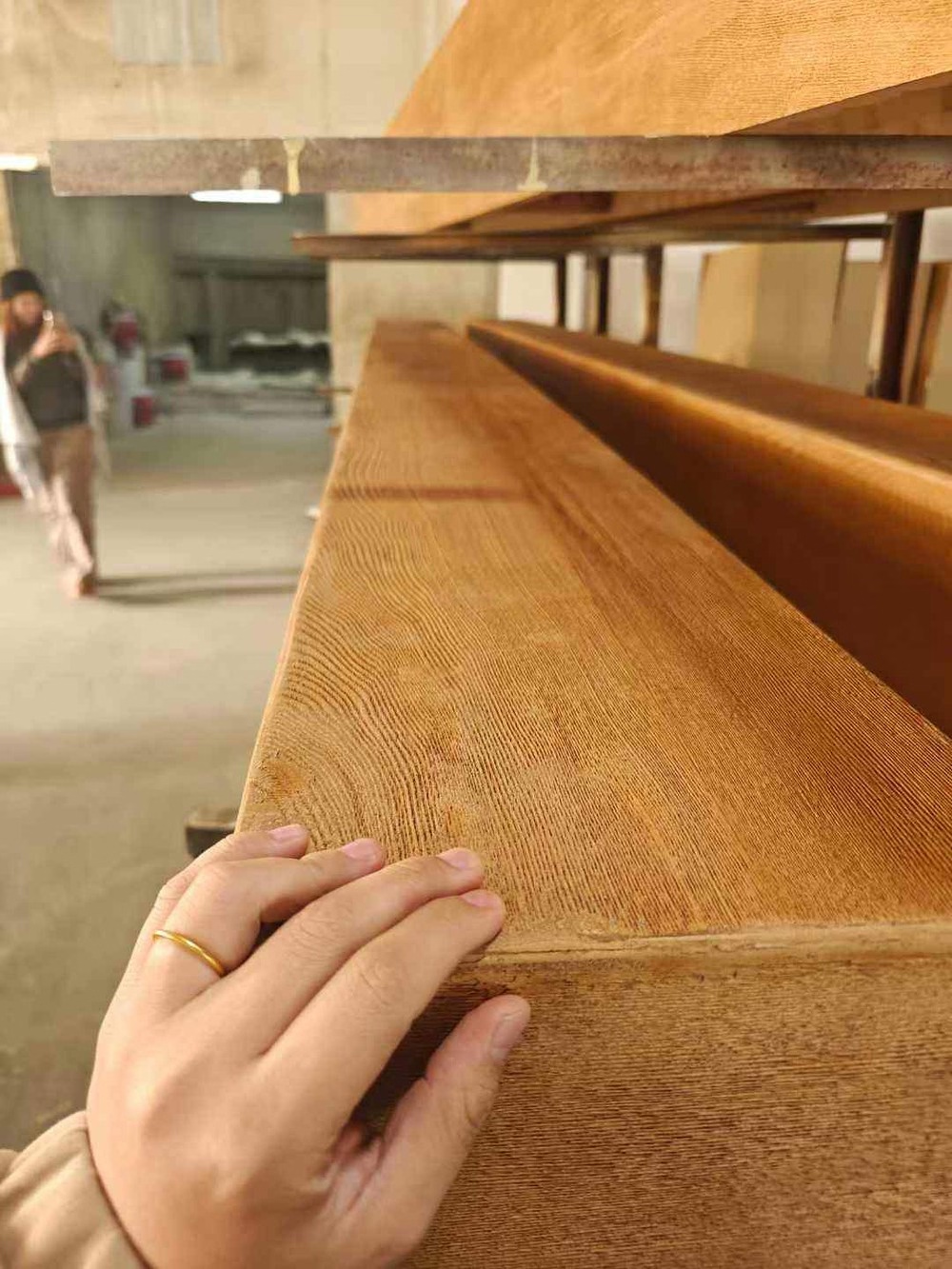
Understanding what distinguishes quality faux beams from inferior alternatives requires attention to multiple characteristics that combine to create authentic appearance. Grain pattern authenticity reflects how well the reproduction captures the specific species' distinctive features—the cathedral arch of pine, the subtle figure of maple, the bold patterns of oak. Texture depth matters because genuine wood surfaces present three-dimensional quality that flat prints cannot replicate. Color consistency ensures that multiple beams present uniform appearance without obvious variation between pieces. And edge definition addresses how beam profiles handle transitions between surfaces, a detail where lesser products commonly fail.
The decorative beam category encompasses diverse applications beyond structural replacement. Exposed truss ends that add architectural interest without bearing loads. Faux joists that create ceiling texture in industrial loft conversions. Mantel framing that establishes fireplace presence without requiring massive timber construction. Corbel supports that add traditional detail without structural function. Each application benefits from beam appearance while eliminating the engineering requirements that genuine timber would impose. This versatility expands the design vocabulary available for ceiling treatments and architectural accents.
Consider a boutique hotel renovation where designers sought to introduce warmth into what had become a sterile contemporary space. The original architecture featured exposed concrete ceilings, polished concrete floors, and minimal steel-framed windows—a palette that had seemed sophisticated when designed but felt unwelcoming after years of operation. Adding natural wood look decorative beams in key locations—the lobby's double-height ceiling, the restaurant's intimate dining alcoves, the corridor intersections that marked transitions between public and private areas—transformed the atmosphere without requiring structural modification or design revolution.
The weight advantage of polyurethane beams proves decisive in many renovation scenarios where existing structures cannot support additional loading. A century-old home with original plaster ceilings might be damaged by the concentrated loads that genuine timber beams would introduce. A modern condo building with lightweight floor-ceiling assemblies cannot accommodate the deflection that heavy wood would create. Polyurethane beams weighing one-fifth or less of equivalent timber sections can be installed without structural concern, opening possibilities that genuine material would foreclose entirely.
Installation efficiency translates directly to cost savings that affect project feasibility. Genuine timber beams require coordination with structural engineers, specialized lifting equipment, and tradespeople experienced in heavy material handling. The labor costs alone for authentic timber installation often exceed the material cost of faux alternatives. A single installer can position and secure polyurethane beams that would require a crew for timber equivalents, reducing installation time from days to hours in many scenarios. These savings make decorative beam installations practical for projects with limited construction budgets.
The durability characteristics of quality polyurethane deserve emphasis in contexts where genuine timber would require ongoing attention. Moisture exposure that might cause checking or decay in authentic timber creates no such concerns for manufactured alternatives. Temperature fluctuations that prompt wood movement and potential cracking affect polyurethane minimally. Insect activity that threatens genuine timber in some regions cannot damage synthetic materials. These practical advantages mean that faux beams maintain their appearance indefinitely while genuine timber might require repair or replacement within years of installation.
Finishing options for natural wood look faux beams extend beyond straightforward wood-tone replication. The manufactured surface accepts stain and paint treatments that allow customization for specific color requirements. Species other than the base appearance can be simulated through appropriate finishing. Custom color matching to coordinate with existing wood elements enables seamless integration. And surface treatments can modify reflectivity, adding matte or satin sheens that genuine wood finishing would require significant expertise to achieve consistently.
The environmental calculus for faux versus genuine wood involves multiple factors that resist simple comparison. Genuine timber, particularly from certified sustainable forests, carries legitimate environmental credentials that synthetic alternatives cannot match on material sourcing alone. However, transportation distances, installation complexity, and eventual replacement cycles affect genuine wood's lifecycle impacts substantially. Polyurethane's extended service life, reduced transportation requirements, and elimination of replacement frequency often produce favorable lifecycle assessments despite the synthetic material's origins.
Specifier confidence in faux beam appearance has grown substantially as manufacturing quality has improved. Where early generations of faux products failed close inspection and created uncomfortable conversations with design-conscious clients, current products satisfy observers who specifically examine them for authenticity. This increased confidence expands applications beyond budget-conscious projects to high-end residential and commercial installations where discerning clients would previously have rejected anything less than genuine material.
Maintenance protocols for faux beams simplify operational requirements in commercial contexts. Hospitality properties can train housekeeping staff on standard cleaning procedures without specialized training for delicate finishes. Retail spaces can incorporate beam cleaning into regular maintenance schedules without concern for finish damage. Office buildings can address minor soiling with the same products used on other surfaces. These operational simplifications reduce labor costs and training requirements while ensuring consistent appearance across installations.
The acoustic implications of wood-look faux beams deserve consideration in spaces where ceiling treatments affect sound quality. The textured surfaces that authentic wood presents help diffuse sound reflections that smooth ceilings create, reducing echo and improving speech clarity. Faux beams provide this acoustic benefit while eliminating the moisture sensitivity that genuine wood might exhibit in humid environments. This combination of acoustic improvement and practical resilience makes faux beams attractive for restaurants, performance spaces, and other environments where both sound quality and maintenance practicality matter.
Custom profile capabilities for polyurethane beams expand design possibilities that timber cannot support. Compound curves that would be impossible with genuine wood become practical through flexible polyurethane formulations. Oversized beams exceeding timber availability can be manufactured as segmented assemblies that appear monolithic. Intricate detailing that would require expensive custom milling for timber can be molded economically for polyurethane. These manufacturing capabilities allow designs that genuine material would preclude entirely.
Warranty and product support for quality faux beams provide assurance that genuine timber cannot match. Manufacturers of premium polyurethane products typically offer multi-year warranties covering finish adhesion, structural integrity, and manufacturing defects. This warranty coverage protects specifications and provides recourse if problems develop. The professional relationship between manufacturer and specifier that warranty support implies also ensures access to technical assistance during installation and ongoing questions about maintenance or repair.
The long-term value proposition for natural wood look faux decorative beams ultimately rests on the combination of authentic appearance, practical performance, and economic accessibility they provide. Design professionals can specify these products knowing that appearance will satisfy clients, that performance will meet practical requirements, and that budget constraints will not preclude implementation. This triple satisfaction—design, performance, and economic—explains why faux beam specifications have grown substantially across all market segments as manufacturing quality has improved.
For projects considering faux beam specifications, consulting with manufacturers about specific requirements helps ensure appropriate product selection. Beam lengths, profile configurations, finish options, and installation requirements all factor into optimal product choice. Professional consultation often identifies solutions that catalog specifications might miss, ensuring that final installations achieve the authentic wood character that projects seek.

Technical References
ASTM standards cited in every specification
Test Data
Lab results from internal testing program
Updated 2026
Reviewed against current product specs