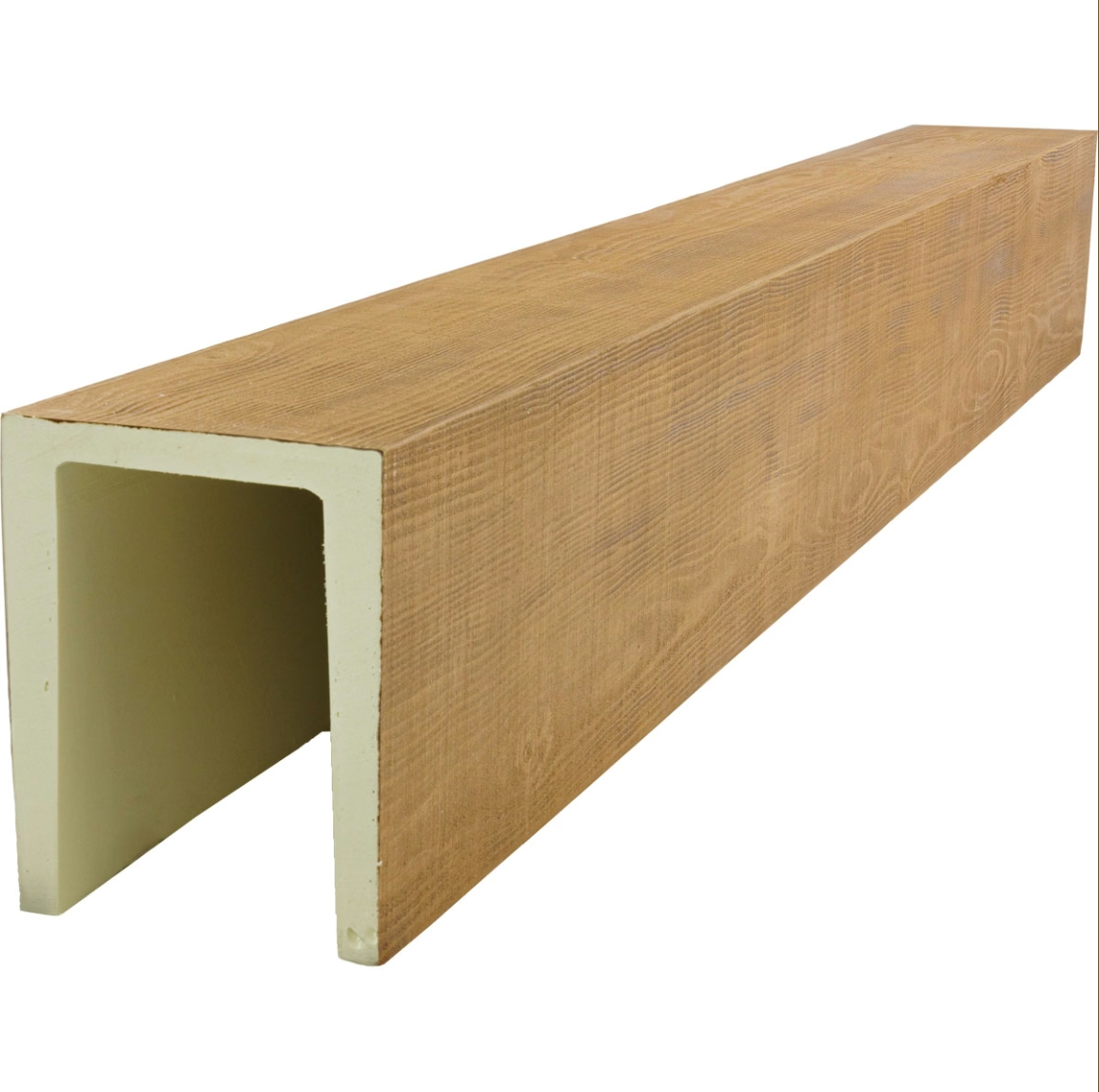
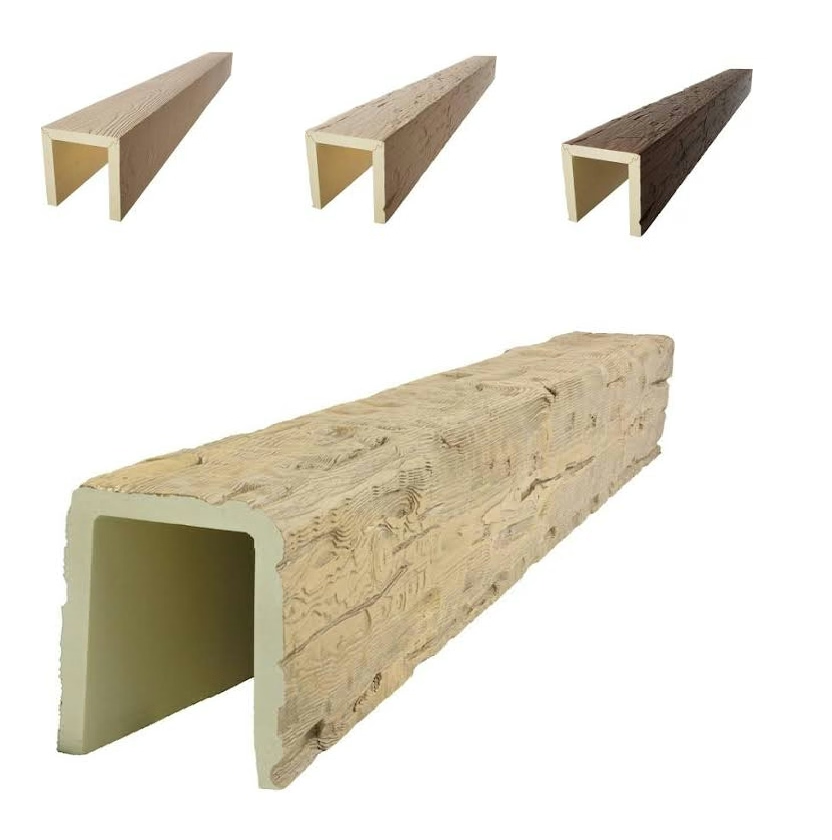
The romance of exposed timber clashes with the reality of how wood responds to moisture exposure over time. Bathrooms, covered patios, pool houses, and spa facilities present environmental conditions that accelerate timber deterioration, eventually transforming handsome beams into maintenance burdens and eventual failures. The cycle of sealing, inspecting, repairing, and replacing natural wood in wet areas consumes resources indefinitely while delivering perpetually uncertain outcomes. Non-rotting waterproof faux wood ceiling beams break this cycle entirely, providing permanent installations that moisture cannot damage.
The biological processes that cause wood rot require specific conditions to proceed. Moisture content above twenty percent, oxygen availability, and suitable temperatures create an environment where fungal organisms thrive and consume wood fiber. Remove any single factor, and rot cannot proceed. Waterproof PU beams remove moisture entirely from the equation, creating conditions that rot simply cannot develop regardless of environmental humidity or incidental water exposure.
The Science of Waterproof Performance
Polyurethane chemistry creates a cellular structure that does not absorb water by capillary action the way natural wood does. Wood fibers draw moisture through cell walls and between cells through natural pores and gaps, creating the saturated conditions that support fungal growth. PU's closed-cell structure presents no such pathways for water intrusion, keeping interior material completely dry even when surface condensation occurs.
Surface treatments enhance waterproof performance through additional barrier layers. Quality faux wood beams receive clear topcoats that seal the surface completely against liquid water while remaining vapor-permeable enough to allow any internal moisture to escape. This unidirectional moisture management prevents both external water intrusion and internal vapor accumulation.
Thermal insulation properties of polyurethane contribute to waterproof performance in humid environments. The material does not conduct cold the way metal alternatives do, preventing the surface condensation that occurs when warm humid air contacts cold surfaces. This condensation prevention reduces the moisture exposure that eventually compromises less sophisticated materials.
Laboratory testing validates waterproof performance through standardized protocols that simulate long-term moisture exposure. Salt spray testing, humidity cycling, and water immersion testing reveal how materials respond to demanding conditions. Quality beams pass these tests without degradation, providing assurance that matches the permanent performance claim.

Ideal Applications for Waterproof Beams
Bathrooms present the most common challenge for wood ceiling elements. Steam from showers, splashing at sinks, and humidity from toilet flushing all contribute to elevated moisture levels. Natural wood absorbs this moisture and begins the deterioration cycle that eventually requires replacement. Waterproof faux wood beams ignore these conditions entirely, maintaining appearance indefinitely regardless of bathroom humidity patterns.
Spa facilities and pool areas create even more demanding moisture exposure than standard bathrooms. The combination of high humidity, chlorinated atmosphere, and temperature fluctuation challenges materials that would perform adequately in less extreme conditions. Waterproof beams handle these challenges without special treatment or maintenance intervention.
Covered outdoor installations expose beams to weather patterns that change with seasons. Summer humidity, winter condensation, rain splash, and temperature-driven moisture cycles all affect outdoor ceiling elements. Waterproof beams handle this environmental variability without the seasonal monitoring that natural wood requires.
Commercial kitchens utilize beams in dining areas adjacent to cooking operations. Grease-laden humidity, cleaning splash, and temperature variations create demanding conditions that affect any ceiling materials present. Waterproof beams maintain clean appearance through these exposures while resisting the staining that other materials experience.
Installation Considerations for Wet Environments
Ventilation design affects long-term performance even with waterproof materials. While beams themselves resist moisture damage, surrounding surfaces might not perform as well. Ensuring adequate air circulation prevents moisture accumulation in concealed spaces and protects the overall installation investment.
Fastener selection requires attention in wet applications. Metal components can corrode when exposed to moisture over extended periods. Stainless steel or coated hardware provides lasting performance in damp conditions, preventing fastener failure from undermining beam security. Quality manufacturers specify appropriate hardware for challenging applications.
Adjacent material compatibility ensures that beam performance does not suffer from moisture passing through surrounding construction. Condensation management, vapor barrier installation, and waterproof membrane details all contribute to complete system performance that individual product specification cannot achieve alone.
Expansion joint provisions accommodate movement that wet-dry cycling creates in surrounding construction. The dimensional stability of PU beams simplifies this consideration, as the beams themselves will not shrink, swell, or distort. However, surrounding materials require attention that maintains system integrity across environmental cycles.
Long-Term Performance Verification
Accelerated aging testing predicts long-term performance without requiring decades of field exposure. Cyclic humidity chambers, temperature extremes, and UV exposure combine to simulate years of service in compressed timeframes. Quality products pass these tests with minimal degradation, providing confidence that matches extended warranty coverage.
Field performance in comparable applications provides the most relevant performance data. Speaking with facility managers, homeowners, and installers who have used products in challenging environments reveals practical insights that laboratory testing cannot capture. The feedback identifies any real-world issues that might affect specification decisions.
Warranty terms reflect manufacturer confidence in long-term performance. Extended warranties covering five, ten, or more years demonstrate belief in product durability that shorter terms would not express. The warranty protection provides recourse should any manufacturing defects emerge after installation.
Maintenance requirements, or their absence, confirm permanent performance claims. Products requiring no ongoing maintenance beyond occasional cleaning demonstrate the waterproof characteristics that enable care-free service. Any maintenance requirements indicate vulnerability that contradicts the permanent use marketing.
Design Flexibility in Challenging Spaces
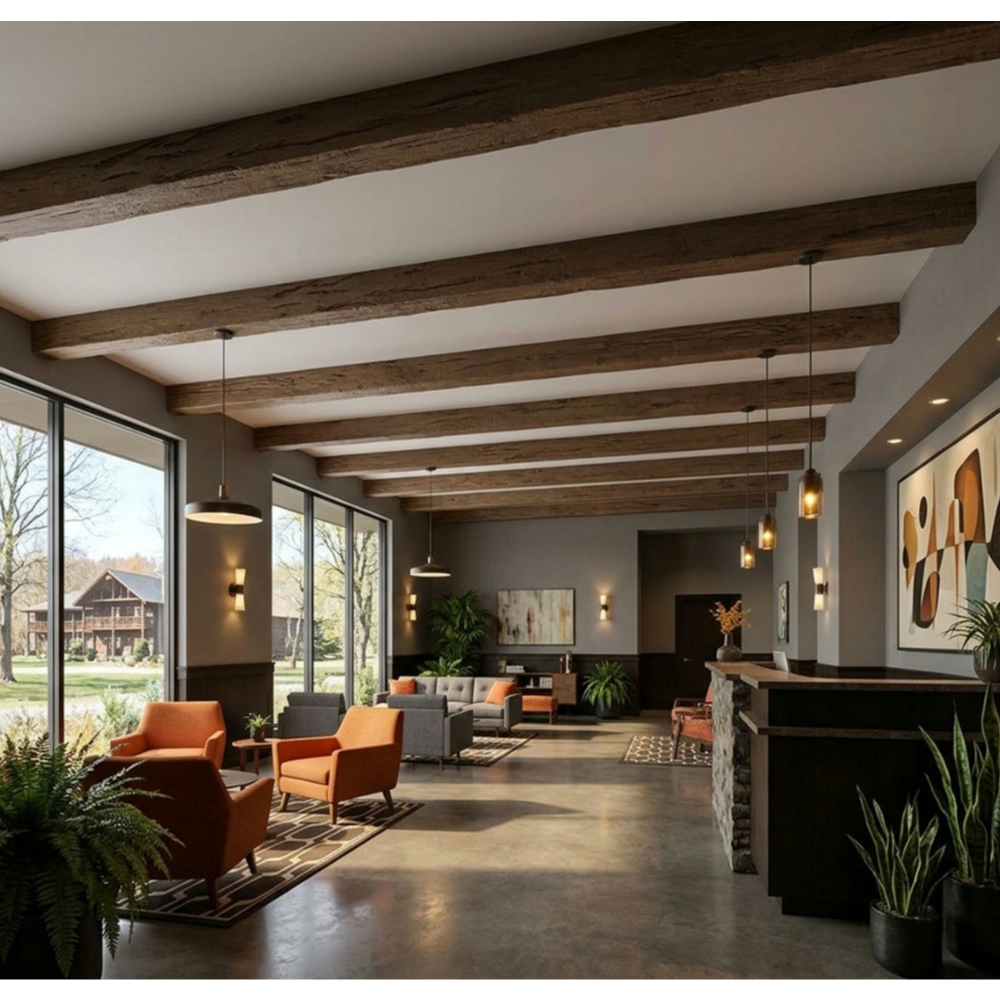
The elimination of moisture concerns opens design possibilities that would prove risky with natural materials. Beams can extend over pools, span wet zones, and create architectural interest in areas previously abandoned to utilitarian treatment. This design expansion enables spaces that delight rather than merely function.
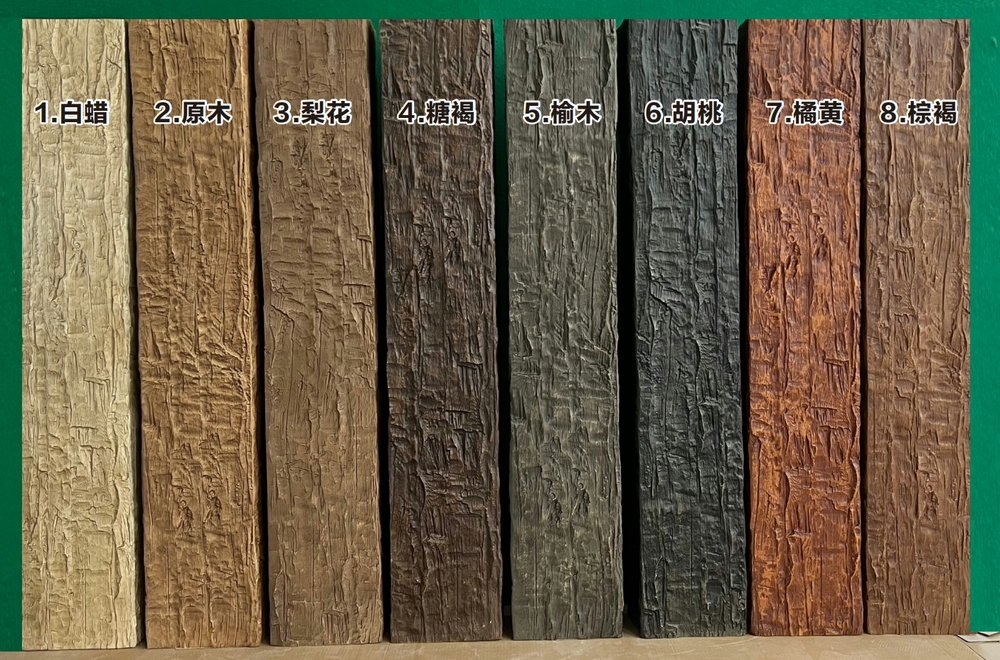
Color and finish options multiply when environmental constraints relax. Dark stains and rich finishes that would show moisture damage quickly on natural wood become viable options for waterproof faux beams. The expanded palette enables more dramatic design expressions without performance compromises.
Integration with other wet-area materials becomes seamless when all components share waterproof characteristics. Coordinated moldings, columns, and architectural trim extend the design language throughout challenging spaces. The comprehensive approach creates cohesive environments that mixed-material approaches cannot achieve.
The permanent nature of waterproof installations justifies design investment that temporary solutions would not support. Homeowners and designers can commit to ambitious ceiling treatments in wet areas, knowing that the installation will perform indefinitely without replacement concerns. This commitment enables design excellence that budget uncertainty otherwise prevents.

Technical References
ASTM standards cited in every specification
Test Data
Lab results from internal testing program
Updated 2026
Reviewed against current product specs