Indoor air quality has emerged as a primary concern for anyone selecting building materials, yet claims of safety proliferate without consistent verification standards. Every manufacturer can assert that products are "safe" or "non-toxic," but without objective third-party testing, these claims remain marketing assertions rather than demonstrated facts. IAQ certification programs establish testing protocols that verify material performance against established standards, providing the assurance that responsible specification requires. Non-toxic polyurethane faux wood ceiling beams bearing current IAQ certifications have earned independent verification that distinguishes them from unverified alternatives.
The certification process subjects products to rigorous laboratory testing that measures emissions under standardized conditions. Chambers containing representative material samples collect air samples that analytical laboratories analyze for volatile organic compounds, formaldehyde, and other concerning emissions. Results determine whether products meet threshold limits that certification programs establish.
Understanding IAQ Certification Programs
GREENGUARD certification, managed by UL Solutions, has become the most recognized IAQ certification in North American markets. The program establishes emission limits for over 360 different chemicals, testing products in controlled environmental chambers that simulate typical indoor conditions. Products earning GREENGUARD certification have demonstrated emissions below limits that protect occupant health across extended exposure scenarios.
GREENGUARD Gold certification extends basic requirements with additional testing for sensitive populations including children and elderly individuals. The stricter limits recognize that these populations face elevated health risks from chemical exposure. Products bearing this designation have proven themselves appropriate for environments like schools and healthcare facilities where vulnerable populations occupy space.
FloorScore certification addresses emissions specifically from hard surface building materials including beams and architectural moldings. Administered by the Resilient Floor Covering Institute, the program requires testing through independent laboratories and ongoing verification that manufactured products match tested formulations. This verification prevents the formulation changes that might compromise certified performance.
California Section 01350 establishes emission limits that many green building programs reference as baseline requirements. The standard has achieved de facto national recognition through adoption by programs including CHPS, LEED, and various state purchasing requirements. Products meeting 01350 limits have satisfied the most demanding regulatory requirements in the United States.

What Testing Measures and Why It Matters
Total volatile organic compound testing captures the broad range of organic compounds that off-gas from building materials. While individual compounds might exist at trace levels, the cumulative effect of multiple compounds remains concerning. TVOC measurements provide aggregate data that identify products requiring more detailed individual compound analysis.
Formaldehyde testing addresses this specific compound given its established health effects at elevated concentrations. While polyurethane does not inherently contain formaldehyde, some manufacturing processes and finishing materials might introduce it. Certification testing detects formaldehyde regardless of source, ensuring that finished products meet safe limits.
Individual chemical compound analysis identifies specific substances that emission testing reveals. Compounds like benzene, toluene, and xylene receive particular attention given their health effects. Products passing certification have demonstrated that these compounds remain below levels of concern even under aggressive testing conditions.
Re-testing requirements ensure that certified products maintain their certified status over time. Formulation changes, even seemingly minor ones, can affect emission characteristics. Certification programs require notification of changes and may require re-testing to maintain certified status.

Benefits of Certified Product Selection
Specification confidence comes from knowing that selected products have demonstrated performance rather than merely promising it. Certified products have undergone objective evaluation that verifies claims manufacturers make. This verification protects specifiers from liability that unverified product selection might create.
Project certification support becomes easier when products carry recognized certifications. Green building programs like LEED, WELL, and others award credits for certified products, reducing documentation burden for project teams. The pre-verification that certifications provide simplifies credit achievement without compromising rigor.
Client reassurance addresses the increasing awareness of indoor air quality concerns that sophisticated buyers express. Presenting IAQ certification documentation demonstrates that material selections considered occupant health, differentiating projects that care about these issues from those that merely claim to.
Occupant comfort improves in spaces built with low-emission materials. The absence of chemical odors, reduced eye and throat irritation, and improved overall air quality contribute to comfort that occupants notice without necessarily understanding the source. This comfort supports productivity in workplaces and recovery in healthcare settings.
Verifying Certification Status
Certification databases maintained by certification bodies enable verification that claimed certifications are current and valid. Product numbers, manufacturer names, and certification scope all appear in these searchable resources. Responsible specification includes database verification that confirms active certification rather than expired or withdrawn designations.
Certificate documentation provided by manufacturers should match information appearing in certification body databases. Discrepancies might indicate fraudulent claims or lapsed certifications that products continue bearing improperly. The verification step catches these issues before problematic products enter installations.
Scope of certification matters as much as its existence. Products certified for one application might not carry certification for other conditions. Testing under different scenarios might be required if intended applications differ from those the certification covers.
Expiration dates on certifications indicate periods when products must undergo re-evaluation to maintain certified status. Products installed during certified periods remain certified even if subsequent re-testing reveals issues. However, ongoing certification requires maintenance that database checking confirms.
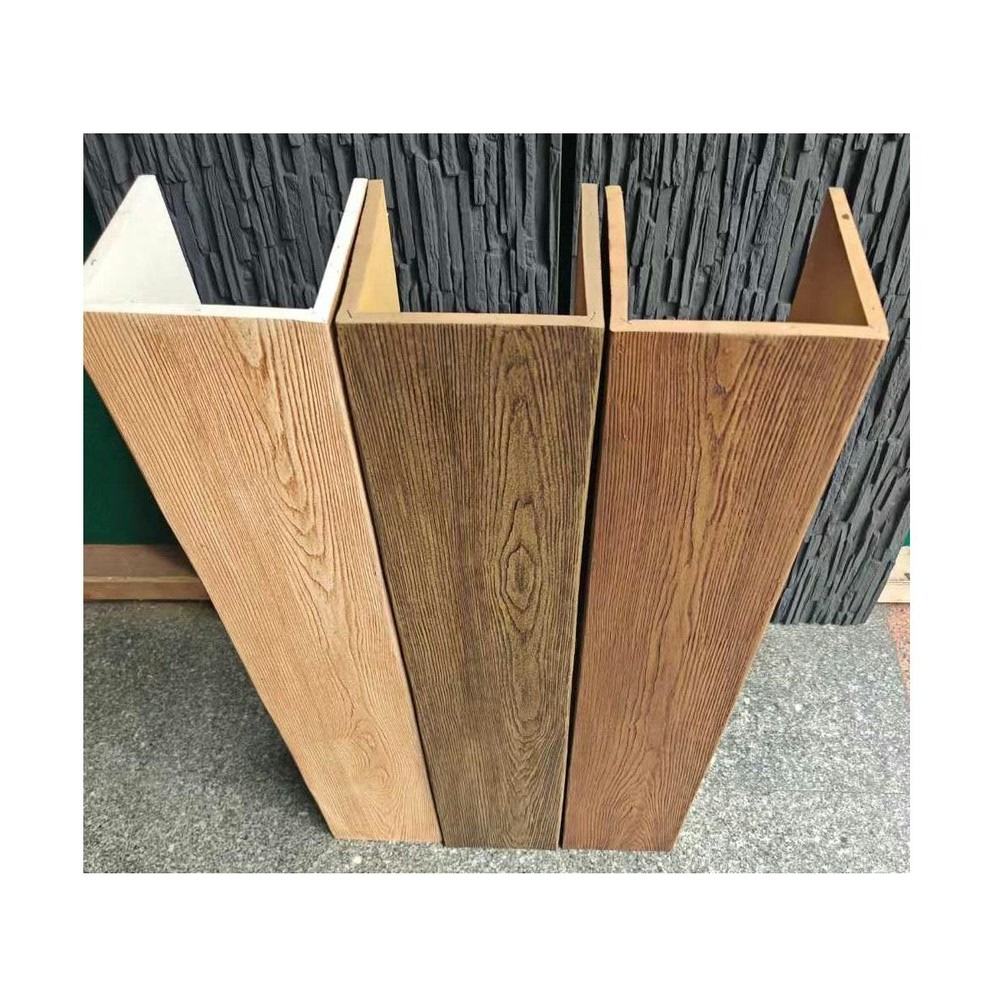
Integration With Comprehensive IAQ Strategy
Material selection represents one component of overall indoor air quality management. Ventilation systems, humidity control, source management, and occupant behavior all contribute to final IAQ outcomes. Certified materials provide a foundation that other IAQ strategies build upon.
Construction phase IAQ protection prevents contamination of installed materials during building completion. Even non-toxic products can absorb odors and chemicals from construction activities that compromise final IAQ. Temporary ventilation, sequencing that minimizes contamination, and protective covering all preserve the IAQ benefits that certified materials provide.
Occupant education about maintaining IAQ helps preserve benefits that certified materials and proper construction provide. Ventilation operation, humidity management, and source control all require occupant participation that informed users provide more effectively than uninformed ones.
Ongoing monitoring identifies any IAQ issues that develop after occupancy. While certified materials should maintain their characteristics indefinitely, unexpected contamination or system issues might affect conditions. Monitoring enables issue identification and correction before occupant health suffers.

Technical References
ASTM standards cited in every specification
Test Data
Lab results from internal testing program
Updated 2026
Reviewed against current product specs


