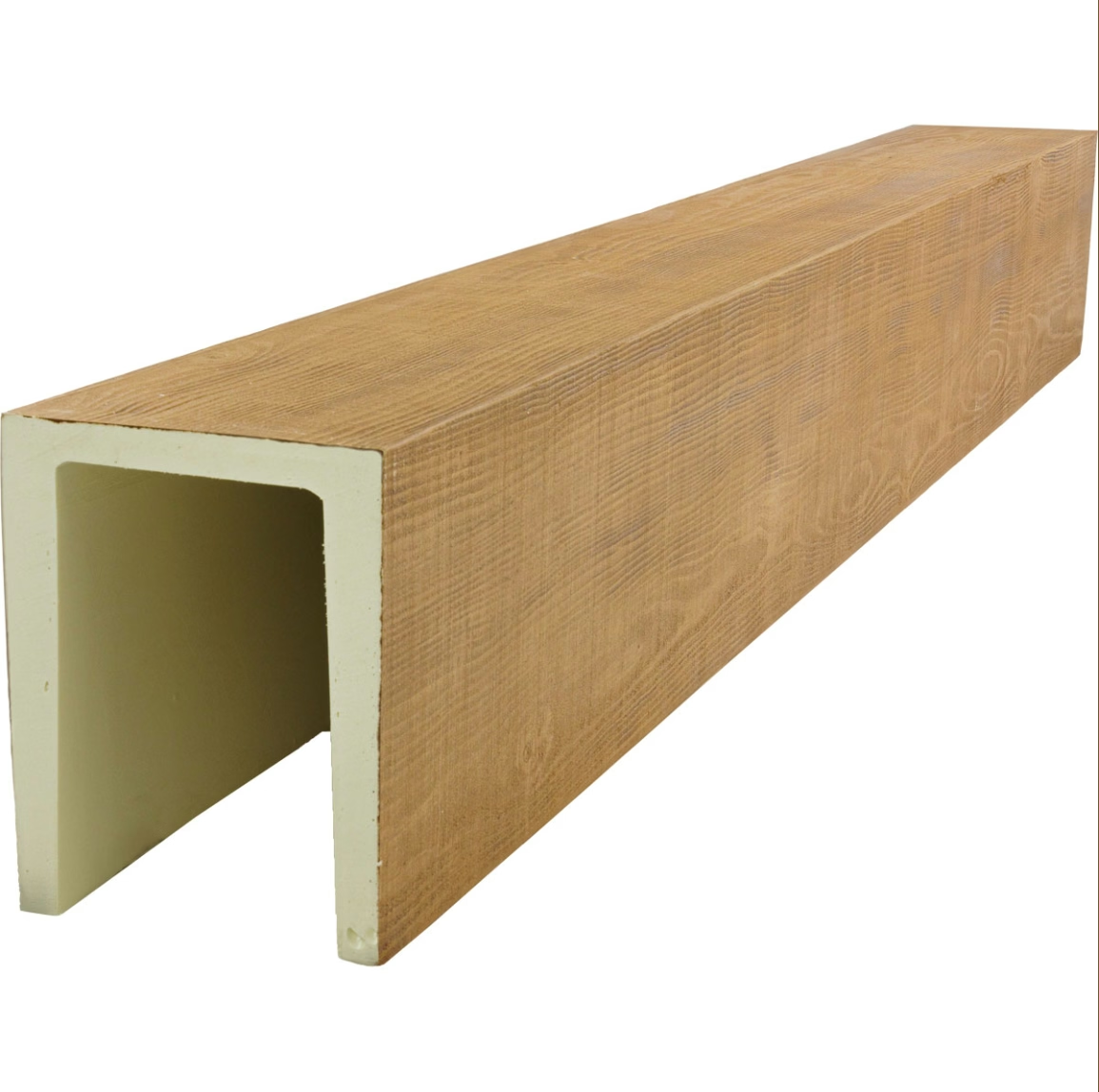
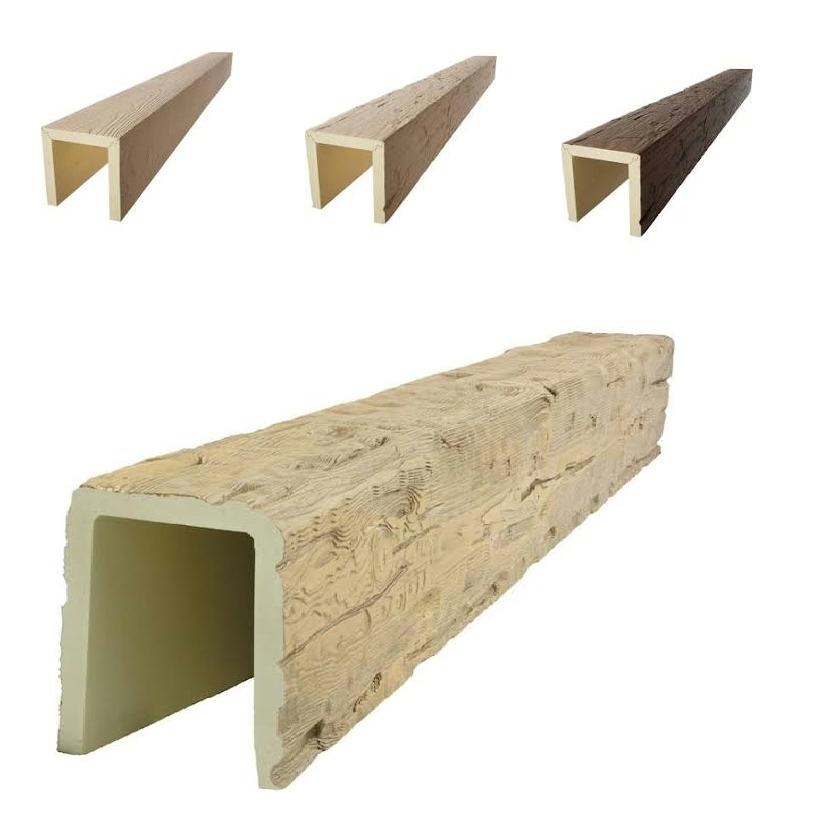
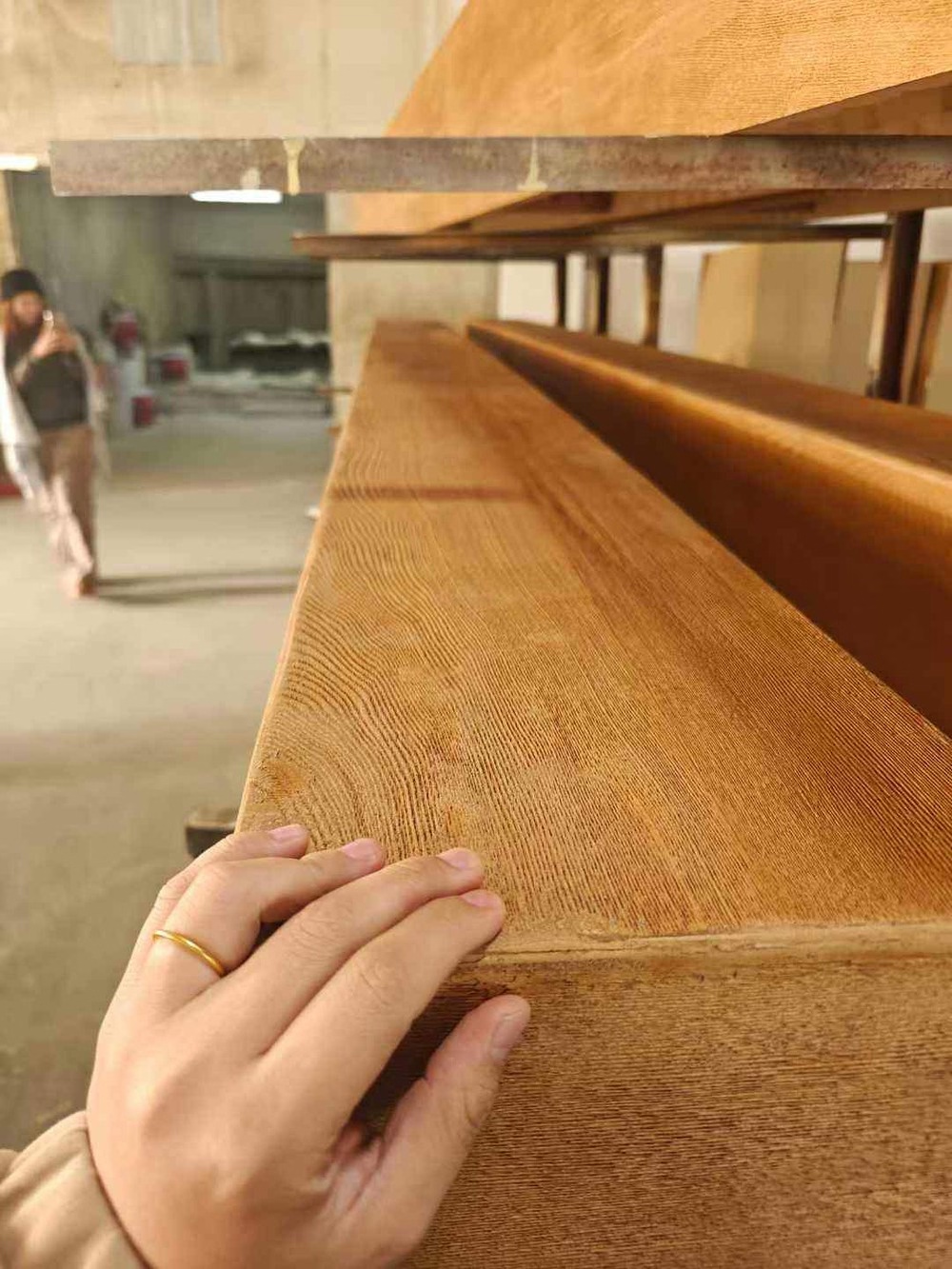
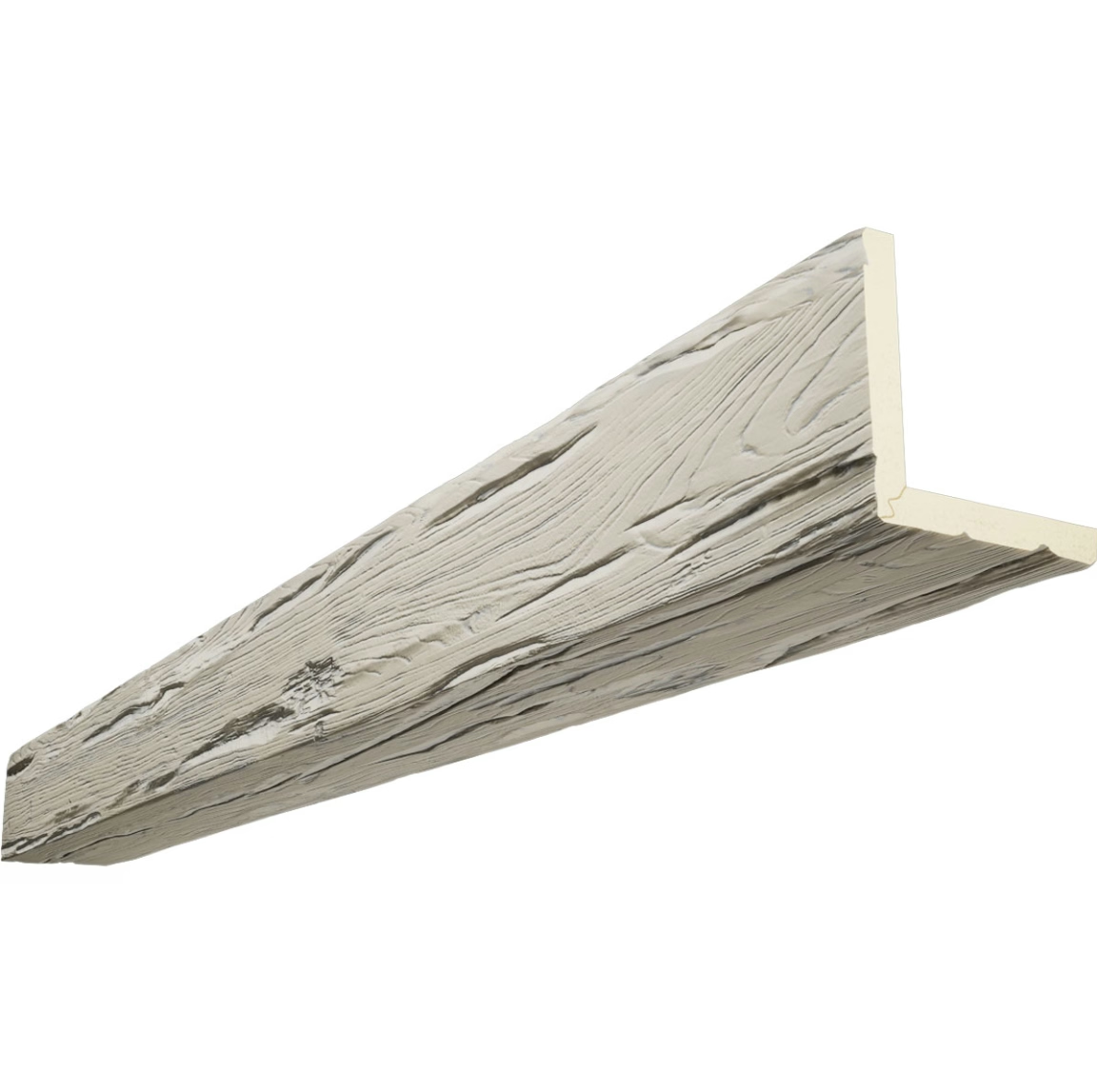
Wood movement represents one of the most challenging aspects of working with natural timber, creating dimensional changes that affect appearance, performance, and maintenance requirements throughout the material's service life. The seasonal expansion and contraction that humidity cycles drive creates gaps, splits, and alignment problems that homeowners observe annually and builders accept as inevitable. This movement compromises the appearance of even well-designed timber installations while requiring ongoing maintenance intervention that costs time and money. Non-warp dimensionally stable PU faux beams eliminate these concerns entirely, maintaining perfect appearance regardless of environmental conditions or seasonal changes.
The engineering that creates dimensional stability operates at the molecular level, producing material characteristics that simply cannot change regardless of what happens to surrounding conditions. Unlike wood treatments that attempt to resist moisture absorption, stable PU material fundamentally does not exhibit the hygroscopic behavior that causes wood movement. This fundamental difference provides permanent stability that surface treatments cannot match.
Understanding Wood Movement and Its Consequences
Hygroscopic materials like wood absorb and release moisture in response to environmental humidity, changing dimensions as their moisture content varies. This behavior follows predictable patterns that experienced woodworkers understand and accommodate through design provisions. Despite this accommodation, visible evidence of movement eventually appears in most timber installations, manifesting as gaps, joints opening, and surfaces pulling away from adjacent materials.
Seasonal timing of movement creates the cyclical problems that building owners observe annually. Winter heating reduces indoor humidity, causing wood to lose moisture and shrink. Spring and fall transitions create fluctuating conditions that accelerate movement cycles. The repeated stress eventually creates damage that repair cannot fully address.
Prevention strategies for natural wood include kiln drying to reduce moisture content, kiln-dried lumber storage in controlled environments, and sealant application to slow moisture exchange. These measures reduce but cannot eliminate movement, merely delaying visible problems while adding cost and complexity to material selection and handling.
The consequences of movement extend beyond aesthetic concerns to include structural implications. Beams that shrink may lose bearing support, while movement stresses affect connections and adjacent materials. These structural concerns require ongoing inspection and maintenance that dimensionally stable alternatives eliminate.

How PU Beams Achieve Dimensional Stability
Polyurethane chemistry creates a cellular structure that does not absorb moisture regardless of environmental conditions. The closed-cell foam composition presents no pathways for water intrusion, keeping material moisture content essentially at zero regardless of surrounding humidity. Without moisture variation, the dimensional changes that wood experiences simply cannot occur.
Manufacturing process control ensures consistent material properties across production runs. Temperature, pressure, and formulation consistency combine to produce beams that behave identically from the first piece to the last. This consistency enables accurate prediction of long-term performance that natural materials cannot provide.
Temperature stability complements humidity stability in complete environmental resilience. Polyurethane does not expand significantly when heated or contract notably when cooled, eliminating the thermal movement that affects metal alternatives. This combined stability ensures that beams perform identically in all seasons.
Accelerated aging testing verifies stability claims by exposing samples to extreme conditions that would quickly reveal any instability in inferior products. Cyclic humidity exposure, temperature extremes, and extended environmental stress all confirm that dimensional stability persists through demanding conditions.
Long-Term Benefits of Stability
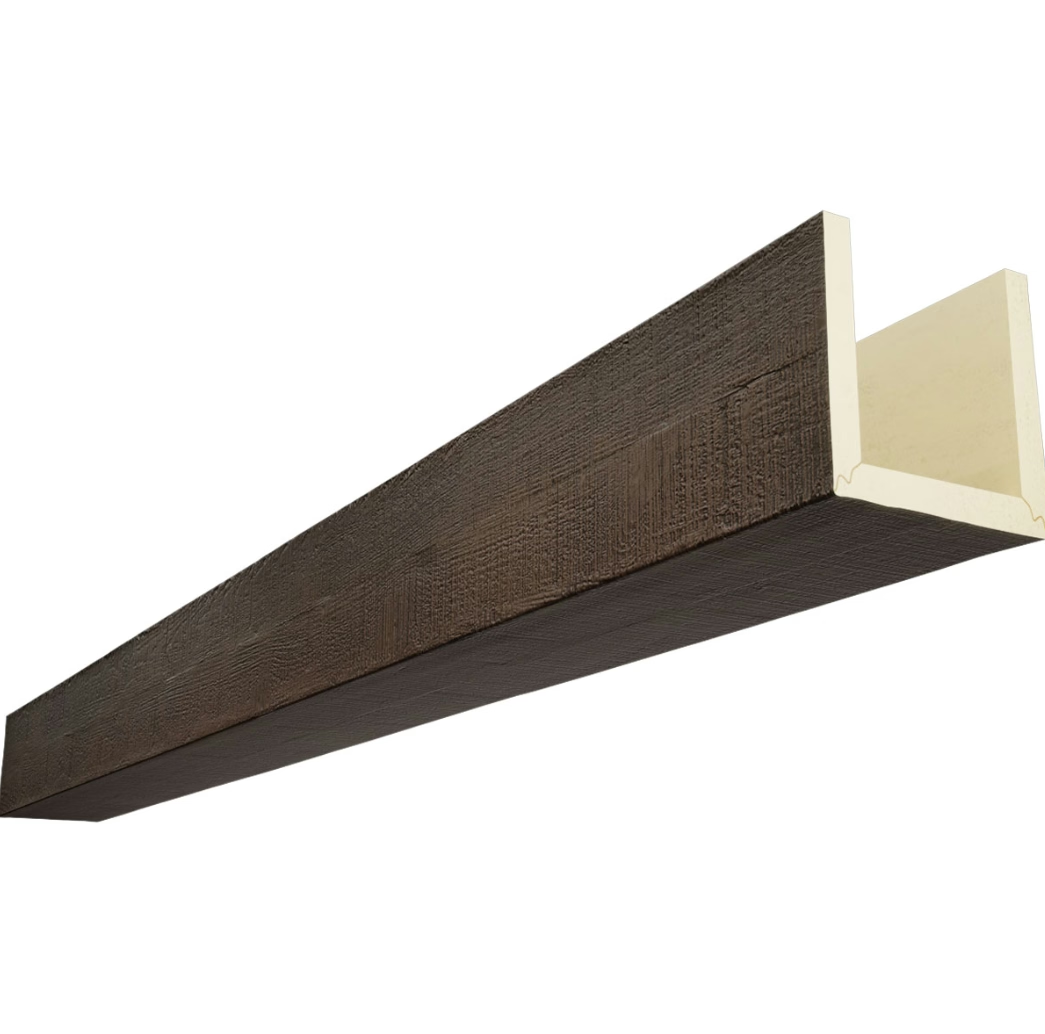
Gap-free appearance throughout service life distinguishes stable beams from natural alternatives. No seasonal gaps appear around joints or between beam sections, maintaining the seamless appearance that initial installation achieved. This consistent appearance eliminates the maintenance intervention that wood requires to address movement-related problems.
Joint integrity remains uncompromised when beam dimensions never change. Natural wood movement stresses connections, eventually loosening fasteners and compromising structural performance. Stable beams transfer no such stresses to mounting hardware, preserving secure attachment indefinitely.
Finish integrity benefits from the absence of movement that would crack or craze painted surfaces. The dimensional constancy of PU beams allows finishes to remain intact without the repainting that wood movement eventually requires. The initial finish investment provides lasting returns without renewal costs.
Maintenance simplification follows naturally from dimensional stability's many benefits. The absence of movement-related problems eliminates the inspection, repair, and refinishing tasks that wood maintenance demands. Owners can install stable beams and essentially forget them, enjoying permanent beauty without ongoing attention.
Applications Where Stability Proves Essential
Bathrooms and kitchens present the most demanding humidity conditions in residential environments. Daily activities involving water create humidity spikes that natural wood absorbs, accelerating the movement cycles that eventually create visible problems. Stable beams handle these conditions without any response, maintaining perfect appearance through years of daily humidity variation.
Vacation homes experience extended periods of unoccupied vacancy during which temperature and humidity conditions vary without the moderating effect of occupancy. The extreme conditions that unheated winter cabins or closed summer properties experience would severely stress natural wood. Stable beams ignore these variations entirely, emerging from vacancy periods with unchanged appearance.
Geographic areas with extreme seasonal humidity variation create conditions that challenge natural wood everywhere. Desert climates with dry winters, coastal regions with humid summers, and continental interiors with both extremes all stress wood in ways that stable materials avoid. The universal applicability of dimensional stability addresses these diverse conditions without modification.
Commercial environments with variable occupancy patterns experience humidity fluctuations that residential settings do not. Conference rooms with occasional heavy use, retail spaces with customer traffic, and hospitality venues with fluctuating occupancy all create humidity patterns that stable beams handle without complaint.
Making Stability-Savvy Specification Decisions
Material specification should explicitly address dimensional stability as a primary selection criterion. The long-term benefits justify this priority, with aesthetic and performance advantages accumulating throughout service life. Specification language should require stability testing documentation that verifies the claims manufacturers make.
Warranty coverage should address dimensional stability specifically, providing recourse if products fail to maintain promised performance. The best warranties explicitly exclude dimensional change, covering replacement and installation costs if stable products somehow exhibit the movement problems that stability should eliminate.
Installation guidelines from manufacturers should address stability advantages by recommending simplified connection details that would not accommodate movement in wood products. The absence of movement allows more economical mounting approaches that reduce installation cost while improving appearance.
Quality differences between manufacturers affect the stability that products actually provide. Premium formulations and manufacturing precision ensure that stability claims translate into long-term performance. Budget products might sacrifice stability through formulation shortcuts or process inconsistency, defeating the purpose of specification.
The investment in stable beams pays returns through years of gap-free beauty that wood alternatives cannot match. While initial cost comparison might favor natural materials, the lifecycle cost analysis including maintenance, repair, and eventual replacement clearly favors dimensional stability. The long view reveals wisdom in specification choices that immediate comparison might miss.

Technical References
ASTM standards cited in every specification
Test Data
Lab results from internal testing program
Updated 2026
Reviewed against current product specs