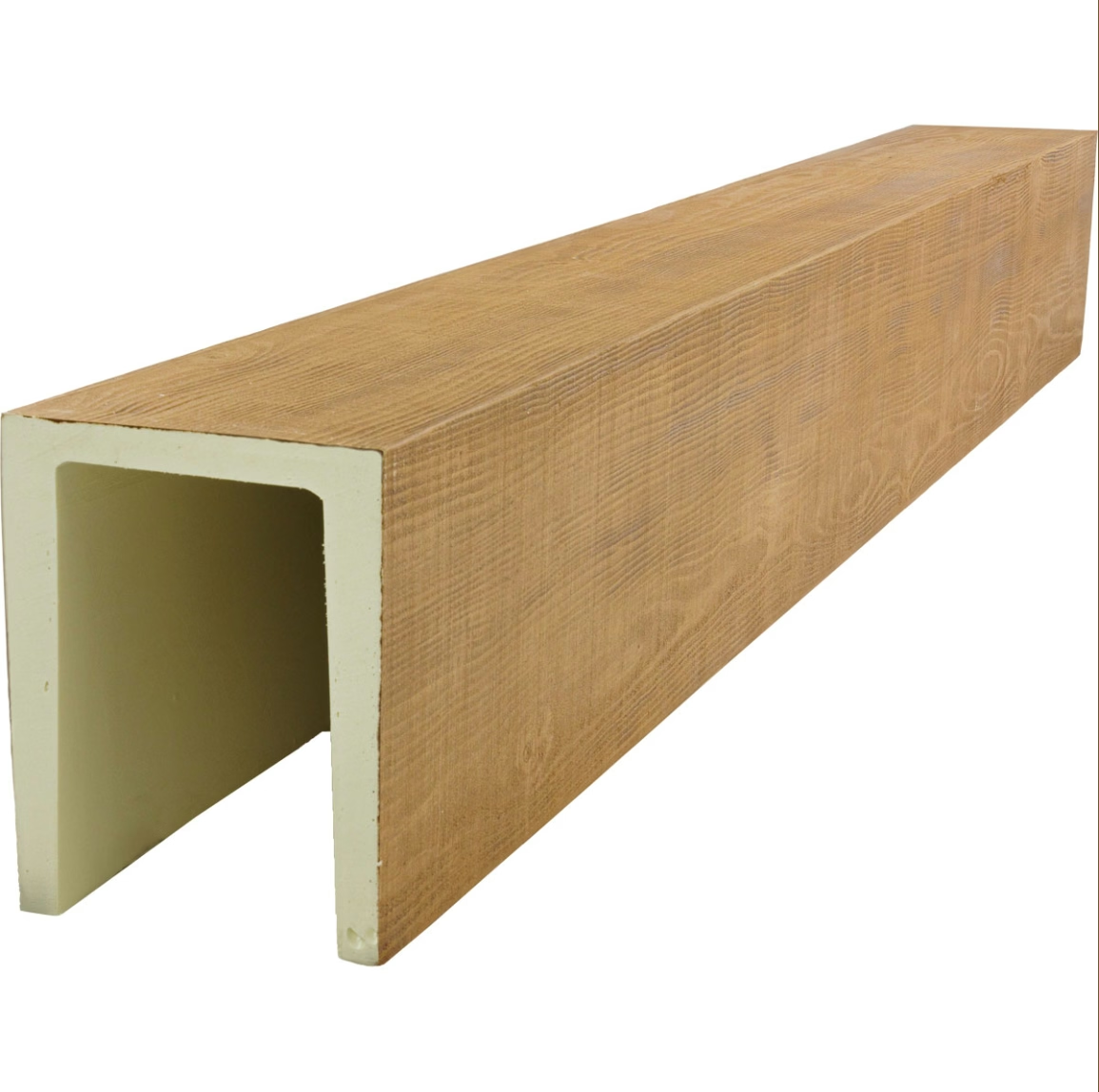
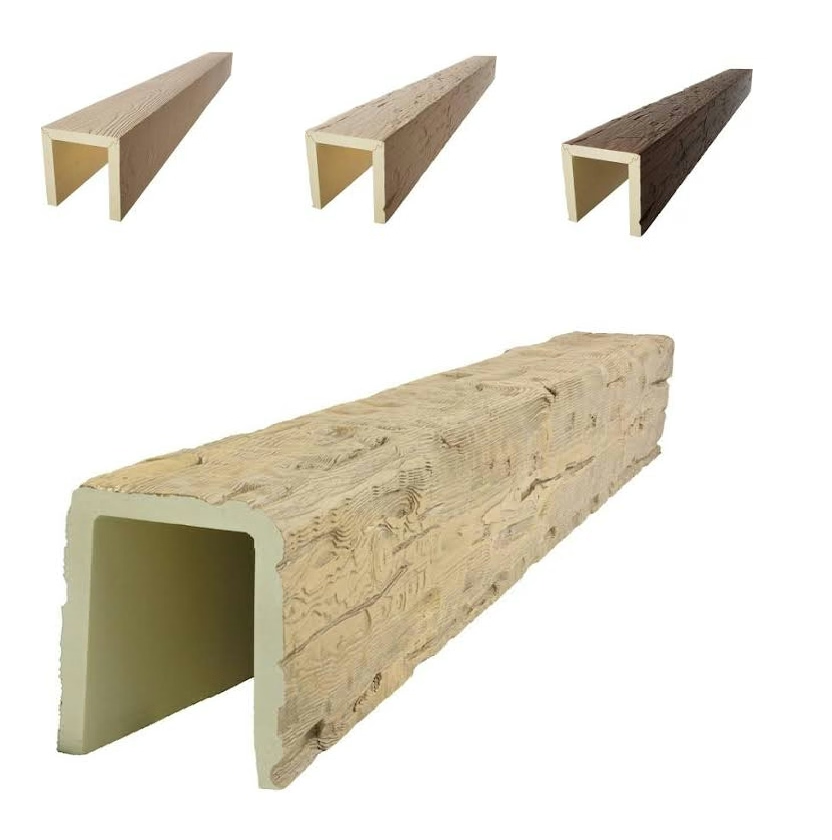
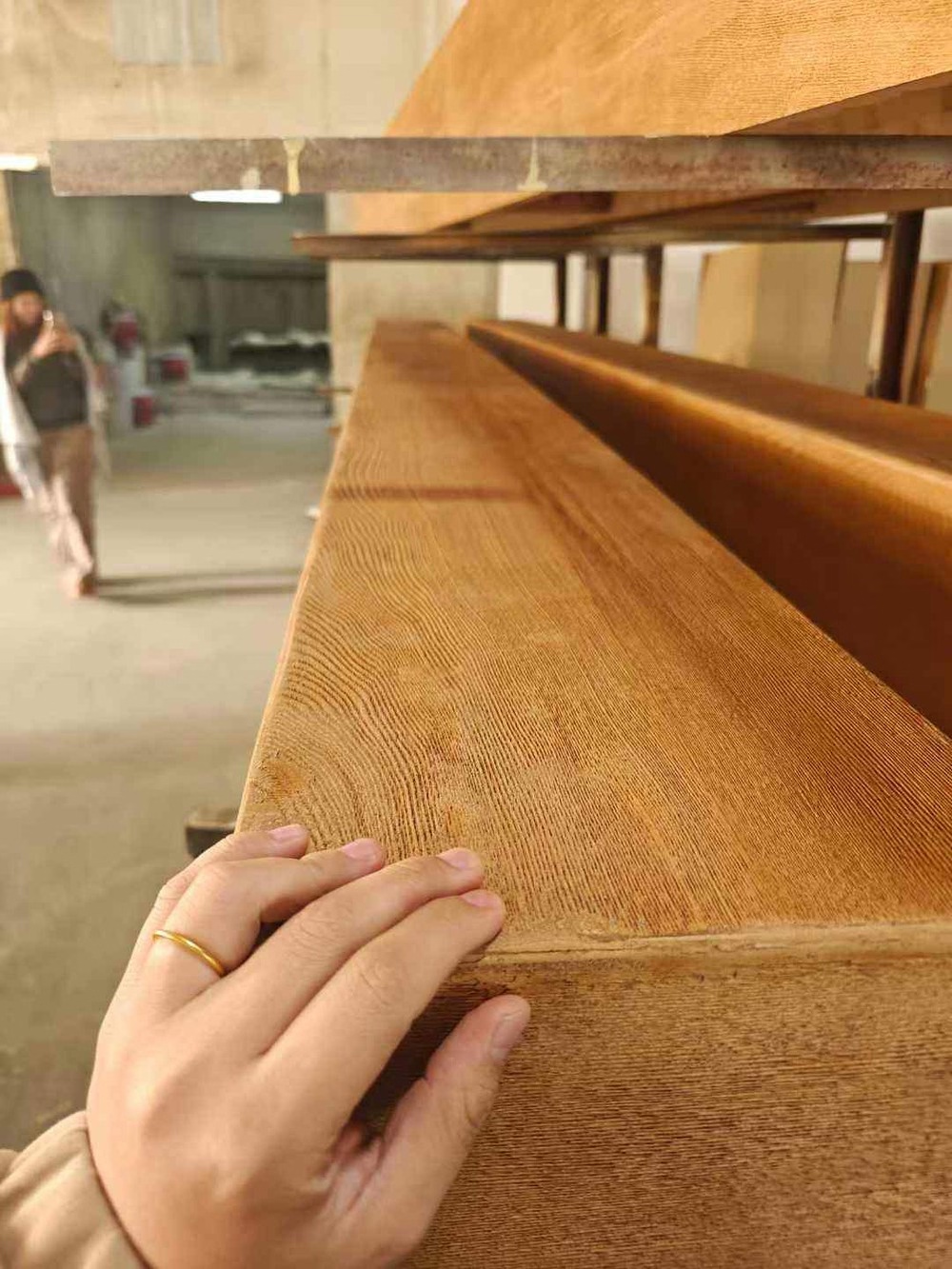
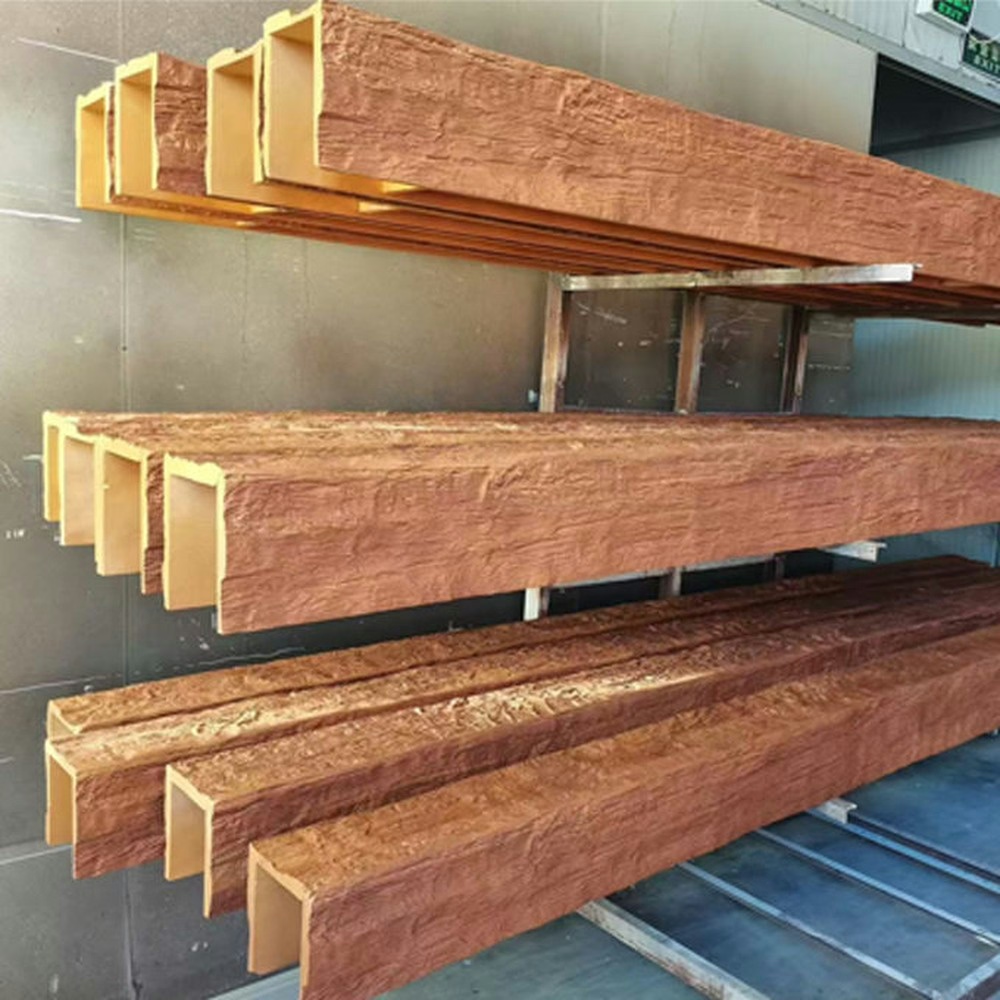
The word "structural" carries significant implications in construction, suggesting elements that bear loads, resist forces, and contribute to building stability. When these serious requirements combine with aesthetic ambitions, specification becomes more challenging because both performance criteria must be satisfied simultaneously. Traditional timber satisfies structural requirements while presenting aesthetic options, but the dimensional instability that timber exhibits creates complications that sophisticated projects increasingly seek to avoid. Dimensionally stable non-warp PU faux wood structural beams address this intersection, providing the authentic timber appearance that design intentions require while delivering the dimensional precision that modern construction demands.
The distinction between truly structural and merely load-bearing cosmetic elements matters for specification purposes. Some applications require beams that actually resist and transfer structural loads, while others use the word "structural" more loosely to suggest substantial appearance rather than functional load-bearing. Understanding which application applies ensures appropriate product selection and prevents either over-specification that wastes money or under-specification that creates safety concerns.
Understanding Structural Requirements for Ceiling Beams
Structural ceiling beams must satisfy engineering criteria that vary based on application, building type, and applicable codes. Span length, load magnitude, and load type all influence required beam capacity, with longer spans and heavier loads demanding greater structural performance. The engineering analysis that determines these requirements should precede material selection rather than following it.
Deflection limits govern how much beams can bend under load without creating visible problems or occupant discomfort. Standard limits permit deflection ranging from L/180 to L/360 depending on application and applicable code, with the fractional notation indicating how much bending relative to span length is acceptable. Meeting these limits ensures that beams perform acceptably under expected loading conditions.
Connection design affects overall structural performance as much as beam capacity itself. The weakest connection in a load path determines system capacity, making proper connection specification essential for structural applications. Detail drawings that specify hardware, fastener patterns, and bearing conditions ensure that installation matches engineering assumptions.
Lateral bracing requirements prevent beams from buckling sideways under load. The depth-to-width proportions that make beams architecturally effective also create vulnerability to lateral instability that structural design must address. Engineering analysis should verify that planned beams include adequate bracing or that beam proportions satisfy stability requirements.

How Dimensional Stability Affects Structural Performance
Movement tolerance accumulates in timber structures as dimensional changes stress connections and supporting elements. The seasonal cycles that cause wood to expand and contract gradually loosen fasteners, compress bearing surfaces, and transfer unexpected forces to adjacent construction. These accumulated effects eventually create problems that inspection reveals as concerning but that might have been prevented through more stable material selection.
PU dimensional stability eliminates movement-related stress entirely, maintaining exact dimensions regardless of environmental conditions. This constancy preserves connection integrity, bearing surface relationships, and alignment with adjacent elements throughout the structure's life. The stability benefit compounds over time as timber structures accumulate movement-related wear that stable alternatives avoid.
Thermal expansion affects some materials significantly, with metal beams particularly susceptible to length changes that architectural details must accommodate. The minimal thermal expansion that polyurethane exhibits simplifies connection design and eliminates the expansion joints that metal construction requires. This simplification improves appearance while reducing potential failure points.
Long-term creep and stress relaxation affect polymer materials under sustained load, potentially reducing connection effectiveness over extended periods. Quality PU formulations resist creep effectively, maintaining structural performance throughout intended service life. Testing and certification verify that products perform acceptably under sustained load conditions.
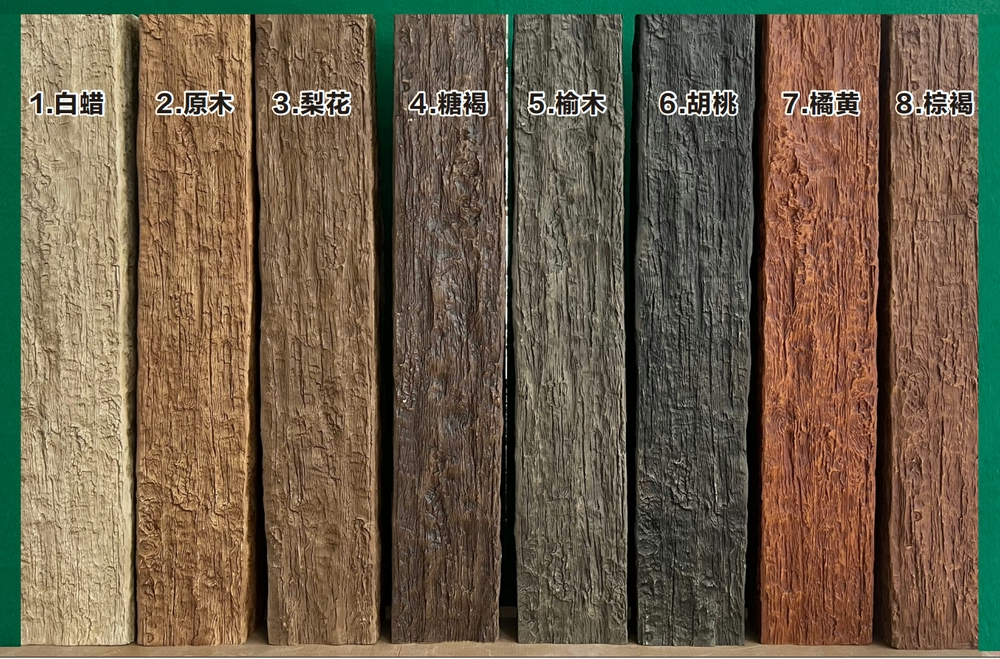
Design Applications for Structural Faux Beams
Cathedral and vaulted ceilings create conditions where structural beams contribute both to appearance and to spanning the open volume between walls. The dramatic architectural effect requires substantial elements that carry their own weight plus any ceiling materials while spanning wall-to-wall or between support points. Structural faux beams provide this capability with authentic timber appearance that enhances rather than compromises the design intent.
Mezzanine and loft constructions often incorporate beams at the floor/ceiling boundary, with structural requirements for floor joist support or as decorative elements framing the opening. The visual prominence of these locations makes authentic timber appearance particularly valuable, while the structural demands require engineering-matched performance. Faux beams address both requirements simultaneously.
Patio and covered porch structures frequently include beams that span between posts or from walls to independent supports. These exterior applications require materials that tolerate weather exposure while maintaining appearance. The weather resistance that PU provides proves valuable here, though finish selection must address UV exposure that interior applications avoid.
Commercial spaces including restaurants, retail environments, and hospitality venues often specify substantial beam elements that establish design character while potentially serving structural functions. The durability and stability advantages that PU provides benefit commercial applications where maintenance access proves difficult and replacement disruption proves costly.
Engineering Considerations for Structural Specification
Load path continuity ensures that forces transferred by beams reach the building's foundation through properly designed supporting elements. The beam itself might perform acceptably while connections or bearing conditions create failure points. Complete structural analysis addresses the entire load path rather than focusing narrowly on beam capacity alone.
Design drawings should clearly indicate structural requirements including loads, spans, and connection details that installation must satisfy. Ambiguous specification creates confusion that results in installations that might appear correct while failing to meet engineering requirements. Clear communication between designers, engineers, and installers prevents costly mistakes.
Inspection requirements vary by application and applicable codes, with structural elements typically receiving more scrutiny than purely decorative installations. The inspection process verifies that installed elements match specifications and that construction quality meets standards. Planning for inspection ensures that projects proceed without delays that unclear expectations create.
Liability considerations affect structural specification significantly, with engineers and designers bearing responsibility for ensuring that specified elements perform adequately. Documentation of specification basis, load calculations, and product verification protects professionals while ensuring that installed construction performs safely. The documentation burden that structural applications create should influence whether genuine structural elements are truly required.
Selecting Structural Faux Beam Products
Manufacturer engineering support helps specifiers develop appropriate solutions for structural applications. Load tables, span charts, and connection details enable confident specification that engineering analysis can verify. Products supported by thorough technical documentation demonstrate manufacturer commitment that less comprehensive alternatives do not provide.
Third-party testing and certification verify that products perform as engineering analysis requires. ICC-ES, IAPMO, and similar listing organizations evaluate products against established standards, providing the independent verification that responsible specification requires. Listed products carry marks indicating compliance that building officials recognize.
Warranty coverage for structural applications should address both appearance and performance, with terms that reflect the serious nature of structural specification. The warranty should clearly state coverage for structural failure, appearance degradation, and any other concerns that specification should address.
Installation instructions from manufacturers provide guidance that ensures proper assembly and connection. Detailed instructions addressing structural applications specifically help installers understand requirements that might differ from decorative installations. Following manufacturer guidance ensures that products perform as tested and listed.
The investment in quality structural beams pays returns through decades of reliable service that less appropriate materials would not provide. Engineering precision and dimensional stability combine to create products that satisfy both aesthetic and structural requirements comprehensively. This combination justifies specification choices that might appear expensive initially but prove economical over complete service life.

Technical References
ASTM standards cited in every specification
Test Data
Lab results from internal testing program
Updated 2026
Reviewed against current product specs