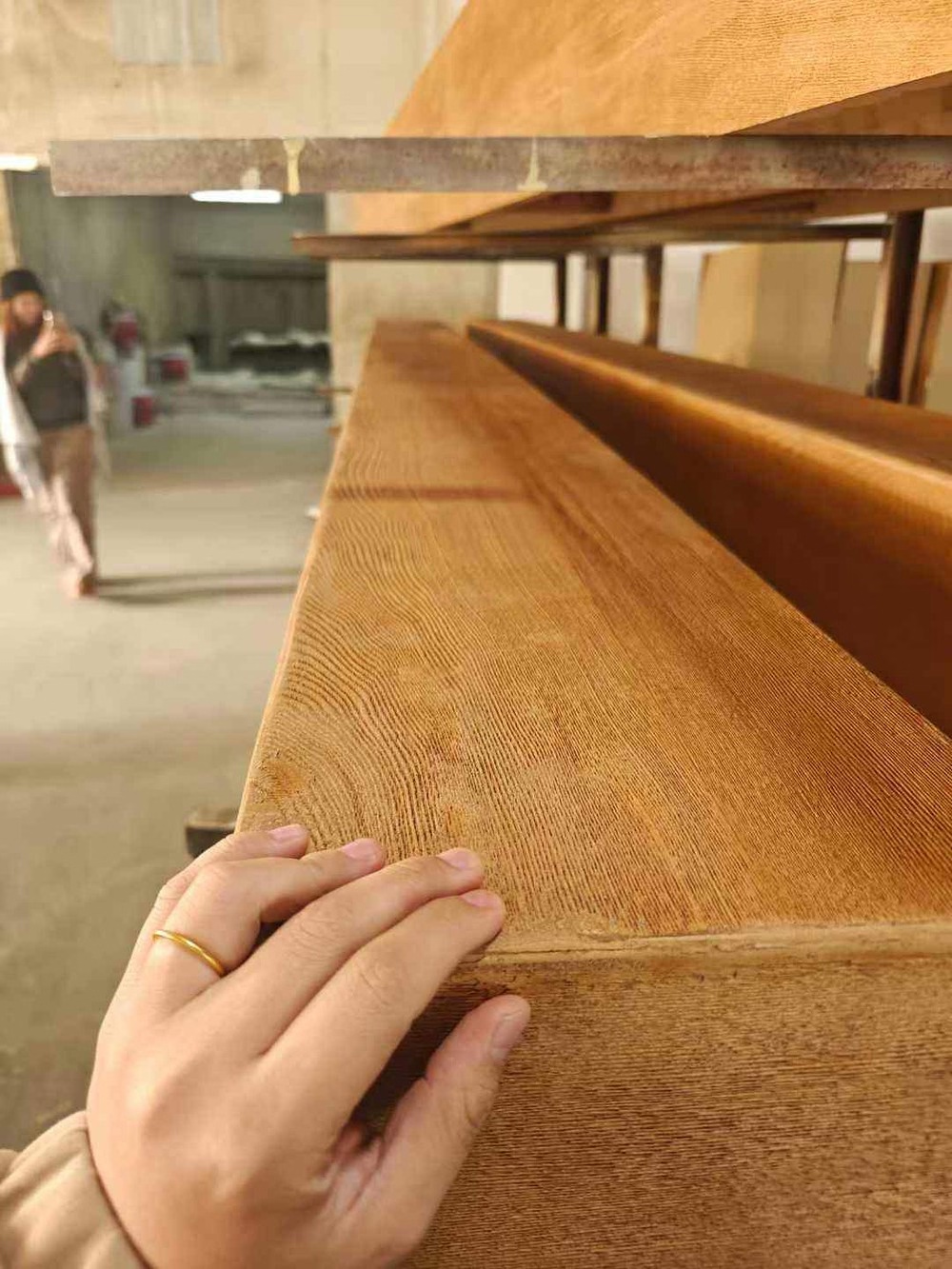
Adding character to a space with unconventional architecture often runs into the same problem: real wood simply will not bend to meet the designer's vision. Standard dimensional lumber and even many engineered wood products have limits on how far they can be curved without cracking, splitting, or being permanently damaged. For years, architects and designers faced a difficult choice between abandoning curved design elements or spending significantly on custom-machined solid wood pieces that still carried the risk of future warping. Polyurethane resin faux timber beams have changed that calculation entirely.
What Makes PU Resin Beams Resistant to Warping
Traditional wood beams, whether solid hardwood or engineered products, contain natural fibers that respond to changes in humidity and temperature. These fibers absorb moisture unevenly across the beam's cross-section, causing internal stresses that manifest as warping, twisting, cupping, or checking over time. Even kiln-dried premium lumber can shift when exposed to the varying conditions found in many building environments.
Polyurethane resin, by contrast, is a closed-cell synthetic material that does not absorb moisture. Once cured and formed, a polyurethane beam maintains its dimensional stability across a wide temperature range without any meaningful response to humidity fluctuations. This fundamental material property eliminates the primary mechanism behind wood warping. A polyurethane faux timber beam installed in a humid coastal property, a dry heated interior, or an outdoor pergola will hold its shape with virtually no dimensional change over decades of service.
The material also resists UV degradation better than natural wood when properly formulated with UV inhibitors. Surface chalking and color fading can occur over very long exposure periods, but the structural integrity and shape of the beam remain unaffected where natural wood would check, crack, or split.

Designing with Curved Faux Timber Beams
Curved beams open design possibilities that are difficult or impossible to achieve with rigid materials. Vaulted and barrel-vaulted ceilings, which have enjoyed a sustained revival in both residential and commercial interiors, pair naturally with curved faux timber beams. A barrel vault running the length of a great room or entry hallway can be accented with beams that follow the vault's radius precisely, creating a sense of volume and craftsmanship that flat ceiling treatments simply cannot replicate.
Bay windows and oriel windows present another compelling application. These features often have multiple planes meeting at angles, and real timber crown molding or fascia pieces require extensive milling and fitting work to follow the geometry. Flexible polyurethane beams can be fabricated to match the exact radius and profile, reducing installation labor substantially while delivering a finished appearance that is indistinguishable from custom-milled wood.
Another increasingly popular use is curved feature beams in open-plan commercial spaces. Restaurants, boutique hotels, and coworking environments frequently incorporate sweeping curved elements to define zones within large open floor plates. Curved faux timber beams can serve as visual anchors for seating groupings, mark transitions between lounge and dining areas, or simply add warmth to what would otherwise be a flat, corporate ceiling plane.
The Fabrication Process for Curved PU Beams
Creating a curved polyurethane beam begins with defining the radius and profile requirements for the specific project. The beam cross-section — whether a simple rectangular beam, a more complex T-beam or box beam profile, or a decorative beam with built-in crown molding — is selected based on the aesthetic goals and structural considerations of the installation.
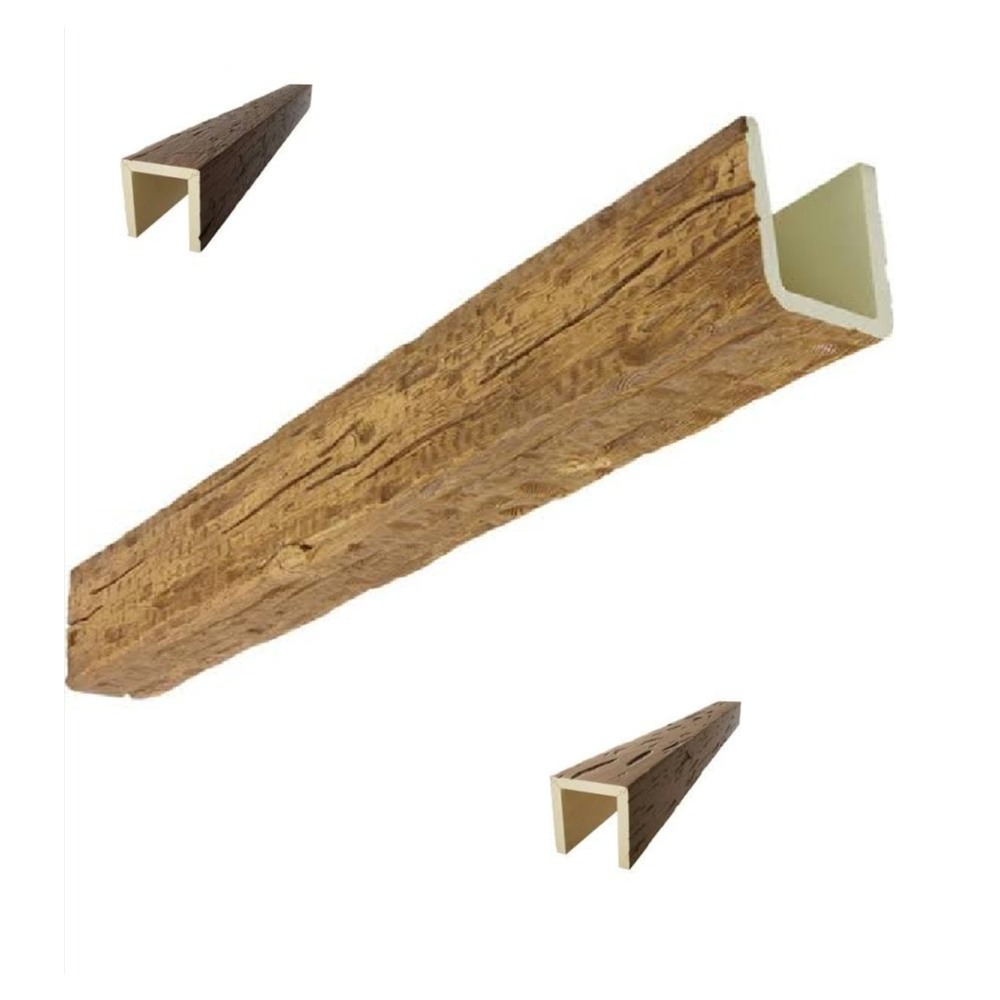
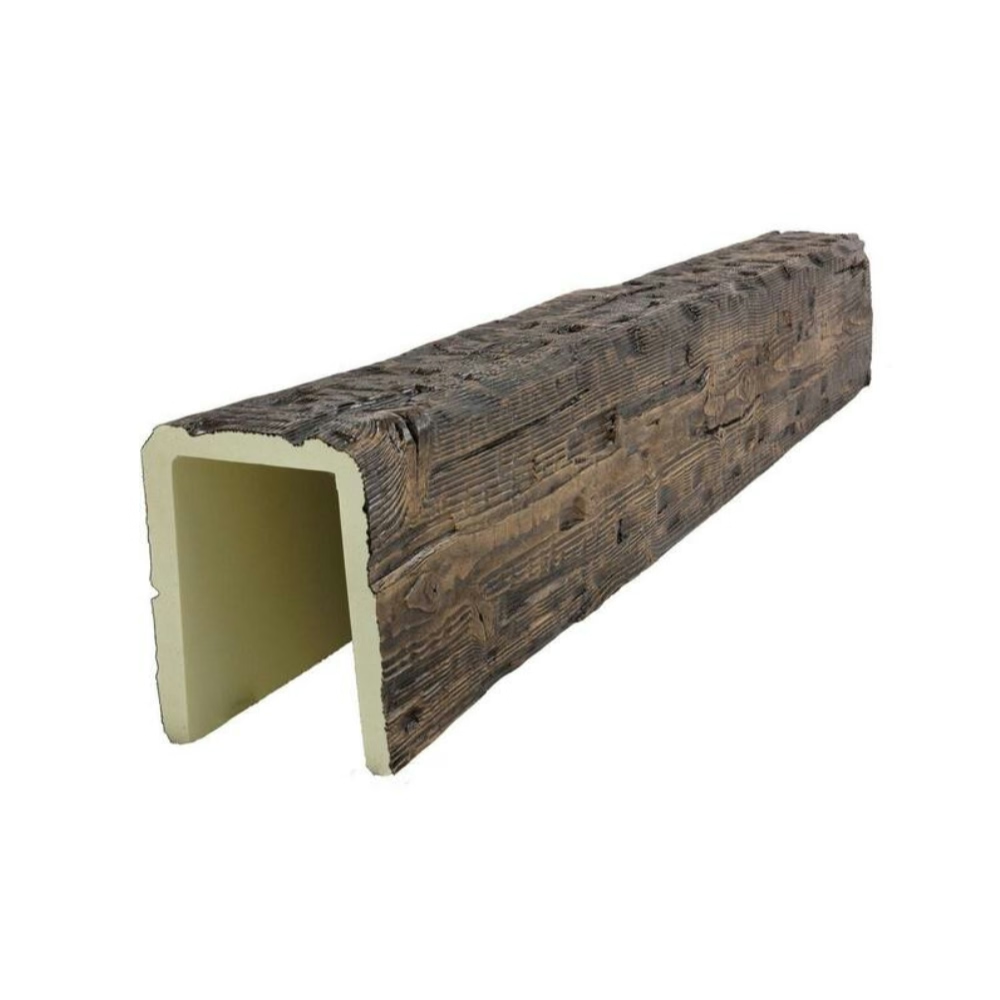
The polyurethane material is poured into molds that incorporate the desired curved geometry. This molding process allows for the incorporation of detailed wood-grain textures directly into the beam surface during manufacture, rather than requiring post-installation finishing. The result is a beam that arrives at the job site looking like aged, hand-hewn timber with natural grain variation, ready to be installed without additional surface preparation.
For very large radii or longer beam spans, manufacturers can produce the beams in segments that are joined using concealed mechanical connections. These joints are hidden within the beam profile and are undetectable in the finished installation, even to a close inspection.

Installation Considerations for Curved Beams
Installing curved beams requires some technique adjustments compared to straight beam installations, but the process is generally more straightforward than working with real curved wood. Polyurethane beams are significantly lighter than comparable solid wood beams — typically 80 to 90 percent lighter — which makes them easier to handle, position, and secure, particularly when working at height.
The recommended mounting method depends on the application. For ceiling installations, a series of blocking or furring strips is installed to follow the planned curve of the beam, providing a continuous backing surface. The beam itself is then secured to this backing using screws driven through the concealed interior face of the beam. For applications where the beam must carry load, such as a structural-appearing beam that is actually decorative, steel mounting brackets rated for the expected load can be incorporated into the installation.
One practical advantage that installers consistently report is the ability to make minor adjustments on-site. Unlike real timber, which is fixed once cut, polyurethane beams can be trimmed, drilled, and shaped using standard wood-working tools. This means that small discrepancies between field conditions and design drawings can often be resolved without custom fabrication.
Longevity and Maintenance of Flexible Curved Beams
One of the most compelling practical arguments for polyurethane faux timber beams in curved applications is their long-term performance profile. Real curved wood beams, particularly those with significant curvature, are under constant internal stress from the tension and compression forces inherent in bending wood fibers. Over time, even well-made curved timber beams can develop micro-cracks at the tension face of the curve, where fibers are stretched beyond their natural limits.
Polyurethane does not suffer from this failure mode. The material flexes uniformly under load and returns to its original shape when the load is removed, within the limits of the beam's geometry. It will not develop stress cracks, split along the grain, or twist out of plane as organic materials inevitably do.
Maintenance consists of occasional dusting or wiping with a damp cloth for interior installations. For exterior applications, an occasional inspection of the mounting hardware and a fresh coat of exterior-grade paint or stain formulated for polyurethane surfaces will keep the beams looking fresh indefinitely.
Cost and Sourcing Considerations
While polyurethane faux timber beams are not the least expensive option on the market — basic commodity lumber and some engineered wood products cost less upfront — they often deliver better lifecycle value, particularly in curved or non-standard applications. The elimination of custom milling costs, the reduced installation labor, and the absence of future repair or replacement expenses from warping damage can make the total installed cost of curved polyurethane beams competitive with or superior to custom-machined solid wood alternatives.
For buyers sourcing products internationally, polyurethane beams ship efficiently due to their light weight, reducing freight costs relative to solid timber products of comparable dimensions. Lead times for custom curved profiles are typically measured in weeks rather than the months often required for specialty custom woodwork from dedicated joinery shops.
Whether the project is a luxury residential home with a barrel-vaulted foyer, a boutique hotel seeking to differentiate its common areas with flowing curved ceiling details, or a restaurant wanting to create intimate zones within a large open shell, flexible curved polyurethane faux timber beams offer a practical and visually compelling solution that performs reliably over the long term.
Technical References
ASTM standards cited in every specification
Test Data
Lab results from internal testing program
Updated 2026
Reviewed against current product specs