The renovation and remodeling sector has undergone a significant shift in how it evaluates building materials. While aesthetics and cost were once the dominant decision factors, project teams increasingly weigh environmental impact alongside traditional criteria. How a material is sourced, manufactured, transported, installed, and ultimately disposed of all feed into the sustainability assessment. For projects where the warmth and character of timber beams are desired but the environmental footprint of harvesting real wood is a concern, synthetic timber effect beams made from polyurethane merit serious consideration.
The Forestry Equation Behind Real Wood
The sustainability story of natural timber is more nuanced than it first appears. Wood does sequester carbon during the growth of the tree, and sustainably managed forests can produce timber indefinitely without depleting the resource. However, the reality of global timber supply chains is more complicated. Not all timber is sourced from certified sustainably managed forests. Illegal and unsustainably harvested timber enters international supply chains regularly despite certification schemes intended to prevent this. Deforestation for agricultural expansion, particularly in tropical regions, continues to reduce the acreage of naturally regenerating forests.
Beyond the sourcing question, the processing of timber carries environmental costs. Sawmills consume significant energy to kiln-dry lumber, reducing moisture content to levels suitable for interior use. The drying process releases moisture and some volatile organic compounds. Transportation from forest to mill to distribution to end user involves multiple handling stages, each adding to the carbon footprint of the final product.
For renovation projects that are specifically trying to reduce their environmental impact, avoiding new timber harvesting altogether by using synthetic alternatives made from existing materials or byproducts represents a meaningful choice.

How Polyurethane Faux Wood Fits into Green Building
Polyurethane is derived from petroleum, which is not a renewable resource, so it would be misleading to characterize polyurethane faux wood beams as a fully renewable material. However, several aspects of the product's lifecycle make it genuinely competitive on environmental grounds when the full picture is considered.
First, polyurethane beams are manufactured to extremely precise specifications with minimal material waste. The molding process used to produce these beams allows for complex profiles and detailed surface textures without generating sawdust, planer shavings, or off-cut waste that characterize the milling of real timber. Any waste material from the molding process, including sprues, flash, or rejected pieces, can typically be recycled back into the production stream or repurposed for other industrial applications.
Second, the light weight of polyurethane beams dramatically reduces transportation emissions. A polyurethane beam of the same dimensions as a comparable hardwood beam weighs approximately one-tenth as much. This means that roughly ten times as many polyurethane beams can be transported in a single shipping container or truckload compared to equivalent hardwood beams. For international trade, where beams may travel thousands of miles from manufacturing facility to installation site, the transportation footprint of polyurethane is a fraction of that for solid hardwood.
Third, the service life of a polyurethane beam is measured in decades without the need for replacement. Natural wood beams, particularly in demanding applications, may require replacement after fifteen to thirty years due to decay, insect damage, or structural failure. Each replacement cycle requires new material, new transportation, and new installation labor. A single polyurethane beam installed once and lasting fifty years or more represents a more efficient use of manufacturing and transportation resources than multiple cycles of timber replacement.
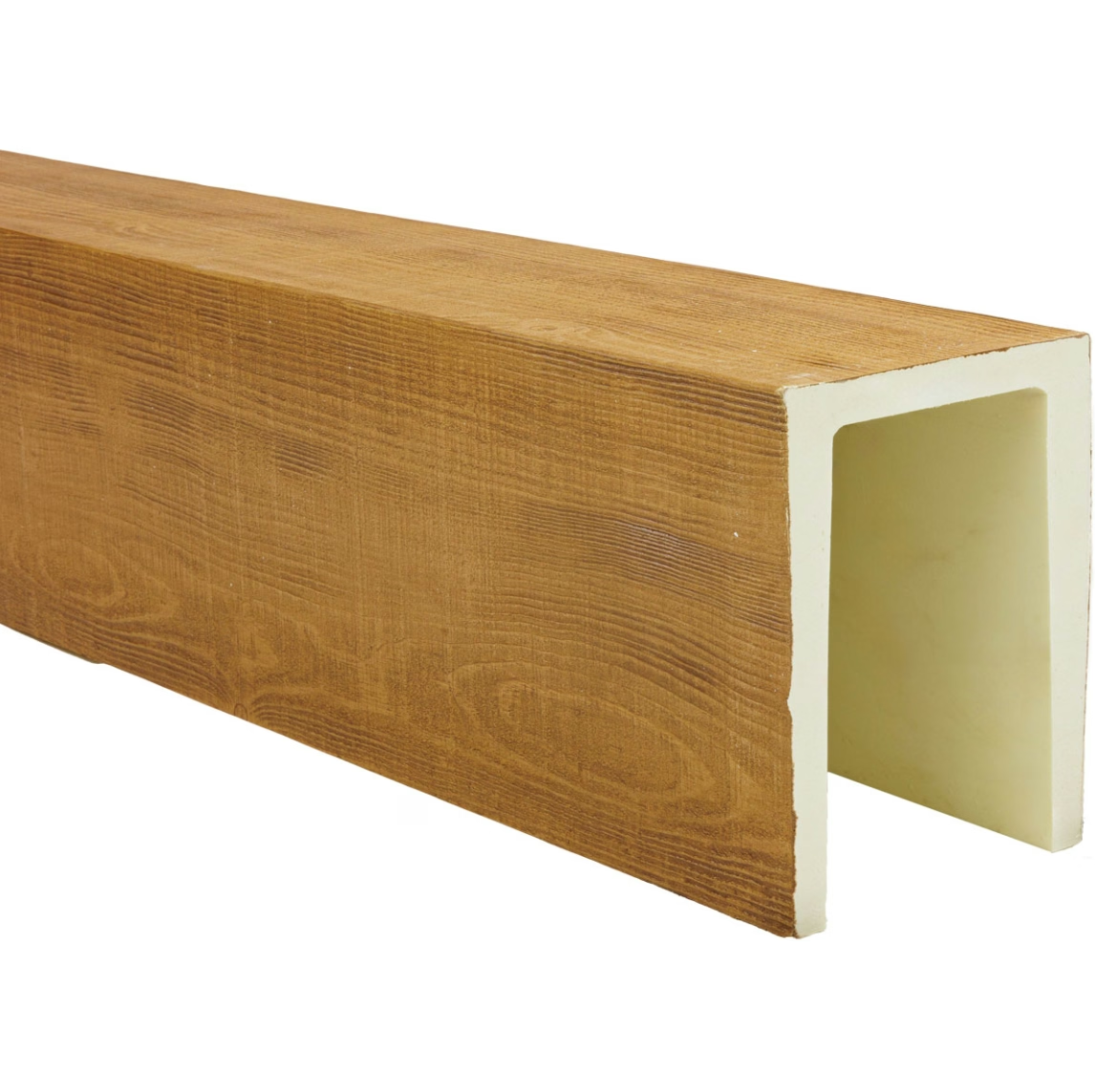
No Harvesting, No Habitat Impact
One of the environmental arguments that resonates particularly strongly with clients pursuing eco-friendly renovation is the simple fact that polyurethane faux wood requires no tree harvesting. Every cubic meter of polyurethane that replaces a cubic meter of natural timber is a cubic meter of forest that does not need to be harvested. For clients who have explicitly chosen renovation over new construction to minimize their environmental footprint, the idea that they are adding timber aesthetics without contributing to timber demand can be a meaningful alignment of values and choices.
This is especially relevant for renovations in historic or heritage properties, where the design calls for matching existing timber beam details. Historically, this might have required sourcing antique timbers or commissioning custom-milled wood to match old profiles. Antique timber harvesting itself raises concerns — barns and historic structures are dismantled to supply reclaimed wood markets, and while this recycling of existing material is preferable to new harvesting, it is not a practice that can scale to meet broad market demand. Synthetic beams sidestep the sourcing question entirely while delivering the visual result the project requires.
Manufacturing Efficiency and Byproduct Utilization
Modern polyurethane manufacturing has made significant strides in reducing waste and improving efficiency. High-quality faux wood beam manufacturers operate closed-loop systems where material usage is optimized and waste streams are minimized or recycled. Some facilities incorporate bio-based polyols derived from plant oils — such as soybean oil or castor oil — as partial replacements for petroleum-derived polyols, reducing the fossil fuel content of the finished product.
The energy intensity of polyurethane beam manufacturing is also relatively low compared to the kiln-drying and machining required to produce finished dimensional lumber from raw logs. Molding and curing polyurethane requires heat, but the process is efficient and contained, without the open-air drying kilns that consume energy and release moisture to the environment.
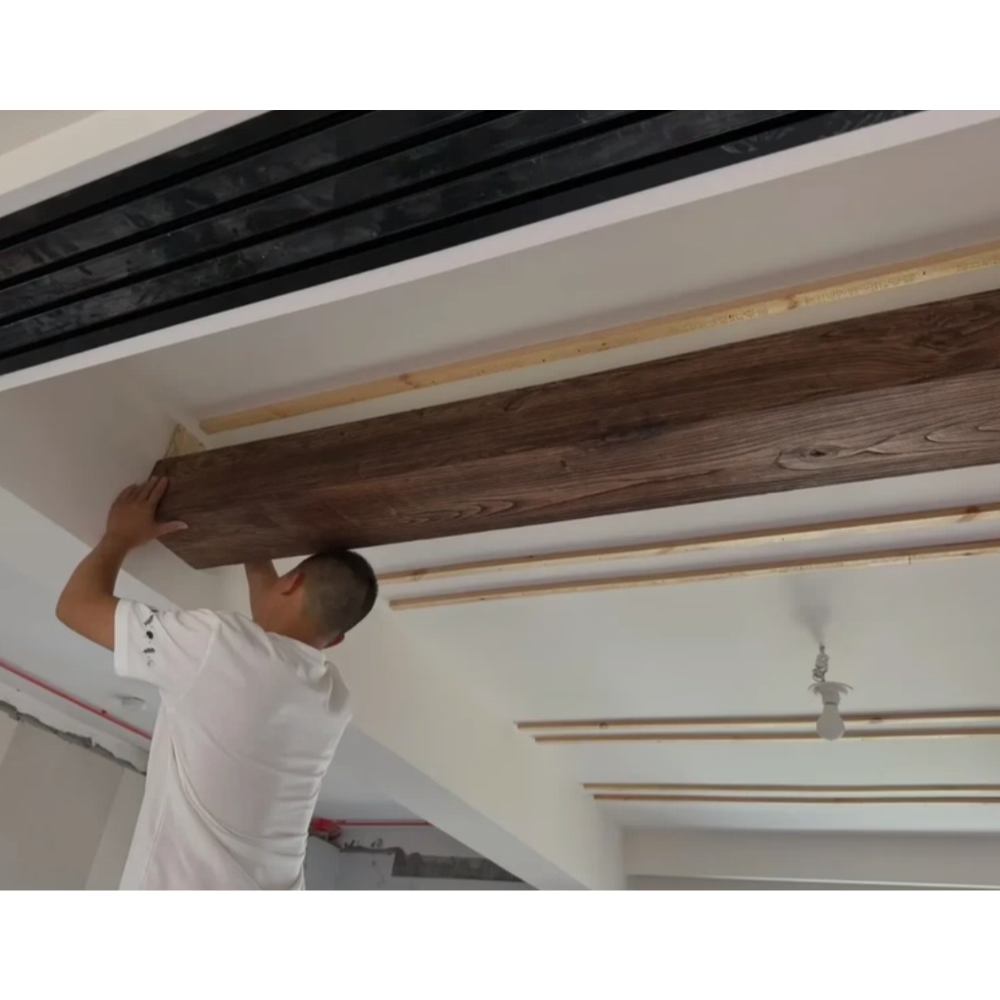
Long-Term Durability Reduces Renovation Cycles
One of the less obvious but practically significant sustainability advantages of polyurethane faux wood beams is their resistance to the conditions that cause natural wood to fail. Moisture, insects, fungal decay, and mechanical wear all contribute to the eventual replacement of wood beams. Each replacement cycle carries environmental cost: manufacturing new material, transporting it to site, installing it, and eventually disposing of the old material.
By eliminating the primary failure modes of natural wood, polyurethane beams reduce the likelihood of renovation cycles driven by beam deterioration. A renovation that incorporates polyurethane beams is more likely to remain functionally and aesthetically intact through subsequent renovations triggered by other factors — aging finishes, changed spatial requirements, or updated systems — without the beam installation itself becoming a source of waste or requiring remediation.
For projects targeting specific green building certifications, polyurethane beams can contribute to credits related to materials optimization, reduced waste, and long-term durability. The exact credit allocation depends on the rating system in use — LEED, BREEAM, Green Star, or other regional standards — and the specific circumstances of the project, but the material's performance profile aligns well with the resource efficiency and durability criteria that these systems reward.

Making the Case to Clients
Presenting polyurethane faux wood as an eco-friendly renovation choice requires honest communication about what the material is and is not. It is not a carbon-neutral product and should not be marketed as such. It is, however, a product with meaningful environmental advantages over the natural timber it aesthetically replaces, particularly in terms of transportation efficiency, manufacturing waste, and long-term durability.
For clients who are committed to minimizing their environmental impact, the conversation can frame polyurethane beams as one element of a broader sustainability strategy. Pairing the beams with other eco-conscious choices — high-performance insulation, energy-efficient systems, responsible finishes — creates a holistic approach where the beam choice contributes positively without requiring the client to accept compromises in appearance or performance.
Renovation projects that use synthetic timber effect beams effectively communicate that environmental responsibility does not require abandoning aesthetic ambition. The warmth, character, and architectural richness that timber beams bring to a space can be achieved through materials that make more efficient use of the planet's resources across their full lifecycle.
Technical References
ASTM standards cited in every specification
Test Data
Lab results from internal testing program
Updated 2026
Reviewed against current product specs


