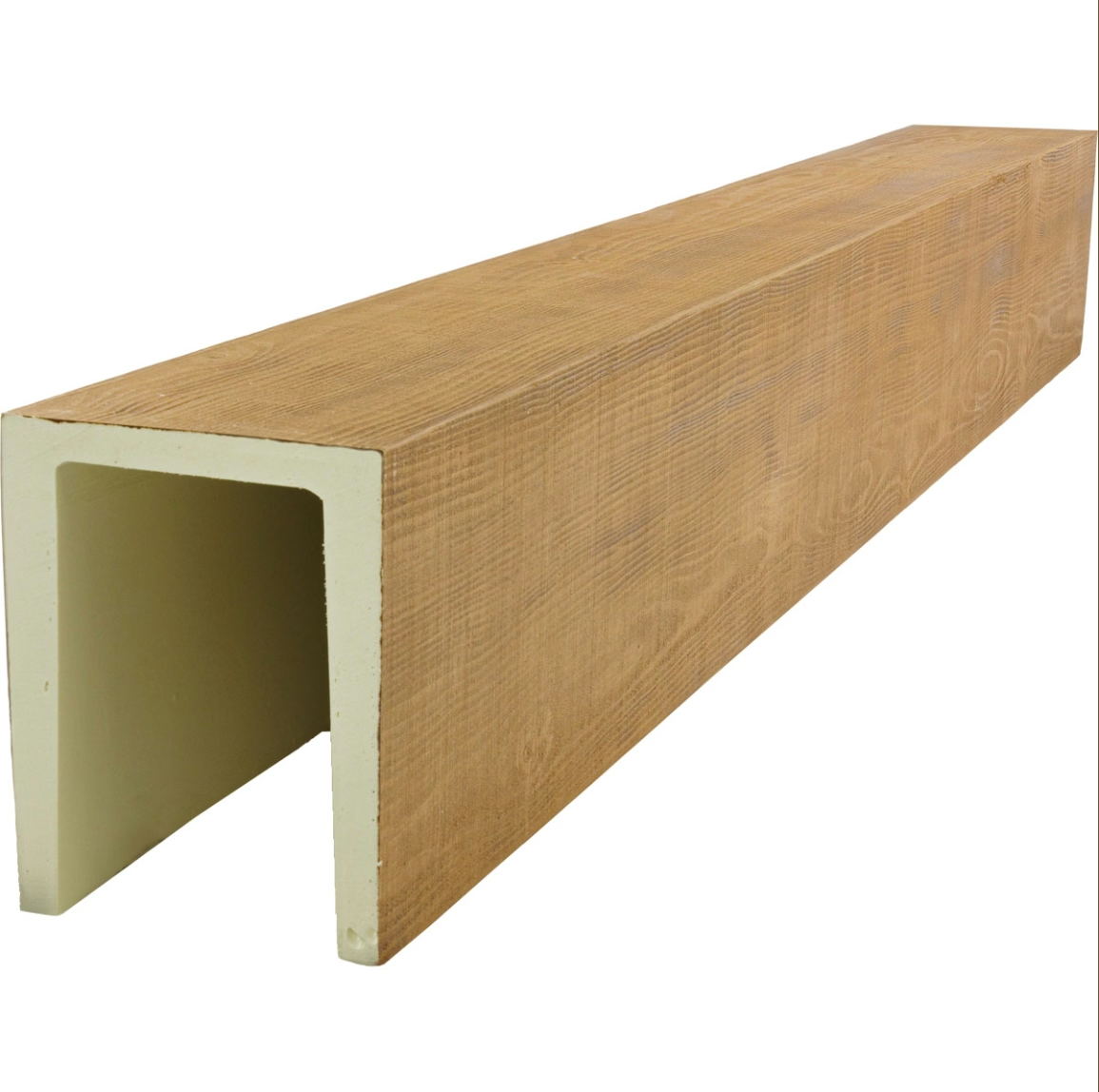
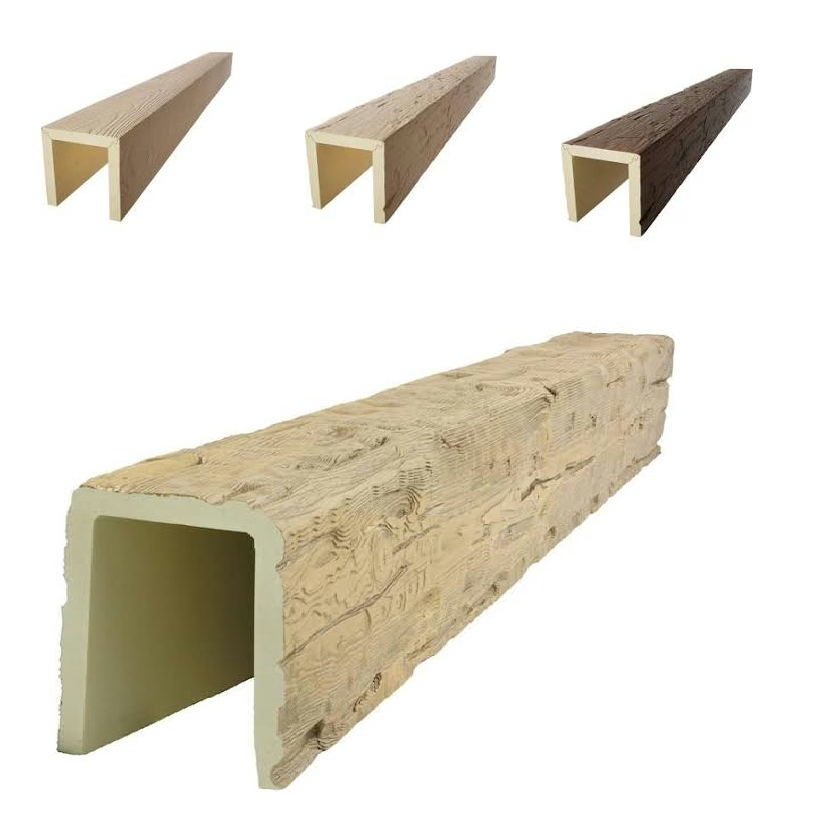
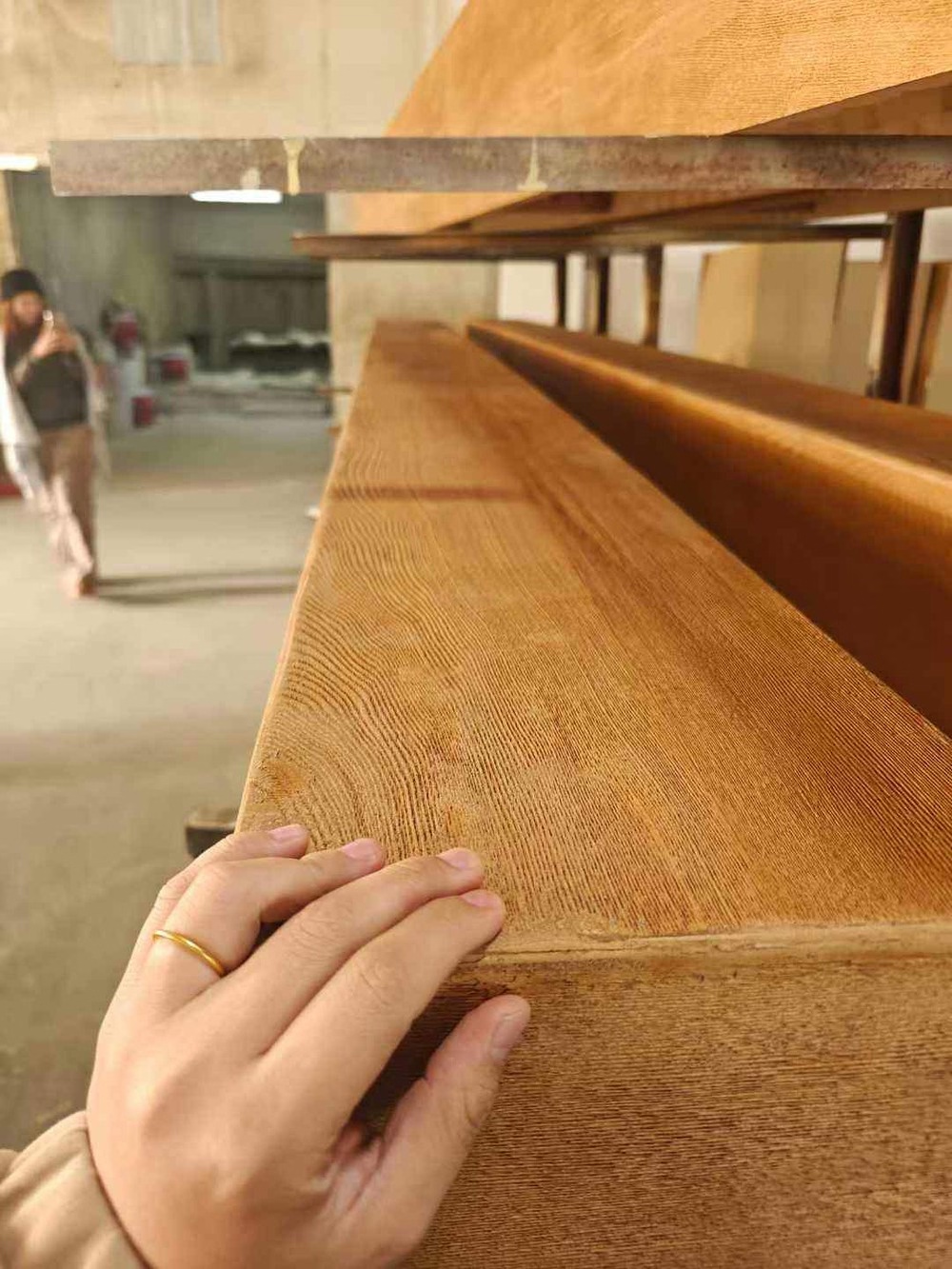
When people describe a room with exposed beams, they rarely limit their description to the beam's shape and color. They talk about the way the grain catches the light, the depth of the saw marks, the weathered character of the surfaces, the sense of age and history communicated by the texture. Texture is not a secondary attribute of a beam — it is the primary medium through which the material communicates its nature. A beam with the wrong texture reads as wrong even if its shape and color are technically correct, and a beam with the right texture can carry a room's aesthetic even with minimal other elements.
Why Texture Specification Matters
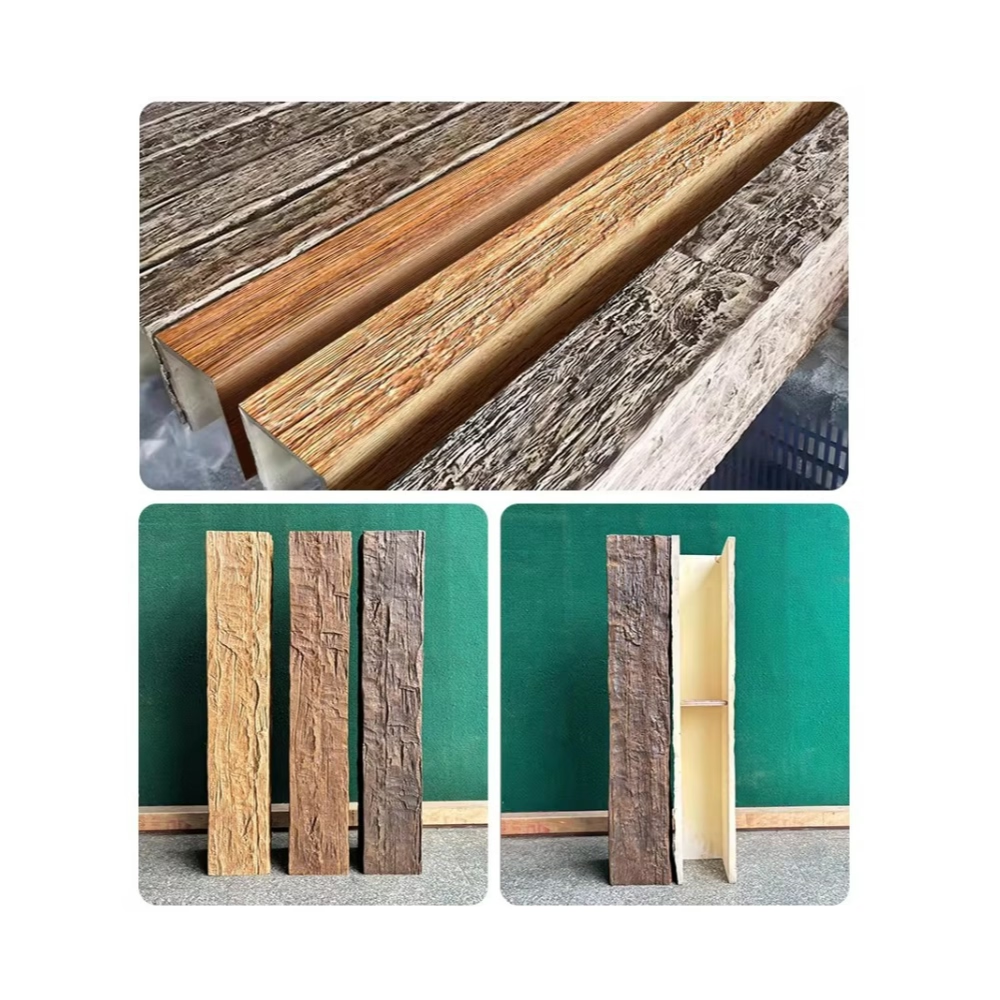
Catalog beams offer a selection of pre-defined textures — typically a handful of options ranging from smooth to highly textured, often labeled with references to wood species or stylistic categories. These textures are developed to appeal to the broadest possible range of projects, which means they are generally competent but not perfectly suited to any specific application. The smooth texture labeled "contemporary" works passably for modern interiors but lacks the refinement that a truly contemporary space demands. The heavy-grain texture labeled "rustic" conveys age and character but may be too aggressive for a space that needs warmth without roughness.
When a designer is working toward a specific aesthetic, standard textures often represent a compromise between the intended effect and the available options. The "barn wood" texture might be slightly too rough, the "hand-hewn" texture slightly too pronounced, and the "smooth" texture too generic. None of the options sits exactly where the design needs it to be.
ODM texture customization resolves this by allowing the designer to specify the exact texture quality the project requires. Not a close approximation — the precise texture that was envisioned when the design concept was developed.

The Mechanics of Polyurethane Texture
Understanding how polyurethane accepts texture helps clarify what is possible in custom specification. Polyurethane beams are produced by pouring liquid resin into molds that contain the negative of the desired texture. The resin fills every microscopic detail of the mold surface, reproducing the texture with high fidelity when cured. This means that the quality of the final texture depends on the quality of the mold tool — specifically, on how precisely the mold surface replicates the target texture.
For standard textures, manufacturers maintain master textures that have been developed, refined, and validated over multiple production runs. These textures are reliable and consistent, but they are fixed — the designer can choose which standard texture to use but cannot modify it.
Custom textures begin with reference materials: physical wood samples exhibiting the desired grain and character, detailed surface scans or photographs of target textures, or written specifications describing the tactile and visual qualities desired. These references are used to create or modify mold surfaces that reproduce the target texture. The process may involve hand-carving texture details into tooling, texturing metal mold surfaces with specialized processes, or creating composite mold surfaces from multiple reference sources.
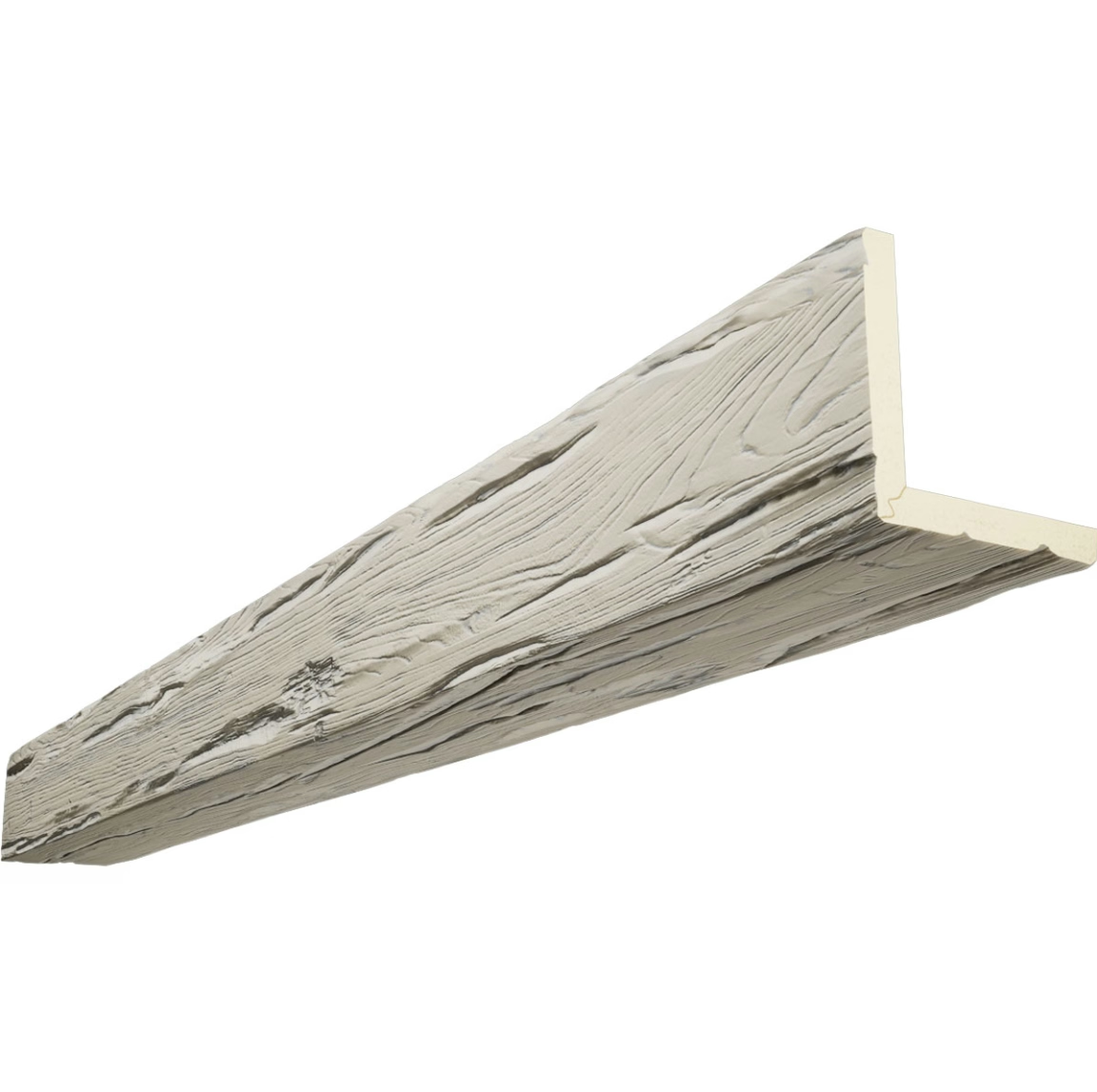
Texture Parameters That Can Be Specified
A wood-look texture is not a single uniform attribute — it is a combination of several distinct characteristics, each of which can be specified independently in an ODM engagement.
Grain pattern refers to the orientation, frequency, and visual character of the wood growth rings and fiber patterns visible on the surface. Tight-grain woods like maple show fine, closely spaced lines. Open-grain woods like oak show prominent rings with visible pores between the rings. Reclaimed or aged wood may show irregular grain patterns influenced by the conditions of the tree's growth and the subsequent treatment of the timber.
Relief depth refers to how pronounced the grain texture projects from the beam's surface. A low-relief grain barely rises above the surface plane and catches light subtly. A high-relief grain creates deep shadows that read from across the room and give the surface a tactile quality that invites touch. The appropriate relief depth depends on the scale of the installation, the lighting conditions, and the intended aesthetic intensity.
Character marks include the incidental features that distinguish one piece of timber from another: knots, burls, checks and cracks, nail holes, bolt holes, saw marks, and weathering patterns. A texture specified for a contemporary minimalist interior might include no character marks whatsoever. A texture referencing heritage timber might incorporate deliberate fastener holes, small checks, and grain irregularities that convey age and authenticity.
Surface sheen is determined by the finish applied to the textured surface. A matte finish absorbs light and minimizes the texture's depth. A semi-gloss or satin finish partially fills the texture valleys and enhances contrast between raised and recessed areas. High-gloss finishes can make texture almost disappear by filling valleys with reflective material. Finish specification is part of the ODM process and can be adjusted to achieve the desired surface character.
Coordinating Texture with Other Design Elements
Ceiling beams rarely exist in isolation. They are surrounded by walls, trim, lighting fixtures, and often other architectural wood elements. The texture of the beams must relate to these adjacent surfaces in a way that creates visual harmony rather than discord.
In a room with smooth plaster walls and textured beams, the contrast between the two surfaces creates a dynamic relationship where the beams read as distinct material elements against a continuous background. In a room with rougher stone or brick walls, a complementary beam texture that echoes the wall's materiality without competing with it can unify the space.
ODM texture specification allows designers to coordinate beam texture with adjacent materials by requesting textures that reference or complement existing surfaces. A beam texture that matches the grain pattern of the room's hardwood floor creates a material continuity that draws the eye through the space. A beam texture that complements the rough texture of a stone fireplace surround without directly copying it creates a layered relationship between different natural materials.

Sampling and Approval Process
The most critical step in custom texture specification is sampling and approval. Because texture is a subjective quality that can be difficult to communicate precisely in written form, physical samples are essential before committing to full production.
The ODM manufacturer produces sample lengths of beam in the proposed custom texture, typically in the same profile as the production beams for the project. The design team reviews these samples in the context of the actual installation conditions — the lighting, the adjacent materials, the viewing distances — and evaluates whether the texture achieves the intended effect.
Revisions are common at this stage. A grain that looked right on a reference sample may appear too aggressive or too subtle in the actual room context. A character mark that seemed charming in isolation may prove distracting when repeated across multiple beams. These observations are translated into revised specifications — adjust the grain frequency, reduce the relief depth, modify the knot placement — and a new sample is produced. The cycle continues until the sample meets the design team's approval.
This iterative process is not a sign of uncertainty — it is the professional standard for custom work. The goal is to produce beams that are exactly right for the project, and getting exactly right usually requires some back-and-forth. Projects that skip the sampling stage in the interest of time frequently end up with beams that are approximately right rather than precisely right, which defeats much of the value of commissioning custom work in the first place.
Texture Consistency Across Large Installations
One practical advantage of ODM texture production over site-applied texturing methods is consistency. A hand-textured beam, where the surface treatment is applied by a craftsman with tools and techniques, will vary from piece to piece. The individual craftsman's touch, the consistency of the applied materials, and the environmental conditions during application all contribute to variation. Over a large installation with many beams, these variations accumulate to create a non-uniform surface quality that may read as inconsistent rather than hand-crafted.
Mold-produced polyurethane beams reproduce the target texture identically on every unit. Each beam emerges from the mold with the same grain frequency, relief depth, and character mark placement as every other beam in the production run. For large installations where visual consistency across all beams is essential, this reproducibility is a significant advantage over any texturing method that relies on hand application.
Technical References
ASTM standards cited in every specification
Test Data
Lab results from internal testing program
Updated 2026
Reviewed against current product specs