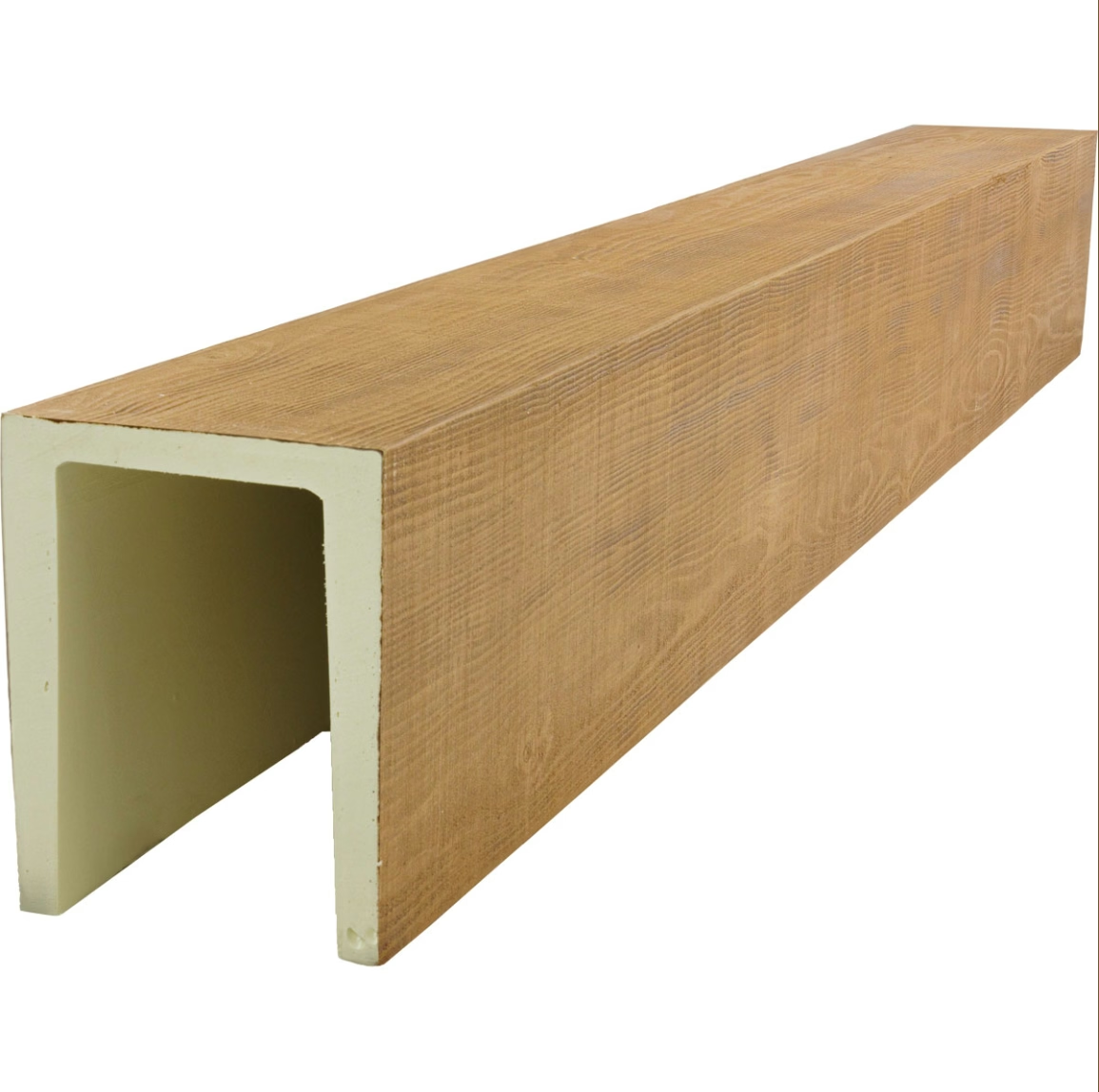
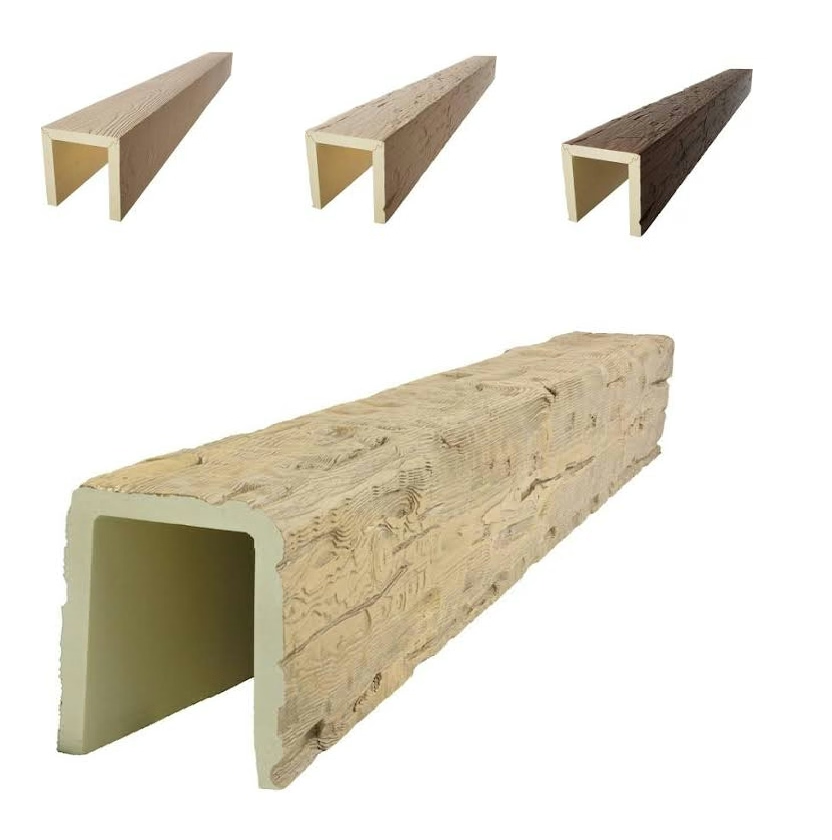
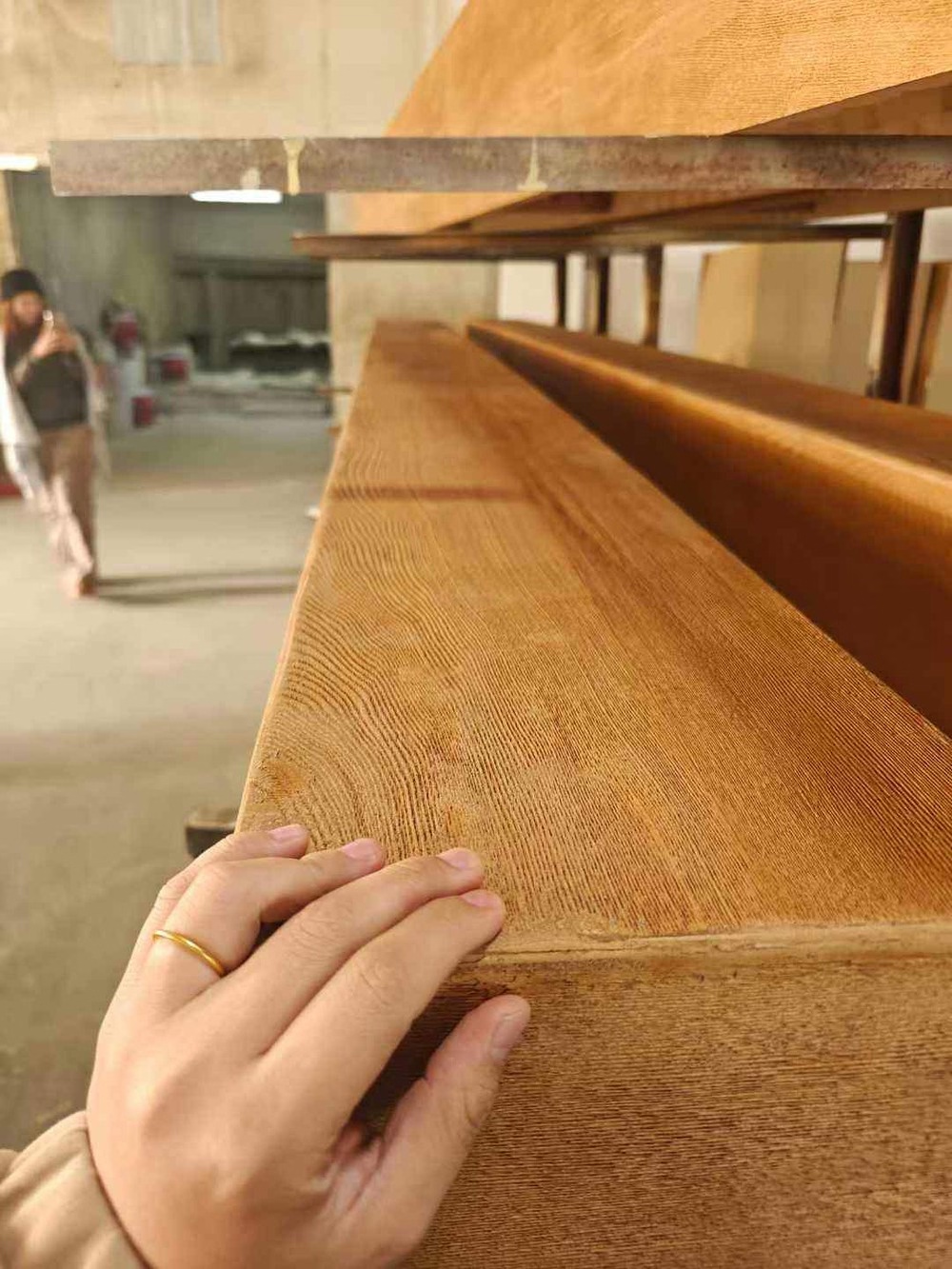
Among the manufacturing processes available for producing decorative faux wood beams, polyurethane molding occupies a unique position. Unlike wood machining, which removes material from a larger piece to create the desired shape, molding adds material — specifically, it fills a mold cavity with liquid resin that takes on the exact geometry of the cavity when it cures. This fundamental difference has profound implications for what can be produced, the consistency of production, and the design complexity that is economically achievable.
The Molding Advantage for Decorative Beams
Machining a complex beam profile in wood requires multiple setup changes and tool changes, each introducing potential for error. A profile with curved surfaces, detailed carvings, and integrated molding elements might require five or more separate machining operations, with each operation requiring the workpiece to be accurately repositioned in the machine. The cumulative tolerance stack-up across multiple operations can result in finished parts that deviate significantly from the design intent, particularly for complex profiles.
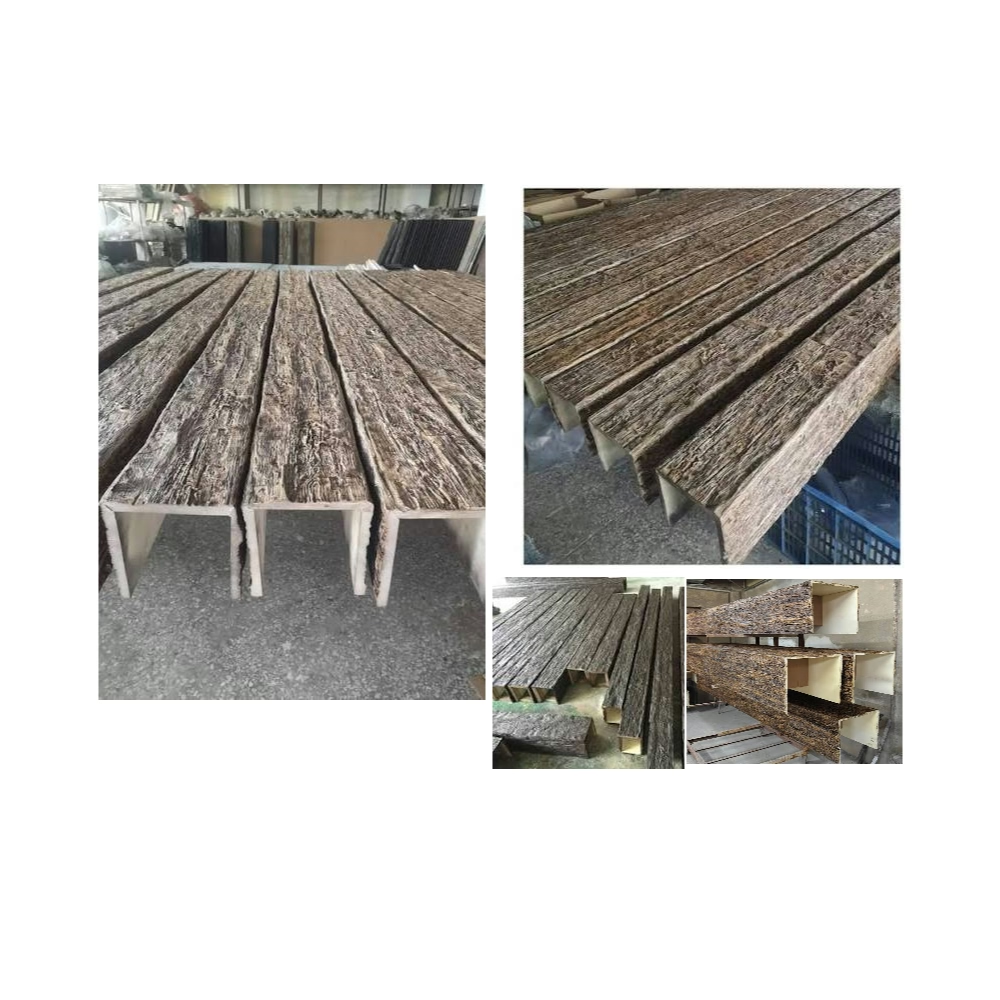
Molding produces the entire profile in a single operation. The liquid resin fills the mold cavity completely and cures into a solid piece that reproduces every detail of the mold surface with high fidelity. The finished beam requires no further machining — it is complete as it emerges from the mold, subject only to any post-cure finishing operations such as painting or sealing.
This single-operation production also means that every beam in a production run is essentially identical to every other beam. The variation that inevitably accumulates across multiple machining operations in wood production is eliminated. For commercial projects where dozens or hundreds of beams must match precisely and install consistently, this reproducibility is a significant practical advantage.
Custom Mold Tooling for OEM Production
Custom molded decorative beams begin with custom mold tooling — the precision-engineered forms that define the beam's profile, surface texture, and any integrated details. Creating this tooling is the primary upfront investment in OEM custom beam production, and its quality determines the quality of everything that follows.
Mold tooling for polyurethane beam production is typically fabricated from aluminum or hardened steel, depending on the expected production volume and the complexity of the profile. Aluminum tooling is faster and less expensive to produce, making it suitable for lower-volume production or for prototyping. Steel tooling has a longer lifespan and can withstand the rigors of high-volume production, making it the better choice for products expected to be manufactured over many years.
The mold surface is machined to match the beam's design specification, including every surface texture detail, decorative element, and dimensional requirement. For beams with wood-grain texture, the mold surface may be textured using specialized processes that imprint the desired grain pattern directly into the tooling. This texture is then reproduced in every beam produced from the mold, with consistent depth and character throughout the production run.
The cost of custom mold tooling varies with the complexity of the profile and the precision requirements of the application. Simple rectangular profiles with smooth surfaces require minimal tooling investment. Complex compound profiles with deep textures, undercuts, and integrated decorative elements require more sophisticated tooling and correspondingly higher investment. The tooling cost is typically amortized across the production order, and the per-unit cost decreases as the production volume increases.

Profile Complexity Within Molding Constraints
While molding enables remarkable design complexity, it is not without geometric constraints. Understanding these constraints helps designers develop feasible specifications and avoid costly revisions when designs prove unmoldable.
Draft angle is the primary geometric constraint. Because the mold must be opened to remove the cured part, the beam's cross-section must include a slight taper — typically one to three degrees — that allows the part to release from the mold without binding. Profiles with severe undercuts or details that would lock the part into the mold cannot be produced in a single-piece mold. These constraints can usually be resolved by modifying the profile slightly, adding a small draft angle to a face that would otherwise be vertical, or splitting complex profiles into multiple mold pieces.
Internal geometry is another area of constraint. Beams with enclosed cavities — such as hollow box beams — require mold designs with internal cores that form the interior surfaces. These cores must be designed to release cleanly without damaging the interior finish. The wall thickness of hollow beams must be consistent enough to fill completely with resin and cure uniformly, avoiding cold spots or incomplete fills that would compromise structural integrity.
Despite these constraints, the range of profiles achievable through molding is broader than most designers initially expect. The manufacturer's engineering team can review a proposed profile and identify any moldability concerns early in the design process, allowing adjustments before tooling is committed.
Surface Texture and Finish in Molded Beams
The mold surface determines the texture of the finished beam. Every imperfection, every scratch, every unintentional mark on the mold surface will be reproduced on every beam produced. This makes mold tooling quality control essential — the mold surface must be finished to a standard that ensures consistent, high-quality texture across all production parts.
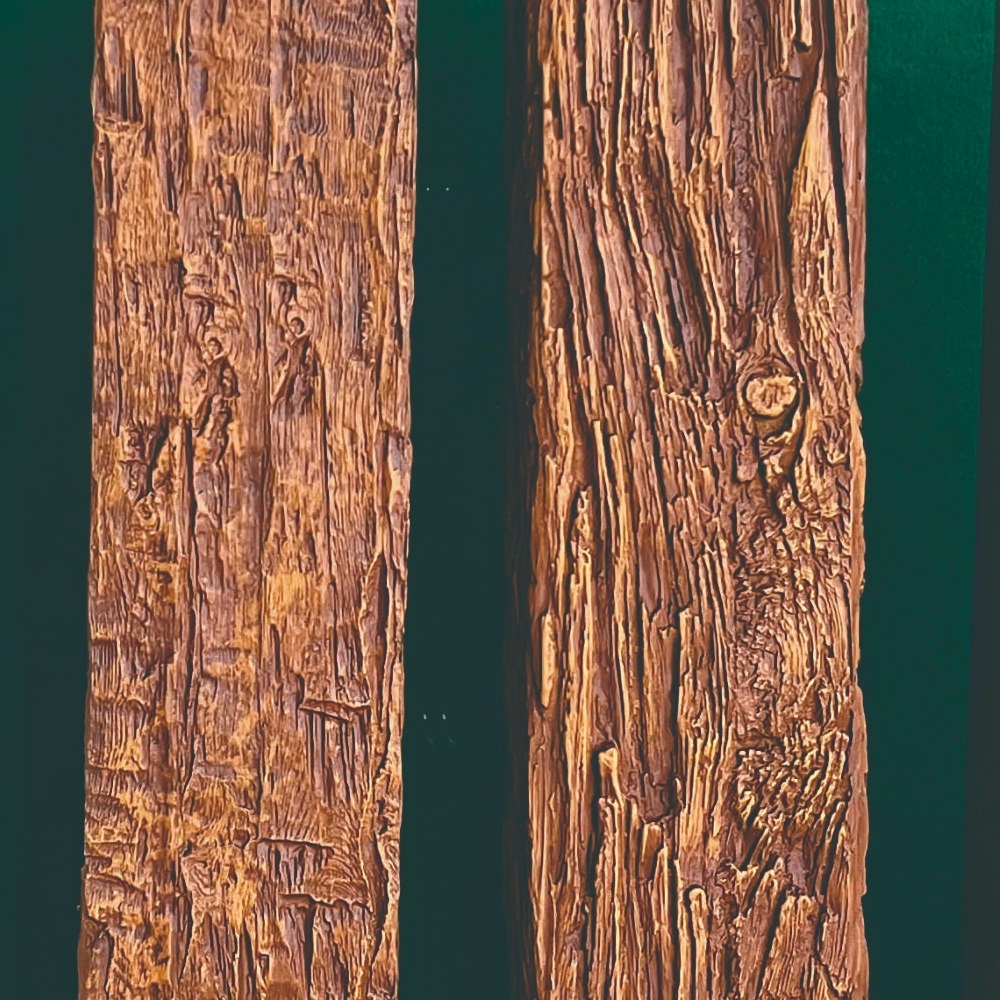
For wood-grain textures, the mold surface is treated to replicate the visual and tactile qualities of real wood. The specific treatment depends on the target appearance: saw-cut textures may use mechanical texturing processes; hand-hewn textures may use hand-tooled or machined grooves; reclaimed wood textures may incorporate deliberately placed character marks such as simulated nail holes and checks.
The finishing process applied after the beam is demolded adds another layer of surface quality. Factory-applied paints, stains, and sealers provide consistent color and protection that cannot be matched by site-applied finishes. Multi-stage finishing processes can layer color tones to simulate the natural variation found in aged wood, creating depth and visual interest that flat single-coat finishes lack.
Production Consistency and Quality Control
The most significant advantage of molding over wood machining is production consistency. Each beam produced from a mold is formed by the same process, in the same material, under the same curing conditions. The result is a level of uniformity that is difficult to achieve in any other manufacturing process.
Quality control in polyurethane beam production involves monitoring key parameters throughout the manufacturing process. Resin material properties, mixing ratios, cure temperatures, and demolding times are all documented and controlled to ensure consistent product quality. Finished beams are inspected for dimensional accuracy, surface quality, and finish consistency before being released for packaging and shipment.
For OEM buyers, this documented quality control provides assurance that every beam in an order will meet the specified requirements. The uniformity of molded production means that the first beam approved from a production run is representative of the entire run — there are no outliers, no parts that are significantly different from the prototype, and no sorting and grading required to achieve acceptable installation quality.

Scalability for Commercial Projects
Molded production scales efficiently from small prototyping runs to high-volume commercial production. The same mold tooling that produces a handful of prototype beams can produce thousands of production beams without modification, and the per-unit cost decreases as the production volume increases.
For commercial projects with large beam requirements — a hotel chain standardizing a specific beam design across all properties, a developer building multiple residential projects to a unified aesthetic — the scalability of molded production provides a pathway from design development through full-scale rollout. The design is established and validated on prototype beams, production scales to meet the project's requirements, and the same design can be reproduced for subsequent projects using the same tooling.
This scalability also supports inventory strategies for distributors. Standard products can be held in inventory for rapid fulfillment, while custom OEM products are produced to order with predictable lead times. The combination of standard and custom offerings allows distributors to serve both the quick-turn market and the project-specific customization market from the same product ecosystem.
Technical References
ASTM standards cited in every specification
Test Data
Lab results from internal testing program
Updated 2026
Reviewed against current product specs