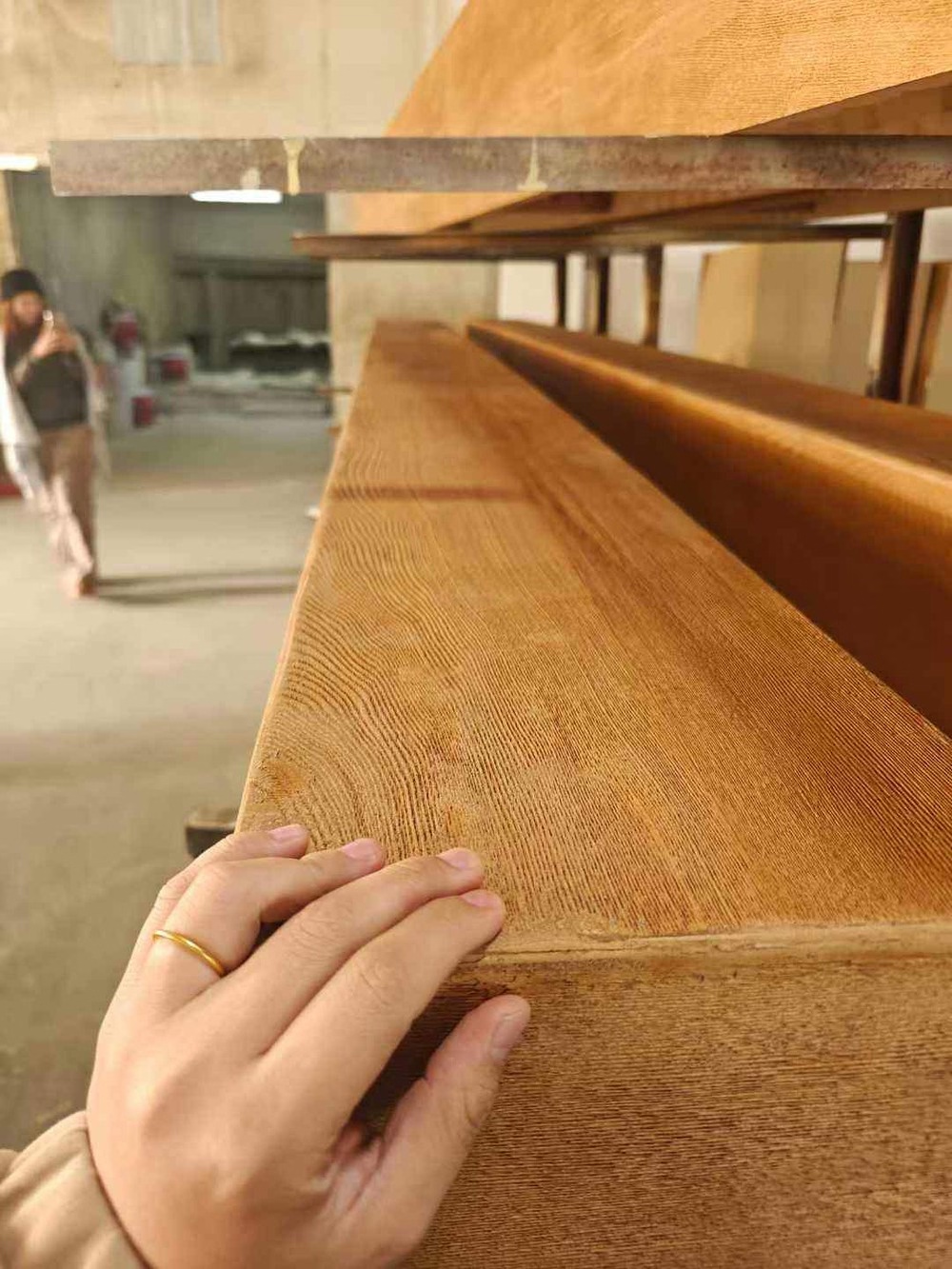
Walk into a room with exposed beams and your hands might move toward the nearest surface before your conscious mind registers the impulse. The tactile quality of wood — the way it feels under fingertips, the subtle resistance of grain, the coolness of a smooth finish or the roughness of weathered surfaces — is such an integral part of the experience of wood that the visual sense alone feels incomplete. This is why specifying the surface texture of a decorative beam is not a secondary consideration after shape and color have been established. Texture is a primary design decision that determines whether a beam feels right in its space.
Texture as a Design Tool
In architecture and interior design, texture operates at multiple levels simultaneously. At the macro level, texture provides visual interest and scale — a heavily textured beam reads differently from across a room than a smooth beam, even before the specific character of the texture can be discerned. At the meso level, texture defines the material character — whether the surface suggests hand craftsmanship or machine precision, aged patina or fresh-cut newness. At the micro level, texture affects how light behaves on the surface — matte textures absorb light and minimize shadow, while raised textures create contrast between illuminated peaks and shadowed valleys.
All three levels must be considered when specifying a custom texture for a beam project. A texture that is perfectly appropriate at the macro level may be wrong at the meso level, or a texture that reads beautifully at a distance may become overwhelming or mechanical at close range. The ODM texture development process allows all three levels to be evaluated together, using prototype samples to assess the texture's effect across the full range of viewing distances and lighting conditions.
Different interior styles call for textures that are as distinct from each other as the styles themselves. A farmhouse kitchen with a rustic aesthetic calls for a texture that references hand-hewn timber and the marks of tools used by craftsmen working without the benefit of electric machinery. A sleek urban loft calls for a texture that evokes the refined grain of kiln-dried hardwood without the excessive character that would conflict with the clean-lined contemporary environment. A boutique hotel seeking to evoke a sense of place might reference local timber species or traditional regional building practices through carefully chosen textures.

The Range of Texture Possibilities
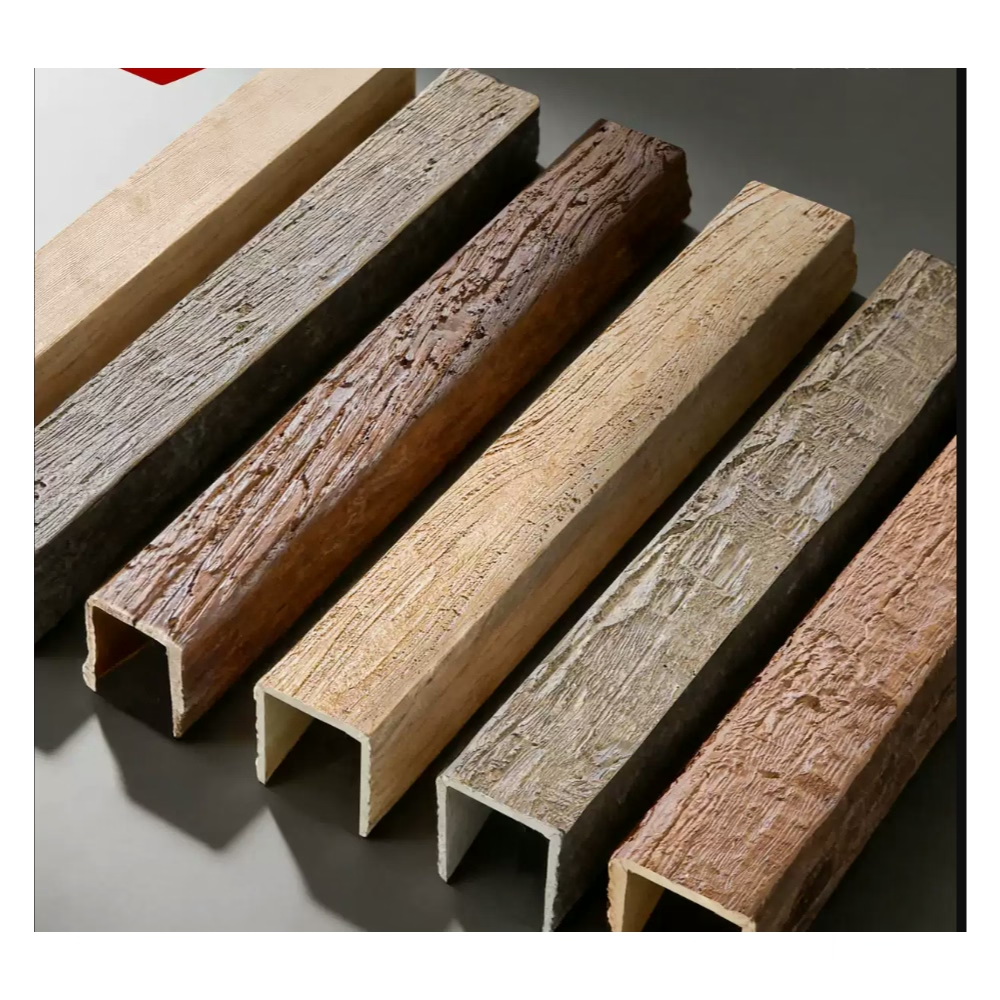
Polyurethane molding technology enables a remarkably broad range of surface textures, constrained more by the designer's imagination than by manufacturing capability. The primary determinant of what can be achieved is the quality of the reference material or specification provided by the design team.
Saw-cut textures replicate the surface left by various saw types and blade configurations. A rough-sawn texture from a circular saw shows deep, irregular scratches across the grain. A finer crosscut texture from a hand saw shows cleaner, more consistent marks. A bandsawn texture shows the fine, consistent striations left by a bandsaw blade. Each of these textures creates a distinctly different visual effect.
Hand-tooled textures reference the surfaces created by traditional woodworking tools. A adze texture shows the sweeping curved marks of an adze blade across the wood surface. A chisel texture shows the smaller, more precise marks of a chisel used to smooth or decorate the surface. A drawknife texture shows the characteristic shavings left by a drawknife pulling across the grain. These textures communicate craftsmanship and age, and they are particularly appropriate for heritage-referencing or rustic design schemes.
Weathered textures replicate the surface changes that occur in timber over decades of exposure. Silver-gray patina from UV exposure and rain, brown-black discoloration from iron reacting with tannins in the wood, checking and cracking from repeated moisture cycling — these textures tell a story of time passing and add depth to a space that new, unweathered materials cannot provide.
Reclaimed timber textures incorporate the marks left by the previous use of the wood. Nail holes from original construction, saw marks from the original milling, paint streaks from previous applications, and the general surface quality of wood that has served a previous purpose — these elements can be incorporated into a custom texture to give the beam the appearance of having a history it does not actually have.
Coordinating Texture with Other Materials
The texture of a beam does not exist in isolation — it must relate to the textures of the other materials in the space. A beam with a heavy, rustic texture paired with smooth plaster walls creates a dynamic tension that can be either compelling or uncomfortable depending on how well the designer manages the relationship. A beam with a complementary texture — one that echoes the roughness of a brick wall or the grain of hardwood flooring — creates a harmonious relationship that unifies the space.
Custom texture specification allows the designer to develop beam textures that specifically complement the other materials in the project. If the room features reclaimed hardwood flooring with a specific grain pattern and level of wear, a custom beam texture can be developed that references the flooring's characteristics while remaining distinct enough to read as a separate element. The result is a material coherence that enhances the overall design quality of the space.
This kind of texture coordination requires the designer to think carefully about the material palette of the entire room. Rather than selecting a beam texture from a catalog and then hoping it coordinates with the other finishes, the designer specifies the target texture in terms of its relationship to the other materials, and the manufacturer develops a custom texture that achieves that relationship.
Texture Aging and Long-Term Appearance
One advantage of specifying custom textures for polyurethane beams rather than natural wood is predictability. Natural wood texture evolves over time — new wood weathers, old wood continues to age, and the texture at the end of the beam's service life may be significantly different from the texture at installation. This can be either a benefit or a concern depending on the project and the client's expectations.
For clients who appreciate the living quality of natural materials and look forward to the way their beams will age, the natural evolution of wood texture is a feature. For clients who want their beams to maintain the appearance they had at installation, the continued aging of wood texture can be a maintenance concern.
Custom polyurethane textures can be formulated to simulate aged wood at installation, giving the beam the appearance of having been in place for years without the ongoing changes that actual aging would bring. Alternatively, a fresh-cut texture can be specified for clients who prefer the appearance of new timber. The texture is permanent in the sense that it will not change significantly over the beam's service life — the material does not continue to weather or age in the way that natural wood does.
This predictability simplifies the designer's task and the client's expectations. The texture specified at the beginning of the project is the texture the beam will have throughout its service life, with only the gradual accumulation of dust and the normal wear of occasional cleaning affecting its appearance.
Developing a Custom Texture Specification
The process of developing a custom texture specification begins with reference materials. These may include physical wood samples, high-resolution photographs, detailed written descriptions of the desired visual and tactile qualities, and specific requirements for character marks, grain patterns, and surface relief.
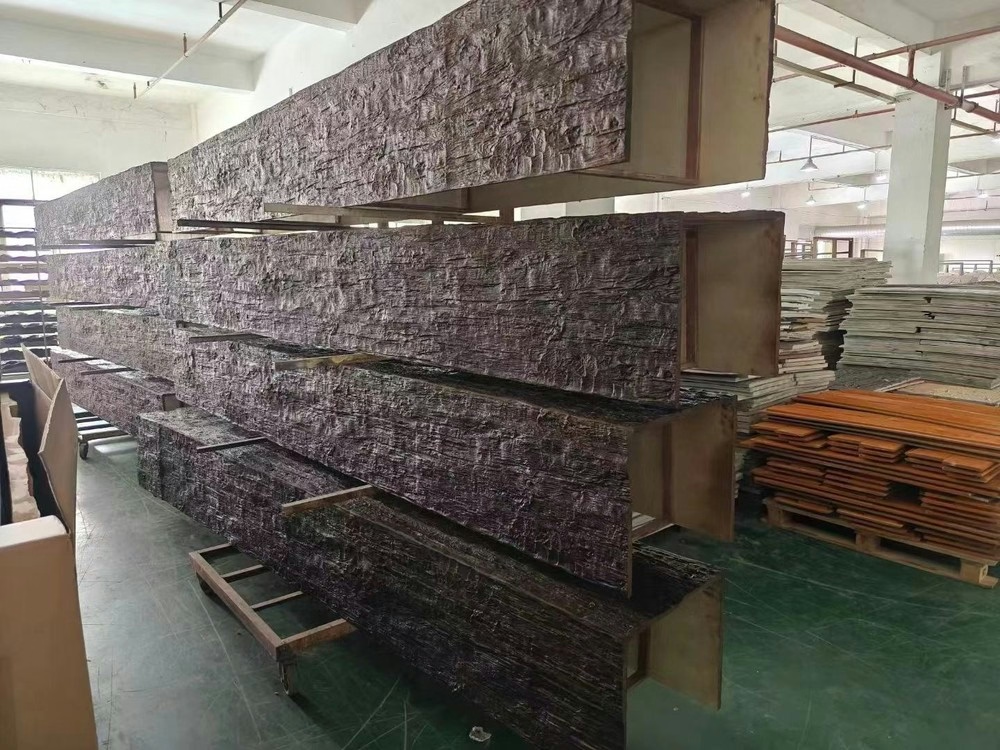
The manufacturer translates these references into manufacturing specifications — the specific tooling processes, texture depths, and finishing treatments needed to reproduce the target texture in polyurethane. A prototype beam is produced, reviewed by the design team, and revised as needed until the texture meets the design intent.
This process benefits from iteration. The first prototype will rarely be exactly right, but each iteration refines the texture toward the target. The designer's ability to articulate what is working and what is not, and the manufacturer's ability to translate that feedback into manufacturing adjustments, determine how quickly and successfully the texture development proceeds.
For projects where the texture must match an existing element in the building — an existing beam, an antique piece of furniture, a piece of reclaimed wood — the reference material can be the existing element itself. The manufacturer examines the reference, develops tooling and finishing specifications that reproduce its characteristics in polyurethane, and produces a sample that is evaluated against the original.

Texture Consistency in Production
Once a custom texture has been developed and approved, the production process must maintain that texture consistently across all beams in the order. For polyurethane molding, this consistency is achieved through the inherent nature of the process — every beam is produced in the same mold, using the same material formulation, under the same curing conditions.
The mold surface, once textured to the approved specification, reproduces that texture identically on every beam produced. There is no accumulated variation from piece to piece, no craftsman's touch that differs from day to day, no batch-to-batch variation in applied texture treatments. The result is a level of texture consistency that cannot be achieved by any hand-application method.
For large installations where texture consistency is essential to the visual quality of the finished result, this reproducibility is a significant advantage. Every beam in a hotel corridor, a restaurant dining room, or a retail space will have the same texture quality and character, creating the visual uniformity that the design requires.
Technical References
ASTM standards cited in every specification
Test Data
Lab results from internal testing program
Updated 2026
Reviewed against current product specs