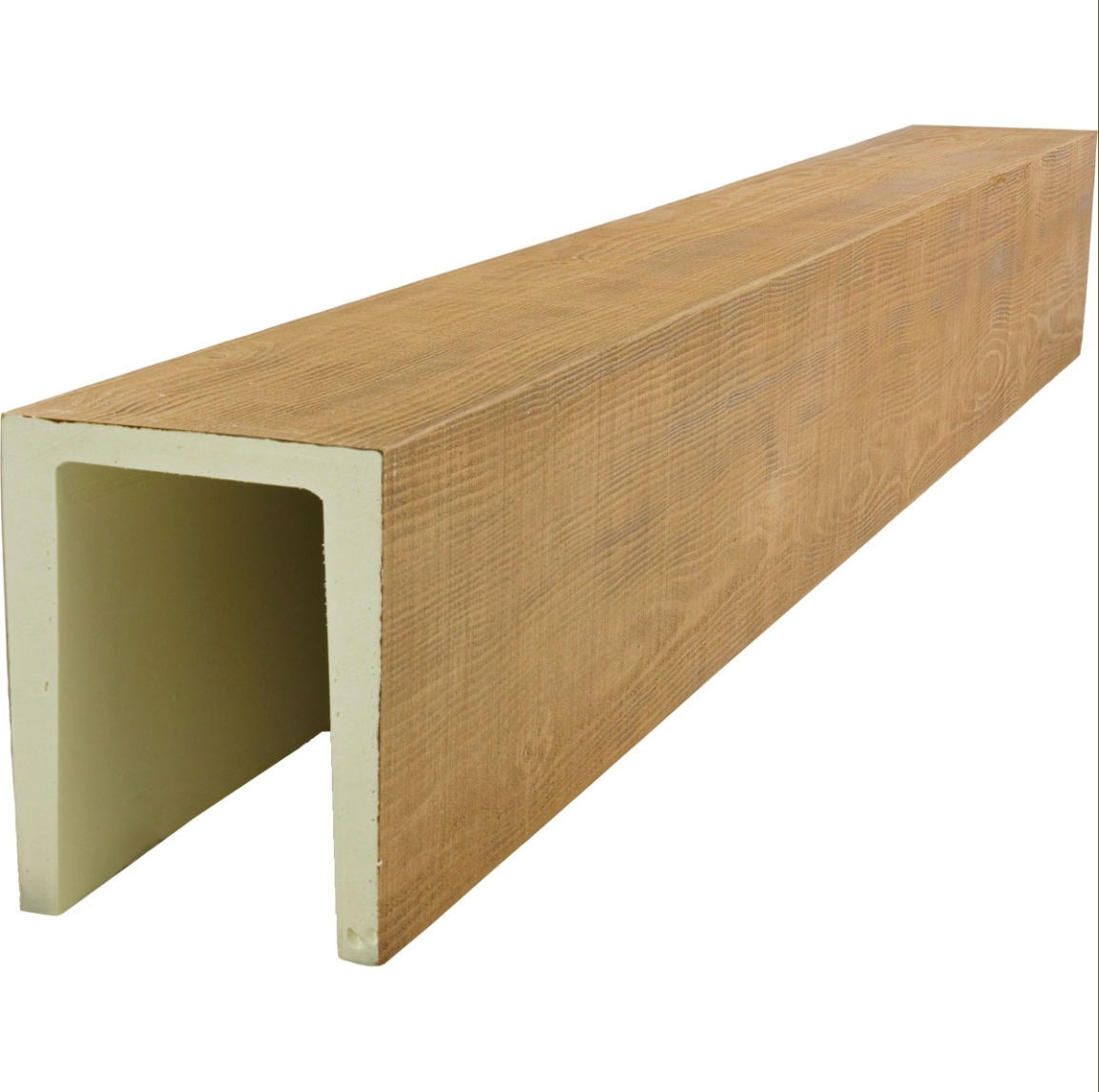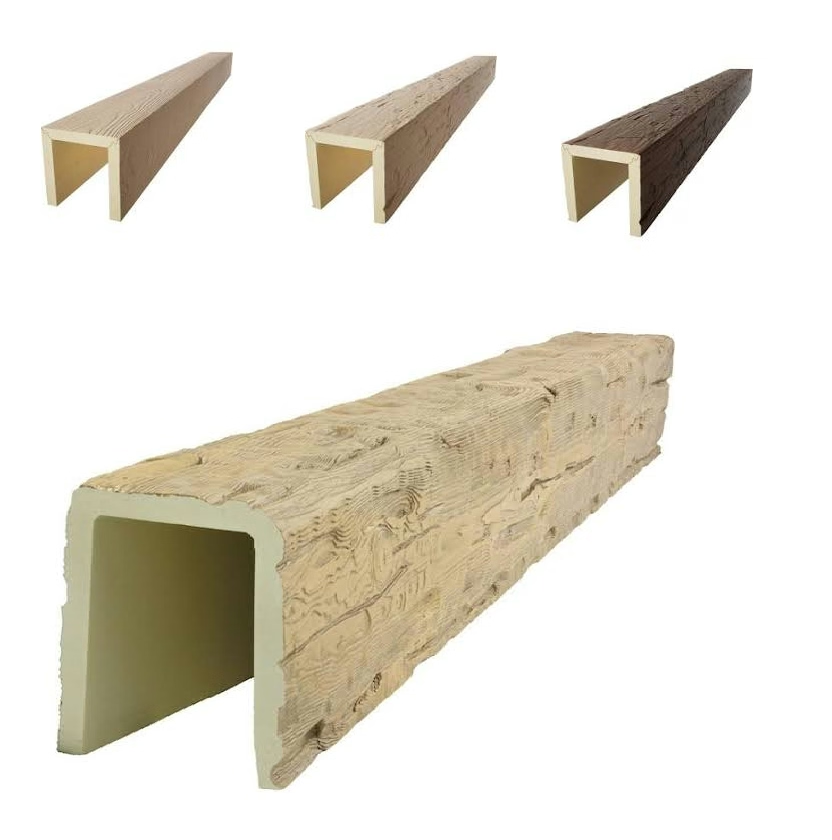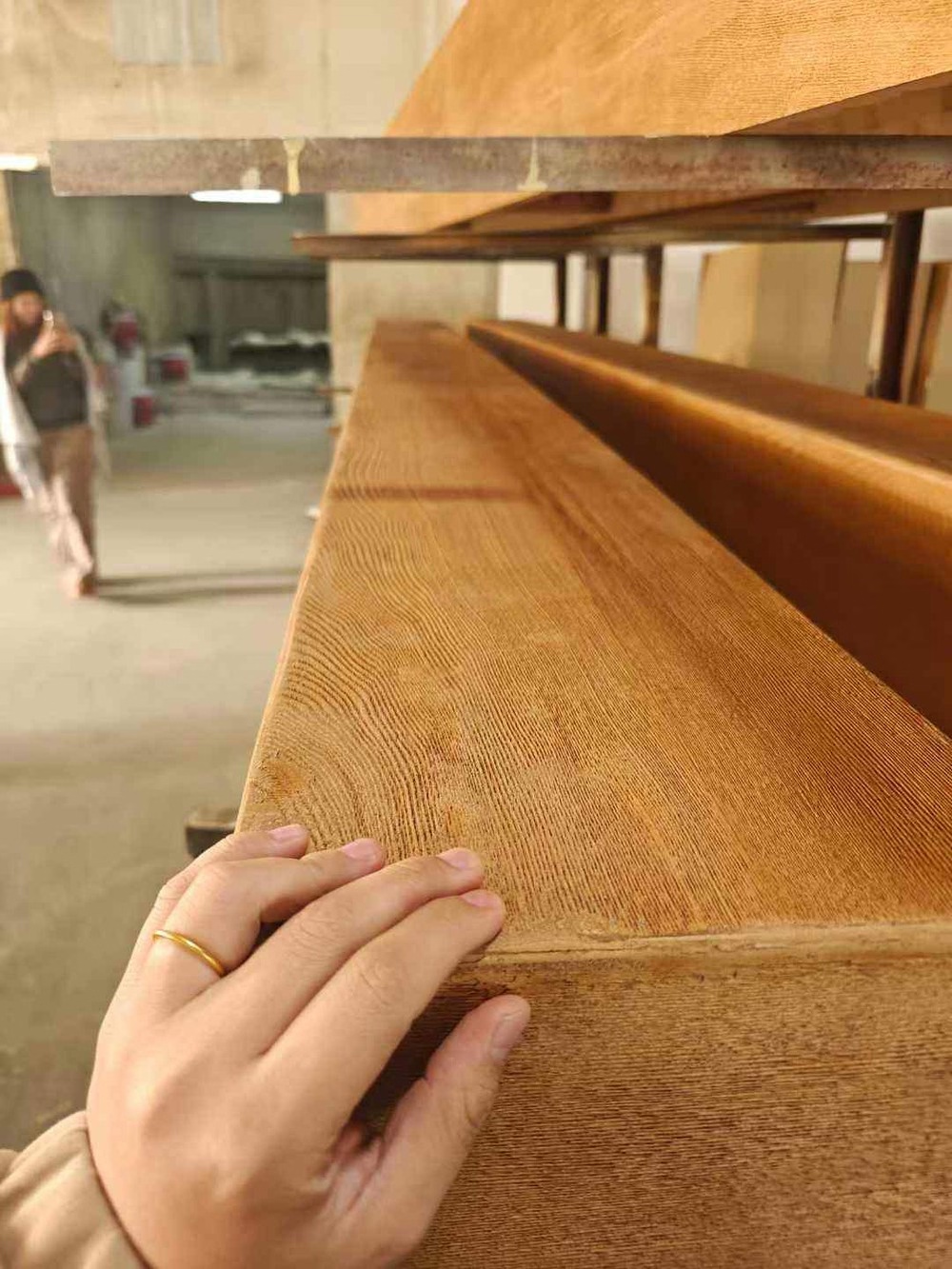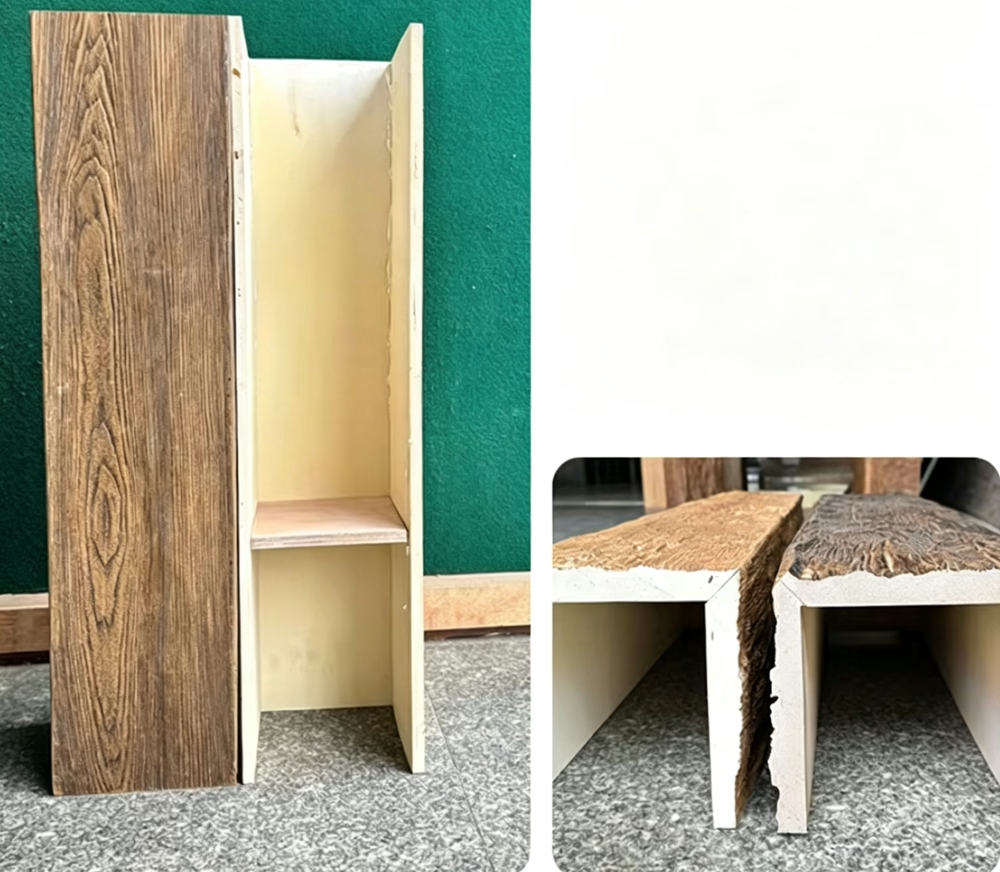
The CE marking represents a manufacturer's declaration that products comply with applicable European Union health, safety, and environmental protection requirements. For polyurethane faux beam products destined for European markets, understanding the specific directives and harmonized standards that apply to these architectural products ensures smooth customs clearance and legal market access.
Understanding CE Marking Requirements
CE marking became mandatory for construction products sold within the European Economic Area following implementation of the Construction Products Regulation (CPR) in 2013. Polyurethane decorative beams fall under this regulation when used as permanent building elements, even when their primary function is aesthetic rather than structural. The classification places these products within the harmonized technical specifications governing fire performance, dangerous substance emissions, and structural contribution to building works.
Unlike some product categories where CE marking remains voluntary, construction products face mandatory compliance requirements enforced through national market surveillance authorities. Products lacking required documentation face removal from sale and potential financial penalties. For foreign manufacturers, establishing an authorized representative within the EU becomes necessary for compliance when no established EU presence exists.
The declaration of performance constitutes the legal document confirming that a product meets declared characteristics. This document must accompany all CE-marked construction products and remain available for regulatory review for ten years following last placement on the market. Importers and distributors share responsibility for verification that declarations remain current and accessible.
Applicable Directives and Standards
The Construction Products Regulation 305/2011 establishes the framework for CE marking of architectural products. For decorative beams, the relevant harmonized standard is EN 15102, covering decorative wall coverings including ceiling beams and similar elements. This standard defines testing protocols and performance thresholds across critical characteristic categories.
Reaction to fire classification determines whether products may be installed in specific building types and locations. Testing according to EN 13823 and EN 11925-2 generates classifications ranging from A1 (non-combustible) through F (unclassified) under the Euroclass system. Most polyurethane faux beams achieve Class D or E without flame retardant treatment, with higher ratings available through additive modification.
Release of dangerous substances requires declaration under the CLP Regulation when applicable chemical compositions pose exposure risks. Modern polyurethane formulations used in architectural applications typically contain no REACH-restricted substances, but formal testing and documentation confirms compliance for customs and regulatory inspection purposes.
Testing Requirements and Documentation
Initial type testing establishes baseline performance characteristics for a product family. Testing must be conducted by laboratories meeting EN ISO 17025 requirements, with test reports documenting methodology, results, and conclusions. For faux beams, critical tests include fire reaction, mechanical resistance, dimensional stability, and adhesive bond strength for multi-component products.
Factory production control requirements ensure that products placed on the market maintain consistent compliance with tested specifications. Manufacturers must implement documented quality management systems covering raw material verification, production process controls, and finished product inspection. Annual surveillance audits by notified bodies verify ongoing system effectiveness.
Technical documentation must include detailed product descriptions, declarations of performance, test reports, calculation records where applicable, and instructions for safe installation and use. This documentation travels with each product shipment and must be translated into official languages of destination markets upon request.
Authorized Representative Responsibilities
Foreign manufacturers selling directly to EU importers must designate an authorized representative established within the European Economic Area. This representative maintains technical documentation, corresponds with market surveillance authorities, and acts as the regulatory contact point for compliance verification activities.
The authorized representative arrangement requires formal written agreement defining responsibilities, access to documentation, and limitation of liability. Many third-party regulatory service companies offer authorized representative services for a fixed annual fee, providing a cost-effective compliance solution for manufacturers without established EU operations.
Relationship management between manufacturers and authorized representatives requires clear communication channels for regulatory changes, market notifications, and incident response. Annual review meetings ensure that product changes, new markets, or regulatory updates receive appropriate attention and documentation.

Maintaining Compliance After Certification
Product modifications require re-evaluation when changes could affect declared performance characteristics. Formulation adjustments, production process changes, or dimensional modifications trigger reassessment obligations under the Construction Products Regulation. Maintaining detailed change records enables systematic evaluation of modification impacts.
Market surveillance activities in EU member states include random product testing, documentation audits, and installation site inspections. Responding to surveillance inquiries requires prompt access to technical documentation and knowledgeable personnel capable of addressing technical questions. Establishing internal protocols for surveillance response prevents compliance gaps during active investigations.
Post-market surveillance obligations include maintaining records of complaints, non-conformities, and recalls. Implementing tracking systems that capture installation locations enables targeted field actions when quality issues emerge. Manufacturer vigilance demonstrates due diligence and supports continued market access during regulatory review.
Practical Implementation Steps
Achieving CE compliance for polyurethane faux beam products involves systematic steps beginning with product categorization and applicable standard identification. Technical file compilation follows, incorporating test reports, calculations, and declarations. Third-party assessment by a notified body may be required depending on the designated reaction to fire classification.
Labeling requirements specify minimum information to appear on products and packaging: CE symbol, last two digits of manufacture year, manufacturer identification, and reference to declaration of performance. Specific labeling formats ensure readability and durability throughout distribution channels.
Ongoing compliance maintenance requires documented quality control procedures, periodic re-testing at specified intervals, and systematic monitoring of regulatory developments. Establishing compliance as an integrated business process rather than a one-time achievement ensures sustained market access and protects business relationships with EU trading partners.
Technical References
ASTM standards cited in every specification
Test Data
Lab results from internal testing program
Updated 2026
Reviewed against current product specs