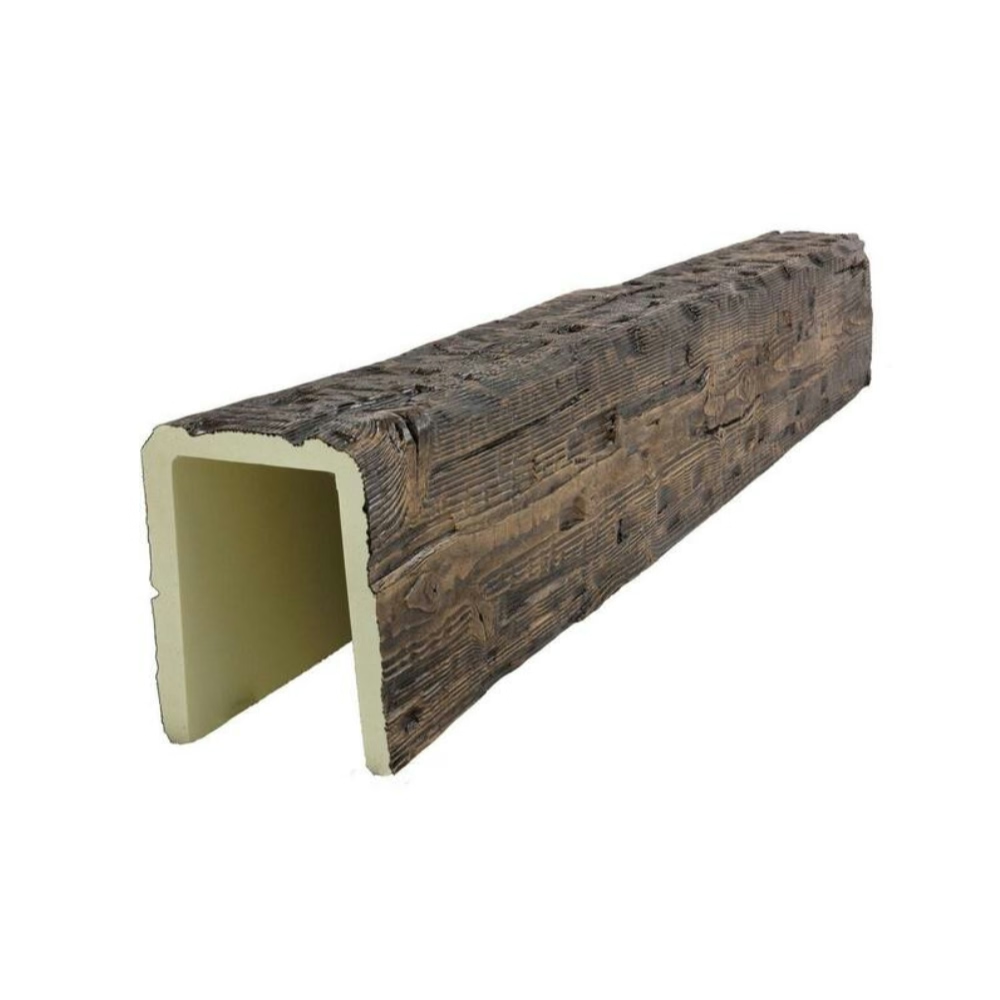
Importing polyurethane faux wood beams requires accurate tariff classification to determine applicable duties, taxes, and regulatory requirements. The landed cost calculation depends heavily on proper HS code assignment and identification of available preferential treatment under free trade agreements. Procurement professionals who master these fundamentals secure better pricing and smoother customs clearance.
Core Tariff Classification Fundamentals
The foundation of import cost calculation begins with accurate HS code assignment. The six-digit international HS code identifies the general product category, while importing countries add national digits to specify exact classifications and associated duty rates. Polyurethane faux wood beams typically fall within Chapter 39 (Plastics and Articles Thereof) under headings covering builders' ware or decorative articles.
Determining the precise subheading requires analyzing product characteristics against classification definitions. Construction-intent beams matching architectural specifications classify differently than decorative elements marketed for furniture applications. Physical composition, intended use evidence, and marketing materials all influence the classification determination that customs authorities will accept.
Tariff codes should be verified with destination country authorities before committing to purchase arrangements. Classification can vary between countries for identical products, particularly at the national extension digit level. Advance classification rulings from destination customs authorities eliminate uncertainty and provide binding classification commitments for defined periods.

Major Market Import Requirements
The United States maintains a complex tariff structure where polyurethane architectural beams typically enter under HTSUS 3925.90.10 for general construction decorations or alternative provisions depending on specific product characteristics. General duty rates under most favored nation status fall between 3-5%, but punitive tariffs from ongoing trade disputes may substantially increase costs for Chinese-origin products.
China's import tariff structure applies the national HS extension to identify specific duty rates for each product category. Polyurethane architectural elements typically classify under codes with 10% basic duty plus 13% value-added tax on combined DUTY and CIF value. CFEP (China Foreign Trade Enterprise) registration requirements apply to certain import categories.
European Union imports face classification under the Combined Nomenclature system that augments international HS codes. Polyurethane decorative elements for construction typically classify under CN codes with 2-3% ad valorem duty for most-favored-nation treatment. Post-Brexit United Kingdom applies its own UK Global Tariff schedule, which differs from EU rates.

Free Trade Agreement Opportunities
The USMCA (United States-Mexico-Canada Agreement) provides preferential duty treatment for qualifying goods originating in member countries. For polyurethane beam imports, origin qualification typically depends on meeting change of tariff classification requirements or value content thresholds. Manufacturing process documentation must demonstrate qualifying origin production.
ASEAN-China Free Trade Area provisions offer reduced duty rates for imports from participating Southeast Asian nations. Products manufactured in Vietnam, Thailand, or other ASEAN members may qualify for preferential treatment when origin criteria are satisfied. Certificate of origin documentation must accompany shipments claiming preferential rates.
Regional comprehensive partnerships and bilateral agreements continue expanding coverage across Pacific Rim nations. RCEP (Regional Comprehensive Economic Partnership) establishes common origin rules and preferential tariff rates among fifteen Asia-Pacific nations. Qualifying products require proper certificate of origin issuance and presentation at customs entry.
Landed Cost Calculation Methodology
Accurate landed cost calculation integrates product pricing, shipping charges, insurance costs, customs duties, and destination taxes into a unified analysis. Omitting any cost component produces misleading comparisons that may result in procurement decisions that prove expensive upon actual import. Template calculation worksheets ensure comprehensive cost capture.
Duty calculation applies the applicable tariff rate to the customs value, which typically equals the transaction price for CIF-delivered shipments. Freight and insurance costs increase the dutiable value for landed cost calculations, while certain deductions and exclusions may apply depending on specific circumstances. Understanding the customs valuation basis prevents calculation errors.
Non-tariff costs including customs broker fees, port handling charges, inspection fees, and inland transportation accumulate to substantial amounts beyond the headline duty rate. These costs vary by port, shipment size, and import complexity. Experienced customs brokers provide comprehensive cost estimates that account for all foreseeable charges.
Documentation for Efficient Customs Processing
Commercial invoice requirements vary by destination country but universally demand accurate product descriptions, HS code declarations, and transaction values. Generic descriptions such as "decorative materials" invite customs inquiries that delay cargo release. Specific descriptions referencing material composition, dimensions, and intended use facilitate efficient processing.
Packing lists supplement commercial invoices with carton-level detail enabling cargo verification. Each package should be marked with carton numbers, product descriptions, and quantities matching invoice entries. Consolidated shipments from multiple suppliers require detailed manifests that clearly separate individual shipper contents.
Certificate of origin forms must be completed accurately and signed by authorized personnel. Different free trade agreements use different certificate formats with distinct data requirements. Incorrect certificates cause customs authorities to reject preferential treatment claims, resulting in duty assessment at standard rates plus potential penalties for improper claims.
Compliance Risk Management
Misclassification penalties can far exceed the duty amounts in dispute, particularly when customs authorities determine that violations were willful rather than inadvertent. Maintaining documentation supporting classification decisions provides defense against penalty assessment and demonstrates good faith compliance efforts.
Post-clearance audits may occur years after import entry, requiring retention of all supporting documentation for the applicable retention period. Record-keeping systems should archive invoices, certificates, classification rulings, and correspondence in accessible formats. Digital archiving provides efficient storage with retrieval capability for audit response.
Product changes affecting classification should trigger proactive review before subsequent imports. Reformulated products, modified applications, or new marketing approaches may alter the appropriate classification. Proactive communication with customs authorities prevents inadvertent violations when product evolution affects classification status.
Technical References
ASTM standards cited in every specification
Test Data
Lab results from internal testing program
Updated 2026
Reviewed against current product specs


