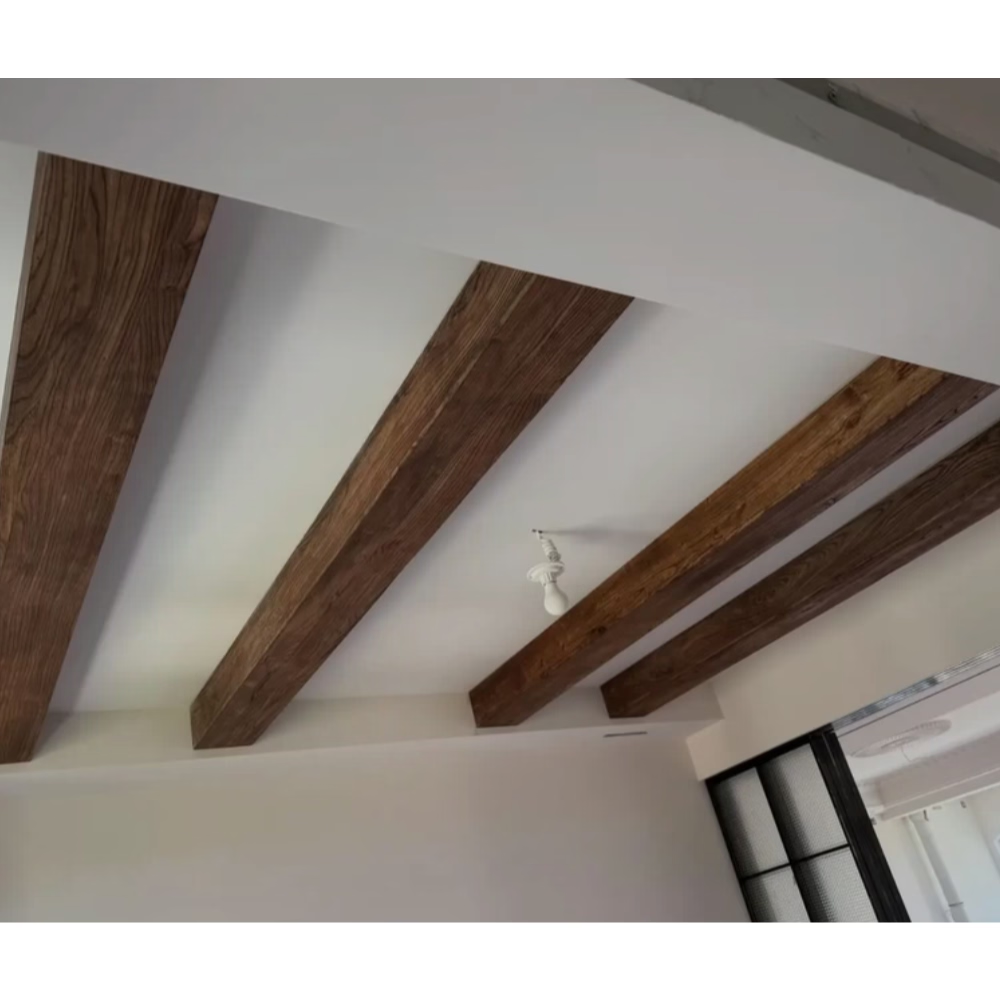
Material certification documentation provides the authoritative record of polyurethane resin faux timber beam composition, manufacturing controls, and tested performance characteristics. These documents serve critical functions in specification compliance, regulatory approval, and quality assurance throughout the supply chain. Understanding how to obtain, interpret, and apply certification data enables informed procurement decisions and defensible installation practices.
Types of Material Certification Documents
Certificates of Analysis document specific production batch testing results, confirming that delivered products meet specified material properties. These certificates reference actual test measurements rather than typical values, providing documented evidence of conformance. Batch-specific certificates enable traceability from installation back to production conditions.
Certificates of Compliance declare that products meet specified requirements without necessarily providing detailed test data. Compliance certificates assert conformance to applicable standards, regulations, or specification requirements. The certifying party accepts responsibility for conformance, though verification details may remain proprietary.
Technical Data Sheets compile material property information including physical characteristics, thermal performance, chemical resistance, and recommended handling procedures. These reference documents summarize manufacturer knowledge about product behavior under various conditions. Data sheets support specification development and installation planning.
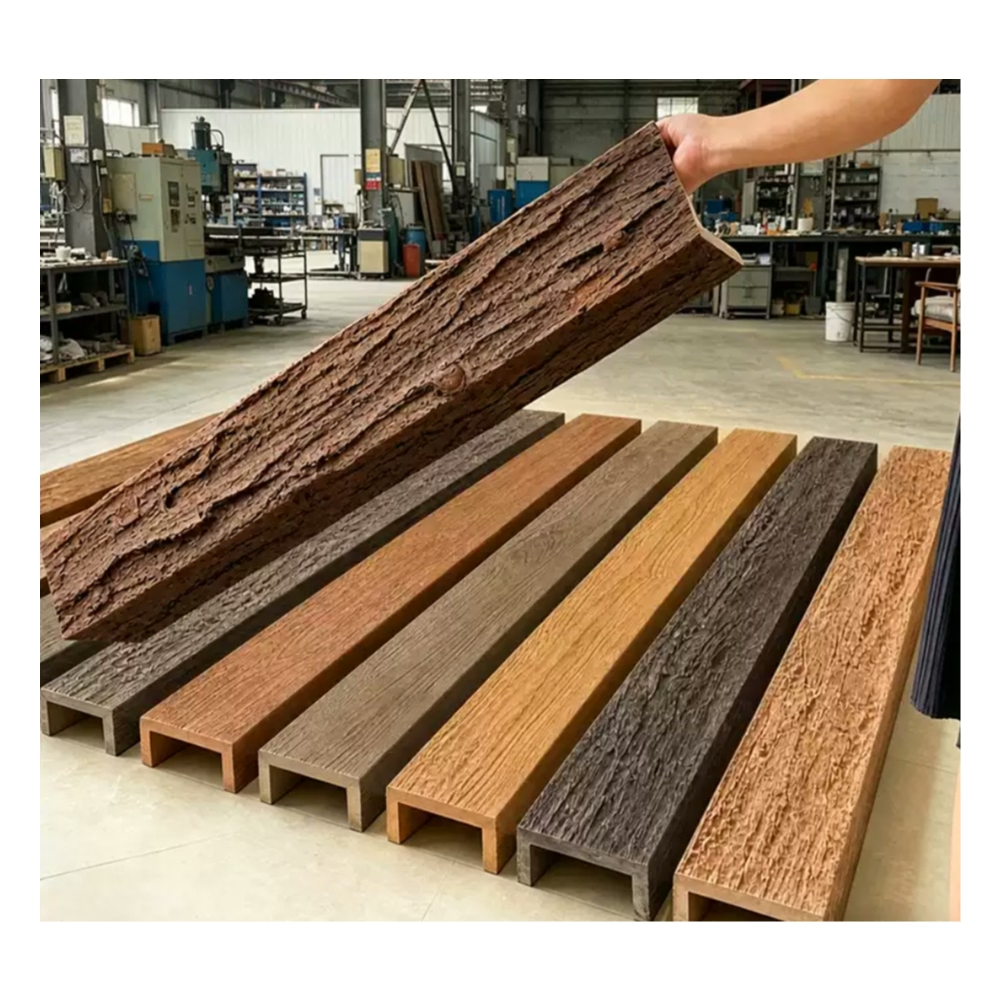
Physical Property Documentation
Density specifications define the mass per unit volume that characterizes polyurethane beam formulations. Measured in pounds per cubic foot or kilograms per cubic meter, density affects structural performance, thermal properties, and shipping cost calculations. Certification documents should report actual measured values rather than typical ranges.
Compressive strength indicates the load-bearing capacity of polyurethane material under crushing loads. This property determines whether products can support mounting hardware, light fixtures, or other attachments without deformation. Specifications should identify minimum acceptable values with certification confirming compliance.
Flexural modulus measures stiffness characteristics indicating how beams will perform under gravitational and dynamic loads. Higher modulus values indicate stiffer materials resistant to sagging or deformation. Load calculations for spanning applications reference flexural properties to determine maximum span limits.
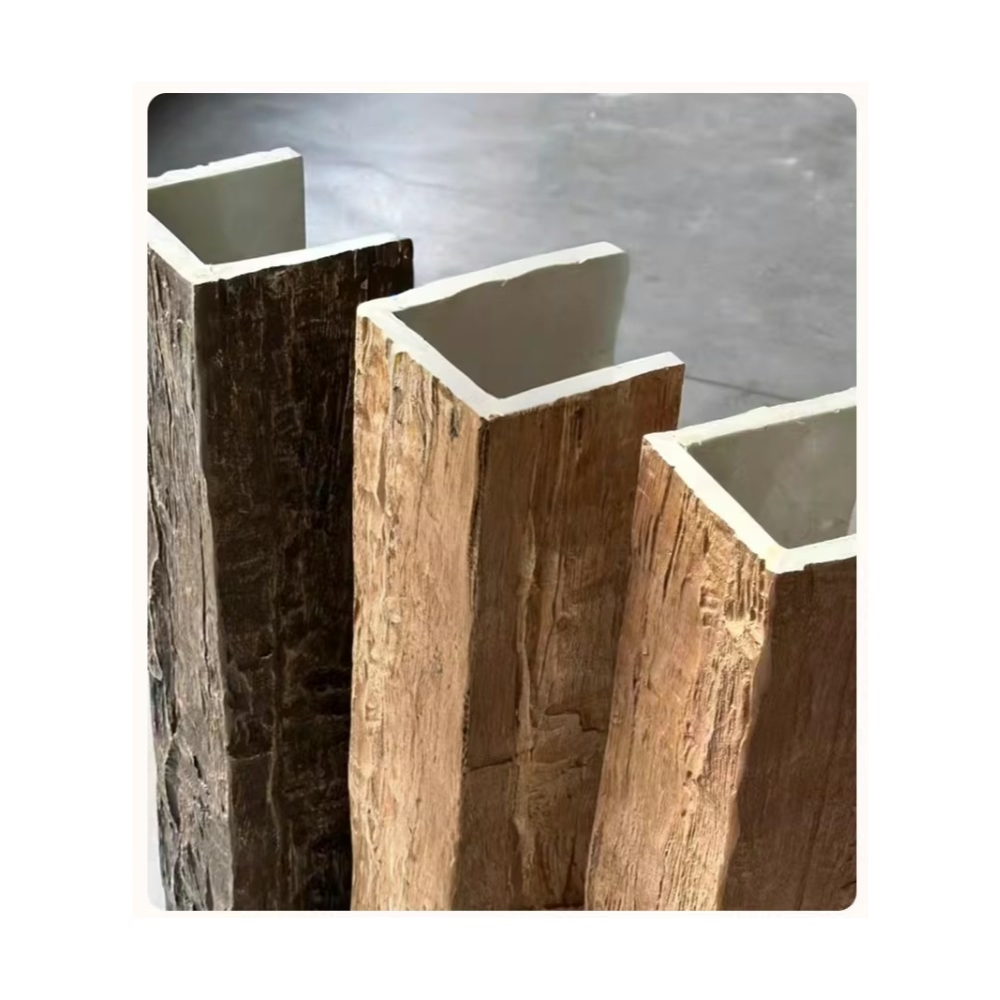
Thermal Performance Properties
Thermal conductivity ratings quantify heat transfer rates through polyurethane material, expressed in BTU-inch per hour-square foot-degree Fahrenheit or metric equivalents. Lower conductivity indicates better insulating properties. Ceiling beam applications benefit from low conductivity, reducing heat transfer between conditioned and unconditioned spaces.
Service temperature ranges define the minimum and maximum temperatures within which products maintain intended performance. Exceeding these limits causes dimensional changes, surface degradation, or property reductions. Exterior applications in extreme climates require careful verification of temperature range adequacy.
Thermal expansion coefficients describe dimensional change rates per degree of temperature change. This data enables calculation of expansion joint requirements for long beam runs. Installations spanning significant temperature variations need expansion provisions proportional to calculated movement.
Chemical Resistance Characteristics
Resistance to common chemicals ensures long-term durability when beams contact cleaning agents, construction chemicals, or environmental contaminants. Documentation should specify performance against acids, alkalis, solvents, and common household products. Bathroom and kitchen installations benefit from documented chemical resistance.
Moisture absorption rates indicate how polyurethane performs when exposed to water or high humidity. Low absorption rates prevent dimensional instability and biological growth that affect appearance and longevity. Exterior applications require particular attention to moisture-related properties.
UV resistance documentation addresses performance degradation from ultraviolet radiation exposure. Unprotected polyurethane may chalk, fade, or become brittle under sustained sun exposure. Exterior applications require UV-stabilized formulations with documented long-term exposure performance.
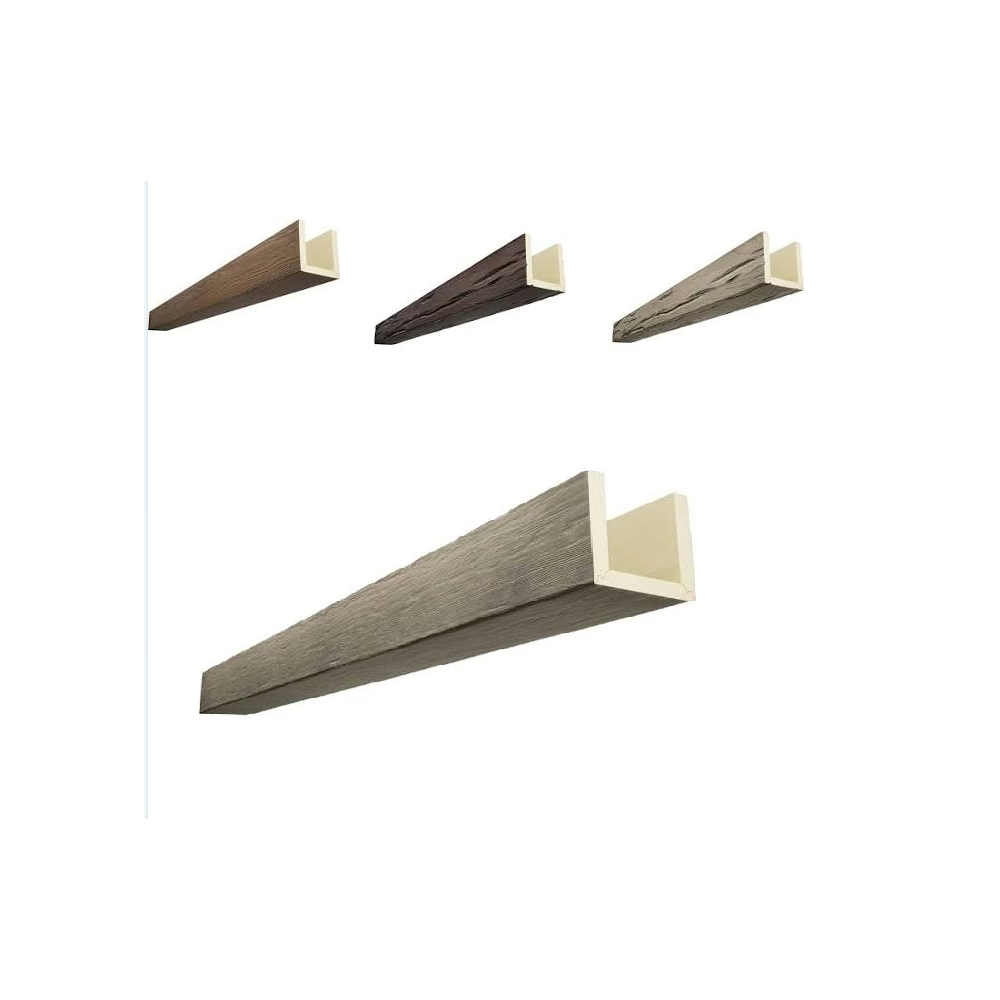
Environmental Compliance Certification
VOC (Volatile Organic Compound) emissions documentation demonstrates compliance with indoor air quality standards and low-emission material requirements. Green building certification programs such as LEED require documentation of VOC content for applied products. Testing according to CDPH/EHLB Standard Method produces emission factor data.
REACH compliance documentation confirms that products contain no substances restricted under European Union Registration, Evaluation, Authorization and Restriction of Chemicals regulations. Construction products exported to European markets must be supported by REACH compliance declarations from manufacturers and their supply chain.
RoHS (Restriction of Hazardous Substances) declarations address electronics sector requirements that have expanded into general product applications. While not universally required for decorative beams, RoHS documentation demonstrates environmental responsibility and may be required by certain customers or applications.
Document Authentication and Verification
Original document authentication prevents reliance on fraudulent or altered certifications. Digital verification methods including QR codes, document serial numbers, and online validation portals enable instant authentication. Direct verification with issuing laboratories provides highest confidence for critical applications.
Document retention policies should maintain certification records for building service life plus statutory retention periods. Building code compliance documentation may be reviewed during property transfer, insurance audits, or legal proceedings years after installation. Archived documents should remain accessible and readable throughout retention periods.
Third-party verification programs add credibility to manufacturer-provided documentation. ISO 9001 quality management system certification indicates systematic production controls. Laboratory accreditation to ISO 17025 standards confirms testing validity. Combined certifications provide layered assurance of documentation reliability.
Technical References
ASTM standards cited in every specification
Test Data
Lab results from internal testing program
Updated 2026
Reviewed against current product specs


