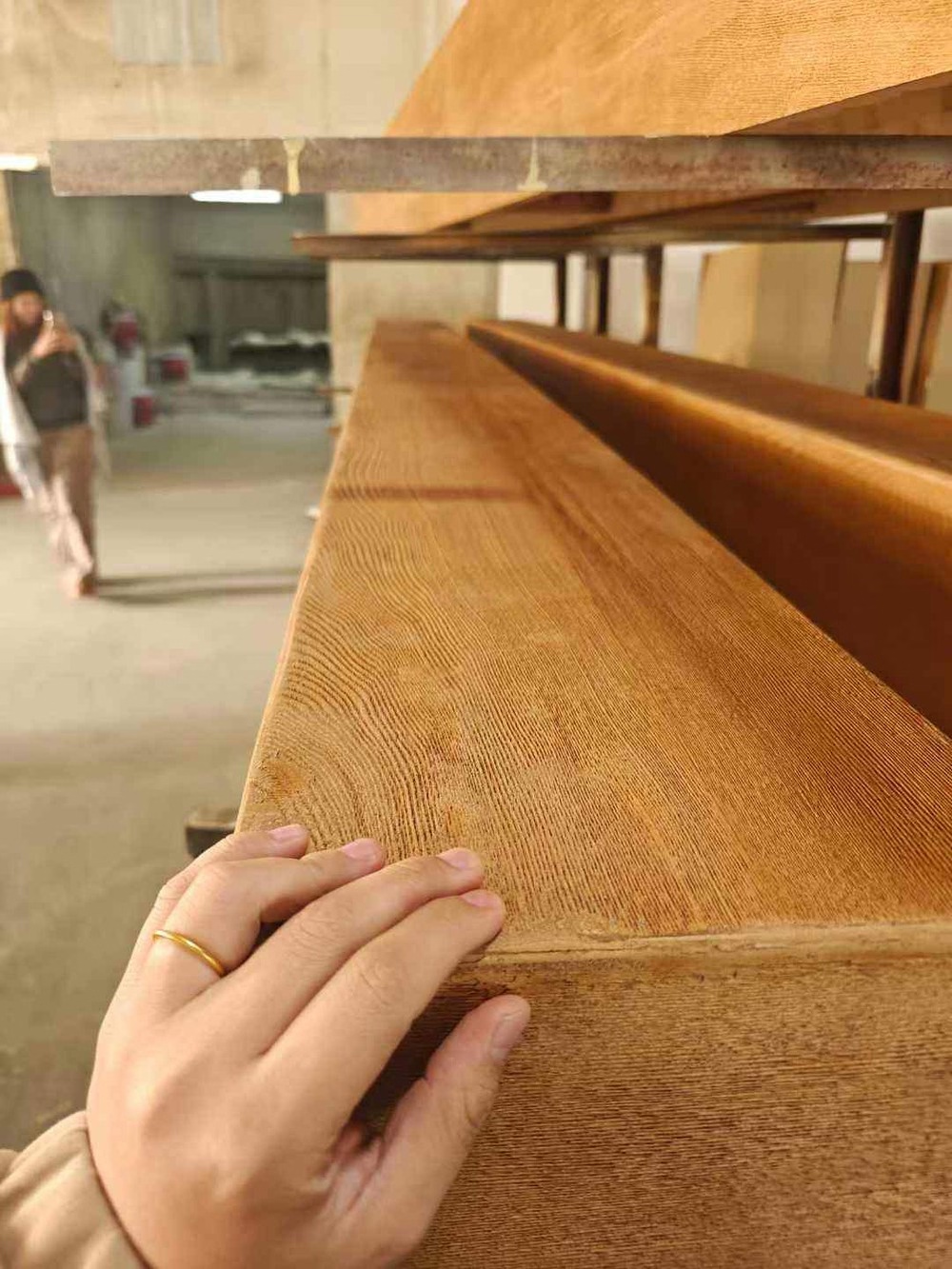
The appeal of timber in exterior applications remains powerful despite centuries of alternatives. Wood brings organic warmth, authentic texture, and architectural gravitas that manufactured materials often struggle to match. Yet the practical challenges of natural timber—rot susceptibility, insect vulnerability, moisture sensitivity, and ongoing maintenance demands—have driven innovation toward materials that capture wood's visual virtues while eliminating its performance limitations. Outdoor-grade weather-resistant faux timber beams represent the culmination of this evolutionary process, delivering authentic wood character with engineered performance that modern building practices demand.
The market for faux timber beams has expanded dramatically as quality has improved and awareness has spread among builders, designers, and homeowners. What once seemed an obvious compromise now represents a sophisticated material choice backed by advanced manufacturing and supported by substantial warranties. Understanding these products thoroughly helps decision-makers select appropriately and install successfully.
The manufacturing process that creates faux timber beams begins with master patterns derived from genuine timber samples. These patterns capture not only overall dimensions but surface textures, end grain characteristics, and natural variations that give real wood its distinctive appearance. Quality manufacturers employ skilled craftsmen to evaluate and refine these patterns, ensuring that produced beams achieve convincing authenticity.

Engineering Excellence in Material Formulation
Outdoor-grade formulations distinguish themselves through comprehensive resistance to environmental degradation mechanisms. Ultraviolet radiation, moisture exposure, temperature extremes, and biological threats all receive specific countermeasures through thoughtful material engineering. The result is a product that maintains appearance and structural integrity through decades of service.
The density of polyurethane beams affects both visual weight and performance characteristics. Higher-density formulations provide more substantial visual presence and better resistance to impact damage, but increase material weight and cost. Premium outdoor products typically balance these factors through densities in the 35-45 pound per cubic foot range, sufficient for convincing appearance while remaining light enough for practical installation.
Impact resistance becomes particularly important for exterior applications where accidental contact, landscaping activities, and weather events create potential for surface damage. Quality formulations incorporate impact modifiers that absorb and distribute contact forces without cracking or denting. This resilience distinguishes premium products from economy alternatives that fail catastrophically under modest impact.
Chemical resistance ensures that cleaning agents, landscaping chemicals, pool treatment products, and environmental pollutants don't degrade beam surfaces or compromise structural integrity. Outdoor installations inevitably encounter these substances, and material formulations must accommodate exposure without damage.
Applications Across Exterior Project Types
Residential exterior applications represent the largest market segment for outdoor-grade faux timber beams. Covered porches, patio ceilings, garage trims, and entry porticos all benefit from beam installations that add architectural character while tolerating environmental exposure. The variety of available sizes, profiles, and finishes ensures options suitable for homes ranging from cottage-style bungalows to contemporary masterpieces.
Commercial hospitality projects including hotels, restaurants, and resorts demand materials that withstand intensive use while projecting brand-appropriate aesthetics. Courtyards, outdoor dining areas, poolside structures, and public gathering spaces all accommodate faux timber beams that elevate environment quality while tolerating the challenging conditions commercial applications create.
Agricultural and rural applications particularly benefit from faux timber's insect resistance. Farms, ranches, and equestrian facilities that struggle with termite pressure find polyurethane alternatives eliminate costly treatments and structural remediation. The barn, stable, and outbuilding applications that previously required pressure-treated lumber or exotic hardwoods now utilize more affordable and attractive faux alternatives.
Educational and civic facilities appreciate the combination of aesthetic appeal and maintenance reduction that faux timber provides. School campuses, municipal buildings, and community centers often operate with limited maintenance budgets, making the elimination of regular staining and sealing requirements particularly valuable. The initial investment in quality faux timber pays dividends through reduced maintenance labor and material costs over facility lifecycles.
Design Considerations for Exterior Success
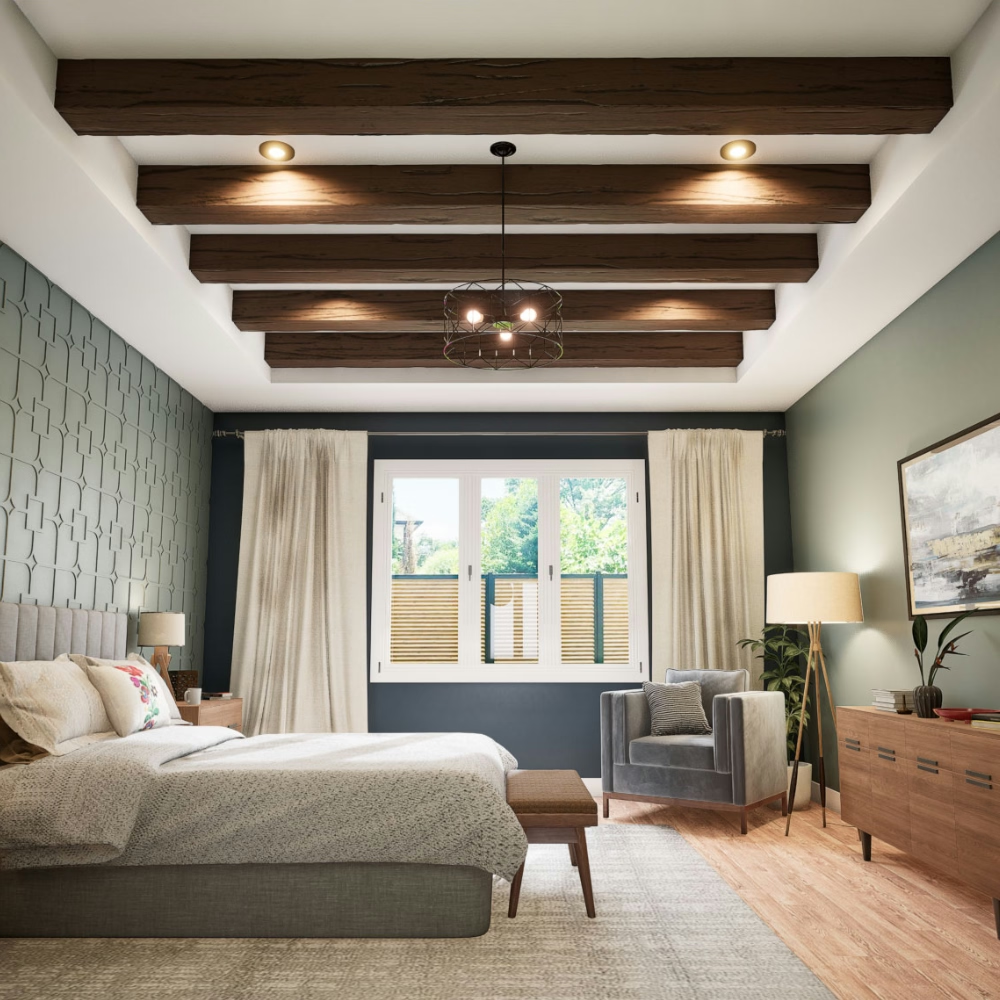
Scale selection requires balancing visual presence against proportional appropriateness for specific installations. Oversized beams create dramatic impact but may overwhelm smaller structures or appear cartoonish when dimensions exceed architectural context. Undersized beams lack the visual weight necessary for authentic timber appearance. Careful dimension selection ensures installations achieve intended design effects.
Finish selection influences both immediate appearance and long-term maintenance requirements. Darker stains and finishes absorb more heat, potentially accelerating surface degradation in sunny climates. Lighter finishes reflect heat but may show environmental soiling more readily. Matching finishes to climate conditions and maintenance capabilities produces more satisfying long-term outcomes.
Profile complexity affects both manufacturing cost and visual authenticity. Simple rectangular beams offer clean modern aesthetics but may appear too precise compared to natural timber variations. Complex profiles with pronounced grain texture and irregular surfaces achieve convincing authenticity but cost more to produce. Balancing these factors against project budgets and design objectives guides appropriate selection.
The relationship between beams and adjacent building elements deserves thoughtful design attention. Fascia boards, trim elements, and soffit materials should coordinate with beam finishes and architectural style. Disconnected or conflicting design elements undermine the cohesive appearance that successful installations achieve.
Installation Best Practices
Structural support requirements depend on whether beams serve purely decorative functions or bear actual loads. Decorative installations can mount directly to existing surfaces using appropriate brackets and fasteners, while load-bearing applications require engineering analysis and proper structural connection to building framing.
Fastener selection influences both installation security and finished appearance. Exposed fasteners detract from authentic timber appearance, while concealed mounting systems create cleaner installations. Quality manufacturers often provide matching mounting hardware designed for specific beam profiles, simplifying secure attachment while maintaining visual appeal.
Joint treatment between beam segments determines whether installations appear continuous or obviously assembled from components. Mitered corners, butt joints with grain matching, and proper alignment all contribute to professional appearance. Attention to these details separates quality installations from amateur execution.
Sealing and waterproofing at beam-wall intersections prevents moisture infiltration that could affect building materials or create staining on beam surfaces. Quality exterior-grade sealants maintain flexibility through temperature extremes while preventing water penetration at these vulnerable transitions.
Economic Analysis and Value Proposition
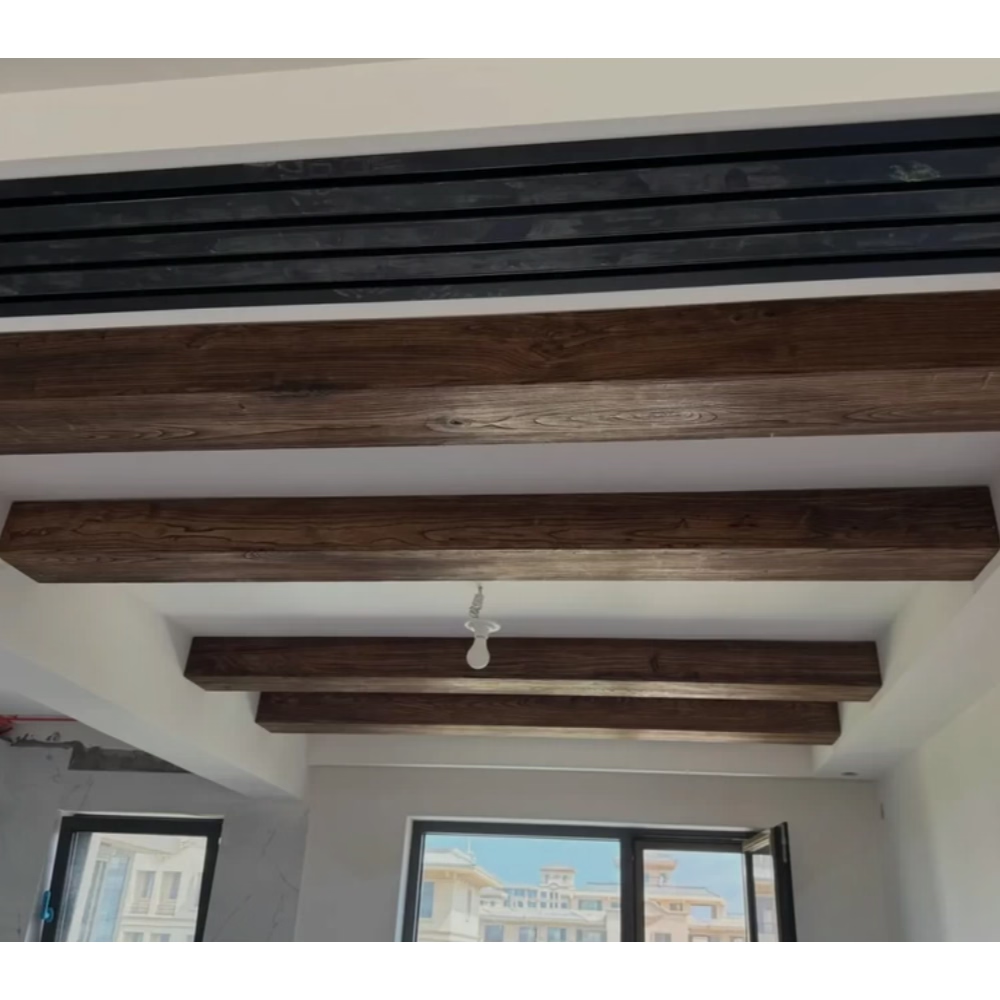
Initial material costs for quality faux timber beams exceed dimensional lumber alternatives but often fall below premium hardwood or specialty timber species. The comparison point matters significantly—evaluating faux beams against expensive exotic timbers may reveal favorable economics rather than premium pricing.
Lifecycle cost analysis reveals substantial advantages for faux timber over natural wood alternatives. The avoided costs of regular staining, sealing, repair, and eventual replacement translate to significant savings over beam service life. For commercial applications with high maintenance labor costs, these savings can justify higher initial investments.
Warranty coverage and manufacturer support vary considerably between products. Premium products backed by extended warranties provide risk mitigation that supports higher initial pricing. Understanding warranty terms and manufacturer reliability helps evaluate whether apparent savings from economy products justify the performance risks.
The environmental dimension of material selection involves tradeoffs worth considering. Natural timber represents a renewable resource when harvested responsibly, though transportation impacts and treatment chemical requirements affect overall environmental profile. Polyurethane production involves petroleum-derived raw materials but creates products with extended service life and recycling potential. Neither choice offers clear environmental superiority; project priorities and values should guide these decisions.
Outdoor-grade weather-resistant faux timber beams have earned their place in contemporary exterior design through proven performance and aesthetic achievement. When quality products receive appropriate specification and professional installation, they deliver lasting satisfaction while eliminating the maintenance burden that has historically accompanied timber in exterior applications.
Technical References
ASTM standards cited in every specification
Test Data
Lab results from internal testing program
Updated 2026
Reviewed against current product specs