The versatility of paintable polyurethane resin beams extends design possibilities far beyond what standard finish offerings provide. When projects demand specific colors that manufacturers cannot anticipate or supply, paintable formulations enable on-site finishing that achieves exact color matching while maintaining the performance advantages that polyurethane construction provides. This capability transforms beams from predetermined appearance products into flexible design elements that serve any creative vision.
Resin-based polyurethane formulations offer particular advantages for finishing applications. The consistent surface quality, uniform density, and controlled porosity that quality resin products provide ensure predictable finish response across all beam surfaces. This consistency eliminates the variables that affect natural wood finishing, where density variations, grain patterns, and natural defects create uneven appearance.
Architects and designers increasingly specify paintable products to maintain control over final appearance throughout project timelines. Late finish selection, client-requested changes, and coordination with materials not finalized during beam procurement all become manageable when beams can be finished after installation rather than requiring advance specification.
The technical characteristics of quality paintable resin beams support professional finishing results. Understanding these characteristics helps ensure that finishing processes achieve intended outcomes without the frustration of adhesion failures or appearance inconsistencies.

Surface Characteristics for Quality Finishing
Density uniformity throughout beam cross-sections ensures consistent finish absorption and appearance. Quality resin formulations provide homogeneous density without the density gradients that affect lower-quality products. This uniformity translates to even color distribution across all surfaces.
Surface smoothness suitable for finishing distinguishes paintable products from textured alternatives. While some applications benefit from heavy texture, color-matched finishes generally work best on relatively smooth surfaces that apply evenly without pooling in texture depressions.
Porosity balance provides enough surface character for mechanical adhesion without excessive absorption that causes uneven color. Quality paintable formulations achieve this balance through controlled cell structure that accepts finishes predictably.
Edge quality ensures that beam edges present surfaces suitable for finishing without chipping, tearing, or delamination. Quality manufacturing produces clean edges that maintain integrity through handling, installation, and finishing processes.
Finishing System Selection
Primer selection significantly affects final finish quality and durability. Premium acrylic latex primers designed for difficult surfaces provide excellent adhesion while remaining flexible enough to accommodate minor substrate movement. Shellac-based primers offer superior adhesion in challenging conditions but may require additional attention for appearance consistency.
Paint type selection depends on application environment and performance requirements. Acrylic latex paints provide excellent durability and color retention for most interior applications. Alkyd paints offer superior adhesion on challenging surfaces but require longer drying times and more careful application. Urethane paints provide maximum durability for high-traffic or demanding applications.
Stain application on polyurethane differs from natural wood application due to different surface characteristics. Gel stains perform reliably on resin surfaces, providing color buildup control and even appearance. Multiple thin coats achieve more controlled results than single heavy applications.
Topcoat selection adds durability and cleanability to finished surfaces. Clear topcoats protect colored finishes from wear and cleaning damage while maintaining intended appearance. Water-based topcoats yellow less than oil-based alternatives, maintaining color fidelity over time.
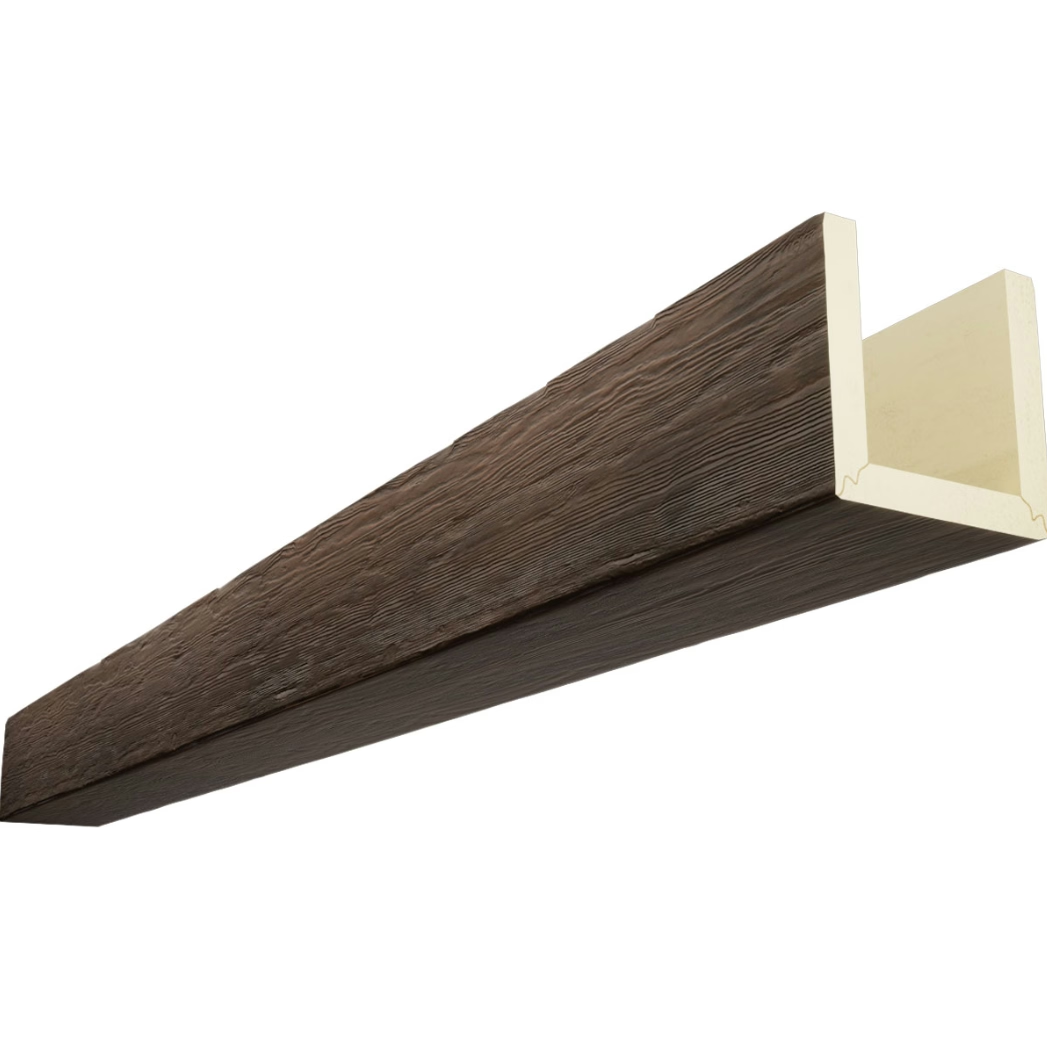
Application Techniques for Professional Results
Spray application provides the most uniform finish coverage, particularly for beams with complex profiles or textured surfaces. Airless spray equipment delivers consistent film thickness across varied surfaces. HVLP systems offer more controlled application with less overspray.
Roller application with appropriate nap rollers works well for larger flat surfaces. The nap texture may create slight stippling that adds character or requires back-rolling for smoother appearance. Roller application suits projects without spray equipment access.
Brush application introduces visible texture that may be desirable for rustic aesthetics or problematic for smooth finishes. Quality brushes with appropriate bristle types minimize brush mark visibility while providing reasonable application speed.
Back-brushing or tipping techniques smooth application marks while maintaining reasonable application efficiency. These techniques require some skill but produce superior results compared to single-pass application.
Quality Control During Finishing
Sample testing on beam scraps or inconspicuous areas verifies finish appearance and adhesion before full application. This testing identifies any compatibility issues before substantial work begins.
Coverage verification ensures that all surfaces receive adequate film thickness without excessive buildup. Inadequate coverage produces poor appearance and reduced durability; excessive buildup may cause sagging, wrinkling, or extended drying problems.
Drying time respect between coats ensures proper cure without surface damage from premature handling. Premature recoating or handling creates adhesion problems, surface damage, or appearance inconsistencies.
Final inspection under appropriate lighting identifies any areas requiring touch-up or correction. Identifying issues before project completion prevents post-completion remediation that may be difficult to accomplish without visible repair evidence.
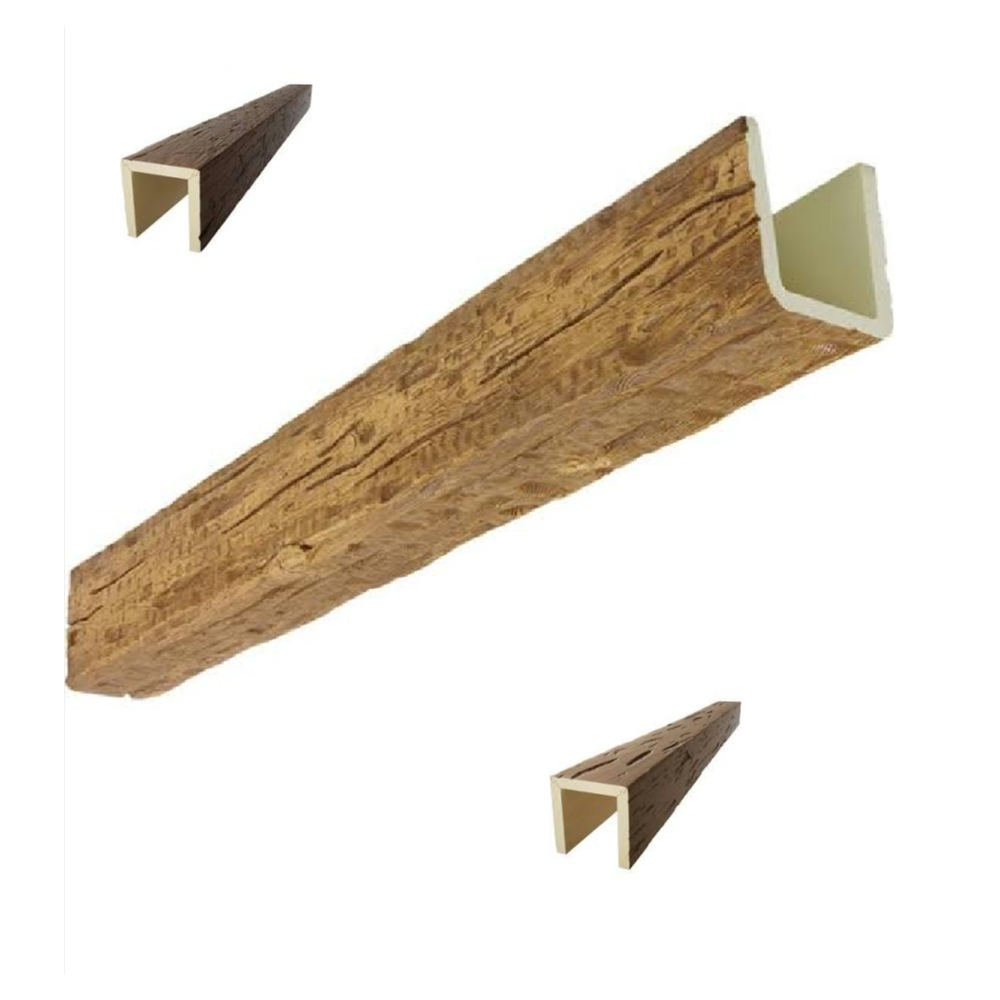
Long-Term Finish Performance
UV resistance matters for installations near windows or in spaces with significant sunlight exposure. Some colors and finish types degrade faster than others under UV exposure; appropriate selection for exposure conditions ensures lasting satisfaction.
Cleanability considerations affect maintenance requirements for finished surfaces. Higher sheen finishes clean more easily but show surface imperfections more readily; lower sheen finishes hide imperfections better but may require more aggressive cleaning that affects finish appearance.
Touch-up capability ensures that future repairs can match original finishes. Documentation of products used, application conditions, and color formulations enables future matching when repairs become necessary.
Aging characteristics should inform initial finish selection. Some colors and finishes age more gracefully than others; understanding aging behavior prevents future disappointment when finishes change appearance over years of service.
Paintable PU resin faux timber beams provide the finishing flexibility that demanding projects require. The capability to achieve precise color matching while maintaining quality surface characteristics enables design visions that preset finish limitations would prevent. When paired with appropriate finishing materials and techniques, these beams deliver lasting satisfaction across diverse applications and aesthetic requirements.
Technical References
ASTM standards cited in every specification
Test Data
Lab results from internal testing program
Updated 2026
Reviewed against current product specs


