Architectural specifications frequently demand custom finishes that transcend standard product offerings. Interior designers, architects, and design-build contractors require materials that accept site-applied finishes matching specific project color requirements, coordinating palettes, or unique aesthetic visions that mass-produced products cannot accommodate. Paintable and stainable high-density polyurethane faux wood beams address these demanding requirements, providing premium surface quality that accepts custom finishing with reliable, consistent results.
The distinction between paintable and non-paintable polyurethane products involves formulation differences that affect surface adhesion and finish durability. Standard polyurethane often incorporates release agents or surface treatments that resist paint adhesion; paintable formulations eliminate these barriers, creating surfaces that primers and finishes grip securely. This formulation difference makes paintable products essential for projects requiring custom finishing.
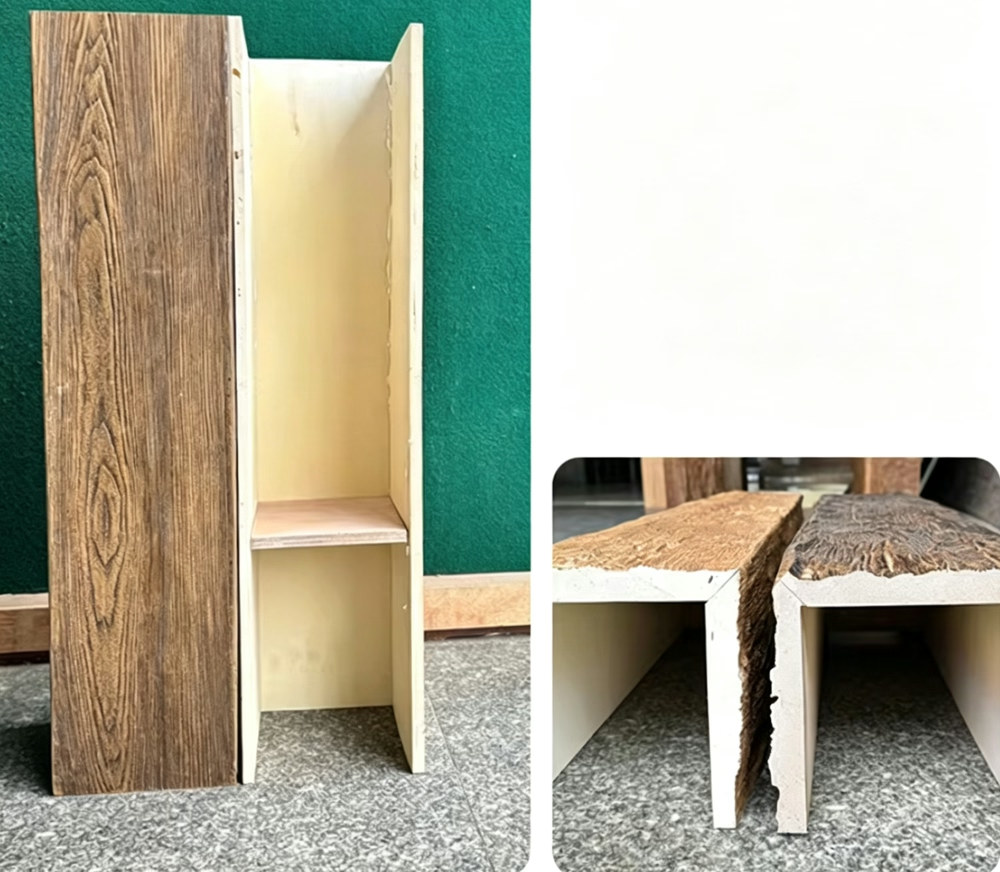
High-density formulations provide the solid, consistent surfaces that quality finishing demands. Lower-density products may include cellular cores with surface skins that respond differently to finishing than solid materials, producing uneven appearance or compromised adhesion. The density premium in paintable products ensures surface consistency that supports professional finishing results.

Surface Quality Requirements for Finishing
Porosity characteristics influence how finishes penetrate and adhere to beam surfaces. Ideal surfaces provide enough texture for mechanical bonding while maintaining sufficient smoothness for even finish distribution. High-density polyurethane offers balanced porosity that accepts various finish types without excessive absorption or poor adhesion.
Surface cleanliness affects finish adhesion significantly. Manufacturing residues, dust accumulation, and handling contamination all compromise primer and paint performance. Quality paintable beams ship in protective packaging that prevents contamination; site storage should maintain this cleanliness until finishing occurs.
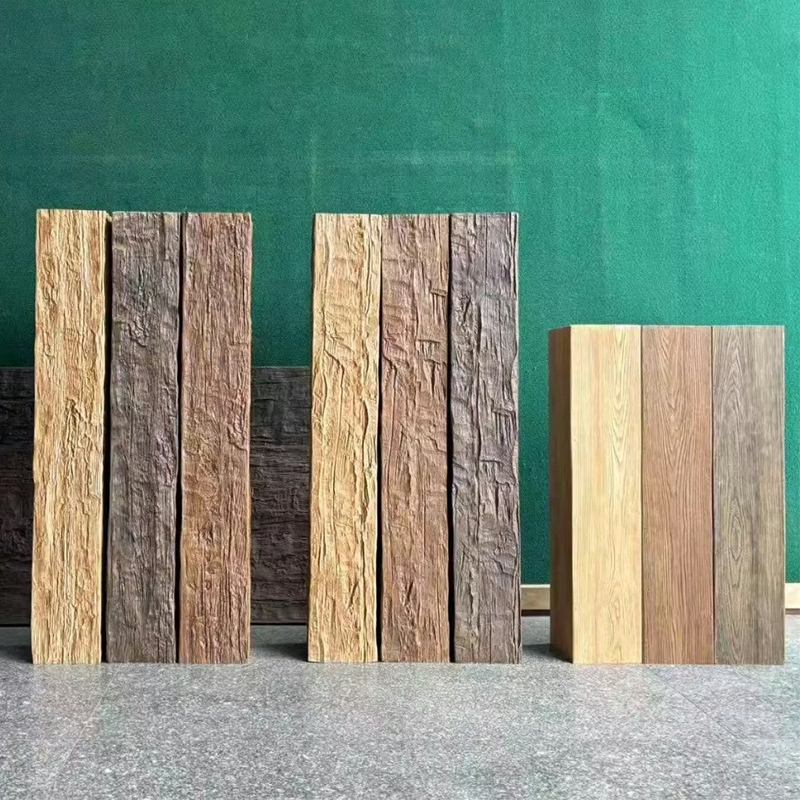
Texture consistency across beam surfaces ensures uniform finish appearance. Variations in surface texture create visible differences in finish appearance once applied. Quality manufacturing produces consistent texture throughout beam lengths and across multiple beams in the same product line.
Edge and end grain surfaces require attention during finishing to ensure complete coverage and consistent appearance. These surfaces often accept finishes differently than face surfaces; appropriate priming and attention to coverage ensures uniform results.
Finishing Techniques and Recommendations
Priming establishes the foundation for successful paint or stain application. Premium acrylic latex primers provide excellent adhesion to polyurethane surfaces while accommodating minor surface variations. Shellac-based primers offer superior adhesion in challenging conditions but may require additional attention for uniform appearance.
Paint application methods affect both finish appearance and durability. Spraying provides the most uniform coverage, particularly for larger beam installations. Roller application with appropriate nap height works well for textured surfaces. Brush application introduces visible marks that may be desirable or problematic depending on aesthetic intentions.
Stain application on polyurethane differs from natural wood staining due to different absorption characteristics. Gel stains perform reliably on polyurethane, providing color without the blotching that penetrating stains sometimes create. Multiple thin coats achieve more controlled results than single heavy applications.
Sealant and topcoat application protects finished surfaces from environmental exposure and mechanical wear. Exterior applications require UV-resistant sealants that prevent finish degradation. Interior applications benefit from protective coatings that facilitate cleaning and maintain appearance.
Project Applications for Custom Finishing
Design-build projects frequently specify paintable beams because finish requirements cannot be finalized until later project phases. Paintable products accommodate these delayed specifications without requiring extensive product modifications or special orders. The flexibility supports compressed project schedules that don't accommodate extended lead times for custom-finished products.
Historical restoration projects benefit from paintable beams that can match original trim colors without requiring product matching services. The ability to finish beams on-site ensures precise color coordination with existing architectural elements that may have shifted in color over decades of aging.
Color-matching to cabinetry, built-ins, or other fixed elements ensures cohesive appearance throughout finished spaces. Site finishing enables exact matching that pre-finished products cannot achieve, particularly when coordinating with materials that vary naturally or were supplied from different sources.
Branded environments require specific color compliance that generic products cannot provide. Hospitality brands, corporate offices, and retail environments often maintain strict color standards that paintable beams can meet precisely.
Technical Considerations for Professional Results
Temperature and humidity conditions during finishing affect cure times and final appearance. Moderate temperatures between 60-80°F with moderate humidity provide optimal conditions for most finishing products. Extreme conditions require adjusted schedules and potentially specialized finishing products designed for challenging environments.
Ventilation requirements ensure adequate air circulation for proper finish curing while protecting applicators from fumes. Finished spaces should be ventilated throughout cure periods, with appropriate respiratory protection for applicators working in enclosed areas.
Drying and cure times between finish coats vary based on product formulation, environmental conditions, and film thickness. Rushing these intervals compromises final appearance and durability; appropriate scheduling ensures proper results.
Maintenance considerations for finished beams depend on finish type and application environment. Exterior applications require more frequent maintenance than interior installations. Understanding maintenance requirements helps set appropriate expectations for finished appearance over time.
Quality Assurance for Specification Compliance
Finish testing on sample beams before full project application identifies potential issues before substantial work begins. This testing verifies adhesion, color matching, and appearance outcomes without risking complete project finishes based on untested assumptions.
Specification documentation ensures that finish requirements are clearly communicated and consistently applied. Written specifications covering product preparation, priming, finish application, and acceptance criteria provide reference points for quality verification.
Acceptance criteria establishment before finishing begins prevents disputes about finished appearance. Visual standards, color targets, and durability requirements should be defined and agreed upon before application begins.
Documentation of finishing processes—including products used, application conditions, and cure times—provides valuable reference for future maintenance and repair. This information ensures that future touch-up or refinishing matches original work.
The capability to achieve precise custom finishes elevates polyurethane faux wood beams from decorative alternatives to specification-grade architectural products. Paintable and stainable high-density formulations meet the demanding requirements that design professionals specify, enabling project visions that depend on exact color and finish coordination. When paired with appropriate finishing techniques and quality materials, these beams deliver results that satisfy the most exacting project requirements.
Technical References
ASTM standards cited in every specification
Test Data
Lab results from internal testing program
Updated 2026
Reviewed against current product specs


