
When planning a ceiling beam installation project, whether for a residential living room makeover or a commercial hospitality space renovation, understanding the actual cost per foot for polyurethane faux wood beams requires examining multiple pricing layers. Most buyers focus solely on the quoted per-foot price, but the true project cost incorporates shipping, mounting hardware, finishing materials, and potential labor expenses. This comprehensive breakdown helps procurement managers, interior designers, and DIY homeowners make informed purchasing decisions that align with their budget constraints and quality expectations.
The foundational price tier for polyurethane faux wood beams starts at the material composition level. Entry-level PU beams manufactured with standard-density foam typically fall in the $3 to $6 per linear foot range for stock sizes between 4 and 6 inches in width. These products work adequately for accent applications where the beams serve primarily visual purposes rather than structural considerations. Mid-range offerings with enhanced density and more sophisticated wood-grain texturing generally command $8 to $15 per linear foot, with the price variation reflecting differences in cell structure, surface detail accuracy, and color saturation during the molding process. Premium architectural-grade polyurethane beams that closely mimic rare hardwood species or feature hand-painted finishing techniques can reach $18 to $35 per linear foot, positioning them as alternatives to reclaimed barn wood or exotic lumber beams.
Density Specifications and Their Impact on Unit Pricing
High-density polyurethane foam formulations directly influence both product performance and manufacturing costs. The foam expansion process during production requires precise chemical ratios, and higher density results demand additional raw material inputs. A beam measuring 6 inches wide by 8 inches deep by 12 feet long constructed from standard 4-pound-per-cubic-foot density foam might weigh approximately 8 pounds total, whereas an identical dimensional beam produced with 6-pound-density foam could weigh 12 pounds or more. This weight difference translates to roughly 25 to 40 percent higher material costs, which manufacturers pass through to buyers.
The performance advantages of increased density extend beyond mere weight considerations. Higher-density polyurethane resists denting from accidental impacts, maintains sharper architectural details over decades of service, and provides more authentic acoustic dampening properties compared to lower-density alternatives. For commercial applications in restaurants, hotels, or retail environments where beams face elevated handling and environmental stress, the premium for high-density construction often proves economical when calculated against replacement and maintenance expenses over the product lifecycle.
Dimensional Variations Affecting Per-Foot Calculations
Standard stock beam profiles come in predictable width increments—4, 6, 8, 10, and 12 inches being the most commercially available sizes—but custom dimensions frequently require special production runs that substantially increase per-unit pricing. A contractor ordering 200 linear feet of 6-inch-wide stock beams benefits from economies of scale inherent in mass production, while the same quantity of 7-inch-wide custom-molded beams may cost 40 to 60 percent more per foot due to setup costs amortized across a smaller production run.
Depth specifications create similar pricing gradients. Beams marketed as "4x6" or "6x8" dimensions typically list the face width first, followed by the depth measurement. A 4-inch-wide by 6-inch-deep beam represents the smallest practical profile for visible ceiling applications, while architectural statements in grand foyers or great rooms often utilize 10-inch-wide by 12-inch-deep beams that require substantially more raw material. The mathematical relationship between dimensional increases and price is not strictly linear—doubling both width and depth quadruples the foam volume, but per-foot pricing typically increases only 150 to 200 percent due to fixed production overhead.
Profile Style Complexity and Mold Development Expenses
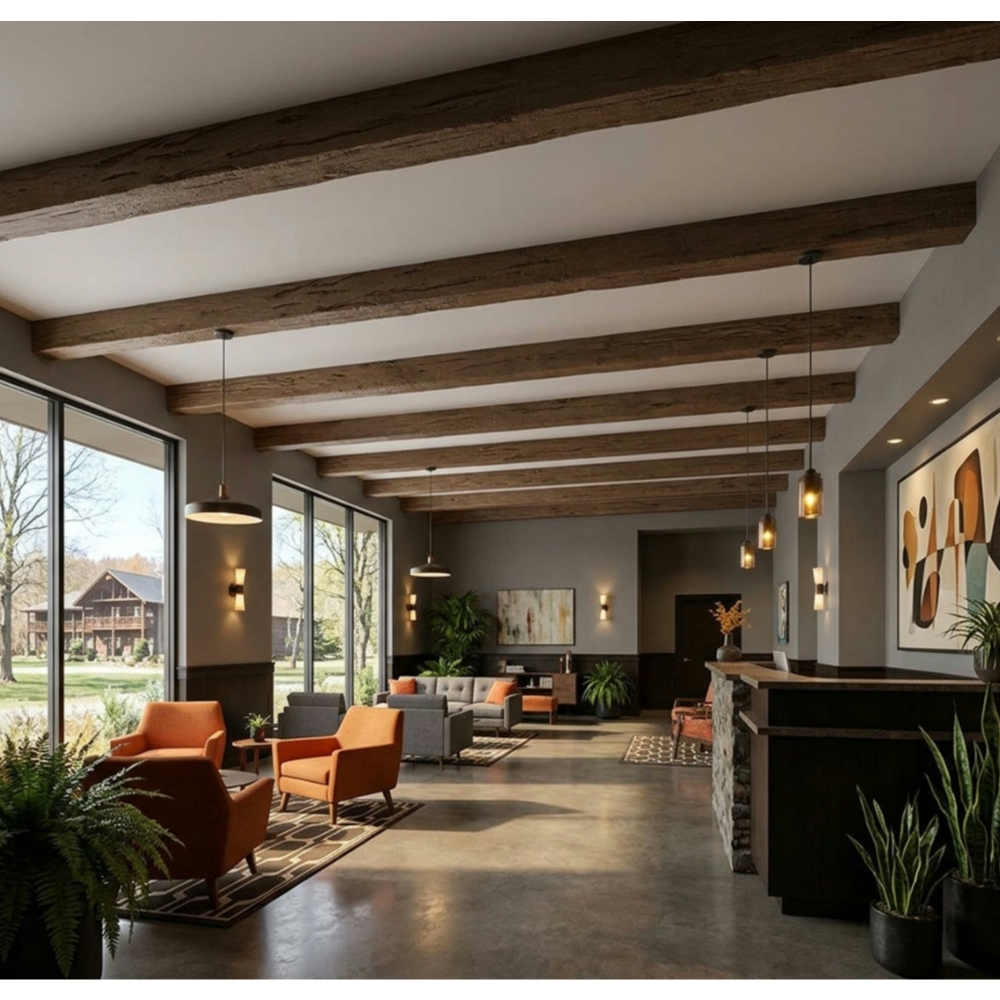
The visual profile of a faux wood beam—whether simple square-edged, authentically weathered, or intricately hand-carved—significantly influences manufacturing complexity and final pricing. Basic structural beams with clean lines and minimal texturing require simpler mold tooling and shorter production cycles, keeping per-foot costs manageable for budget-conscious projects. Conversely, beams designed to replicate century-old reclaimed lumber with saw blade marks, nail holes, and natural checking patterns require sophisticated multi-stage molding processes and sometimes manual finishing work.
Manufacturers invest substantially in custom mold development for unique beam profiles, with tooling costs potentially ranging from $2,000 for simple modifications to $15,000 or more for entirely new intricate designs. These expenses distribute across production volumes, meaning buyers ordering beams in quantities exceeding 500 linear feet might see minimal premium increases for complex profiles, while small-quantity purchasers absorb proportionally higher tooling amortization charges. When evaluating quotes for custom-profiled beams, requesting itemized breakdowns separating material, labor, and tooling costs provides transparency into whether a seemingly high per-foot price reflects genuine production complexity or excessive profit margins.
Installation Hardware and Accessory Expenses
Completing an accurate budget projection requires accounting for mounting systems, connecting hardware, and finishing materials beyond the beam unit price itself. Hanging steel rods, decorative brackets, mounting plates, and wood screws typically add $2 to $8 per linear foot depending on beam weight and installation method. Faux beam installation kits sold as bundled packages often represent better value than purchasing components separately, though the quality and load rating of included hardware warrants careful review before assuming apparent savings are genuine.
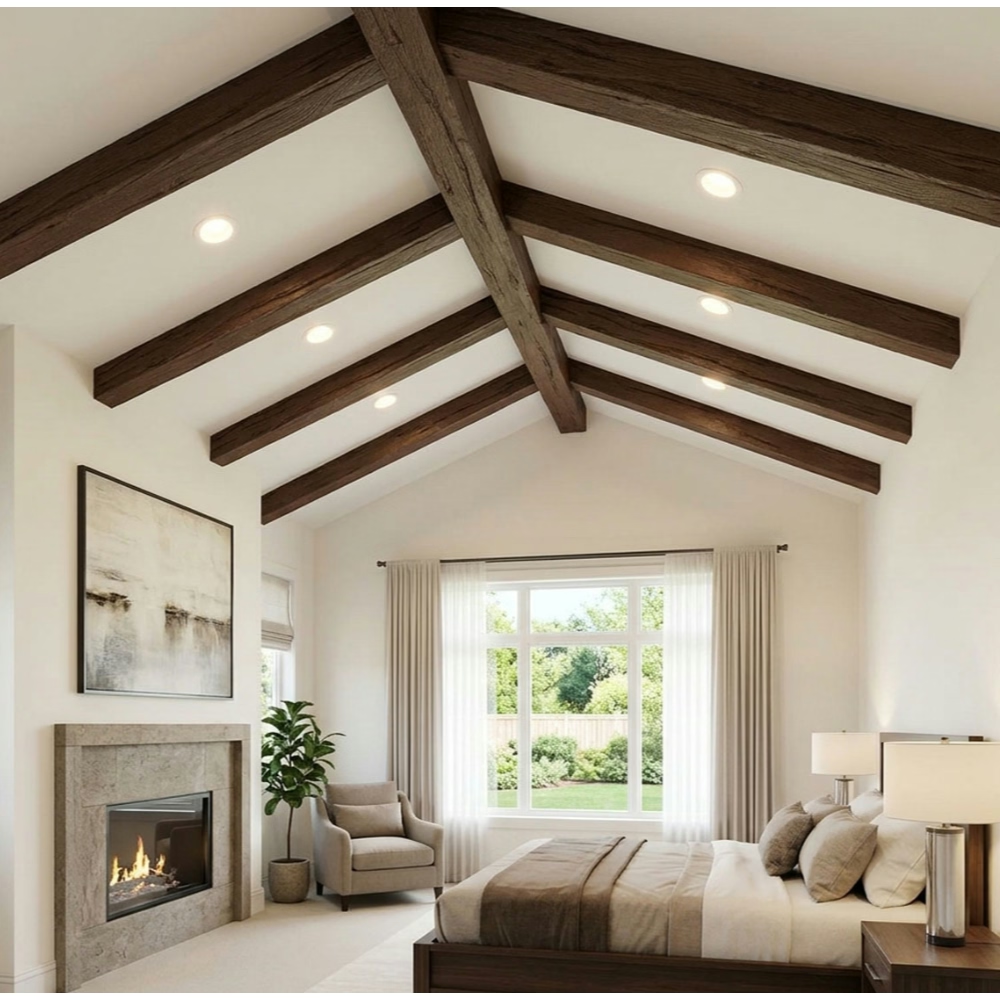
For beams requiring painting or staining to match existing décor, budget an additional $0.50 to $2 per linear foot for quality primers, paints, or gel stains plus application supplies. Some polyurethane beams arrive pre-finished from the manufacturer withUV-resistant coatings that eliminate on-site finishing requirements, potentially offsetting higher initial purchase prices through reduced labor hours. When comparing pre-finished versus raw beams, calculate the total installed cost rather than simply comparing base prices to determine actual value.

Shipping Logistics and Order Quantity Optimization
Transportation expenses constitute a frequently overlooked component of faux wood beam procurement, particularly for projects requiring beams longer than 8 feet. Standard shipping carriers often impose oversize surcharges for packages exceeding 8 feet in length, while beams 12 feet or longer may require freight shipping with significantly different rate structures. A typical 200-linear-foot residential order might incur $150 to $400 in shipping charges, whereas identical quantities shipped to commercial job sites accessible by freight trucks could cost only $75 to $150.
Strategic order consolidation reduces per-unit shipping costs substantially. Combining multiple project requirements into single shipments, scheduling installations to align with manufacturer production cycles, or negotiating freight contracts for recurring orders all contribute to lowering logistics expenses. Some suppliers offer free or reduced shipping for orders exceeding specific thresholds—commonly 500 or 1,000 linear feet—which can transform otherwise marginal purchases into compelling deals when the shipping savings exceed inventory carrying costs.
Volume Discount Structures and Negotiation Leverage
Most polyurethane beam manufacturers and distributors publish tiered pricing schedules that reward larger orders with progressively lower per-foot costs. The discount percentages vary by supplier, but common structures offer 5 to 10 percent reductions for orders exceeding 100 linear feet, 12 to 18 percent for 500-linear-foot quantities, and 20 to 30 percent for bulk orders above 1,000 linear feet. These tier breaks represent general guidelines rather than rigid pricing floors—experienced buyers understand that quoted prices often include negotiation room, particularly for first-time customers establishing ongoing procurement relationships.
Establishing vendor partnerships for multi-phase construction projects or property management companies maintaining multiple properties creates sustained ordering volumes that justify preferential pricing treatment. Requesting quotes from three to five suppliers for identical specifications provides leverage during negotiations and reveals market price ranges that illuminate whether any particular offer represents genuine value. When receiving quotes significantly below market averages, investigate whether the low price reflects genuine manufacturing efficiencies, desperate inventory liquidation, or compromised quality standards that will create problems during installation or service life.
Total Cost of Ownership Beyond Initial Purchase
Evaluating faux wood beam investments through a total cost of ownership lens reveals that the lowest initial price frequently proves more expensive over time. Cheaper polyurethane formulations may yellow prematurely under UV exposure, requiring earlier replacement. Inferior surface treatments chip or scratch during installation, necessitating touch-up work or acceptance of cosmetic deficiencies. Poorly designed mounting systems fail catastrophically, creating safety hazards and requiring emergency repairs.
High-quality premium polyurethane beams installed correctly typically maintain their appearance for 20 to 30 years in interior applications with minimal maintenance beyond occasional dusting or gentle cleaning. This service life compares favorably with real wood beams that require periodic refinishing, insect treatment, and moisture damage repairs. When calculating per-foot costs across the product lifecycle, a $25-per-foot premium beam serving reliably for 25 years costs $1 per foot annually, potentially matching or beating the true cost of cheaper alternatives requiring earlier replacement or extensive maintenance.
Technical References
ASTM standards cited in every specification
Test Data
Lab results from internal testing program
Updated 2026
Reviewed against current product specs


