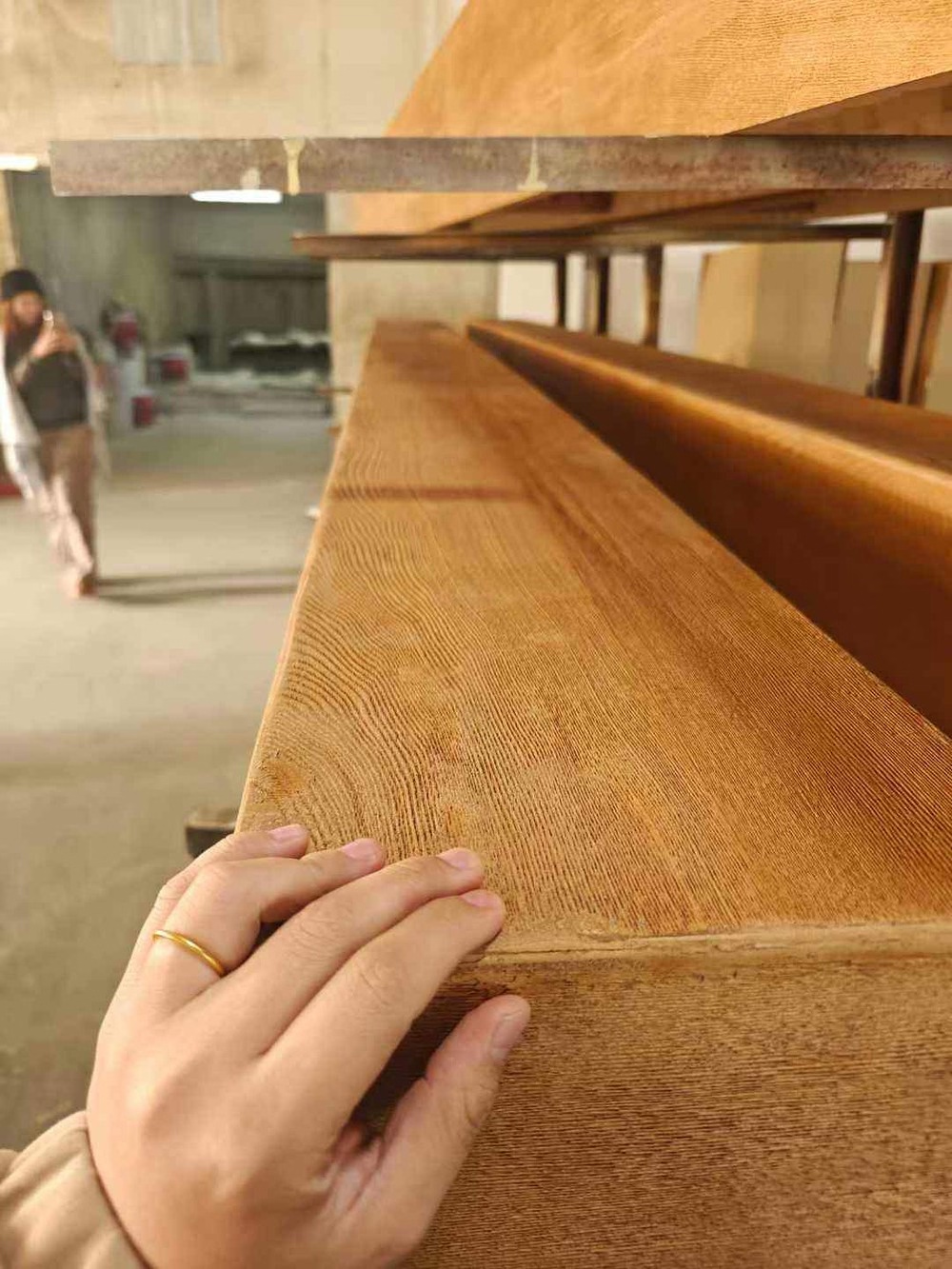
The faux wood beam market encompasses multiple foam material technologies, with polyurethane and expanded polystyrene (EPS) representing the two most commonly available options for residential and commercial ceiling applications. While both materials achieve similar visual outcomes—lightweight beams that reproduce wood aesthetics without solid timber weight and cost—fundamental chemical and physical differences create distinct performance characteristics that significantly affect installation success, long-term appearance, and value realization. Understanding these material differences prevents costly purchasing mistakes when assumptions based on surface appearance lead to selection of inappropriate products.
Polyurethane and EPS serve genuinely different application requirements despite superficial similarity as "foam" materials. Attempting to use EPS beams in applications designed for polyurethane—or vice versa—typically results in disappointment as material limitations constrain performance below expectations. Successful projects match material selection to application requirements, considering not just initial appearance but the full lifecycle performance that different foam chemistries deliver.
Fundamental Chemical Differences
Polyurethane results from the chemical reaction between polyol and isocyanate compounds that polymerize into a thermosetting material—once formed through the expansion and curing process, polyurethane cannot be melted or reshaped by heat. This thermoset character provides thermal stability and resistance to softening that EPS lacks. The chemical structure also accepts a wider range of additives including UV stabilizers, fire retardants, and impact modifiers that enhance specific performance characteristics.
EPS forms through the expansion of polystyrene beads containing pentane blowing agent, creating the familiar white bead-board material. The resulting structure consists of numerous fused beads rather than a continuous polymer matrix, with the individual bead boundaries remaining visible even in finished products. EPS is a thermoplastic material that softens when heated and can melt under sufficiently high temperature exposure. This fundamental material difference affects both manufacturing possibilities and end-use performance capabilities.
The density range achievable differs significantly between materials. Polyurethane spans roughly 2 to 8 pounds per cubic foot in commercial beam products, with consistent quality across this range. EPS typically manufactures at lower densities due to the beaded structure limitations, with most beam applications using formulations between 1 and 3 pounds per cubic foot. This density limitation constrains the surface quality, impact resistance, and durability that EPS beams can achieve compared to polyurethane alternatives.
Surface Quality and Detail Reproduction
The most immediately apparent difference between polyurethane and EPS beams manifests in surface quality and detail reproduction. Polyurethane's liquid expansion characteristics allow it to fill intricate mold details with precision, capturing fine wood grain patterns, authentic weathering marks, and sharp architectural edges. The resulting surface reads convincingly as natural wood at typical viewing distances, satisfying all but the most exacting close inspection.
EPS bead structure creates inherent surface limitations that affect visual authenticity. The fused bead boundaries create subtle irregularity visible under direct lighting, potentially telegraphing the foam origin regardless of surface finishing attempts. Achieving smooth surfaces on EPS beams requires additional finishing steps—typically skim coating with finishing compounds—that add manufacturing cost while potentially obscuring fine detail. The fundamental material structure limits how precisely EPS can reproduce the authentic wood appearance that polyurethane achieves more readily.
For applications where beams receive close scrutiny—rooms with high ceilings allowing detailed viewing, installations photographed professionally, commercial spaces where image matters—polyurethane's superior surface quality provides meaningful aesthetic advantages. EPS beams serve better in applications where surface perfection is secondary to basic wood aesthetics at accessible price points.
Impact Resistance and Durability
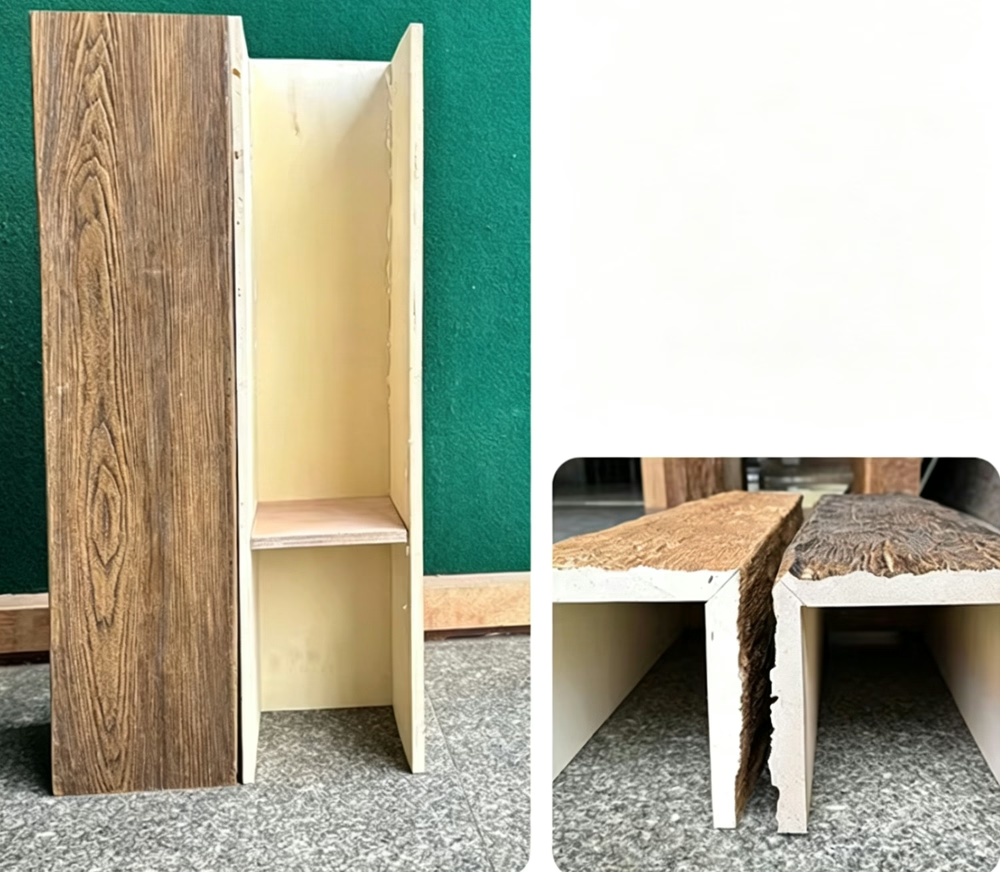
Durability differences between polyurethane and EPS beams reflect fundamental material structure variations. Polyurethane's continuous polymer matrix absorbs impacts across the beam surface, distributing stress through interconnected material rather than concentrating at bead boundaries. The result is genuine impact resistance that tolerates accidental contact without visible damage.
EPS bead structure concentrates stress at bead boundaries, creating vulnerability to impact damage that may propagate along weakness zones between adjacent beads. A moderate impact that would bounce off polyurethane may crater, chip, or shatter EPS beam surfaces, creating damage that cannot be repaired and requires component replacement. The fused bead structure also creates planes of weakness that can delaminate under sustained stress or temperature cycling.
This durability differential becomes particularly significant in active household environments, commercial spaces, or any application where accidental beam contact is reasonably foreseeable. The initial cost savings from EPS selection evaporate quickly when beams require replacement following routine household accidents that polyurethane would survive unscathed. Evaluating true cost of ownership reveals that EPS beams may represent false economy in most practical applications.

Moisture Resistance and Environmental Performance
Both polyurethane and EPS resist water absorption compared to solid wood, but meaningful differences exist in moisture-related performance. Polyurethane's closed-cell structure limits water infiltration even when foam is submerged or exposed to sustained high humidity. Surface treatments and factory finishes add additional moisture barriers that maintain appearance and structural integrity in challenging environments.
EPS absorbs water more readily through the inter-bead void spaces, potentially accumulating moisture within the beam structure that compromises performance over time. This moisture absorption creates several concerns: increased weight from water accumulation, potential for mold growth within the foam structure, and degradation of beam integrity as water freezes and thaws in exterior applications. EPS beam manufacturers typically recommend sealed installation environments with controlled humidity—limitations that polyurethane does not impose.
For exterior applications, covered but exposed installations, bathrooms, kitchens, or any environment with moisture exposure potential, polyurethane's superior moisture resistance provides important performance advantages. EPS beams may be acceptable in consistently dry interior applications but represent risky choices where moisture exposure is possible or environmental control is imperfect.
Fire Performance and Safety Considerations
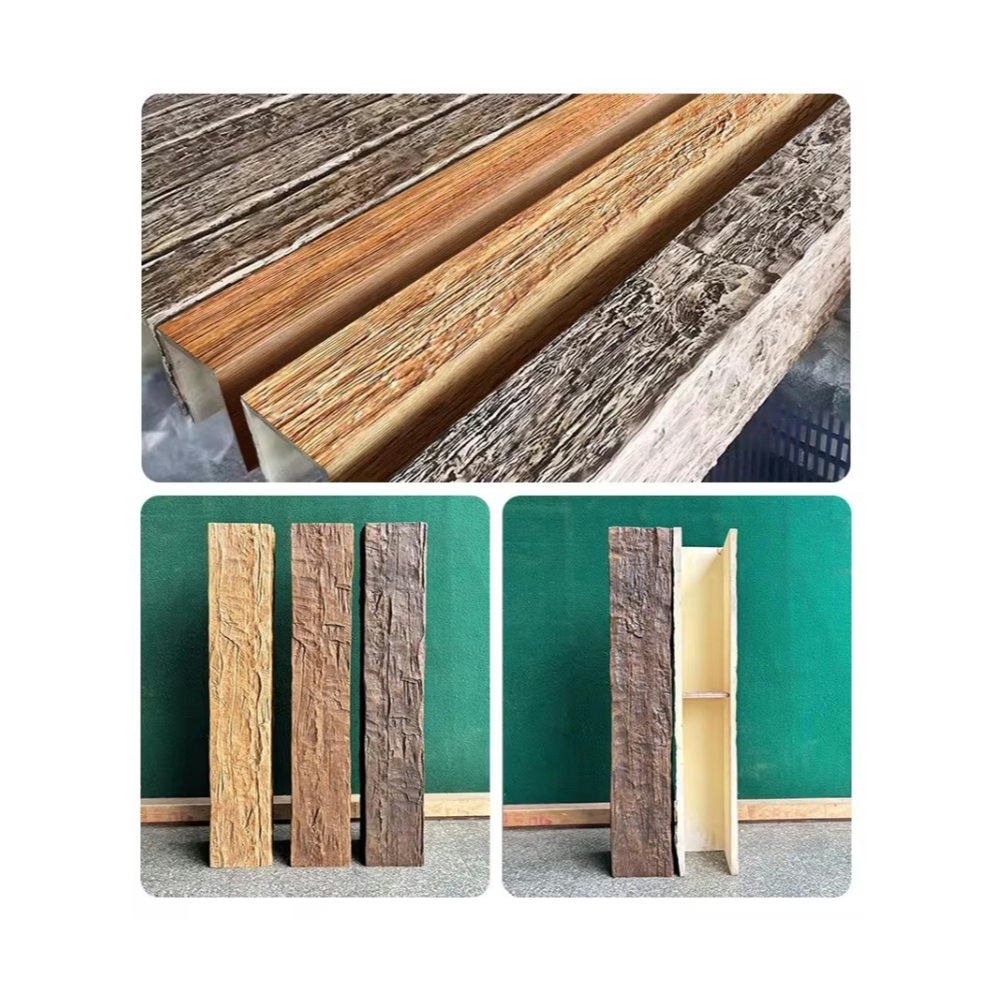
Building codes increasingly require or recommend fire-resistant materials in commercial construction and multi-family residential applications. Polyurethane foam manufacturers typically incorporate fire retardant additives during production, achieving various fire performance ratings depending on formulation and testing protocols. These treated products resist ignition, limit flame spread, and reduce smoke development compared to untreated alternatives.
EPS traditionally presents more challenging fire performance characteristics, with the polystyrene base material highly flammable and potentially dripping molten material when exposed to flame. While fire-retardant EPS formulations exist, they typically add cost that erodes the price advantage EPS enjoys over polyurethane. Building code compliance in jurisdictions with stringent fire requirements may effectively mandate polyurethane or other non-combustible beam materials regardless of other performance considerations.
Safety-conscious projects should verify fire performance ratings from manufacturers before purchasing any foam beam materials, requesting documentation of testing to applicable standards rather than assuming compliance. The verification effort prevents code compliance failures discovered during inspection that would require expensive material replacement and project delays.
Value Analysis and Application Recommendations
Total value analysis considering initial cost, installation requirements, durability, maintenance needs, and replacement timelines generally favors polyurethane over EPS for most ceiling beam applications. While EPS beams typically price 20 to 40 percent below equivalent polyurethane products, the durability limitations, moisture concerns, and fire performance questions combine to make the apparent savings questionable value. Projects operating under tight budget constraints might consider EPS for low-expectation applications—temporary installations, spaces with minimal traffic, environments with controlled conditions—but should recognize the performance trade-offs involved.
Commercial projects, high-traffic residential installations, and any application where beam longevity matters should default to polyurethane without considering EPS alternatives. The marginal cost premium provides substantial performance improvements across durability, moisture resistance, and fire safety that protect project investments and prevent future complications. Professional designers and contractors increasingly specify polyurethane exclusively due to these performance realities, leaving EPS to price-sensitive applications where long-term performance is secondary to initial cost minimization.
Technical References
ASTM standards cited in every specification
Test Data
Lab results from internal testing program
Updated 2026
Reviewed against current product specs