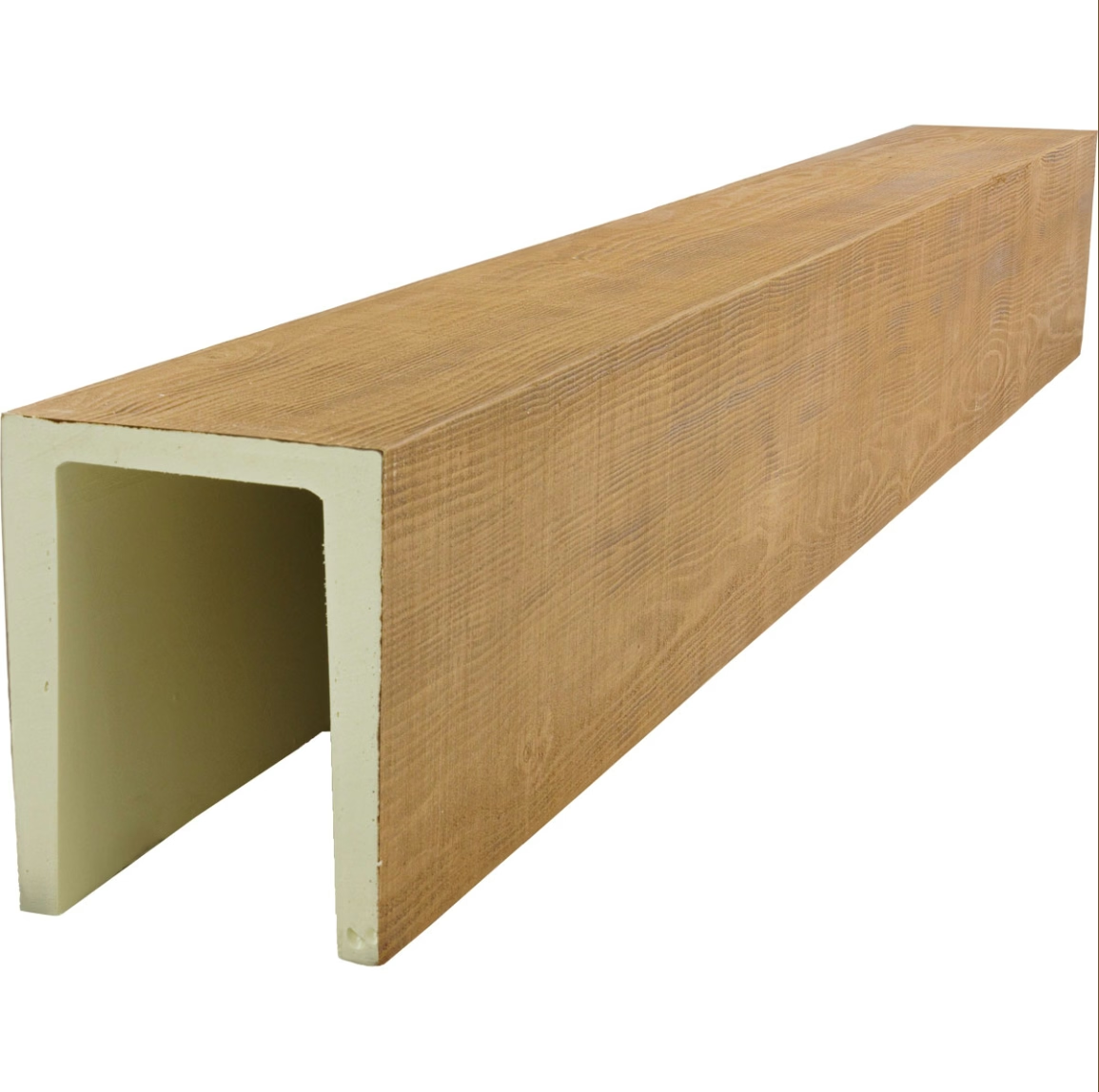
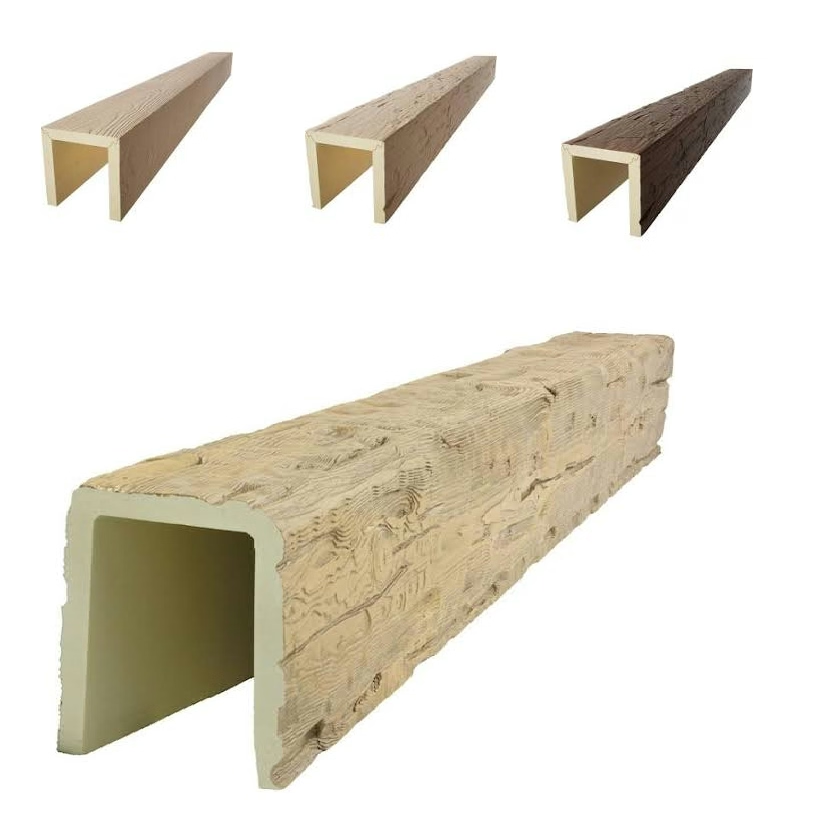
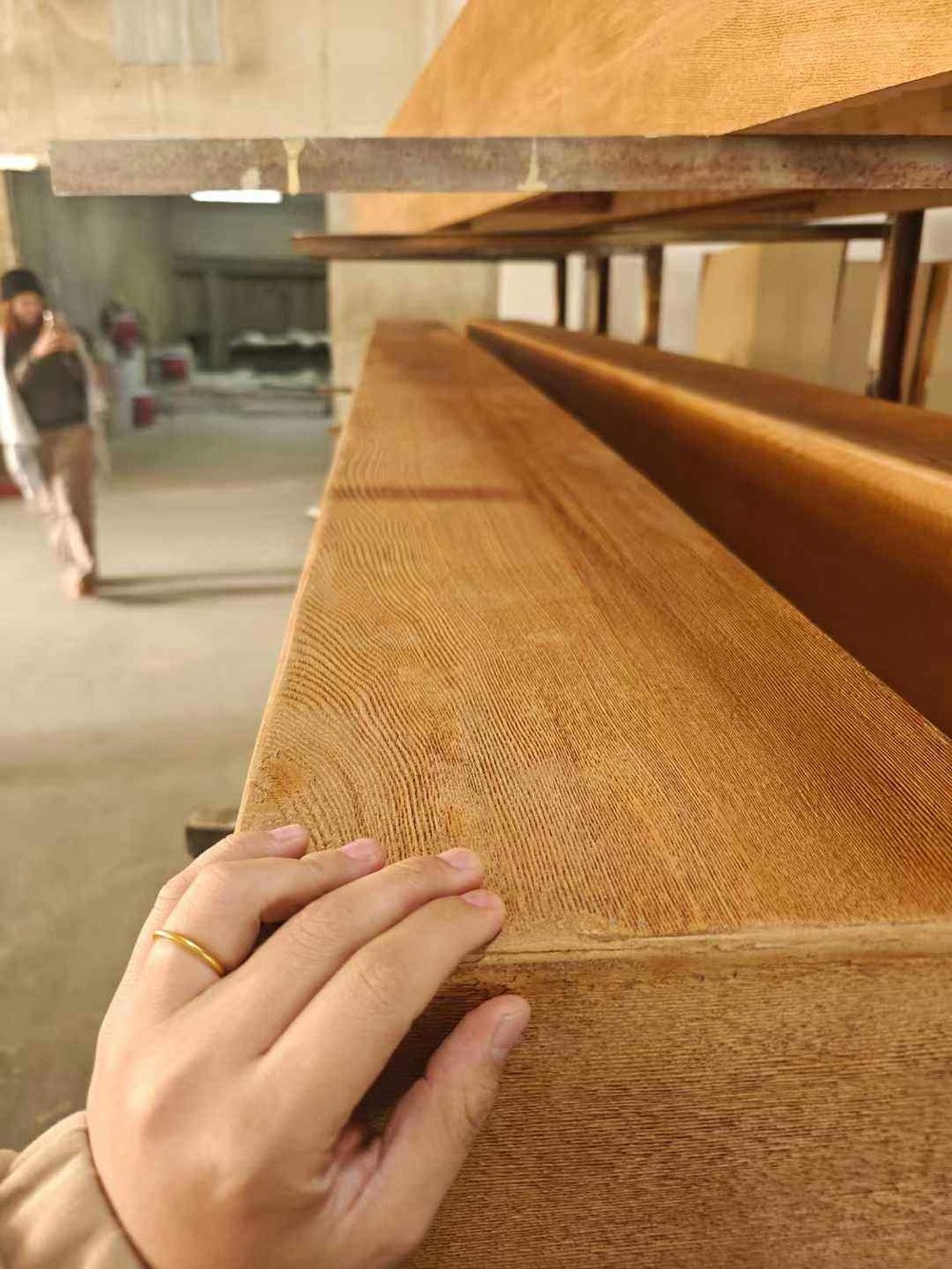
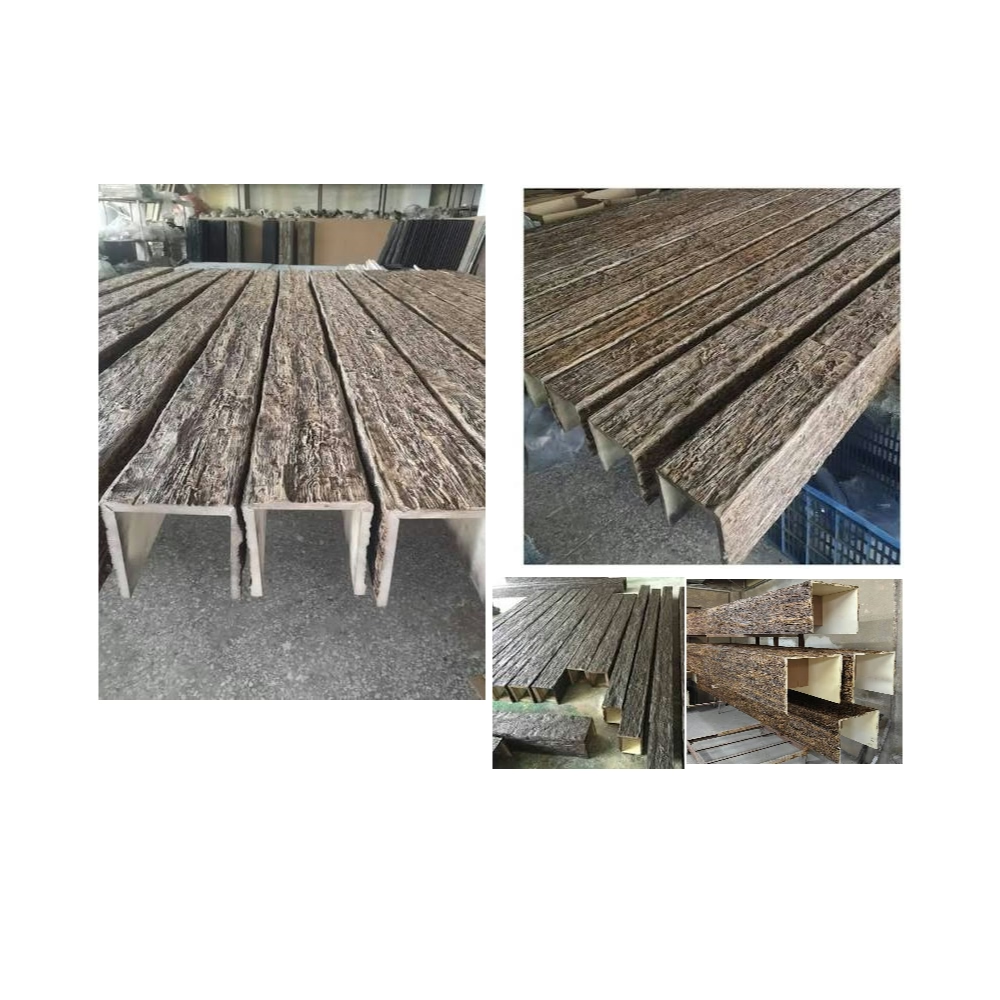
The distinction between interior and exterior grade polyurethane faux wood beams represents more than marketing categorization—it reflects fundamental differences in material formulation, UV resistance, moisture tolerance, and thermal cycling capability that determine service life in their intended environments. Using interior grade products in exterior applications guarantees premature failure, while specifying exterior grade materials for interior applications wastes money on unnecessary performance capabilities. Understanding these formulation differences enables appropriate material selection that matches product capabilities to application requirements.
Interior grade polyurethane beams optimize for controlled environment performance at accessible price points. The formulations assume stable temperatures, controlled humidity, UV protection from architectural shade or indirect lighting only, and minimal environmental stress. These products perform excellently within their intended scope but degrade rapidly when exposed to the environmental challenges that exterior applications present.
Exterior grade formulations incorporate enhanced chemical packages that resist UV degradation, tolerate temperature extremes, handle moisture exposure, and maintain structural integrity through seasonal environmental cycles. This enhanced performance comes at increased material cost that interior applications do not justify. The formulation differences create distinct product categories serving appropriately different market segments.
UV Resistance and Degradation Prevention
Ultraviolet radiation represents the primary degradation mechanism for polyurethane materials exposed to direct sunlight. UV energy breaks chemical bonds in the polymer matrix, causing surface chalking, color fading, surface cracking, and gradual material erosion that compounds over years of exposure. Interior grade formulations typically include minimal UV inhibitors due to the controlled lighting conditions in their intended applications, while exterior grades incorporate robust UV stabilizer packages that extend service life under direct sun exposure.
The UV resistance testing performed on exterior grade beams quantifies expected performance under standardized exposure conditions. Premium exterior formulations may maintain 80 to 90 percent of original surface properties after 5,000 hours of accelerated UV exposure testing, while interior formulations may retain only 50 to 60 percent of original properties under identical testing. This differential translates to dramatically different service life expectations in actual exterior applications.
Color retention parallels UV resistance—exterior grade formulations maintain original color saturation through years of sun exposure, while interior products fade noticeably within months of exterior exposure. The visual degradation of faded beams undermines the aesthetic investment that prompted their installation, making exterior grade selection essential for any application receiving direct or reflected sunlight.

Moisture and Temperature Cycling Performance
Exterior applications expose beams to moisture from rain, snow, humidity, and irrigation that interior installations never encounter. Exterior grade polyurethane formulations incorporate moisture barriers and hydrophobic additives that prevent water infiltration into the foam structure, maintaining dimensional stability and surface integrity through wet-dry cycles. Interior grade materials absorb moisture more readily, potentially leading to surface blistering, delamination, or foam degradation that compromises appearance and structural integrity.
Temperature cycling creates physical stress that tests material flexibility and adhesion characteristics. Exterior beams experience seasonal temperature swings from extreme cold to intense heat, with daily fluctuations adding thermal stress cycles throughout each year of service. Exterior grade formulations accommodate these cycles without cracking, delaminating, or losing surface adhesion. Interior formulations optimized for stable temperatures may fracture or separate when subjected to the thermal extremes that exterior environments produce.
Freeze-thaw cycling presents particular challenges that exterior grade materials address specifically. Water absorbed into foam pores expands when freezing, potentially causing surface damage, cracking, or structural compromise. Exterior grade formulations include additives that reduce moisture absorption and accommodate freeze-thaw expansion without damage. Interior beams lack this protection and may fail rapidly when exposed to winter conditions even in covered exterior applications.
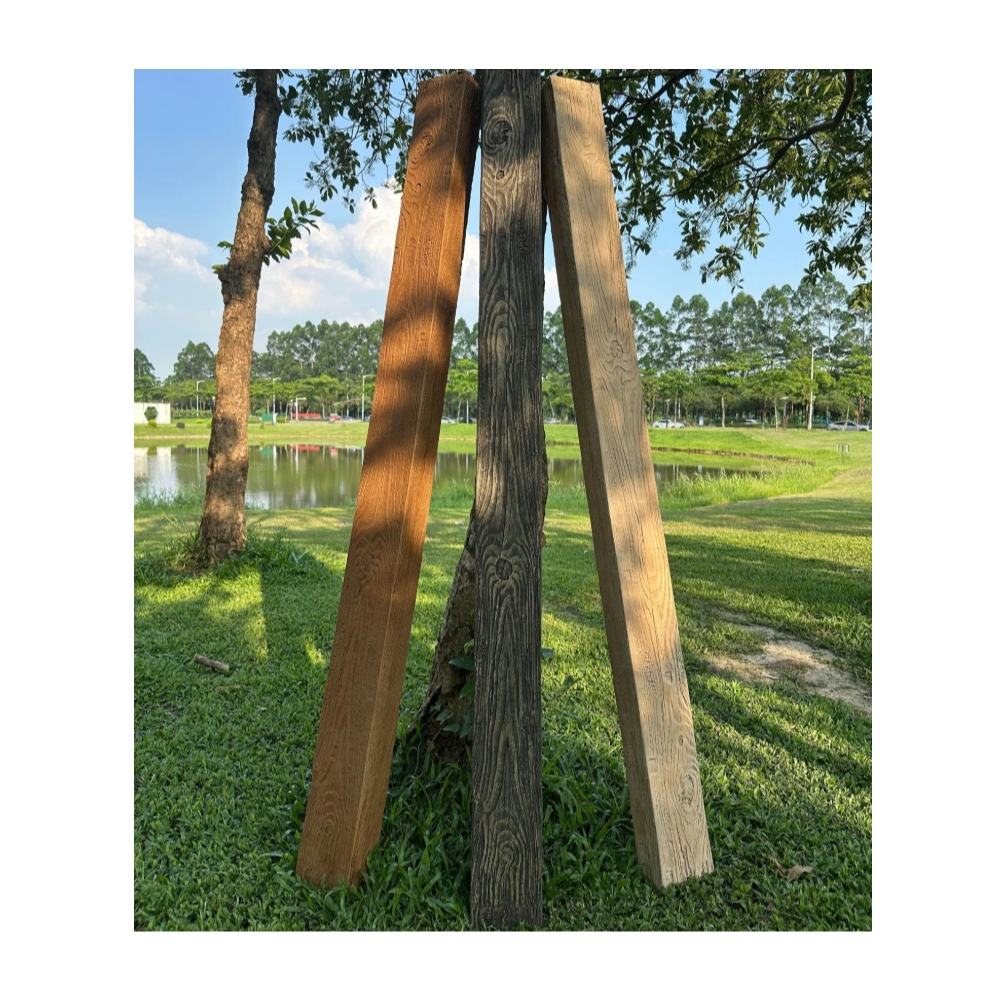
Structural Considerations for Exterior Installation
Exterior beam installations face wind loads, seismic movement, and thermal expansion forces that interior applications do not encounter. The mounting systems and installation techniques appropriate for interior beams may prove insufficient for exterior exposure that tests structural connections continuously. Exterior grade beam specifications often include enhanced mounting requirements—additional fasteners, stronger brackets, or structural backing modifications—that ensure reliable performance under environmental loading.
Thermal expansion affects exterior beams more significantly than interior installations. Sun exposure heats beam surfaces to temperatures far exceeding ambient air temperature, causing dimensional expansion that must accommodate without stressing connections or distorting appearance. Interior beams experience negligible thermal expansion due to stable environment temperatures. The expansion accommodation built into exterior grade products prevents the buckling, warping, or connection failure that interior formulations would experience under identical conditions.
Wind uplift forces in exposed exterior locations can lift improperly secured beams from mounting surfaces with potentially dangerous consequences. Exterior installations require evaluation of local wind exposure conditions and specification of mounting systems with adequate uplift resistance. Interior grade products may appear physically identical to exterior alternatives but lack the structural engineering validation that ensures safe performance under wind loading.
Cost-Benefit Analysis Across Applications
Interior grade beams priced 20 to 30 percent below exterior alternatives represent appropriate selection for purely interior applications where environmental protection is assured. The cost premium for exterior grade materials cannot be justified when beams will operate in controlled environments without UV exposure, moisture contact, or temperature extremes. Budget allocation toward quantity or finish quality in interior applications often provides better value than spending on unnecessary exterior-grade capabilities.
Covered exterior applications—patios, covered porches, carports, exterior walkways—present boundary conditions requiring careful evaluation. These locations provide shade and rain protection that reduce but do not eliminate environmental stress. Indirect UV exposure through reflected light, humidity from nearby water features, and temperature variation even in covered spaces may stress interior grade materials beyond their design capabilities. Conservative specification for covered exterior applications should include exterior grade materials, while purely interior locations can safely use interior grade products.
Fully exposed exterior installations absolutely require exterior grade specification without exception. The full environmental exposure that these locations present—direct UV, rain, snow, ice, extreme temperatures, wind loading—will destroy interior grade materials within one to three years while exterior grade products should provide decades of reliable service. The cost difference between beam grades becomes negligible against the replacement costs and installation disruption that interior grade failure would require.
Long-Term Value Considerations
Life cycle cost analysis comparing interior versus exterior grade specification reveals important long-term implications. Exterior grade products cost more initially but provide service life measured in decades without replacement or major maintenance. Interior grade products in marginal applications may require replacement within 5 to 10 years when environmental exposure exceeds their design capabilities. The present value of replacement costs, installation labor, and business disruption often exceeds the initial savings from interior grade selection.
Warranty coverage differs between product grades, with exterior applications typically requiring exterior grade specification for warranty validity. Manufacturers understand that interior grade products will fail prematurely in exterior conditions and appropriately limit warranty coverage to applications matching product capabilities. Attempting to claim warranty coverage for interior grade products installed in exterior conditions wastes effort—the failure falls outside covered conditions regardless of circumstances.
Property value implications favor appropriate grade specification for exposed applications. A pergola with failed, faded beams creates negative impressions that affect perceived property maintenance and quality. Exterior beams that maintain fresh appearance through years of exposure contribute positively to property presentation and perceived care levels. The investment in exterior grade materials protects property aesthetics alongside material performance.
Technical References
ASTM standards cited in every specification
Test Data
Lab results from internal testing program
Updated 2026
Reviewed against current product specs