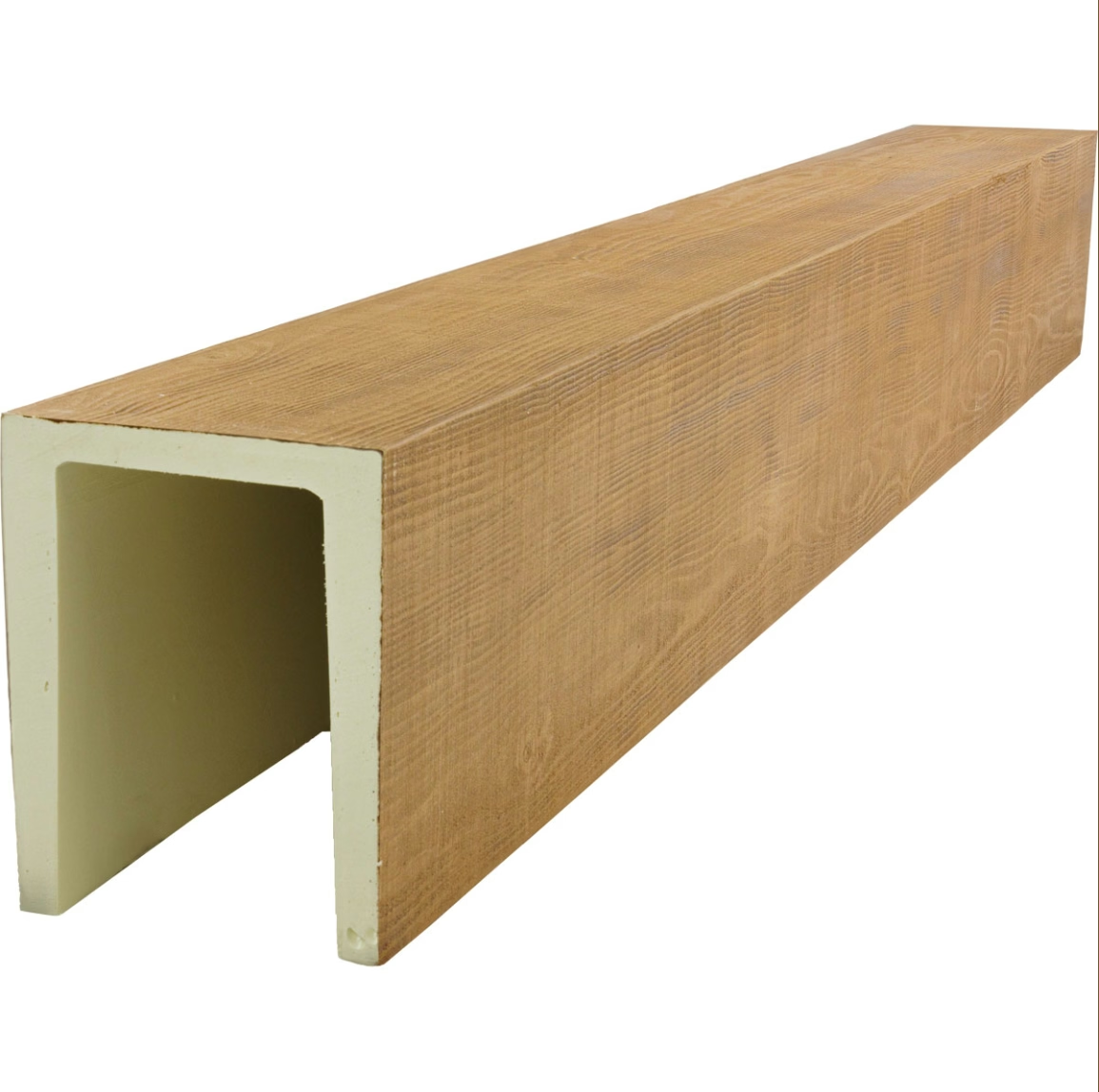
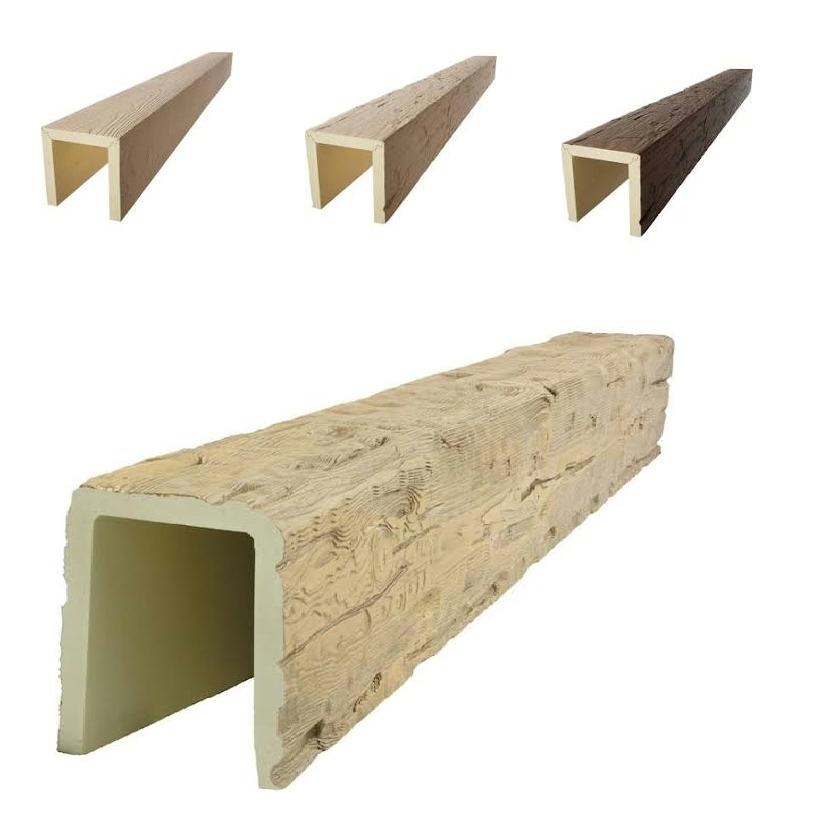
Sometimes the smallest things make the biggest difference. A two-inch square chip may seem insignificant compared to a twenty-foot ceiling beam, yet that tiny piece of polyurethane carries all the information needed to prevent costly color mismatches and texture disappointments. Sample chip swatches have become essential tools in the polyurethane beam specification process, offering practical verification methods that balance convenience with sufficient detail for accurate material selection.
The chip swatch approach emerged from practical necessity. Full beam samples, while valuable for evaluating profile shapes and overall appearance, present storage and shipping challenges that make them impractical for comprehensive color matching exercises. A contractor comparing eight different finish options across three texture styles would need to manage twenty-four full beam sections—unwieldy materials that complicate site visits, client presentations, and supplier consultations. Chip swatches solve this logistical problem while preserving the physical verification capabilities that digital specifications cannot provide.
Practical Applications in Real Projects
Interior design firms routinely maintain chip swatch libraries organized by finish family and texture type. These collections serve as reference standards when specifications need to be verified against incoming materials, when clients request confirmations about previously selected options, or when multiple project locations require coordinated finish selections. The portability of chip swatches allows these reference standards to travel easily between office, showroom, and job site without the awkwardness of transporting full beam samples.
For large-scale commercial projects, chip swatches provide crucial verification documentation. Hotel chain specifications often require documented proof that installed finishes match approved standards across multiple properties. Chip swatches submitted during approval processes create paper trails that protect both owners and contractors when questions arise about finish compliance. These documentation functions prove especially valuable in hospitality environments where brand consistency directly impacts guest experience and operational identity.
Renovation projects benefit significantly from chip swatch verification, particularly when new beam installations must coordinate with existing woodwork. The ability to place a swatch against original trim, existing furniture, or historic millwork elements enables accurate matching that preserves design continuity. Without physical verification, designers risk selecting finishes that photograph acceptably but clash noticeably with surrounding materials under actual lighting conditions.
Understanding Swatch Limitations
Honest assessment of chip swatch limitations prevents specification errors that physical verification should prevent. These small samples cannot fully represent how finishes appear across large surface areas, where subtle patterns repeat and color variations accumulate into overall impressions quite different from isolated swatch views. Professionals experienced with wood finishes understand that a color perfect in a six-inch sample may appear monotonous across a hundred square feet of beam surfaces.
Texture evaluation through chip swatches also requires interpretation. Grain patterns visible in hand-held samples may appear quite different when viewed from ceiling height across room dimensions. The perspective shift changes apparent texture density, highlight distribution, and shadow depth in ways that only experience can predict. Design professionals learn to extrapolate from swatch observations to finished installation expectations, developing intuitive understanding of how small-sample observations translate to full-scale applications.
Seasonal color variations present another consideration often overlooked in swatch-based specification. The same wood finish appears warmer in summer lighting conditions and cooler during winter months when daylight shifts toward blue wavelengths. Northern hemisphere installations facing south receive different illumination than those oriented north, creating orientation-based color variations that swatches cannot anticipate. These environmental factors require specification experience that extends beyond simple color matching.
Swatch Organization and Storage
Effective swatch libraries require systematic organization that maintains sample integrity over time. Binders with archival-quality sleeves protect polyurethane chips from UV exposure, humidity damage, and physical wear that degrades sample accuracy. Organizations investing in comprehensive swatch collections often create duplicate sets—one for daily reference use and one stored under ideal conditions for dispute resolution or long-term record keeping.
Color-coded organization systems accelerate swatch retrieval during busy specification periods. Finish families grouped by base tone (warm browns, cool grays, natural honey) combined with texture types (heavy grain, subtle grain, distressed) create logical categorization that speeds material matching. Digital inventory systems linked to physical swatch locations provide additional efficiency for large collections serving multiple concurrent projects.
Supplier partnerships often include swatch subscription services that deliver new finish options as they become available. These programs keep design firm libraries current without requiring constant monitoring of supplier catalogs. The convenience factor encourages specification of newer options that might otherwise be overlooked, benefiting suppliers through expanded product exposure while keeping design professionals ahead of finish trends.
Cost-Benefit Considerations
The economics of chip swatch programs favor both suppliers and buyers in specification processes. Manufacturing costs for small samples remain minimal compared to full beam production, allowing suppliers to offer comprehensive swatch sets at low or no cost to qualified buyers. This accessibility removes price barriers that might otherwise discourage thorough material verification before commitment.
From buyer perspectives, swatch investments represent fraction of potential error costs. A mismatched beam finish requiring replacement after installation costs hundreds or thousands of dollars in materials, labor, and possible damage to adjacent finishes. The dollars saved by accurate specification through swatch verification far exceed any investment in sample acquisition and library maintenance.
Professional liability considerations also favor comprehensive verification practices. Designers and contractors who document material approval processes—including swatch-based verification—protect themselves against claims that finished installations deviated from specifications. This documentation value extends swatch programs beyond practical matching benefits into risk management territories that justify broader implementation across project portfolios.

Chip swatches occupy an important middle ground between digital specification convenience and physical material verification. Their portability and accessibility make them practical tools for daily specification work, while their physical nature preserves the tactile certainty that appearance-dependent decisions require. For polyurethane beam selections where color and texture determine installation success, these small samples provide big protection against specification errors.
The relationship between swatch size and verification accuracy continues evolving as manufacturing processes improve. Modern polyurethane formulations achieve consistency levels that reduce variation concerns, making smaller samples increasingly representative of production materials. This quality evolution supports broader swatch adoption while maintaining verification confidence that keeps installations looking precisely as specified.
Design professionals who invest in comprehensive swatch library development gain competitive advantages in client service quality and specification accuracy. Their ability to confidently present and verify finish options streamlines approval processes while reducing costly revision cycles. In specification-intensive industries where details determine project success, these small verification tools deliver outsized practical value.

Technical References
ASTM standards cited in every specification
Test Data
Lab results from internal testing program
Updated 2026
Reviewed against current product specs